Chengdu Museum is located at No. 1 Xiaohe Street, Qingyang District, Chengdu, Sichuan Province. It was founded on September 15, 1958, and also bears the sign of the Chengdu Chinese Shadow Puppet Museum. It is the first national-level museum in Sichuan and the only one in Chengdu authorized by the State Council in 2006. In 2020, it was rated as a National First-Class Museum and is also the largest comprehensive city museum in Southwest China.
The new museum covers an area of about 17 mu, with a total floor area of about 65,000 square meters and an exhibition area of about 20,000 square meters. It has nine floors in total, divided into five above ground and four underground, and also features a 100-meter viewing corridor that offers a panoramic view of Tianfu Square. As of 2023, it has a collection of 221,967 items (sets), including 1,399 precious cultural relics (sets).
History and Culture
On September 15, 1958, the Chengdu Municipal People's Government established the Preparatory Committee of the Chengdu Local History Museum. The director of the preparatory committee was Li Jieren, a famous writer and then deputy mayor of Chengdu. The museum site was set in Daci Temple, responsible for the collection, investigation, excavation, and preservation of cultural relics in Chengdu. In 1974, the Chengdu Municipal Culture Bureau established the Chengdu Cultural Relics Management Office, with its office located in Wenshu Monastery, restoring the museum-related cultural and museum work of the former local history museum.
In 1982, Chengdu integrated relevant cultural relic management institutions to form the Chengdu Museum, with its site selected at Daci Temple on Dongfeng Road in Chengdu, and it officially opened to the public on October 1, 1984. In December 2004, Chengdu Museum moved out of Daci Temple and worked temporarily in the Qintai Building, carrying out database construction and collection archive organization, and preparing for the construction of the new museum.
In July 2009, the Chengdu Municipal Planning Committee deliberated and approved the optimized architectural design plan for the new Chengdu Museum. In September, the foundation laying for the new museum construction project was completed. In January 2010, the Chengdu Municipal Development and Reform Commission approved the establishment of the new Chengdu Museum, and the construction work of the new museum was officially launched in full. In June 2016, the new Chengdu Museum opened for trial operation to the public, and it officially opened on September 15 of that year. In 2020, the basic smart museum and informatization construction work was initially completed.
Main Attractions
Flowers Heavy on Brocade City — Chengdu Historical and Cultural Exhibition (Ancient Section)
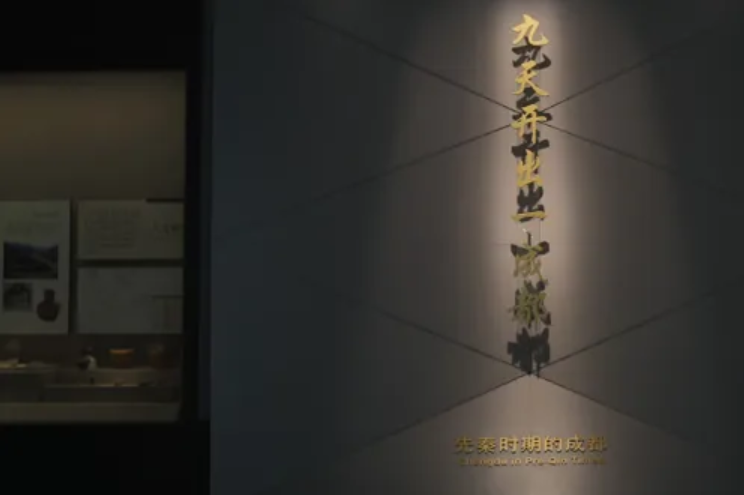
Located on the second and third floors of the exhibition hall, it is an important part of Chengdu's general history exhibition. Among them, the second-floor exhibition hall "A Chengdu Emerges from Nine Heavens: Chengdu in the Pre-Qin Period" takes the development of Shu culture in the pre-Qin period as its main thread and uses more than 240 fine cultural relics, such as relics related to the Baodun Culture ancient city site group of the late Neolithic period, and relics from the Sanxingdui site and Jinsha site, to display the ancient Shu civilization of the pre-Qin period. It also uses scene restoration, sand table models, and other forms to introduce the life of the ancient Shu people.
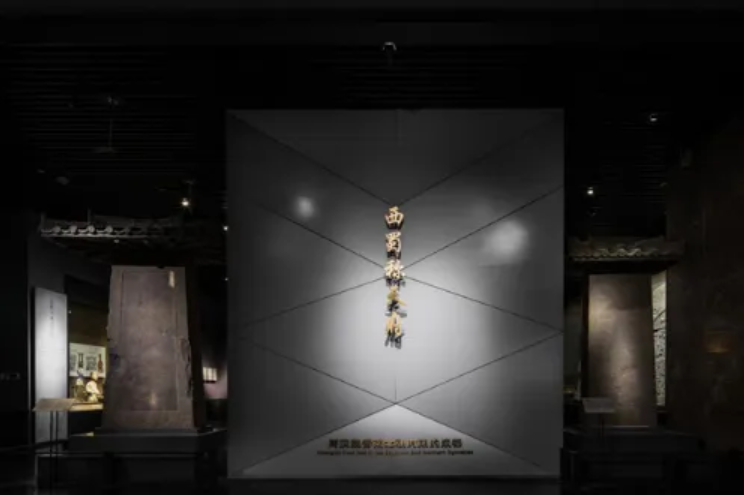
The second floor also has the exhibition hall "Western Shu Called Tianfu: Chengdu in the Han, Wei, Jin, Southern and Northern Dynasties," displaying Chengdu during this period, with mostly Han Dynasty relics. It introduces the prosperity of Chengdu as the political, economic, and cultural center of Southwest China at that time, as well as its position in the Three Kingdoms pattern and the Silk Road.
The third-floor exhibition hall "A Bustling Famous Metropolis:Chengdu in the Sui, Tang, Five Dynasties, Song, and Yuan Periods" has more than 600 cultural relics/items, reflecting the prosperity of Chengdu during this period, such as the grand situation of "Yangzhou first, Yizhou second" in the Sui and Tang dynasties, and also includes related art exhibits and miniature scenes.
The third-floor exhibition hall "Vermilion Towers Generate Evening Radiance: Chengdu in the Ming and Qing Dynasties" displays architectural components and models of the Ming Shu Princely Palace, reflecting the important status and prosperous scene of Chengdu as the provincial capital of Sichuan during the Ming and Qing dynasties.
Flowers Heavy on Brocade City — Chengdu Historical and Cultural Exhibition (Modern Section)
Located on the fourth floor of the museum, it uses cultural relics to show Chengdu in the modern period and introduces Chengdu's history as an important source of the Railway Protection Movement, a strategic important town in the rear area during the War of Resistance Against Japan, and the main battlefield for the liberation of Southwest China.
Flowers Heavy on Brocade City — Chengdu Historical and Cultural Exhibition (Folk Customs Section)
Located on the fourth floor of the museum, it is divided into four units: Old Streets and Alleys Past Events, Sichuan People Value Flavor, Seasonal Outings and Pleasures, and Teahouses as Small Chengdu. Through the four major sections of streets and alleys, food, outings, and teahouses, it connects content such as life folk customs and production folk customs, reflecting Chengdu's unique humanistic temperament and spiritual outlook.
Shadows Dancing in Myriad Forms: Chinese Shadow Puppet Exhibition
Located on the fifth floor of the museum, it selects nearly 2,000 representative and unique cultural relics (sets) for exhibition. It is the first systematic sorting and comprehensive display of Chinese shadow puppets and puppets in China. The curatorial team of Chengdu Museum cooperated deeply with Chinese and French exhibition teams and others, interpreting the traditional puppet theater art with internationalized exhibition art language. The exhibition hall also has multiple independently created stories, plays, and multimedia.
Puppet Theater of Great Variety: Chinese Puppet Exhibition
Located on the north side of the exhibition hall on the 5th floor of the museum, with an area of more than 400 square meters and more than 200 physical exhibits. The exhibition traces the history of Chinese puppets, introduces the distribution and characteristics of puppet theater types still circulating today, such as marionette theater and rod puppet theater, as well as the development of puppet performance and modeling art, and also includes introductions to related production and performance artists.
Humans and Nature: Bering Donation Exhibition
Located on the first floor of the museum, it is the first nature-themed exhibition since the founding of Chengdu Museum, displaying more than 300 animal specimens. It showcases the characteristics of diverse species and ecosystems on different continents and the stories behind them from multiple directions and angles, and expounds on the relationship between humans and nature.
Suggested Visiting Route:
If time is relatively ample, you can start from the first floor's "Humans and Nature: Bering Donation Exhibition" to learn about diverse species and ecosystems. Then go to the second floor and visit in sequence the exhibition halls "A Chengdu Emerges from Nine Heavens: Chengdu in the Pre-Qin Period" and "Western Shu Called Tianfu: Chengdu in the Han, Wei, Jin, Southern and Northern Dynasties" to experience ancient Shu civilization and the development of early Chengdu. Then go to the third floor and appreciate the cultural relics in the exhibition halls "A Bustling Famous Metropolis: Chengdu in the Sui, Tang, Five Dynasties, Song, and Yuan Periods" and "Vermilion Towers Generate Evening Radiance: Chengdu in the Ming and Qing Dynasties" to appreciate the prosperity of Chengdu in different dynasties. Then go to the fourth floor and visit "Flowers Heavy on Brocade City: Chengdu Historical and Cultural Exhibition (Modern Section)" and "Flowers Heavy on Brocade City: Chengdu Historical and Cultural Exhibition (Folk Customs Section)" to learn about modern Chengdu history and folk culture. Finally, go to the fifth floor and visit "Shadows Dancing in Myriad Forms: Chinese Shadow Puppet Exhibition" and "Puppet Theater of Great Variety: Chinese Puppet Exhibition." If time is limited, you can focus on visiting the second and third floors' "Flowers Heavy on Brocade City — Chengdu Historical and Cultural Exhibition (Ancient Section)" and the fourth floor's Folk Customs Section exhibition hall to quickly understand the essence of Chengdu's history and culture.
Visiting Suggestions:
Check the recent exhibition information and related activities in advance on the official WeChat public account or official website of Chengdu Museum, so as to better plan your visiting route.
Try to avoid peak periods such as holidays and weekends, so that you can enjoy the exhibits more comfortably and reduce queuing time. If visiting during peak periods, it is recommended to arrive at the museum early to line up for tickets or make a reservation.
You can rent an audio guide or join the museum's scheduled free guided tours to better understand the historical and cultural stories behind the cultural relics. Free tour times are usually 10:00 and 14:00 every day, subject to the museum's arrangements on the day.
The visit inside the museum takes a relatively long time, so it is recommended to wear comfortable shoes. At the same time, there are rest areas in the museum where you can rest as appropriate.
You can bring a notebook and pen to record information about cultural relics that interest you or your own reflections on the visit.
Notes:
Observe the museum's visiting order, do not make loud noises, and maintain a quiet visiting environment.
It is strictly forbidden to touch cultural relics or damage exhibition facilities. Some cultural relics are sensitive to light, and the use of flash photography is prohibited. Specific rules are subject to signs in the museum.
Smoking and eating are prohibited inside the museum. You may eat and drink in designated areas outside the museum.
Visitors with children should take good care of them and prevent them from running and playing in the museum, so as not to affect other visitors or damage cultural relics.
In case of emergency, follow the instructions and arrangements of the museum staff.
Take good care of personal belongings, especially in crowded areas and when using storage lockers, to avoid loss of property.
Transportation:
Subway: You can take Chengdu Metro Line 1 or Line 2, get off at Tianfu Square Station, exit from the corresponding exit, and walk to the museum.
Bus: Multiple bus routes can reach the area, such as Route 1, Route 4, Route 5, Route 16, Route 37, Route 55, Route 56, Route 61, etc. Get off at Tianfu Square East, West, South, or North Station and walk to the museum.
Self-driving: For visitors driving by themselves, there are parking lots around the museum. However, during peak periods such as holidays, parking may be relatively tight, so it is recommended to plan travel time in advance.
Opening Hours:
Open from Tuesday to Sunday. In winter (November 1 to April 30 of the following year), opening hours are 09:00 - 20:00, and entry stops one hour before closing each night. In summer (May 1 to October 31), opening hours are 09:00 - 21:00, and entry stops one hour before closing each night. Closed all day on Mondays (except statutory holidays), New Year's Eve, and the first day of the first lunar month.
Tickets:
Free and open to the public.