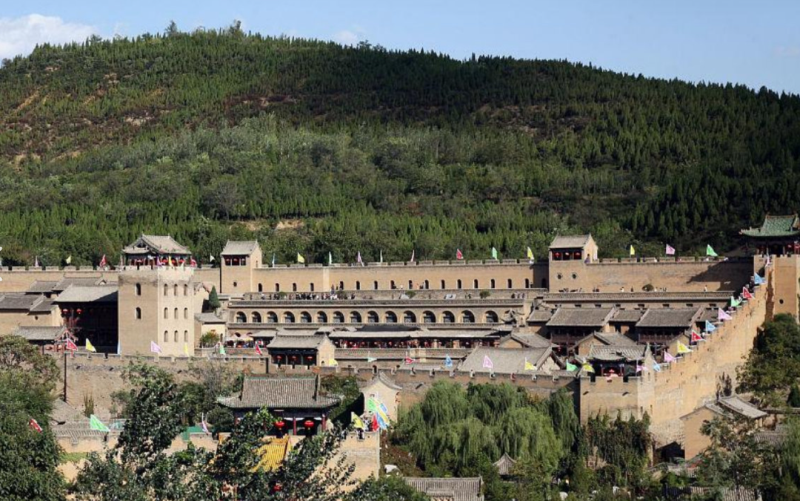
The Imperial City Prime Minister's Residence is located in Huangcheng Village, Beiliu Town, Yangcheng County, Jincheng City, Shanxi Province. It is a national 5A-level tourist attraction and one of the best-preserved Ming and Qing dynasty official residence complexes in northern China. The scenic area is centered on the former residence of Chen Tingjing, a Grand Secretary of the Wenyuan Pavilion and chief editor of the Kangxi Dictionary during the Ming and Qing dynasties. It combines the characteristics of both official residences and folk dwellings, integrating the grandeur of northern architecture with the refinement and elegance of southern gardens. The building complex covers a total area of 36,000 square meters and consists of the Inner City, Outer City, Ziyunqian, and other parts. It has a total of 16 courtyards and 640 rooms. The city wall has a total length of more than 780 meters and a height of about 12 meters, equipped with crenellations, watchtowers, and other defensive facilities. It not only presents the dignity of an official mansion but also possesses the defensive functions of an ancient castle. It is known as "the first cultural clan residence in northern China."
Historical Culture
The construction of the Imperial City Prime Minister's Residence began in the fifth year of Chongzhen in the Ming dynasty (1632). It was initially the "Douzhu Residence" (Inner City) built by Chen Changyan, Chen Tingjing's uncle, mainly to defend against wartime turmoil. During the Kangxi period of the Qing dynasty, Chen Tingjing rose to the position of Grand Secretary of the Wenyuan Pavilion and Minister of Personnel. With his prominent status and the prosperity of his family, the Outer City was expanded on the original foundation, forming today's scale. The entire construction process lasted nearly a hundred years.
As Emperor Kangxi's teacher and close minister, Chen Tingjing not only presided over the compilation of the Kangxi Dictionary while living here but also promoted the prosperity of his family's culture, making the Chen family a famous cultural clan in Shanxi during the Ming and Qing dynasties. The family successively produced 41 gongsheng, 19 juren, and 9 jinshi, among whom 6 entered the Hanlin Academy. It was praised as "a family of virtue producing nine jinshi in one gate, and three generations honored with six Hanlin members."
The scenic area preserves a large number of plaques, couplets, steles, and other cultural relics from the Ming and Qing dynasties, truly recording the rise and fall of the Chen family and the social conditions of that time. In 1998, the Imperial City Prime Minister's Residence began restoration and development. In 2007, it was rated as a national AAAAA-level tourist attraction. In 2018, it was selected as one of the "Top 50 Scenic Spots of China's Yellow River," becoming an important window for displaying Ming and Qing official culture and Shanxi merchant family culture.
Main Attractions
Inner City (Douzhu Residence)
The Inner City, also known as "Douzhu Residence," is the early architecture of the Imperial City Prime Minister's Residence. It was built in the fifth year of Chongzhen in the Ming dynasty (1632) and covers an area of about 11,000 square meters. The city wall is 12 meters high and 2.5 meters wide, with three gates in the east, west, and south. Above the south gate is a plaque inscribed with "Douzhu Ke Ju," written by Chen Changyan. Inside the Inner City are the ancestral courtyards of the Chen family, including the Chen Family Ancestral Hall, Shide Courtyard, and Shude Courtyard. The buildings are mostly brick-and-wood structures with blue bricks and gray tiles, with carved beams and painted rafters. Among them, Shide Courtyard is the place where Chen Tingjing was born. The courtyard preserves the room where he studied in his early years. The furnishings are simple, showing scenes of his youth. The defensive facilities of the Inner City are complete, with watchtowers at the four corners of the city wall for lookout and defense, reflecting the architectural defensive wisdom under the background of frequent wars during the Ming-Qing transition.
Outer City (Zhongdaozhuang)
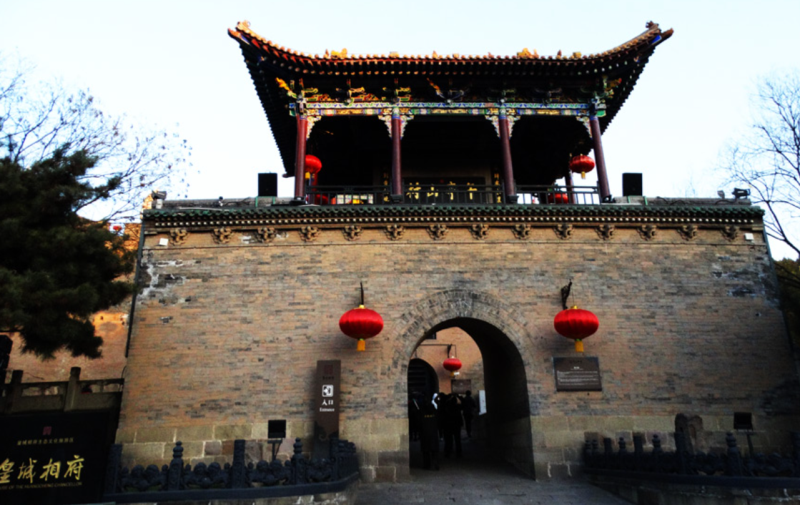
The Outer City was built in the 42nd year of Kangxi in the Qing dynasty (1703). It is the part expanded after Chen Tingjing held a high official position. It covers an area of about 25,000 square meters, and its overall layout is in the shape of the Chinese character "Fu" (fortune). The main gate of the Outer City is "Zhongdaozhuang," and above the lintel hangs the plaque "Grand Secretary's Residence," highlighting Chen Tingjing's official rank and status. The main buildings include the Zhongzai Residence, Grand Secretary's Residence, Miss's Courtyard, Steward's Courtyard, and others. Among them, the Zhongzai Residence is Chen Tingjing's mansion. "Zhongzai" means Minister of Personnel. The plaque "Dianhan Hall" in the courtyard was personally bestowed by Emperor Kangxi. The hall displays Qing dynasty official robes, ceremonial guards, and other cultural relics. The architectural style of the Outer City is more magnificent, decorated with a large number of wood carvings, stone carvings, and brick carvings. The themes are mostly auspicious patterns and historical allusions, with exquisite craftsmanship, reflecting the luxury and solemnity of Qing dynasty official mansions.
Heshan Tower
Heshan Tower is the landmark building of the Imperial City Prime Minister's Residence. It was built in the fifth year of Chongzhen in the Ming dynasty (1632) by the Chen family to resist bandits. It is 23.3 meters high and has seven floors, making it one of the tallest extant ancient defensive pavilions in northern China. The tower body is a brick-and-stone structure with walls 1.3 meters thick. Inside, there are stairs leading to each floor. The first floor has a well, stone mill, and other living facilities and can store grain. It can accommodate more than a thousand people for refuge at most. The second to sixth floors have arrow windows and lookout openings. The seventh floor is a spacious viewing platform from which one can overlook the entire building complex and the surrounding landscape. After hundreds of years of wind and rain, Heshan Tower is still well preserved and is an important physical example for studying Ming dynasty civilian defensive architecture.
Imperial Book Tower
The Imperial Book Tower is located inside the main gate of the Outer City. It is a two-story pavilion built specifically to enshrine plaques bestowed by Emperor Kangxi. It is 15 meters high, three bays wide, and has a hip-and-gable roof covered with glazed tiles, appearing solemn and elegant. The tower houses plaques and couplets bestowed by Emperor Kangxi, such as "Wuting Mountain Village" and "Spring returns to the dense shade of tall trees, autumn arrives with the fragrance of yellow flowers in late integrity." These imperial calligraphies are evidence of Chen Tingjing's deep imperial favor and important cultural relics in the scenic area. Every year on the 18th day of the third lunar month (Chen Tingjing's birthday), the scenic area holds a sacrificial ceremony here, recreating the cultural interaction between the ancient royal court and scholar-officials.
Miss's Courtyard
The Miss's Courtyard is located in the northeast part of the Outer City. It was the residence of the female members of the Chen family. It covers an area of about 800 square meters and consists of two courtyards connected by corridors. The courtyard layout is exquisite, with an embroidery building, garden, qin room, and others. The architectural decorations mainly feature flowers, birds, qin, chess, calligraphy, and painting, reflecting the lifestyle and tastes of noble ladies in ancient times. The courtyard also has a "Double Well Courtyard." The distance between the two wells is less than 3 meters. One is sweet water and the other is bitter water, implying "sweetness and bitterness depend on each other," reflecting the Chen family's educational concept regarding women's moral cultivation.
Ziyunqian
Ziyunqian is the cemetery of the Chen family. It is located on the hillside west of the Imperial City Prime Minister's Residence, covering an area of about 15,000 square meters. It mainly buries Chen Tingjing and members of his family. At the entrance of the cemetery is a stone archway inscribed with words such as "Imperial Edict" and "Imperial Grace and Favor." On both sides stand stone figures, stone horses, stone sheep, and other stone statues, demonstrating the noble status of the family. In front of Chen Tingjing's tomb stands a tombstone inscription personally composed by Emperor Kangxi, recording his life achievements in detail. Ziyunqian is surrounded by pines and cypresses, with a quiet environment. It is an important example for studying the burial system of Ming and Qing aristocracy.
Food
Gaoping Roasted Tofu
Gaoping Roasted Tofu is a specialty snack of the Gaoping area in Jincheng and is also a common food around the Imperial City Prime Minister's Residence. Its production uses locally produced firm tofu, cut into cubes, blanched in boiling water, then fried in hot oil until golden. After being removed, it is stir-fried with a sauce made from scallions, ginger, chili, Sichuan pepper, bean paste, and others. It has a crispy exterior and tender interior, with a salty, fragrant, and slightly spicy taste. In restaurants around the scenic area, a portion of Gaoping Roasted Tofu costs about 15-25 yuan. It is a common dish at local banquets and is said to be related to the Battle of Changping during the Warring States period, with a long history.
Jincheng Stir-Fried Liangfen
Jincheng Stir-Fried Liangfen is a traditional snack in the Jincheng area. It uses locally produced mung bean liangfen as the raw material. After being cut into small pieces, it is stir-fried in an iron wok with garlic sprouts, chili, Sichuan pepper, and others. Before serving, vinegar is added for seasoning. It has a soft, glutinous, and smooth texture and is sour, spicy, and appetizing. It is sold in the snack street inside the scenic area and in surrounding restaurants. A portion costs about 8-12 yuan. It is a good choice for tourists to experience local market flavors.
Youhujiao
Youhujiao is a traditional pasta snack in Jincheng. Its shape is similar to dumplings. It uses hot-water dough as the wrapper and is filled with chives, eggs, vermicelli, and other fillings. It is pinched into a half-moon shape and fried in hot oil until golden and crispy. Its outer skin is fragrant and crisp, and the filling is fresh and savory. It can be eaten directly or dipped in vinegar. At snack stalls in the Imperial City Prime Minister's Residence scenic area, a portion of Youhujiao (about 10 pieces) costs about 10-15 yuan. It is a breakfast and snack loved by local people.
Surrounding Food - Yangcheng Meat Jar Meat
Yangcheng County is where the Imperial City Prime Minister's Residence is located. Meat Jar Meat is a traditional famous dish of the area with a history of hundreds of years. Its production mainly uses pork as the raw material. After being cut into cubes and marinated with soy sauce, cooking wine, and others, it is placed in a special clay jar, with Sichuan pepper, star anise, cinnamon, and other spices added, and simmered over slow fire for several hours until the meat is tender and the bones are soft and the soup is thick. Meat Jar Meat is bright red in color, fatty but not greasy, and rich in aroma. In restaurants in Yangcheng County, a portion of Meat Jar Meat costs about 30-50 yuan. It is a specialty dish for entertaining guests locally.
Tickets:
Ticket 150 yuan/person (including shuttle bus).
You can search for the official WeChat public account "Imperial City Prime Minister's Residence Ecological Culture Tourism Area" to get the latest updates or buy tickets online.
Opening Hours:
Opening hours adjust with the seasons: From April 1 to October 31, it is peak season, with opening hours from 8:00 to 18:00 (last entry at 17:30); from November 1 to March 31 of the following year, it is off-season, with opening hours from 8:30 to 17:00 (last entry at 16:30). The live-action performance "Kangxi Dynasty" in the scenic area (recreating the scene of Emperor Kangxi staying at the Imperial City Prime Minister's Residence) is performed once at 10:00 and once at 15:00 every day during peak season (April-October). There is no performance during off-season. The specific performance time is subject to the announcement of the scenic area on the day.
Tour Route:
After entering the scenic area, visitors are advised to enter through the main gate of the Outer City, "Zhongdaozhuang," and first visit the Imperial Book Tower (20 minutes), admire the plaques bestowed by Kangxi, and learn about the relationship between Chen Tingjing and Kangxi. Then go to the Zhongzai Residence and Grand Secretary's Residence in the Outer City (1 hour), visit the layout and decoration of the official mansion, and experience Qing dynasty official residence culture.
Next, enter the Inner City (Douzhu Residence) and visit Shide Courtyard, Shude Courtyard, and the Chen Family Ancestral Hall in sequence (1 hour) to learn about the historical origins of the Chen family. After that, focus on visiting Heshan Tower (40 minutes), climb the tower to overlook the entire scenic area, and experience the functions of ancient defensive architecture.
After coming down from Heshan Tower, go to the Miss's Courtyard (30 minutes) to experience the living environment of ancient women. If time is sufficient, you can go to Ziyunqian (1 hour) to visit the Chen family cemetery and learn about the Ming and Qing burial system. Finally, watch the live-action performance "Kangxi Dynasty" (if available). The overall tour time is recommended to be 3-4 hours.
Transportation:
Bus: There is a direct tourist bus from Jincheng Passenger Transport East Station to the Imperial City Prime Minister's Residence, running every 30 minutes from 7:30 to 18:00, with a journey of about 1.5 hours and a fare of 15 yuan/person; Yangcheng County Passenger Transport Station also has buses to Huangcheng Village, with a journey of about 40 minutes and a fare of 5 yuan/person. After getting off, walk 5 minutes to reach the entrance of the scenic area.
Self-driving: The scenic area has a parking lot with an area of about 12,000 square meters and can accommodate 800 small cars. The parking fee is 10 yuan/time (unlimited time). From Jincheng urban area, drive north along the Jinyang Expressway (S86) for about 50 kilometers, exit at Beiliu, and follow road signs for 5 kilometers; from Taiyuan, drive south along the Erguang Expressway (G55) to Jincheng, then transfer to the Jinyang Expressway (S86) to Beiliu Exit, about 300 kilometers in total.
Tourist Special Line: Tourist distribution centers in Taiyuan, Zhengzhou, Luoyang, and other cities have direct tourist special lines to the Imperial City Prime Minister's Residence. The journeys are 4 hours, 3 hours, and 2.5 hours respectively. Round-trip fares and itineraries can be consulted with local tourism agencies.
High-speed Rail Bus: Take the high-speed rail to Jincheng East Station, then transfer to the above tourist bus directly to the scenic area. The high-speed rail from Taiyuan to Jincheng East Station takes about 1.5 hours, and from Zhengzhou to Jincheng East Station about 1 hour.
Must-Visit Attractions:
Heshan Tower: 23.3 meters high, 7 floors, the tallest ancient defensive pavilion in northern China. You can climb the tower for views and learn about ancient defensive functions. It is the landmark building of the scenic area.
Outer City (Zhongdaozhuang): Includes core buildings such as the Zhongzai Residence and Grand Secretary's Residence, with plaques bestowed by Kangxi and exquisite carvings, showing the luxury and solemnity of Qing dynasty official mansions. It covers 25,000 square meters.
Inner City (Douzhu Residence): The early residence of the Chen family, preserving Ming dynasty architectural style, with the Chen Family Ancestral Hall, Shide Courtyard, and others, recording the origin and development of the Chen family. It covers 11,000 square meters.
Tour Suggestions:
It is recommended to hire a scenic area guide (fee 100 yuan/within 5 people). The guide can introduce the historical stories and cultural connotations behind the buildings in detail, avoiding the boredom of simply looking at architecture. The explanation time is about 2 hours.
During peak season (May-October), there are many tourists. It is recommended to enter before 8:30 a.m. or after 15:00 p.m. to avoid the peak period from 9:00 to 14:00 for a better experience.
The scenic area is mostly stone-paved roads with slopes. It is recommended to wear comfortable sports shoes and avoid high heels.
The live-action performance "Kangxi Dynasty" is a feature of the scenic area. It is recommended to check the performance time in advance and arrange the itinerary reasonably. The performance lasts about 40 minutes and requires no additional ticket.
There are many shops selling local specialties inside and around the scenic area, such as Imperial City Prime Minister's Residence wine and Yangcheng mulberry juice. You may buy some as appropriate. Prices are transparent, and there is no forced consumption.
Precautions:
Smoking and littering are prohibited in the scenic area. Public health regulations must be observed, and cultural relics and architectural facilities must be protected.
Do not touch or carve the wood carvings, stone carvings, and other decorations on ancient buildings. There is surveillance in the scenic area, and violations will be fined.
Watch your step when visiting. Some areas are dimly lit, especially the old courtyards in the Inner City. Walk carefully to prevent falls.
In summer, the temperature in the scenic area is high. It is recommended to bring a sun umbrella and sunscreen; in winter, it is colder, and some roads may freeze, so pay attention to keeping warm and preventing slips.
Keep personal belongings safe. There are many tourists in the scenic area, especially at performance venues and popular attractions. Be alert to theft.
Some residential areas in the scenic area still have residents. When visiting, respect local residents' lives and do not enter unopened private areas at will.