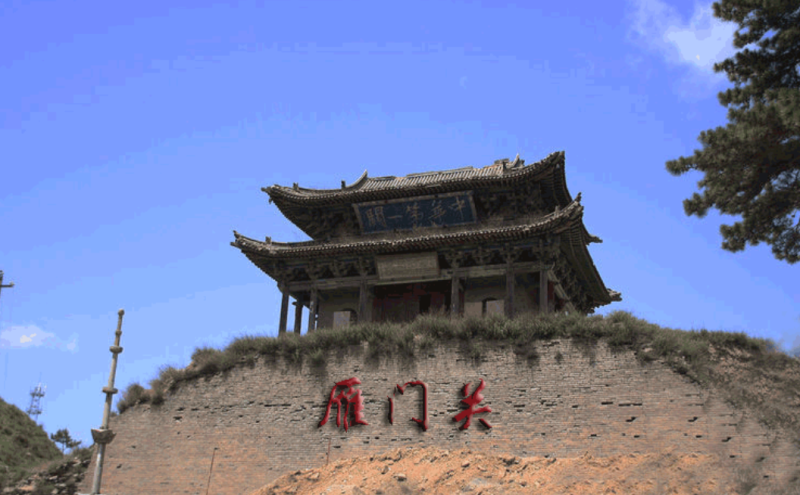
Yanmen Pass is located in the Yanmen Mountains about 20 kilometers north of Dai County in Xinzhou City, Shanxi Province. It is a national 5A-level tourist attraction and one of the important passes of the Great Wall, known as "the First Pass under Heaven." The scenic area is characterized by its steep mountain terrain and rich historical heritage. It was an important military defensive fortress in ancient northern China and witnessed countless alternations between war and peace. The Yanmen Pass scenic area covers a total area of about 30 square kilometers, with a core scenic area of about 1.68 square kilometers. About 40 structures of various types remain, including the pass city, the Great Wall, and beacon towers. The pass city has a perimeter of more than 1 kilometer and walls 7 meters high. It has a stone base and brick facing, with rammed earth inside. It has east and west gates. The east gate is inscribed "Tianxian" (Heavenly Hazard), and the west gate is inscribed "Dili" (Strategic Advantage), both with gate towers. The scenic area also preserves facilities from the Ming and Qing dynasties, such as the ancient post road, drill ground, and military camps, fully presenting the appearance of the ancient frontier military defense system.
Historical Culture
The history of Yanmen Pass can be traced back to the Warring States period, when King Wuling of Zhao established Yanmen Commandery here. Thereafter, it was a military stronghold in successive dynasties. After Qin unified the six states, General Meng Tian led troops north to attack the Xiongnu and once built the Great Wall here. During the reign of Emperor Wu of Han, Wei Qing and Huo Qubing repeatedly went out through Yanmen Pass to campaign against the Xiongnu in the north, leaving behind the famous line, "If only the Flying General of Longcheng were still here, the barbarian horses would not dare cross the Yin Mountains."
During the Northern Song dynasty, Yanmen Pass became an important line of defense on the border between Song and Liao. The famous anti-Liao general Yang Ye and the Yang family generals guarded it and defeated Liao forces many times, leaving behind many heroic deeds. Related relics such as the Shrine of Lord Yang Linggong still remain in the scenic area. During the Ming and Qing dynasties, although the military status of Yanmen Pass declined somewhat, it was still an important transportation route and frontier defense town in the north, witnessing ethnic integration and commercial exchange.
As an important part of Great Wall culture, Yanmen Pass carries rich historical memory, and its architectural layout embodies the essence of ancient military defense thought. In 1987, Yanmen Pass was inscribed on the World Cultural Heritage List as an important part of the Great Wall; in 2017, it was rated a national 5A-level tourist attraction, becoming an important window for displaying ancient Chinese frontier culture.
Main Attractions
Pass City
The pass city is the core structure of Yanmen Pass. It was first built in the Ming dynasty, and the existing buildings are restorations from recent years. The pass city faces south, has a perimeter of more than 1,000 meters, and walls 7 meters high. The walls use stone as the base, are faced with brick, and filled with rammed earth, making them extremely solid. The pass city has two gates, east and west. The east gate bears the inscription "Tianxian," and the west gate bears "Dili." Both have gate towers. The gate towers are 12 meters high, five bays wide, and three bays deep, with single-eaved hip-and-gable roofs, grand and majestic. Inside the pass city are military facilities such as an urn city, drill ground, and soldiers' quarters. The urn city is square and enhances the defensive capability of the pass city. The drill ground was a place for ancient troops to train, with an area of about 5,000 square meters, and still preserves relics such as flagpoles and a martial arts platform. Standing atop the pass city, one can gaze at the rolling mountains in the distance and feel the steep majesty of "one man guarding the pass, ten thousand men unable to force it open."
Great Wall Section
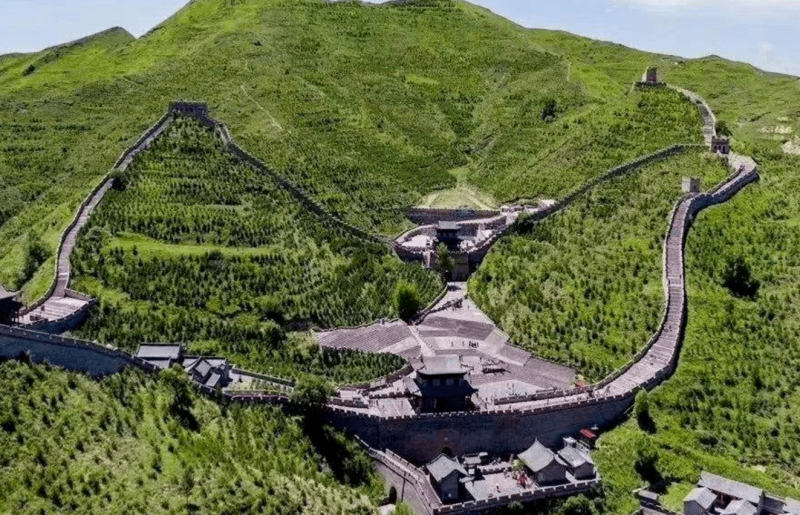
The Great Wall section within the Yanmen Pass scenic area is about 5 kilometers long. It was first built during the Warring States period and underwent large-scale reconstruction in the Ming dynasty. Most of the surviving walls are Ming remains. The Great Wall is built along the mountains, winding across the ridges, with an average height of about 6 meters and a width of 3–5 meters. Some sections are extremely steep, with the steepest reaching more than 70 degrees, making construction extremely difficult. On the Great Wall are 18 beacon towers, spaced about 500 meters apart. The beacon towers are square or round, 8–10 meters high, and were important facilities for transmitting military information in ancient times. When there was an enemy situation, smoke was lit by day and fire by night, allowing information to be transmitted quickly. Visitors can hike along the Great Wall trail and experience the majestic momentum of the ancient Great Wall. Among them, the section from the pass city to Baicaokou is the best preserved, about 2 kilometers long, and a round-trip hike takes 1.5–2 hours.
Shrine of Lord Yang Linggong
The Shrine of Lord Yang Linggong is located on the east side of the pass city. It was built to commemorate the Northern Song anti-Liao general Yang Ye (Lord Yang Linggong). It was first built in the Yuan dynasty, and the existing buildings were rebuilt in the Qing dynasty. The shrine covers an area of about 1,200 square meters and faces south. It consists of a mountain gate, main hall, and east and west side halls. The main hall enshrines statues of Yang Ye and his wife She Taijun. The side halls on both sides enshrine statues of other generals of the Yang family. The statues have different expressions and are lifelike. The shrine preserves Ming and Qing dynasty inscriptions recording Yang Ye's life and deeds and the anti-Liao achievements of the Yang family generals. It is an important place for promoting patriotism and a must-visit place for tourists to remember heroes and learn about Yang family general culture.
Ancient Post Road
The ancient post road is located on the west side of the pass city. It was an important transportation route connecting the Central Plains with the north in ancient times. Historically, it was a necessary route for merchants and troops. The post road is paved with stone slabs, about 3 kilometers long and 2–3 meters wide. Because of years of carriage and horse traffic, the stone slabs bear deep rut marks, the deepest reaching more than 10 centimeters, witnessing the prosperity of the past. On both sides of the post road are remains of post stations, shops, and inns. Among them, "Yanmen Village" was an important settlement on the post road, once guarded by heavy troops, and some house foundations and enclosure walls remain. Strolling along the ancient post road, one can imagine the bustling scene of former days, with "carriages rattling and horses neighing," and feel the close connection between ancient transportation, military affairs, and commerce.
Yan Pagoda
The Yan Pagoda, also called the "Watchtower," is located on the mountain peak southeast of the pass city. It was first built in the Ming dynasty and is a hexagonal pavilion-style brick pagoda about 20 meters high with five stories. Each story of the Yan Pagoda has lookout windows. From the top, one can overlook the entire Yanmen Pass and the surrounding mountains and terrain. It was an important facility for ancient military observation. Inside the pagoda, stone steps spiral upward, and part of the pagoda body preserves Ming dynasty inscriptions recording the military deployment and construction conditions at that time. The Yan Pagoda is simple and solemn in shape. It is both a military facility and one of the landmark buildings of Yanmen Pass, attracting many tourists to climb the pagoda and enjoy the view.
Food
Daixian Stewed Fish
Daixian stewed fish is a traditional famous dish in the Dai County area where Yanmen Pass is located. It uses fresh live carp from the local Hutuo River as the main ingredient, supplemented with scallions, ginger, garlic, chili, and other seasonings, and is made through procedures such as pan-frying and stewing. Its characteristics are tender fish, rich broth, savory and delicious flavor, with a slight spiciness. During preparation, the carp is first pan-fried until golden on both sides, then seasonings and clear water are added and simmered slowly so that the fish fully absorbs the flavor of the broth. Before serving, cilantro is sprinkled on top to enhance the aroma. It can be tasted in restaurants in Dai County town, priced at about 60–80 yuan per portion. It is a specialty dish used by locals to entertain guests.
Daixian Huoshao
Daixian huoshao is a traditional local noodle food, similar in appearance to a baked flatbread. It uses flour, oil, and salt as the main ingredients and is made through fermentation, rolling, and baking. Huoshao comes in sweet and savory flavors. The savory version can include scallions and sesame, while the sweet version includes sugar filling. Its characteristics are a crisp outer layer, soft interior, and rich wheat aroma. It can be eaten directly or stuffed with meat or vegetables for a better flavor. There are many huoshao stalls in the streets and alleys of Dai County town, priced at about 2–3 yuan each. It is a breakfast and snack favored by local residents and also a portable specialty snack for tourists.
Youmian Kaolaolao
Youmian kaolaolao is a traditional noodle food in northern Shanxi and is also very common in the areas around Yanmen Pass. It uses youmai flour as the raw material. The dough is rolled into thin strips and then rolled into cylinders, shaped like a kaolao (a kind of bamboo container). After being steamed in a steamer, it is ready to eat. It can be dipped in tomato sauce, meat sauce, vinegar, and other seasonings when eaten. It has a chewy texture and is nutritious. It can be tasted in farmhouses near the Yanmen Pass scenic area or in Dai County restaurants, about 15–20 yuan per portion. It is one of the daily staple foods of local people and reflects the dietary characteristics of the north.
Nearby Food — Xinzhou Wafu
Xinzhou wafu is a traditional pastry of Xinzhou City, about 70 kilometers from Yanmen Pass, and is a nearby food worth tasting. Wafu uses flour, sugar, and oil as the main ingredients and is made through procedures such as forming and baking. It is named for its tile-like shape. Its characteristics are golden color, crisp texture, sweet and delicious flavor, melting in the mouth, with the aroma of sesame. Xinzhou wafu has a long history, was first created in the Qing dynasty, and was once presented to the imperial court as tribute. It can be purchased in pastry shops in Xinzhou city or specialty stores in Dai County, priced at about 10–15 yuan per box. It is convenient to carry and a good choice for gifts to relatives and friends.
Tickets:
Tickets are 90 yuan per person.
You can search for the official public account "Yanmen Pass Scenic Area Official WeChat" in WeChat to get the latest updates or buy tickets online.
Opening Hours:
Opening hours are slightly adjusted according to the season: April 1–October 31 is 8:00–18:00 (last entry at 17:30); November 1–March 31 of the following year is 8:30–17:00 (last entry at 16:30). The opening hours of some attractions within the scenic area, such as the Shrine of Lord Yang Linggong and the Yan Pagoda, are consistent with those of the scenic area. Visitors are advised to arrange their itinerary reasonably to avoid missing visiting times. In addition, the scenic area may appropriately extend opening hours during major holidays, subject to the announcement of the day.
Suggested Tour Route:
Suggested tour route (1-day tour): Arrive at the scenic area entrance at 8:30 a.m., take the sightseeing bus to the pass city (about 10 minutes), first visit the pass city, tour the east and west gates and gate towers, and learn about the architectural layout and defensive functions of the pass city (about 1 hour); then go to the Shrine of Lord Yang Linggong to remember the heroic deeds of the Yang family generals (about 40 minutes).
At noon, dine at a farmhouse in the scenic area and taste specialty foods such as youmian kaolaolao and Daixian huoshao. At 13:30 p.m., hike along the Great Wall trail to the Baicaokou section, enjoy the majestic appearance of the Great Wall, and on the way climb a beacon tower to experience ancient military observation (about 2 hours round trip); afterward, go to the ancient post road to feel the historical imprint of the former transportation route (about 1 hour); finally, climb the Yan Pagoda and overlook the panoramic view of the scenic area (about 40 minutes). At about 17:00, take the sightseeing bus back to the scenic area entrance and end the trip. If time is sufficient, after the tour you can go to Dai County town and visit attractions such as the Dai County Confucian Temple and Bianjing Tower to further experience the local historical culture.
Transportation:
Long-distance bus: There are direct buses from Dai County Bus Station to Yanmen Pass Scenic Area at 8:00, 10:00, and 14:00 every day. The ride takes about 40 minutes, and the fare is 10 yuan per person. From Xinzhou Bus Station to Dai County town, there is one bus every 30 minutes. The ride takes about 1 hour, and the fare is 15 yuan per person. After arriving in Dai County, transfer to the bus to Yanmen Pass.
Train: Dai County Railway Station is located in Dai County town. There are direct trains from Beijing, Taiyuan, Datong, and other places to Dai County Station. Among them, Taiyuan to Dai County Station takes about 2.5 hours, with a hard-seat fare of 28.5 yuan; Beijing to Dai County Station takes about 6 hours, with a hard-seat fare of 64.5 yuan. From Dai County Railway Station, you can take a taxi to Dai County Bus Station (about 5 yuan), then transfer to the bus to Yanmen Pass.
Self-driving: From Taiyuan, drive north along the Erguang Expressway (G55), get off at the Dai County exit, then drive along signs for the Yanmen Pass scenic area. The total distance is about 180 kilometers, and the drive takes about 2.5 hours. From Beijing, drive southwest along the Beijing-Kunming Expressway (G5), transfer to the Erguang Expressway (G55), and get off at the Dai County exit. The total distance is about 480 kilometers, and the drive takes about 5.5 hours. There is a parking lot in the scenic area, with a charge of 5 yuan per hour and a maximum charge of 20 yuan within 24 hours.
Must-Visit Attractions:
Pass City: The core structure of Yanmen Pass, with a perimeter of more than 1,000 meters and walls 7 meters high. It has the two gates "Tianxian" and "Dili," and majestic gate towers. It is an important window for understanding the ancient military defense system. Tour time is about 1 hour.
Great Wall (Baicaokou Section): The best-preserved section of the Great Wall, about 2 kilometers long, with tall and solid walls and densely distributed beacon towers. Hiking here allows a deep experience of the Great Wall's majestic momentum. Round trip takes about 2 hours.
Shrine of Lord Yang Linggong: An important place to commemorate the Yang family generals, covering an area of 1,200 square meters. It contains statues of Yang Ye and the Yang family generals and inscriptions. It is an attraction for promoting patriotism. Tour time is about 40 minutes.
Yan Pagoda: A hexagonal brick pagoda about 20 meters high. From the top, one can overlook the panoramic view of the scenic area. It is one of the landmark buildings of Yanmen Pass. Tour time is about 40 minutes.
Tour Suggestions:
The scenic area is mostly mountainous terrain, and the trails have steep slopes. It is recommended to wear comfortable sports shoes and avoid high heels; in summer, ultraviolet rays are strong, so bring sun hats, sunscreen, and other sun protection items; in winter, it is cold and windy, so pay attention to keeping warm.
The scenic area is large, and a full hiking tour takes about 5–6 hours, consuming considerable physical strength. It is recommended to carry an appropriate amount of drinking water and snacks. Prices at farmhouses and small shops in the scenic area are relatively high, so you can prepare in advance in Dai County town.
It is recommended to hire a scenic area guide (100 yuan per time). The guide can introduce the historical background and stories of the attractions in detail, helping you better understand Yanmen Pass culture; you can also rent an electronic guide device (30 yuan per unit) and listen to the commentary independently.
The best seasons for visiting are April–May and September–October, when the climate is suitable and the scenery is beautiful; in summer there is more rain, so beware of natural disasters such as landslides; in winter some sections may freeze, so tour cautiously.
There are few dining options in the scenic area. It is recommended to dine in Dai County town. At "old brand" restaurants in Dai County town such as "Daizhou Renjia," you can taste authentic specialty dishes such as Daixian stewed fish, with an average consumption of about 50 yuan per person.
Precautions:
Some sections of the Great Wall are steep. Pay attention to safety when hiking, do not stray from the trail, and do not stop or take photos in dangerous places. In rain or snow, the trail is slippery, and it is recommended to suspend hiking.
Ancient buildings and cultural relics in the scenic area must be protected. Graffiti, smearing, and climbing are strictly prohibited, and violators will face fines or other penalties; smoking must be in designated areas, and cigarette butts must not be thrown randomly to prevent fire.
Mobile phone signal is weak in some sections of the scenic area. It is recommended to keep in contact with companions and avoid acting alone; the scenic area has an emergency rescue phone number, and you can seek help promptly in case of emergency.
Respect local customs and habits. There are villages and residents around the scenic area. Do not enter private homes casually during the tour and do not disturb villagers' normal lives.
Scenic area tickets are valid on the day of purchase. If you leave the park and enter again, you need to buy another ticket. It is recommended to arrange tour time reasonably to avoid repeated ticket purchases.
Self-driving visitors should park vehicles in designated parking lots in the scenic area and not park randomly on the roadside, so as not to affect traffic and incur fines.