The Dahuaishu Scenic Area is located at No. 002, Park Street, Guhuai North Road, Hongtong County, Linfen City, Shanxi Province. It is a national 5A-level tourist attraction centered on the themes of "searching for roots" and "ancestor worship," and is a well-known scenic area in China distinguished by its immigrant culture. The architectural style within the scenic area blends traditional and modern elements, with its layout organized around immigrant history. It features numerous attractions related to immigrant culture, including the Stele Pavilion, the Second and Third Generation Great Pagoda Trees, and the Ancestor Worship Hall. The scenic area covers a total area of approximately 3.5 square kilometers, with the core scenic area covering about 100,000 square meters. The various buildings are arranged in a well-proportioned manner, showcasing both a sense of historical depth and providing visitors with a pleasant touring environment. It is an important site for Chinese people at home and abroad to search for their roots, worship their ancestors, and learn about immigrant history.
Historical Culture
The history of the Hongtong Dahuaishu is closely connected to the large-scale and far-reaching migration activities in Chinese history. During the Hongwu to Yongle periods of the Ming Dynasty, due to war, famine, and other reasons, the population of the Central Plains region dropped sharply, while the Shanxi region was relatively stable and densely populated. In order to restore production and balance the population, the imperial court relocated people from Shanxi to more than a dozen provinces and cities, including Hebei, Henan, Shandong, and Beijing, on multiple occasions. Among these, the Dahuaishu in Hongtong County was an important gathering and distribution center for migrants.
According to historical records, at that time most migrants gathered under the large pagoda tree beside Guangji Temple north of Hongtong City, where they received certificates and travel expenses before departing for various places. Over time, the large pagoda tree became a symbol of their hometown in the hearts of the migrants, and the folk rhyme "Where are our ancestors? The large pagoda tree in Hongtong, Shanxi" spread widely among the people. To commemorate this historical event and carry forward immigrant culture, the Hongtong Dahuaishu Root-Seeking and Ancestor-Worship Garden Scenic Area was gradually built. Today, it has become a cultural scenic area integrating root-seeking and ancestor worship, cultural experience, and tourism, attracting a large number of Chinese people from home and abroad every year to search for their roots and pay respects to their ancestors.
Main Attractions
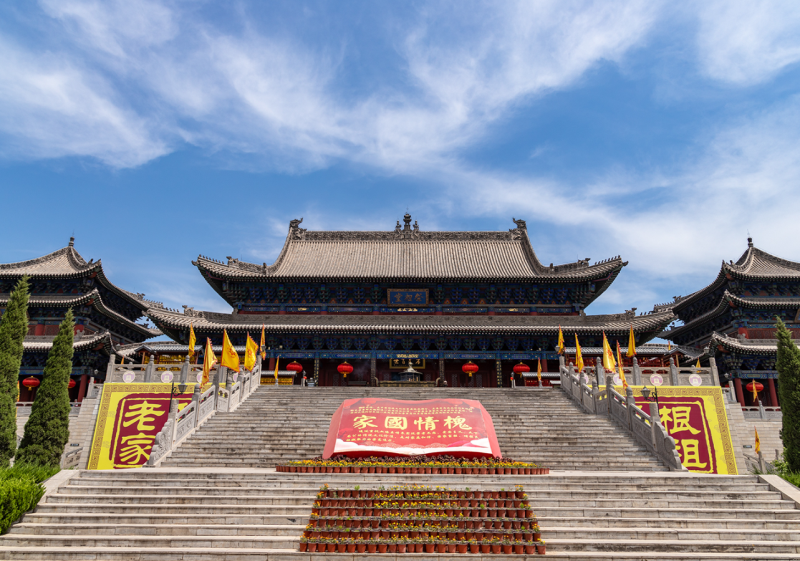
Dahuaishu Ancestor Worship Hall
The Dahuaishu Ancestor Worship Hall is one of the core buildings of the scenic area, covering an area of approximately 2,000 square meters. It enshrines memorial tablets for 1,230 ancestral surnames of migrants, covering the main surnames of Ming Dynasty migrants. The Ancestor Worship Hall adopts a pseudo-classical architectural style, solemn and dignified, with carved beams and painted rafters inside and a magnificent momentum. Visitors can worship their ancestors here, express their homesickness, and feel the strong atmosphere of root-seeking. The square in front of the Ancestor Worship Hall is spacious and open, serving as the venue for large-scale ancestor worship activities. Every year on important festivals such as Qingming Festival, a grand ancestor worship ceremony is held here.
Second and Third Generation Great Pagoda Trees
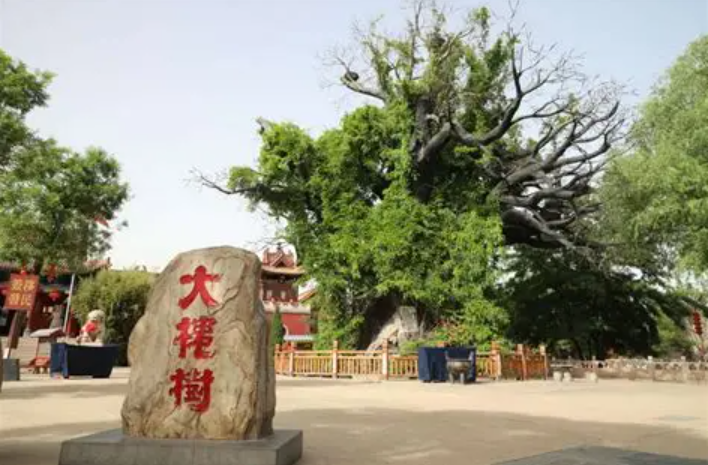
The first generation great pagoda tree has withered away through historical changes. The existing second generation great pagoda tree grew from the roots of the first generation great pagoda tree and has a history of nearly 400 years. It is about 13 meters tall, with a trunk diameter of about 1.5 meters, lush branches and leaves, and a vigorous and upright appearance. The third generation great pagoda tree grew from the roots of the second generation great pagoda tree and is over 100 years old, about 10 meters tall, with a trunk diameter of about 0.8 meters. These two pagoda trees are living witnesses to immigrant history and are regarded by Chinese people at home and abroad as symbols of their hometown. Many tourists take photos here to express their remembrance of their ancestors.
Stele Pavilion
The Stele Pavilion is located within the scenic area and was built to protect the "Site of the Ancient Great Pagoda Tree" stele. It covers an area of approximately 30 square meters. The stele is about 3 meters high and about 1 meter wide. The five large characters "Site of the Ancient Great Pagoda Tree" on the stele are vigorous and powerful. It was erected in the Qing Dynasty and is an important cultural relic confirming the immigrant history of the great pagoda tree. The Stele Pavilion adopts the traditional four-corner pavilion architectural form, with upturned eaves and corners, simple and elegant. It not only protects the stele but has also become a landmark landscape within the scenic area, attracting many tourists to stop and admire it and take photos.
Migrant Relief Sculpture
The Migrant Relief Sculpture is located in an important position within the scenic area, with a total length of about 50 meters and a height of about 3 meters. It is carved from bluestone. The relief vividly reproduces the scene of Ming Dynasty migration from the Hongtong Dahuaishu, from migrants gathering under the large pagoda tree and bidding farewell to relatives, to traveling long distances and reclaiming wasteland. The entire process is depicted lifelike, with vivid characters and rich details. Through this relief, visitors can intuitively understand the arduous journey of the migrants and feel the profound connotations of immigrant culture.
Guangji Temple
Guangji Temple was an important gathering place for migrants in history. The existing buildings were rebuilt by later generations on the original site, covering an area of approximately 5,000 square meters, and adopt Tang Dynasty architectural style. The temple has magnificent halls and flourishing incense. Its main buildings include the Mountain Gate, the Mahavira Hall, and the Guanyin Hall. Guangji Temple is not only a place for Buddhist activities but also a witness to immigrant history. The temple preserves some cultural relics and historical materials related to migration. Visitors can learn about the place of origin of migration activities here and feel the vicissitudes of history.
Food
Hongtong Steamed Rice
Hongtong steamed rice is a traditional local specialty food with a long history. It uses glutinous rice as the main ingredient, paired with red dates, bean paste, raisins, and other ingredients, and is made through procedures such as soaking and steaming. The steamed rice is golden in color, soft, glutinous, sweet, and nutritious. It can often be eaten in restaurants and snack shops around the Hongtong Dahuaishu Scenic Area. Its production process is unique, and it is a common food during local festivals and when entertaining guests, deeply loved by tourists.
Hongtong Beef Meatball Noodles
Hongtong beef meatball noodles is a distinctive noodle dish in the Linfen area and can also be tasted at the food street near the Dahuaishu Scenic Area. It features chewy noodles as the main element, paired with tender beef meatballs and a rich broth, and seasoned with chili, cilantro, and other seasonings. It tastes spicy and delicious with an endless aftertaste. The beef meatballs are made from fresh beef and have a bouncy texture, while the broth is simmered for a long time and is fragrant and rich. It is a food favored by both local people and tourists.
Linfen Hele Noodles
Linfen Hele noodles is a type of traditional Shanxi noodle dish and is relatively common in restaurants around the Dahuaishu Scenic Area. It is made by pressing dough into thin, long noodles using a hele noodle press. After cooking, it is paired with various toppings, such as meat gravy or vegetarian gravy. The hele noodles have a chewy texture, and the gravy has a rich flavor. Different toppings and side dishes can be chosen according to personal taste. This food is quick to make and has a unique flavor, making it a good choice for tourists to replenish energy between sightseeing stops.
Tickets:
Tickets are 80 yuan per person.
You can search for the official WeChat public account "Hongtong Dahuaishu" to get the latest updates or purchase tickets online.
Opening Hours:
Opening hours are adjusted according to the season. From April 1 to October 31 each year, opening hours are 7:00 to 19:30; from November 1 to March 31 of the following year, opening hours are 7:30 to 18:00. Last entry is 1 hour before closing. During important holidays such as the Spring Festival and Qingming Festival, opening hours may be appropriately extended. Visitors are advised to confirm before traveling through the scenic area's official website or telephone.
Tour Route:
After entering the scenic area, visitors can first visit the Stele Pavilion and view the "Site of the Ancient Great Pagoda Tree" stele to learn about the historical origins of the great pagoda tree; then proceed to the Second and Third Generation Great Pagoda Trees to closely experience these two ancient trees symbolizing their hometown; afterward go to the Migrant Relief Sculpture to learn about the migration process through vivid carvings; then visit Guangji Temple to experience the temple's simple atmosphere and its connection to migration activities; finally go to the Ancestor Worship Hall to worship ancestors and participate in ancestor worship activities. The entire tour takes about 3-4 hours. Visitors can flexibly arrange time at each attraction according to their own interests.
Transportation:
Bus: Within Hongtong County, visitors can take Bus No. 1 or No. 2 directly to the Dahuaishu Scenic Area. The bus fare is 1 yuan per person, and the frequency is relatively high, making travel convenient for tourists.
Train: Visitors coming from other places can take the train to Hongtong Station or Hongtong West Station. Hongtong Station is about 3 kilometers from the scenic area, and it takes about 10 minutes by taxi; Hongtong West Station is about 10 kilometers from the scenic area, and it takes about 20 minutes by taxi. Visitors can also transfer to a bus.
Self-driving: Departing from Taiyuan, visitors can drive along the Beijing-Kunming Expressway to the Hongtong exit, then follow road signs to the scenic area. The total distance is about 250 kilometers, and the drive takes about 3 hours. The scenic area has a parking lot, and the charging standard is 5 yuan per time (small vehicles).
Must-Visit Attractions:
Dahuaishu Ancestor Worship Hall: Covers an area of approximately 2,000 square meters and enshrines memorial tablets for 1,230 ancestral surnames of migrants. It is the core place for ancestor worship, solemn and dignified, where visitors can participate in large-scale ancestor worship activities.
Second and Third Generation Great Pagoda Trees: The second generation tree is about 13 meters tall, about 1.5 meters in diameter, and nearly 400 years old; the third generation tree is about 10 meters tall, about 0.8 meters in diameter, and over 100 years old. They are living witnesses to immigrant history.
Migrant Relief Sculpture: About 50 meters long and 3 meters high, carved from bluestone, vividly reproducing the scenes of Ming Dynasty migration and intuitively showing the migration process.
Stele Pavilion: Covers an area of approximately 30 square meters and protects the Qing Dynasty "Site of the Ancient Great Pagoda Tree" stele. It is an important cultural relic confirming immigrant history, and the architecture is simple and elegant.
Travel Suggestions:
It is recommended to visit around Qingming Festival, when the scenic area holds a large-scale ancestor worship ceremony, allowing a deeper experience of the atmosphere of root-seeking and ancestor worship. However, there are more tourists at this time, so planning ahead is necessary.
The scenic area offers guide services. The guide fee is about 50 yuan per time (within 5 people). Hiring a guide can help visitors gain a deeper understanding of immigrant history and the stories behind each attraction, enhancing the touring experience.
When visiting, you may bring relevant family genealogies or materials and look for the corresponding surname memorial tablet in the Ancestor Worship Hall to enhance the sense of immersion in root-seeking.
There is a cultural and creative shop in the scenic area selling souvenirs related to Dahuaishu immigrant culture, such as surname pendants and books, which can be purchased as keepsakes according to need.
It is suggested to arrange 3-4 hours for the visit so as to fully tour each attraction and feel the profound connotations of immigrant culture.
Precautions:
When entering solemn places such as the Ancestor Worship Hall, please keep quiet, observe etiquette, and respect sacrificial customs.
Please protect the trees, cultural relics, and facilities in the scenic area. Do not carve or climb at will. As precious ancient trees, the Second and Third Generation Great Pagoda Trees must not be touched or climbed.
When there is a large flow of people in the scenic area, please take care of personal belongings and avoid crowding or stampeding.
When visiting in summer, pay attention to sun protection and bring items such as a parasol and hat; in winter, temperatures are lower, so pay attention to keeping warm.
There is a dining area in the scenic area where visitors can taste local food, but prices are slightly higher than in the surrounding area. Visitors may also choose to dine outside the scenic area.