Zhengjia Polar Ocean World is located on the 2nd and 3rd floors of the West Zone, Zhengjia Plaza, No. 228 Tianhe Road, Tianhe District, Guangzhou, Guangdong Province. Situated within Zhengjia Plaza, a national 4A-level tourist attraction, the aquarium itself has been officially recognized as a National Science Popularization Education Base, a Guangdong Provincial Science Popularization Education Base, and a Guangzhou Municipal Science and Technology Popularization Base. It is also the world’s first and largest indoor aerial polar oceanarium. The project was funded by Zhengjia Group, with a total investment of RMB 680 million, of which the introduction of polar and marine life exceeded RMB 80 million. The venue covers a total area of 58,000 square meters, with an actual biological display area of 30,000 square meters, accounting for one-sixth of the total floor area of Zhengjia Plaza. The building is equipped with a complete constant temperature and humidity system. Relying on the shopping mall’s suspended structure, 12,000 tons of water were installed to complete the exhibition hall. The maximum instantaneous visitor capacity is 6,218 persons per day. The venue was jointly planned and designed by multiple international professional teams, including Japanese marine architecture master Yasui Koichi, Australia’s PTA design team, and the visual production team of the Beijing Olympics. It is divided into ten core thematic exhibition areas and 22 sub?display zones, housing more than 500 species of marine and polar organisms, with over 30,000 live specimens. It offers more than ten fixed free underwater performances throughout the year, along with diversified experiences such as science classes, overnight stays under the sea, and underwater themed shows. It is an urban marine cultural tourism complex integrating biological viewing, performances, science education, and immersive play, located in the core business district. On normal weekdays, the average daily visitor flow is about 5,000, while on holidays and during summer peak seasons it can reach up to 15,000 visitors per day.
History and Development
In 2014, Zhengjia Group proposed the idea of building a large?scale polar oceanarium inside a commercial shopping mall, leveraging the prime location of Zhengjia Plaza. The project went through site survey, overall design, and formal planning. Construction, including civil works, water systems, and display tanks, took about one year to complete and commission. On January 16, 2016, the aquarium began trial operations, and officially opened to the public on January 28 of the same year. At its opening, it introduced rare polar and marine species such as beluga whales, polar bears, sand tiger sharks, walruses, and penguins, filling a gap in large indoor polar marine venues in central Guangzhou. Within just over a year of operation, total visitors exceeded 1 million, quickly making it a landmark cultural?tourism attraction on the Tianhe Road business circle.
During its operation, the venue has continuously updated its content and pursued official recognitions. Through regular marine science lectures, hands?on study programs, and marine conservation activities, it was awarded the title of Guangdong Provincial Science Popularization Education Base in 2021, and officially entered the National Science Popularization Education Base list in 2022. It has long offered study tour channels for primary and secondary schools and social groups, fulfilling a public function in marine biology outreach in South China. At the same time, the venue continuously upgrades its performances, introducing professional underwater performance teams for mermaid shows, beluga interaction shows, underwater ballet, and other acts. It regularly launches special themed performances like Chinese?style underwater shows and parades for holidays. Leveraging the shopping mall’s round?the?clock commercial amenities, it has created a full?day tour model with daytime exploration and nighttime shows. Over the years, it has actively integrated business district resources, forming a mature operating model where commercial consumption and cultural tourism reinforce each other, setting a benchmark for large?scale aquariums inside commercial complexes in China. Additionally, the venue has issued a biodiversity protection initiative, standardizing all procedures for the introduction, breeding, and rearing of polar and marine life, supported by professional training teams and veterinary services, balancing tourism experience with wildlife conservation, and promoting the public cultural value of marine ecological protection.
Major Attractions
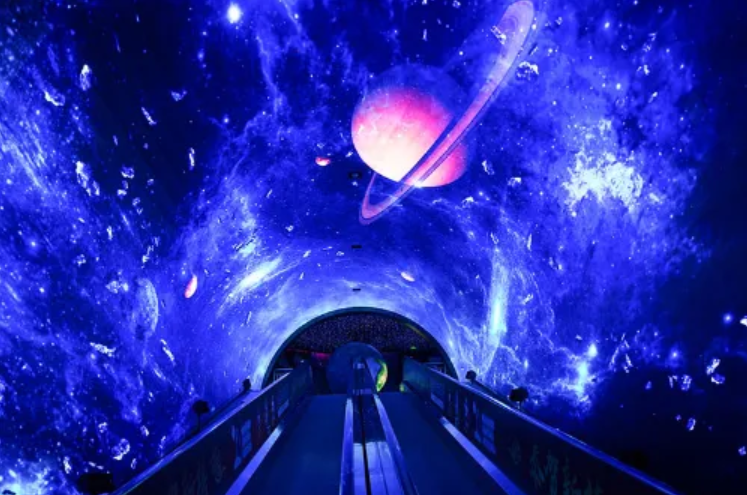
Origin of Life (270° Panoramic Canopy)
Origin of Life is the first themed exhibition area after entering. Its centerpiece is a 270?degree circular panoramic canopy, using a giant LED screen to create an immersive cosmic light?and?shadow space. Dynamic visuals show the evolution of the universe and the birth of Earth’s oceans, accompanied by surround sound for an immersive time?travel experience. The area also features a mirrored corridor that uses reflections to amplify the visual effects. This area serves as the opening science introduction, explaining basic background knowledge about the birth of the ocean. It is the first photo?taking spot after entry. The visual show runs in a loop, and there is no fixed time slot to wait for.
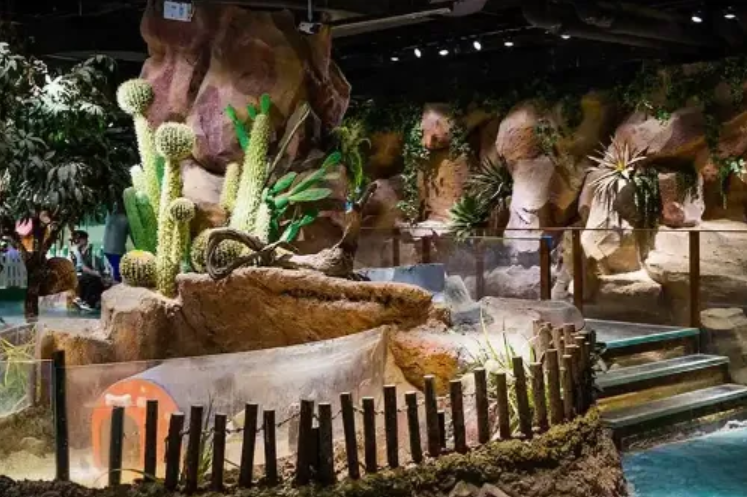
Rainforest Lakes
This area recreates the freshwater ecology of the Amazon rainforest, with simulated jungle scenery, stream landscapes, and mangrove biotopes. It displays freshwater species such as arapaima, Asian small?clawed otters, freshwater turtles, electric eels, and various tropical amphibians and reptiles. There is a small wooden bridge and separate feeding stations, with scheduled freshwater feeding shows at fixed times daily. A shallow touch pool area is available where visitors, guided by staff, can touch gentle marine creatures like starfish and sea cucumbers. Small educational panels explain the habits of freshwater organisms, combining viewing with simple interactive experiences – a popular spot for families.
Jellyfish Wonderland
Jellyfish Wonderland features a 20?meter?long colorful jellyfish corridor, with multiple acrylic jellyfish tanks on both sides and overhead. It houses over a dozen ornamental jellyfish species, including moon jellyfish, Pacific sea nettles, and rocket jellyfish. The corridor uses mirrored surfaces to extend the visual space, with gradually changing coloured lights enhancing the dreamy effect of jellyfish movement. A seated viewing area with soft background music is provided. This is an iconic photo?taking spot throughout the venue – slow?motion filming of jellyfish swimming produces high?quality footage. Information panels detail the living habits and venomous properties of various jellyfish, achieving a blend of visual appeal and education.
Vibrant Ocean & 360° Underwater Tunnel
Vibrant Ocean features multiple independent seawater display tanks housing lemon sharks, spider crabs, various reef fish, stingrays, and other coastal marine life. In the middle of the area is a full 360?degree ultra?wide?angle circular underwater tunnel, made entirely of panoramic acrylic. Fish, sea turtles, and rays swim above and around visitors, enveloping them in an underwater scene. Daily diver feeding shows are scheduled here, offering a direct view of schooling fish feeding together. The tunnel is of moderate length and provides a comfortable viewing experience – a classic must?see spot.
Encyclopedia of the Deep
This area focuses on marine humanities and marine scientific knowledge. It displays ancient sailing ship models, modern ship models, and a simulation model of the Jiaolong manned submersible, alongside marine species with distinctive physical features such as seahorses, moray eels, and garden eels. Through physical exhibits and illustrated educational texts, it covers the history of human navigation, the development of deep?sea exploration technology, and the survival characteristics of unusual marine life. It leans towards knowledge?based visiting, suitable for student study groups. The layout is gentle, allowing visitors to rest and browse the educational content.
Beluga Love (Beluga Concert Hall)
This area features an enclosed large?water exhibit housing several live beluga whales, with stepped viewing stands – the Beluga Concert Hall. At scheduled times daily, an interactive beluga performance takes place, where trainers and belugas perform bubble?ring blowing, underwater formation swimming, and eye?to?eye interactions. After the show, there is a knowledge Q&A session with small gifts for correct answers. The water environment strictly simulates the belugas’ native cold?water conditions with constant temperature control. The viewing stands are terraced; the second?floor balcony offers a broader bird’s?eye view of the entire beluga pool.
Polar Tribe
This zone uses an artificial snow?making system to create a realistic icy environment, replicating the native polar ecological scene. It houses Gentoo penguins, Arctic foxes, and Arctic wolves in separate sections, with both land and water areas – penguins can walk on ice and swim. The environment temperature and humidity are strictly controlled to match polar conditions, and the glass viewing windows are treated for low?temperature insulation. Visitors can observe the daily activities of polar animals up close, with explanatory signage about polar climates and animal adaptations, offering an intuitive experience of polar survival characteristics.
Deep?Sea Marvel (Guinness World Record Deep?Sea Display Tank)
Deep?Sea Marvel is the venue’s signature centerpiece, featuring a deep?sea display tank certified by Guinness World Records. The tank measures 40.809 meters in length, 8.3 meters in height, and 6.7 meters in width, with a water volume equivalent to that of a standard basketball court. It houses dozens of large deep?sea species such as sand tiger sharks, black?spotted rays, golden trevally shoals, and giant groupers. A daily “Golden Rain” feeding show takes place at 14:00, where large schools of fish follow the bait, creating a spectacular swimming display. The tank is also the main venue for mermaid underwater performances, and the second?floor viewing platform offers a panoramic view of the entire show – the most visually stunning spot in the entire aquarium.
Ocean Theatre
The Ocean Theatre is an enclosed indoor performance hall, regularly staging sea lion interactive shows, slapstick water acrobatics, underwater ballet, and other acts. The stage combines both land and underwater areas; sea lions perform ball?balancing, ring?tossing, hand?shaking, and other interactive routines, while human comedians add to the atmosphere. Fixed seating is provided, and all performances are included in the general admission ticket at no extra cost. Visitors should arrive early according to the schedule to secure good seats. The theatre is enclosed and warm, making it a good place to rest during the tour while watching the show.
Suggested Tour Routes:
Standard no?backtracking route:
Entrance → Origin of Life 270° Canopy → Rainforest Lakes → Jellyfish Wonderland → Vibrant Ocean 360° Underwater Tunnel → Encyclopedia of the Deep → Beluga Love Concert Hall → Polar Tribe → Deep?Sea Marvel Guinness Tank → Ocean Theatre → Exit
Express highlights route:
Entrance Canopy → Jellyfish Wonderland → Underwater Tunnel → Beluga Zone → Deep?Sea Display Tank → Ocean Theatre → Exit
Visit Tips:
The venue is air?conditioned to a relatively low temperature throughout the day, with a cool indoor environment. Even in hot summer weather, it is advisable to bring a light jacket to avoid catching a chill during a long visit.
All performances have fixed schedules. Upon entry, pick up a printed tour map that marks show times. Arrive at the performance venue 20–30 minutes early to secure a better viewing position.
Tickets purchased through official online platforms or group channels are generally cheaper than at the on?site ticket window. It is recommended to buy online one day before your visit; most tickets allow full refunds if unused, offering more flexibility.
The walking distance is considerable; the full tour takes about 3–4 hours. Wear soft, non?slip flat shoes. There are many rest seats throughout the venue for breaks.
For photography, the jellyfish corridor, the second?floor platform of the deep?sea tank, and the underwater tunnel are the top three spots. Light?colored clothing photographs better against the blue underwater backdrop. Bring a power bank for your phone.
Weekday visitor numbers are much lower than on weekends and public holidays. For a quiet experience and comfortable animal viewing, choose Monday to Friday during daytime.
Strollers are available for rent at the service desk for families with infants; they are limited and allocated on a first?come?first?served basis. The entire venue is wheelchair?accessible.
Important Notes:
Ticket sales and check?in stop daily at 21:30, and the venue closes at 22:00. Make sure to arrive before the cutoff, as no new visitors will be admitted after that time.
Do not tap on the acrylic glass walls, shout, or scream loudly when viewing any aquatic animals. Loud noise and impact can stress marine and polar animals. Staff will intervene if violations occur.
Only the designated touch pool in Rainforest Lakes permits touching of marine life. For all other tanks, do not reach in, touch, or feed any outside food. Unauthorized feeding can harm animal health; outside bait is strictly prohibited.
Drinking water is available at water stations. You may bring sealed bottled water and individually packaged odorless snacks. Do not bring take?out meals, instant noodles, or strongly scented food into the venue.
Cameras and phones may be used normally for photography. Do not use flash up close against water or animals – bright light can irritate their visual systems and disturb their natural behavior.
Visitors with claustrophobia, cold sensitivity, asthma, or similar conditions should plan their visit duration according to their own health, as some areas are semi?enclosed.
Children under 1 meter tall enter free but must be accompanied throughout by a ticket?holding adult. Each adult may bring only one free?entry child per ticket.
Food and beverages inside the aquarium are relatively expensive. If you need a full meal, you may leave the aquarium temporarily and dine at any of the many restaurants in Zhengjia Plaza. You can re?enter the aquarium with your same?day entry wristband.
Transportation:
Metro:
Line 1, Tiyu Zhongxin Station, Exit D3 – walk about 300 meters straight to the North Gate of Zhengjia Plaza, where the aquarium entrance is located.
Line 3, Tiyu Xilu Station – about a 10?minute walk to the venue.
APM Line, Tianhenan Station, Exit A – a 3?minute walk directly to the west entrance.
Line 3, Shipaiqiao Station, Exit A – walk 600 meters to the West Gate of Zhengjia Plaza.
Bus:
Tiyu Zhongxin Bus Stop: take B1, B2, B3, B25, 540, or 545 and get off directly at the North Gate of Zhengjia Plaza.
Tiyu Donglu Bus Stop: take No. 18, 45, 54, 195, 230, or 245 and walk 2 minutes to the West 2nd entrance of the aquarium.
Driving:
Drive into the underground parking lot of Zhengjia Plaza, park, and follow the signs in the West Zone on the 2nd floor to the aquarium ticket checkpoint.
Ride?hailing:
Set your destination to the West Gate or North Gate of Zhengjia Plaza. After getting out, follow the indoor signs for about a 2?minute walk to the ticket entrance.
Opening Hours:
Zhengjia Polar Ocean World is open 365 days a year without closure. The general visiting hours are from 10:00 to 22:00 daily. Ticket sales and check?in stop fixedly at 21:30; after that, no new visitors are admitted, but those already inside may continue until the official closing and clearance at 22:00. The venue distinguishes daytime and nighttime sessions: daytime visiting is from 10:00 to 18:00, with daytime check?in ending at 17:30; nighttime entry is from 18:00 to 21:30. Night tickets are relatively cheaper than daytime tickets, but some minor educational shows may be reduced during the evening. Visitors can choose the ticket type according to their schedule. Customer service hours match the check?in hours, operating daily from 10:00 to 21:30.
Ticket Price:
RMB 220 per person.