The Guangdong Science Center is located at No. 168, Kexue Road, Xiaoguwei Street, Panyu District, Guangzhou City, Guangdong Province, within the Guangzhou University City. It is a National AAAA Tourist Attraction and a National Science Popularization Education Base. The venue integrates four core functions: science education, exhibition of scientific and technological achievements, academic exchange, and leisure tourism. In 2018, it was certified by Guinness World Records as the largest science center/museum in the world. The project covers a total area of 453,900 square meters, with a floor area of 140,700 square meters and a total investment of approximately 1.9 billion RMB. Its architectural design draws inspiration from Guangzhou's city flower, the kapok, and a technology aircraft carrier, giving it a highly recognizable appearance and making it one of Guangzhou's landmark buildings. The center houses 13 permanent themed exhibition halls, multiple temporary special exhibition areas, and 5 professional science cinemas. It also features an 80,000-square-meter ecological lake, an outdoor science exploration park, and thousands of Lingnan-style plants. With over 700 sets of exhibits, many of which are interactive and hands-on, it serves as a significant public welfare science education destination for the Guangdong-Hong Kong-Macao Greater Bay Area.
History and Culture
In 1996, Guangdong Province formally proposed the construction of a large-scale comprehensive science activity venue to enhance the province's science infrastructure and advance the strategy of revitalizing Guangdong through science and education. In 1997, the Guangdong Provincial People's Government approved the preparation of the Guangdong Science Center, and the project officially commenced. An international architectural design competition was held, and the design proposal "Kapok Technology Aircraft Carrier" by Central South Architectural Design Institute was selected.
On March 28, 2004, the groundbreaking ceremony took place. After nearly five years of construction, the center officially opened to the public on September 26, 2008. Since its operation, it has continuously hosted science exhibitions, science experiment performances, youth study tours, academic forums, and other activities, becoming a member of the Asia-Pacific Science Center Association and the World Science Center Association.
In 2018, the Guangdong Science Center received Guinness World Records certification, solidifying its status as a global large-scale science venue. It has since earned over a hundred honors, including the China Civil Engineering Zhan Tianyou Award and the National Advanced Collective for Science Popularization. The center is committed to promoting basic sciences and cutting-edge technologies to the public, spreading scientific spirit, and facilitating the exchange of science resources and youth science education in the Greater Bay Area.
Main Attractions
Children's World Exhibition Hall
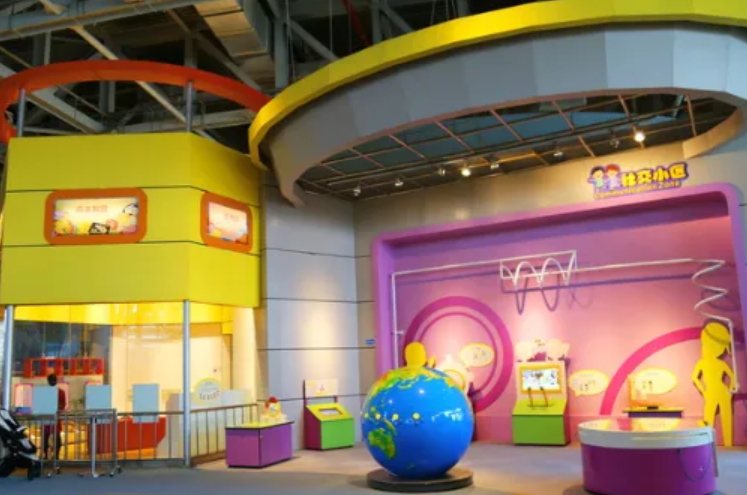
Designed for young children, this hall offers a science enlightenment space with interactive zones such as "Hands-On," "My Home and Community," "My City," "My World," and "My Workshop." Through simulated city traffic, construction sites, mini supermarkets, and water science experiments, children aged 3–10 can explore scientific phenomena in everyday life while developing curiosity, safety awareness, and environmental consciousness.
Experiments and Discoveries Exhibition Hall
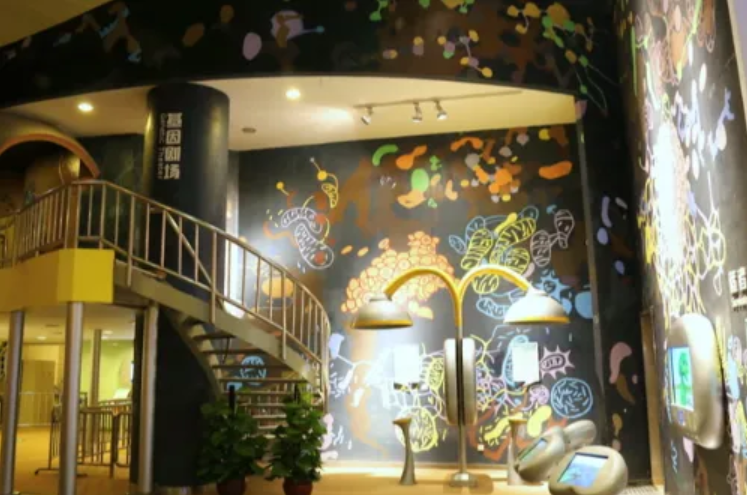
This hall features areas like the Science Discovery Plaza, Mechanics Lab, Electromagnetics Lab, Optics Lab, and Life Sciences Lab, showcasing classic physics and foundational science experiment devices. All exhibits encourage hands-on interaction, allowing visitors to observe phenomena in mechanics, electromagnetism, and optics, making it ideal for primary and secondary school students to engage in immersive scientific practice.
Transportation World Exhibition Hall
Focusing on land, sea, and air transportation, this hall presents knowledge about automotive engineering, rail transit, ships, and aircraft. Interactive experiences include driving simulators, vehicle structure demonstrations, and traffic safety activities. A variety of transport models help visitors understand the engineering behind modern transportation systems.
Human and Health Exhibition Hall
Divided into three areas—"Mysteries of the Human Body," "Technology and Health," and "My Healthy Life"—this hall features 42 exhibits, including human organ models and health monitoring devices. It explains human anatomy, modern medical technologies, balanced diets, and exercise routines, encouraging visitors to adopt healthy lifestyles.
Perception and Cognition Exhibition Hall
This hall explores brain cognition, optical illusions, and psychological perception through light and mirror installations. Visitors can experience visual traps and learn about sensory and brain information processing, gaining insights into basic cognitive science.
Dreaming of the Stars Exhibition Hall
A newly added immersive aerospace-themed hall, it features a 360° starry dome, a C919 cockpit simulator, and a Mars rover control station. Interactive activities include rocket launch simulations, space life experiences, and astronaut training exercises, showcasing deep-space exploration and manned spaceflight technologies.
Ocean Exploration Exhibition Hall
Structured around four themes—"Ocean Origins," "Ocean World," "Ocean Exploration," and "Ocean Protection"—this hall uses dome theaters, deep-sea equipment models, and holographic displays to introduce marine geology, marine life, polar expeditions, and deep-sea exploration technologies while promoting marine conservation.
Science Cinema Cluster
The center boasts five professional science cinemas: IMAX Giant Screen, Dome Theater, 4D Theater, 3D Theater, and Virtual Flight Motion Theater. These cinemas screen regular science films on nature, astronomy, oceans, and space, offering immersive audiovisual experiences. Tickets for the cinemas are sold separately.
Outdoor Science Exploration Park
Adjacent to the 80,000-square-meter ecological lake, this park features dozens of outdoor interactive science exhibits and over 2,000 Lingnan plant species. Combining science exploration with leisure, visitors can take lakeside walks and try outdoor science devices after touring the indoor halls.
Suggested Tour Route:
North Gate → Dreaming of the Stars Exhibition Hall → Ocean Exploration Exhibition Hall → Transportation World Exhibition Hall → Human and Health Exhibition Hall → Perception and Cognition Exhibition Hall → Experiments and Discoveries Exhibition Hall → Children's World Exhibition Hall → Outdoor Science Exploration Park
Tour Tips:
Recommended visit duration: 6–8 hours. Arrive in the morning to allow ample time for interactive exhibits.
Popular attractions like the C919 simulator and space experience require advance reservation via the official WeChat account.
Families with young children should visit the Children's World Exhibition Hall in the morning to avoid afternoon crowds.
If planning to watch a science film, check showtimes upon arrival and plan your schedule accordingly.
Light meals are available in the center. You may also bring water and light snacks, but avoid strong-smelling foods.
Pick up a floor map at the entrance to optimize your route and reduce unnecessary detours.
Peak crowds occur during holidays; avoid entering between 10:00 AM and 2:00 PM on weekends if possible.
Important Notes:
The center is closed every Monday for routine maintenance, unless Monday falls on a statutory holiday.
Follow staff instructions when using interactive exhibits; do not strike or damage any displays.
Large luggage can be stored at the checkroom. Strollers and large carts are discouraged due to narrow corridors.
Some cinema and physical experience activities have height and age restrictions—please check signs before participating.
Drones are prohibited, and flash photography near precision exhibits is not allowed.
If you need to leave temporarily for meals, get a re-entry stamp at the exit to return later the same day.
The Children's World Exhibition Hall restricts entry by age; adults are not allowed to enter unaccompanied by children.
Transportation:
Bus: Take Bus No. 35, 801, Panyu 202, or 383 to the "University City Science Center" terminal stop.
Metro: Take Guangzhou Metro Line 4 to "University City North" Station, exit D, then transfer by bus or shared bike.
Intercity Railway: Get off at "Guangzhou University City" Station on the East Ring Intercity Railway and walk about 400 meters to the main entrance.
Driving: Navigate to the North Gate Parking Lot. Paid parking is available at official rates.
Ride-hailing: Set your destination to the North Gate drop-off point; avoid stopping on main roads.
Opening Hours:
Tuesday to Friday: 9:30 AM – 4:30 PM (last entry at 4:00 PM)
Saturday, Sunday, and statutory holidays: 9:30 AM – 5:00 PM (last entry at 4:30 PM)
Closed every Monday for maintenance (unless Monday is a holiday). Special closures will be announced on official platforms. Cinema showtimes are independent of exhibition hours and are updated daily on the official WeChat account.
Ticket Prices:
Admission: 60 RMB per person.