Mingtang Mountain Scenic Area is located in Hetu Town, Yuexi County, Anqing City, Anhui Province. It is a national 4A-level tourist attraction, a national forest park, and a core area of the Dabie Mountain National Geopark. Belonging to the Dabie Mountain range, it derives its name from Emperor Wu of the Han Dynasty, who once set up an altar here to offer sacrifices to heaven. The main peak rises to 1,563 meters above sea level, and the total scenic area covers 54.2 km2, with a core sightseeing zone of 13.7 km2. The scenic area features amazing pines, grotesque rocks, seas of clouds, waterfalls, valleys, and primeval forests, combining majestic, rugged, perilous, serene, and elegant natural landscapes. It also integrates ancient Wan culture, Zen Buddhism, and red revolutionary culture, making it a comprehensive mountain-type scenic destination in the Dabie Mountains that offers eco-tourism, leisure vacations, outdoor activities, and cultural experiences. Modern facilities include a high-altitude glass plank road (130 m long), a high-altitude suspension bridge (198 m long), and a sightseeing cable car (1,380 m long), making it a well?equipped and uniquely scenic attraction in southwestern Anhui.
History and Culture
Mingtang Mountain has a profound historical heritage. Its name dates back to the Western Han Dynasty, when Emperor Wu of Han toured the south and ascended the mountain, establishing an open?air altar for sacrificial rites to heaven—hence the name "Mingtang" (Bright Hall). As one of the core mountains of the ancient Wan Kingdom, it carries the nature worship and sacrificial culture of the early inhabitants of southwestern Anhui, with many ancient sacrificial sites and legendary tales still preserved.
During the Ming and Qing dynasties, the mountain was an important religious center in southwestern Anhui, where Buddhism and Taoism coexisted and flourished. Ancient temples and Taoist monasteries were built among the peaks, with enduring incense offerings, creating a distinctive religious cultural landscape. Some remnants of these religious structures remain, bearing witness to the area’s historical prosperity.
In modern times, Mingtang Mountain was a vital part of the Dabie Mountain red revolutionary base. Revolutionary forces such as the 28th Red Army once waged guerrilla warfare here, leaving behind numerous red cultural relics and revolutionary stories. Today, it serves as an important site for promoting revolutionary spirit and conducting patriotic education.
Major Attractions
Main Peak Area
The Main Peak Area is the core of the scenic zone. The main peak, at 1,563 m, is the second highest peak in the Dabie Mountains. From the summit, visitors can enjoy panoramic views spanning two provinces (Anhui and Hubei) and three counties. Scattered across the area are several striking peaks—Tianzi Peak, Shennü Peak, Shengmu Peak—with peculiar rock formations and ancient pines. The peaks are often shrouded in mist and clouds, making this the best spot for viewing seas of clouds, sunrises, and sunsets, and it represents the essence of the area’s natural beauty.
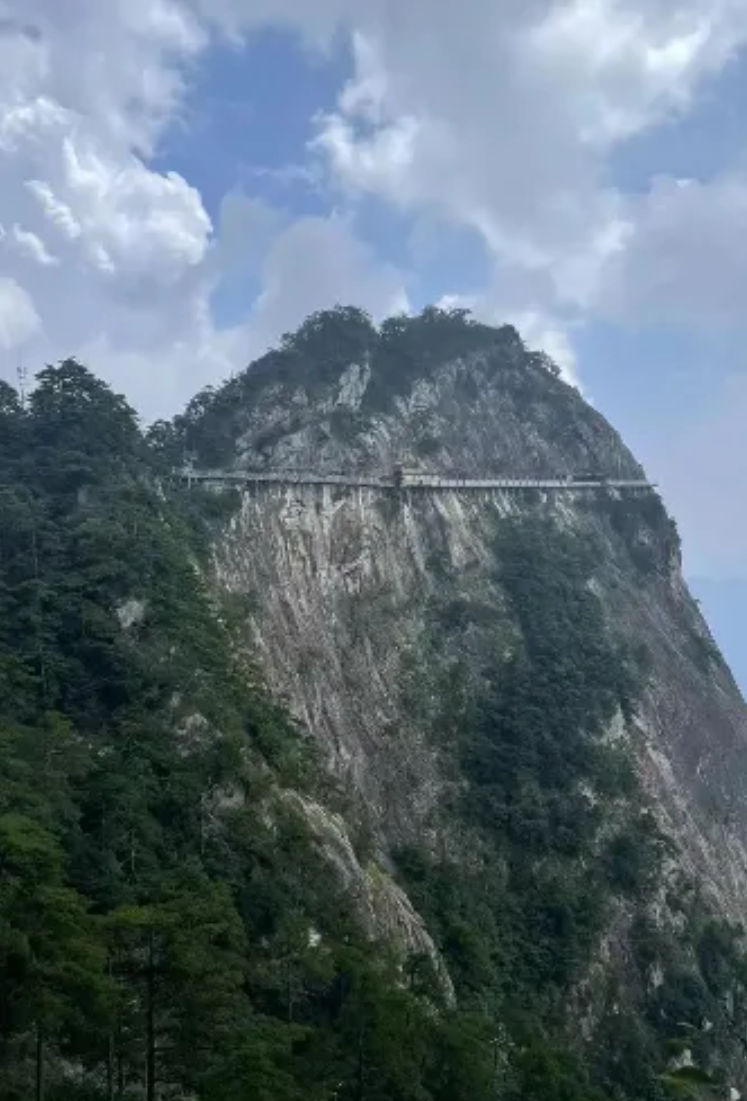
High?Altitude Glass Plank Road
Built on the cliffs of the main peak, the glass plank road is 130 m long and 1.5 m wide, with a vertical drop of 116 m. Made of transparent tempered glass, it offers an exhilarating sensation of walking above the void while providing stunning views of canyons, forests, and peaks. It is the scenic area’s iconic “internet?famous” attraction.
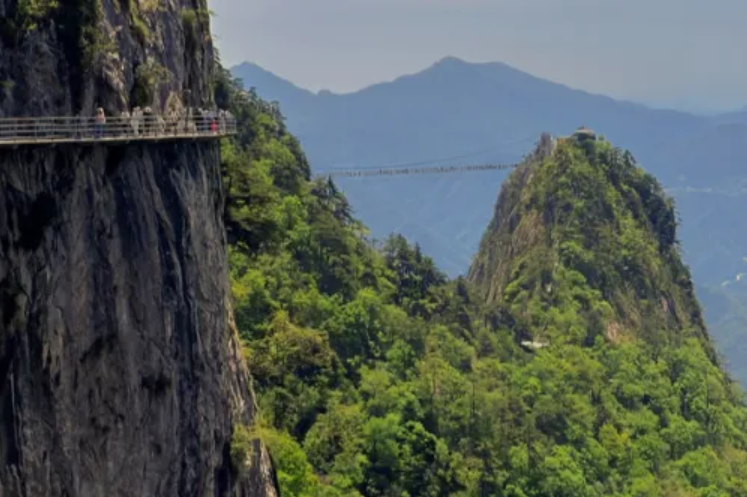
High?Altitude Suspension Bridge
Connecting two main peaks, the suspension bridge spans 198 m in length and 2 m in width, with a vertical height of 108 m above the canyon. The bridge sways slightly as you cross, offering both challenge and great photo opportunities—it is a key passage linking core viewpoints and an ideal place to capture panoramic mountain vistas.
Huluhe (Gourd River) Canyon Area
This canyon zone extends 3.5 km and features gorges, waterfalls, streams, and pools. Dense vegetation and clear water run through the area, with scenic spots such as Gourd Pool, Baizhang Waterfall, and Fairy Waterfall. The negative oxygen ion concentration is extremely high, making it an ideal place for eco?leisure and summer retreat.
Qingsongling (Green Pine Ridge) Area
Characterized by vast stands of primeval Huangshan pines, this area has a forest coverage of over 98%. The ancient pines take on various shapes, and the gentle forest trails are suitable for visitors of all ages. Several viewing platforms offer distant views of the surrounding peaks, allowing visitors to experience the tranquility and beauty of the Dabie primeval forest.
Yueliangxia (Moon Gorge) Area
This deep and narrow gorge is 2.8 km long, dominated by grotesque rocks, serene pools, and streams. The canyon maintains a cool climate with year?round flowing water, preserving a pristine natural environment—an excellent spot for hiking and nature immersion.
Suggested Tour Routes:
Full Route: Visitor Center → Cable Car Lower Station → Cable Car Upper Station → Qingsongling Area → High?Altitude Glass Plank Road → High?Altitude Suspension Bridge → Main Peak Area → Yueliangxia Area → Huluhe Canyon Area → Scenic Exit
Short Essence Route (3 hours): Visitor Center → Huluhe Canyon Area → Qingsongling Area → High?Altitude Glass Plank Road → High?Altitude Suspension Bridge → Main Peak Area → Cable Car descent → Scenic Exit
Travel Tips:
Recommended visiting time: 4–6 hours for the full route; 3 hours for the short essence route. Choose according to your fitness level.
Wear non?slip sports shoes and light clothing; bring a small amount of drinking water and snacks.
Best time for sea of clouds: 6:00–9:00 AM. Best sunrise times: spring 5:30–6:30 AM, summer 5:00–5:30 AM.
For visitors with seniors or children, prioritize gentle sections like Qingsongling and Huluhe Canyon to reduce climbing intensity.
The best season to visit is autumn (October–November), when the mountains are covered with red leaves and the weather is pleasant.
For the glass plank road and suspension bridge, travel light and avoid carrying heavy items for a better experience.
Important Notices:
Flammable/explosive items, controlled knives, and other dangerous goods are prohibited. Outdoor smoking and open fires are forbidden.
The glass plank road and suspension bridge have limited capacity per passage. Please queue orderly, and do not run, jump, or shake the bridge.
Mountain weather is changeable; check the forecast in advance. In thunderstorms, do not ascend to the summit and stay away from cliffs and large trees.
Do not capture or pick wild animals or plants—protect the ecological environment.
Some mountain stair sections are steep; seniors and children must be accompanied at all times. Do not venture into undeveloped areas.
Follow operational rules for the cable car, glass plank road, and other facilities, and obey staff instructions.
Mobile phone signals are weak in some areas; it is advisable to travel in groups and avoid hiking alone.
Transportation:
Self?driving: From Hefei, take the G40 Jingguang Expressway → Yuexi Interchange → G318 National Road → Hetu Town → Mingtang Mountain Scenic Area (approx. 180 km). From Wuhan, take the G42 Hurong Expressway → Yuexi → Mingtang Mountain (approx. 220 km).
Public transport: Take a high?speed train to Yuexi Station, then transfer to the Yuexi–Mingtang Mountain tourist shuttle bus. Departure times: 7:30, 9:00, 13:00, 15:00. The ride takes about 40 minutes.
Parking: The scenic area offers a large free parking lot with capacity for 500 small vehicles and 50 tour buses.
Opening Hours:
Peak season (March 1 – November 30): 7:30 AM – 5:30 PM; last entry at 4:00 PM.
Low season (December 1 – February 28): 8:00 AM – 5:00 PM; last entry at 3:30 PM.
The cable car, glass plank road, and other facilities operate during the same hours as the scenic area. Hours may be adjusted in severe weather; please refer to on?site announcements.
Ticket Price:
160 RMB/person (includes round?trip shuttle bus glass plank road glass bridge).