Huizhou Ancient City (officially the Huizhou Ancient City Scenic Area) is located in Huicheng Town, She County, Huangshan City, Anhui Province. It is a national 5A-level tourist attraction and, together with Lijiang Old Town (Yunnan), Pingyao Ancient City (Shanxi), and Langzhong Ancient City (Sichuan), is known as one of the Four Great Ancient Cities of China. It is also the core birthplace and concentrated showcase of Huizhou culture. The scenic area covers a total of 24.7 square kilometres, with a core scenic area of 132,000 square metres. The extant ancient city wall measures 2,436 metres in total length, and over 400 well?preserved Ming and Qing dynasty buildings remain within the city. The architecture is predominantly in the Huizhou style, integrating memorial archways, ancient streets, residential houses, government offices, and gardens. It retains the complete urban layout and architectural character of the ancient Huizhou prefecture and is one of the best?preserved Ming?Qing prefectural cities in China.
History and Culture
Huizhou Ancient City was first established in the Qin dynasty. Since She County was founded during the Qin period, the city has a history of over 2,200 years. From the Yining era of the Sui dynasty onward, it became the seat of the Huizhou prefectural government. Throughout the Tang, Song, Yuan, Ming, and Qing dynasties, it remained the political, economic, and cultural centre of Huizhou. The unique layout of having both the prefectural and county governments in the same city lasted for more than 1,300 years, making it a quintessential example of the ancient Chinese system of co?located prefectural and county administration.
Huizhou Ancient City is the primary carrier of Huizhou culture. Numerous cultural traditions originated here, including Huizhou studies, Huizhou merchants, Huizhou opera, Huizhou cuisine, Huizhou architecture, Neo?Confucianism of the Xin’an school, and the Xin’an school of painting. During the Ming and Qing dynasties, Huizhou merchants flourished, and the ancient city became an important birthplace and spiritual home for them. The large number of memorial archways, ancestral halls, and government buildings preserved in the city fully document the lineage systems, imperial examination culture, and official bureaucratic system of Huizhou, holding exceptional historical, cultural, and artistic value.
In 1986, Huizhou Ancient City was designated a National Historical and Cultural City by the State Council. In 2014, it successfully became a national 5A?level tourist attraction. Today, it remains a core site for the inheritance, protection, and presentation of Huizhou culture and serves as an important physical testament for the study of ancient Chinese local administrative systems and regional culture.
Major Attractions
Huizhou Prefectural Government Office
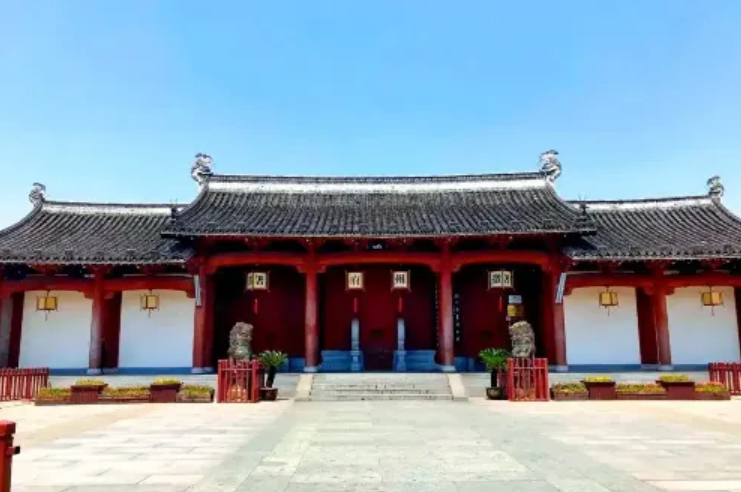
The Huizhou Prefectural Government Office is the central building of the ancient city. It served as the administrative centre of Huizhou Prefecture during the Ming and Qing dynasties. Originally built in the Sui dynasty, the current structure was reconstructed in 2009 following the layout of the Hongzhi period of the Ming dynasty. It covers an area of 2.4 hectares, with a floor area of 9,948 square metres. Facing south, the complex is arranged along a central axis, with the main gate, ceremony gate, main hall, second hall, third hall, and rear garden in sequence. It is the largest and most completely preserved prefectural office complex in the Jiangnan region, faithfully reproducing the official and domestic scenes of a traditional prefectural yamen.
Xu Guo Stone Archway
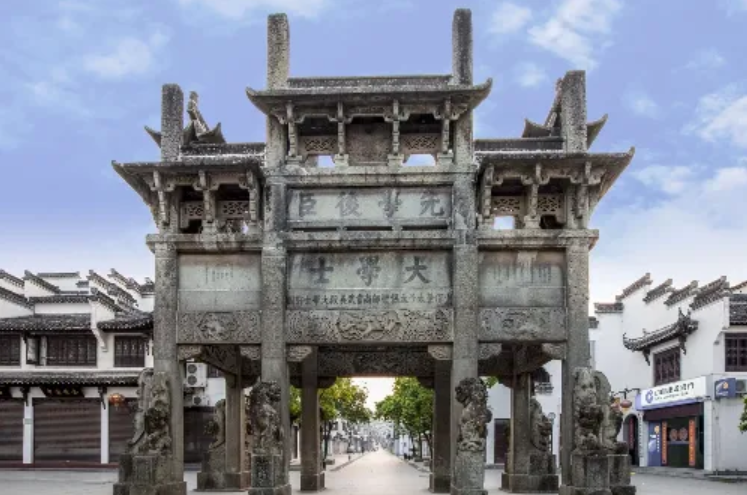
Also known as the Grand Academician’s Archway, this structure stands in the centre of the ancient city. It was built in the twelfth year of the Wanli reign of the Ming dynasty (1584) for Grand Secretary Xu Guo. It is a rare eight?pillar memorial archway in China, rising 11.4 metres in height, 11.5 metres in length, and 6.77 metres in width. Constructed entirely of bluish?grey granite, the archway is exquisitely carved with dragons, phoenixes, flowers, birds, and auspicious beasts. It is the only surviving octagonal archway in China and is often called the “Arc de Triomphe of the East.” It is a National Key Cultural Relic Protection Unit.
Huizhou Ancient City Wall
The city wall was first built in the Sui dynasty and rebuilt during the Ming dynasty. The existing wall is 2,436 metres long, 7 metres high, and 3–5 metres wide. It has four gates: Renhe Gate (east), Ziyang Gate (south), Linjiang Gate (west), and Gongji Gate (north). Built against hills and beside rivers, the wall served both defensive and flood?control purposes. It is one of the best?preserved Ming?dynasty prefectural city walls in China, and walking along it offers a panoramic view of the ancient city.
Yuliang Dam
Located about 1 kilometre downstream from the ancient city on the Lian River, the Yuliang Dam was first built in the Tang dynasty and rebuilt in the Ming dynasty. It is the oldest and largest ancient barrage on the upper reaches of the Xin’an River. The dam is 138 metres long, 27 metres wide at the base, and 6 metres wide at the top, constructed entirely of bluish?grey stone. It is a National Key Cultural Relic Protection Unit and is praised as the “Dujiangyan of the South,” representing the outstanding achievements of ancient Huizhou hydraulic engineering.
Doushan Street
Doushan Street is the best?preserved Ming?Qing ancient street within Huizhou Ancient City, named for its location at the foot of Doushan Hill. The street is over 300 metres long, paved with bluestone slabs, and lined with Ming? and Qing?period Huizhou?style residences, ancestral halls, shops, and ancient wells. It was a prosperous settlement of Huizhou merchants. The white walls, black tiles, and high horse?head gables on both sides fully display the elegant charm of Huizhou vernacular architecture.
Tao Xingzhi Memorial Hall
Located inside the ancient city, the Tao Xingzhi Memorial Hall was built in honour of the renowned educator Tao Xingzhi. The site was originally the Chongyi School, where Tao studied in his childhood. It covers an area of 1,700 square metres, with a floor space of 3,600 square metres. The hall exhibits Tao Xingzhi’s life story, writings, manuscripts, and personal objects, and it is one of the major Tao Xingzhi memorial halls in China.
Suggested Tour Route:
Huizhou Ancient City Visitor Centre → Huizhou Prefectural Government Office → Xu Guo Stone Archway → Doushan Street → Tao Xingzhi Memorial Hall → Huizhou Ancient City Wall → Yuliang Dam
Travel Tips:
Recommended visit duration: 3–4 hours, allowing ample time to tour the core attractions and experience Huizhou culture in depth.
It is advisable to arrive before 9:00 a.m. to avoid peak crowds and enhance your visit.
When visiting the prefectural office, consider following a guided tour to learn about the historical layout and stories behind the yamen system.
Set aside about 30 minutes for the Yuliang Dam to appreciate both the hydraulic engineering and the natural scenery of the Lian River.
Pair your visit with local Huizhou specialities, such as hairy tofu, Huizhou baked cakes, and She County baked cakes.
Wear comfortable flat?soled shoes, as much of the walking is on bluestone?paved streets.
Important Notices:
Climbing on ancient buildings, archways, or city walls is prohibited. Defacing or damaging any cultural relics is strictly forbidden.
The Xu Guo Stone Archway and Yuliang Dam are key cultural relic protection units; do not touch or climb them.
Flammable or explosive items are not allowed inside the ancient city, and smoking is prohibited within historical buildings.
During public holidays, visitor numbers are high; please keep your belongings secure and follow orderly routes.
Some alleys in the city are narrow; please do not stop or block thoroughfares.
Respect local cultural customs and heritage protection regulations, and be a courteous visitor.
Transportation:
High?speed rail: Take a train to Shexian North Railway Station. Upon exit, take Bus No. 101 or No. 2 directly to Huizhou Ancient City Scenic Area (about 20 minutes by bus).
City bus: Within She County, take Bus No. 1, 2, 3, or 4 to the Huizhou Ancient City stop.
Self?driving: Navigate to the Huizhou Ancient City parking lot. There is a large parking area with ample spaces.
Taxi: A taxi ride from downtown She County to the ancient city takes about 5–10 minutes and is reasonably priced.
Opening Hours:
Summer (1 March – 30 November): 08:00 – 17:30
Winter (1 December – 28/29 February): 08:00 – 17:00
All attractions within the scenic area are open during these hours; there are no separate closing times for individual sites.
Admission:
The ancient city is free to enter. However, some individual attractions inside the city require a separate ticket.