Saihanba National Forest Park is located in Weichang Manchu and Mongolian Autonomous County, Chengde City, Hebei Province. It belongs to the Bashang Plateau region and is a national 4A-level tourist attraction, as well as one of the largest forest parks in northern China. The scenic area features "forest sea and snow plains, grasslands and lakes, and wetlands and meadows" as its core characteristics. It integrates ecological sightseeing, leisure vacations, science education, and red tourism, showcasing the ecological miracle of turning desertified sandy land into green mountains and clear waters. The park has a total operating area of 1.406 million mu (about 93,733 hectares), of which the forest coverage rate is as high as 82%. It has major tree species such as larch, Mongolian pine, and spruce, forming a vast artificial forest sea. The average altitude in the park is 1,500-1,940 meters, and the climate is cool. The average summer temperature is about 23°C, making it a summer resort; in winter, it is covered in silver, making it a good destination for ice and snow tourism. There are no large buildings in the scenic area, mainly natural landscapes and ecological facilities, preserving the original natural style and ecological environment.
Historical Culture
Historically, Saihanba was once an important site of the Qing Dynasty royal hunting ground "Mulan Autumn Hunt." During the Kangxi period, it was established as part of the royal hunting ground and has a profound royal cultural heritage. At that time, the area had abundant water and grass and gathered birds and animals. It was a place for the royal family and nobles to hunt and train troops, leaving behind many legends and historical records related to royal hunting.
In modern times, Saihanba experienced severe ecological destruction. By the early 1960s, the primitive forests had almost completely disappeared, turning into desertified sandy land where "yellow sand obscures the sky, and birds have no trees to perch on." In 1962, the state established the Saihanba Mechanical Forest Farm. Three hundred sixty-nine pioneers from 19 provinces and regions across the country shouldered the mission of "blocking the source of sand for the capital and conserving water for Beijing and Tianjin" and began an arduous afforestation undertaking.
After the unremitting efforts of three generations of Saihanba people, under extremely harsh natural conditions, a total of 1.151 million mu of forest was planted, building the largest artificial forest sea in northern China and creating the human miracle of turning desert into oasis. This nurtured the Saihanba spirit of "remembering the mission, arduous entrepreneurship, and green development." In 2017, the Saihanba Mechanical Forest Farm won the United Nations' highest environmental honor, the "Champions of the Earth Award." Its ecological governance achievements have become a model for global ecological restoration, and the Saihanba spirit has also been included in the spiritual pedigree of the Chinese Communists, becoming valuable spiritual wealth.
Main Attractions
Qixing Lake Wetland Park
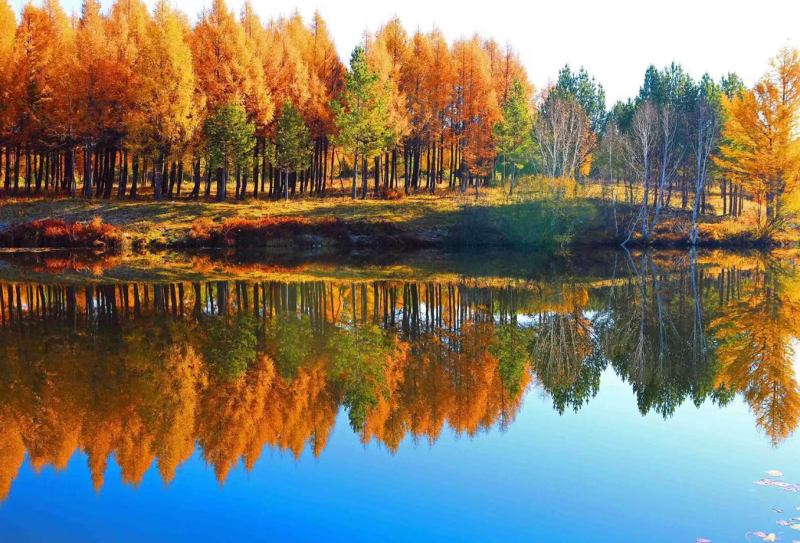
Qixing Lake Wetland Park is one of the core attractions of Saihanba National Forest Park. It is named because seven natural lakes of different sizes and shapes are distributed among the surrounding mountains, resembling the Big Dipper. The park has a total area of about 1,000 mu, of which the water area is about 300 mu. The wetland ecosystem is complete and is a habitat for many water birds and fish. Dense aquatic plants and birch forests grow around the lakes. In summer, the grass is green and flowers bloom everywhere; in autumn, the layered forests are dyed in brilliant colors; in winter, the lake surface is frozen and covered in silver. The scenery differs in each season. A wooden boardwalk with a total length of about 5 kilometers has been built in the park. Tourists can stroll along the boardwalk and enjoy the lake and mountain views and wetland scenery. It is an excellent place for photography and leisure.
Saihan Tower
Saihan Tower is located on the main peak of Saihanba at an altitude of 1,800 meters. The tower is 42.8 meters high and has 7 floors. It is one of the landmark buildings of the scenic area. The tower body is designed in an antique style, with flying eaves and brackets, magnificent and grand. From the top of the tower, visitors can enjoy a 360-degree panoramic view of Saihanba's vast forest sea, broad grasslands, and rolling mountains, taking in the integrated ecological landscape of "forest sea, grassland, and lakes." The tower houses an exhibition hall displaying Saihanba's historical changes, afforestation process, and animal and plant specimens, allowing tourists to learn about Saihanba's ecological construction achievements while climbing high and looking far. Tower admission is included in the scenic area through ticket. It is recommended to go on a clear morning or evening to enjoy the magnificent scenery at sunrise or sunset.
General's Lake
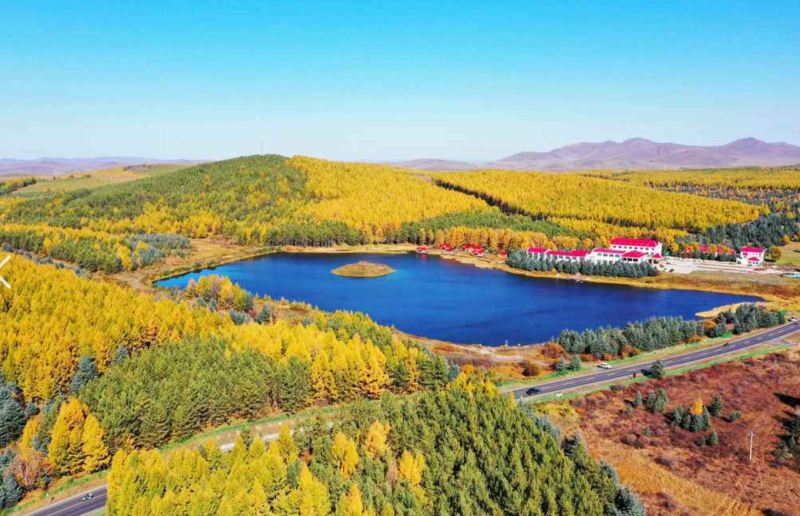
General's Lake is a natural lake with a long history, located deep in the Saihanba grassland, with an area of about 1.5 square kilometers. Its name originates from the Battle of Ulan Butong during the Kangxi period. Legend has it that Tong Guogang, the uncle of Emperor Kangxi, died in battle here. "Paozi" is a local colloquial term for lake, hence the name General's Lake. It is not only a historical site but also a representative of grassland and lake landscapes. Around the lake shore are vast grasslands and sparse forests. In summer, the water and grass are abundant, and water birds such as wild ducks and swans often inhabit the area; in winter, the lake surface is frozen, and the grassland is vast and desolate, offering a different scene. Tourists can ride horses and stroll by the lake, feel the vastness of the grassland and the weight of history, and also taste local specialty foods such as roast whole lamb and milk tea to experience grassland customs.
Golden Lotus Reflecting the Sun
"Golden Lotus Reflecting the Sun" is one of Saihanba's famous landscapes, located in the golden lotus viewing area in the transition zone between grassland and forest. Golden lotus is a characteristic flower of Saihanba. Its flower shape resembles a lotus, and its color is golden yellow. It blooms from July to August each year. Golden lotuses spread across the mountains and plains shine in the sunlight like a golden ocean, contrasting with the surrounding green grasslands and birch forests, forming a colorful picture. The scenic area has viewing platforms and walking paths, making it convenient for tourists to view and take photos. Golden lotus not only has high ornamental value but can also be used as medicine or brewed as tea. Tourists can buy dried golden lotus locally as a souvenir.
Shenlong Lake
Shenlong Lake is a natural lake formed by converging streams, located deep in the Saihanba forest, with an area of about 50 mu and a water depth of about 10 meters. The lake water is clear to the bottom, surrounded by dense larch and birch forests. The environment is quiet and the air is fresh. Legend has it that a giant dragon once lived here, hence the name Shenlong Lake. This is a natural oxygen bar. Tourists can walk along the wooden boardwalk by the lake, listen to birdsong in the forest and the sound of flowing water, and feel the tranquility and peace of nature. Cold-water fish grow in the lake, making it a good place for anglers (subject to scenic area regulations). There are also rest pavilions nearby for tourists to rest and picnic (please note to protect the environment and take away trash).
Food Roast Whole Lamb
Roast whole lamb is a signature dish of Saihanba and the Bashang region. It uses locally free-range sheep. After cleaning, it is coated with a secret seasoning and slowly roasted over charcoal for 3-4 hours. The roasted whole lamb has a crispy skin, tender meat, and a rich aroma. It generally needs to be reserved in advance and is suitable for 8-10 people to share. The price is about 800-1,200 yuan per lamb, depending on the size of the sheep. On the grassland, roast whole lamb is often paired with a bonfire party. Tourists can enjoy food while watching ethnic songs and dances, experiencing rich grassland customs.
Hand-held Mutton
Hand-held mutton is a traditional Mongolian dish and is relatively common in restaurants in Saihanba. Fresh mutton (mostly lamb legs and lamb chops) is selected and boiled in clear water without adding too many seasonings, preserving the original flavor of the mutton. When eating, people hold it with their hands and dip it in seasonings such as chive flower sauce and fermented bean curd. The meat is tender and not greasy. A portion of hand-held mutton costs about 80-120 yuan and can be paired with milk tea or mare's milk wine, allowing visitors to experience the boldness and simplicity of grassland food culture.
Bashang Youmian
Youmian is a characteristic staple food of the Bashang region, made from hulless oats. It is rich in protein and dietary fiber. Saihanba's youmian has various preparation methods, including youmian nests, youmian fish, and youmian dumplings. It is usually eaten with mutton soup, sauerkraut gravy, and so on. It has a chewy texture and is nutritious. A youmian set meal costs about 30-50 yuan. It is one of the daily staple foods of local people and a must-try food for tourists experiencing Bashang cuisine.
Milk Tea
Milk tea is a traditional drink of Saihanba and Mongolian regions. It is made by boiling brick tea with milk or goat milk and can be flavored with salt or sugar according to taste. Local milk tea is mostly salty, with a rich milky aroma and tea aroma. It can quench thirst, warm the body, and can also be eaten with milk tofu, roasted rice, and so on. It can be tasted in restaurants around the scenic area and in herdsmen's homes. A cup of milk tea costs about 5-10 yuan and is an important part of experiencing grassland life.
Tickets
As of August 12, 2025, the combined ticket is 130 yuan per person. No official WeChat public account was found.
Opening Hours
Opening hours are adjusted according to the season. In summer (April 1-October 31), opening hours are 7:00-18:00; in winter (November 1-March 31 of the following year), opening hours are 8:00-17:00. Affected by weather and fire prevention policies, some attractions in winter may be closed or have adjusted opening hours. For example, General's Lake and Qixing Lake may be closed after heavy snow due to road snow accumulation. From late October each year to early April of the following year is the fire prevention period. Entering the scenic area requires compliance with fire prevention regulations, and carrying fire sources is strictly prohibited. It is recommended to consult the latest opening information through the scenic area's official website or telephone before traveling, especially when going in winter, to confirm road conditions and attraction opening conditions.
Tour Route
It is recommended to arrange 2-3 days to visit Saihanba National Forest Park. The following is a classic tour route: On the first day, arrive at the scenic area in the morning and first visit Qixing Lake Wetland Park. Stroll along the wooden boardwalk and enjoy the wetland lakes and forest landscape. This takes about 2 hours. Have lunch near the scenic area at noon. In the afternoon, go to Saihan Tower, climb the tower to overlook the panoramic forest sea, visit the exhibition hall inside the tower, and then go to the Golden Lotus Reflecting the Sun scenic area (best in July-August) to view golden lotuses. The whole process takes about 3 hours. In the evening, go to General's Lake, enjoy the grassland sunset, experience grassland customs, and stay at a resort near General's Lake. On the second day morning, ride horses or experience grassland activities at General's Lake, then go to Shenlong Lake, hike along the lakeside boardwalk, and feel the tranquility of the forest lake. This takes about 2.5 hours. At noon, have a picnic near Shenlong Lake or return to the town for lunch. In the afternoon, visit other lesser-known attractions such as Taifeng Lake and Qiansongba, arranged flexibly according to time. Return to the accommodation in the evening to rest. On the third day morning, depending on the weather, choose to watch the sunrise (Saihan Tower or grassland highlands are recommended), then buy local specialties, pack luggage, and return. This route allows for a comprehensive experience of Saihanba's forests, grasslands, lakes, wetlands, and other landscapes, balancing natural sightseeing and cultural experience.
Transportation:
Self-driving
From Beijing: Drive along the Jingcheng Expressway, Daguang Expressway, and Capital Ring Expressway, exit at Weichang North, then drive along Siyu Line and Qisai Line. The total distance is about 450 kilometers, and the drive takes about 6-7 hours.
From Chengde: Drive along the Daguang Expressway, Jingjia Line, and Qisai Line. The total distance is about 180 kilometers, and the drive takes about 3-4 hours.
Roads in the scenic area are mainly asphalt roads, with some sections being gravel roads. Road conditions are good in summer. In winter, some sections may be covered with snow and ice, so drive cautiously. It is recommended to rent a four-wheel-drive vehicle. There are multiple parking lots in the scenic area, and parking is free.
Public Transportation
From Beijing: You can take a long-distance bus to Weichang Manchu and Mongolian Autonomous County at Liuliqiao Passenger Station. There are 1-2 buses per day, the fare is about 100 yuan, and the journey takes about 6 hours. After arriving at Weichang County, transfer to a shuttle bus to Saihanba. There are 3 buses per day (8:00, 11:00, 14:00), the fare is about 30 yuan, and the journey takes about 2 hours.
From Chengde: Chengde North Bus Station has shuttle buses to Weichang County, one every 30 minutes, fare about 30 yuan, journey about 2 hours. After arriving at Weichang County, transfer to a shuttle bus to Saihanba (same as above).
Tourist Lines
Travel agencies in Beijing, Tianjin, and other cities operate tourist lines to Saihanba, including transportation, tickets, accommodation, etc. The itinerary is mostly 2-3 days, and the price is about 800-1,500 yuan per person. It is suitable for tourists who do not like self-driving.
During peak season (July-August, October), there are more tourist line departures; in off-season, there are fewer departures, so advance booking is required.
Must-visit Attractions:
Qixing Lake Wetland Park: Area about 1,000 mu, with 7 lakes distributed like the Big Dipper. The wetland ecosystem is complete. A 5-kilometer wooden boardwalk allows visitors to stroll and enjoy the scenery. It is a representative of Saihanba's wetland landscape and is beautiful in all seasons, especially suitable for summer and autumn visits.
Saihan Tower: A 42.8-meter-high, 7-story antique-style tower located on the main peak at an altitude of 1,800 meters. From the top, visitors can overlook the panoramic view of forest sea, grassland, and lakes. The tower contains an exhibition on Saihanba's history and culture. It is a must-visit place to learn about the Saihanba spirit and enjoy the panoramic view.
General's Lake: A 1.5-square-kilometer grassland lake that carries the historical memory of the Battle of Ulan Butong. Visitors can experience grassland horseback riding and observe water birds, feeling the integration of grassland and history. The snow scenery in winter is vast, and the water and grass in summer are abundant, each with its own characteristics.
Golden Lotus Reflecting the Sun: From July to August, golden lotuses bloom, and the golden mountains contrast with the green grasslands. It is Saihanba's iconic flower landscape, with viewing platforms, suitable for photo check-ins. Visitors can learn about the medicinal value of golden lotus and local ecological protection achievements.
Travel Suggestions:
The best seasons to visit are June-August (summer escape, grassland flower sea) and October (autumn appreciation, golden forest sea). In summer, bring sunscreen and a light jacket (large temperature difference between morning and evening, average temperature 23°C, about 15°C in the morning and evening). In autumn, bring a thick jacket (temperature about 5-15°C).
The scenic area is large and attractions are scattered. It is recommended to travel by self-driving or chartered car. Chartered car costs about 300-500 yuan per day (depending on vehicle model), allowing flexible itinerary arrangements.
For accommodation, it is recommended to choose resorts or homestays in or near the scenic area. During peak season (July-August, National Day), book 1-2 weeks in advance. Prices are about 200-800 yuan per night. In off-season, prices are lower, about 100-300 yuan per night.
Carry enough drinking water and dry food. Dining in the scenic area is relatively expensive, and some remote attractions have no dining spots. You can purchase supplies in Weichang County and bring them in.
Respect local ethnic minority customs. When riding horses or experiencing activities on the grassland, follow the guide's instructions and pay attention to safety. Protect the ecological environment and do not pick flowers or litter.
Photography enthusiasts are advised to bring telephoto lenses and tripods. In autumn, sunrise is about 6:00-6:30, and sunset is about 17:30-18:00. Plan shooting times in advance.
Precautions:
Saihanba is located on a plateau with a relatively high altitude. Some tourists may experience altitude sickness (such as headache and dizziness). It is recommended to avoid strenuous exercise, walk slowly, and rest or seek medical attention promptly if feeling unwell. There are medical points in the scenic area.
During the fire prevention period (late October-early April of the following year), carrying fire sources into the scenic area is strictly prohibited. Smoking and barbecuing in forest areas are strictly prohibited. Violators will face fines or even legal responsibility. Security checks are conducted at the scenic area entrance.
In summer, there are many mosquitoes, so bring mosquito repellent, floral water, and other mosquito prevention supplies. The grassland area has strong ultraviolet rays, so take sun protection measures, wear hats and sunglasses, and apply sunscreen.
Some road sections in the scenic area have weak signal. It is recommended to download offline maps in advance and inform family of your itinerary. Self-driving tourists should check vehicle conditions and prepare anti-skid chains (in winter).
Respect the production and life of local herdsmen. Do not enter private pastures or drive livestock without permission. When buying specialties, ask about prices in advance to avoid disputes.
Follow scenic area regulations. Do not feed wild animals at will, and do not damage vegetation or facilities. In severe weather (such as heavy rain or strong winds), follow the instructions of scenic area staff and evacuate to a safe area promptly.