Qipan Mountain Scenic Area is located in Huangbeiping Township, Zanhuang County, Shijiazhuang City, Hebei Province. It lies on the eastern foothills of the middle section of the Taihang Mountains and is a national 4A-level tourist attraction. It is known for its ecological forest landscape, with a forest coverage rate of over 90%, fresh air, and an excellent ecological environment. The scenic area covers a total area of 36 square kilometers, of which the main scenic area is 20 square kilometers. The scenic area is famous for its "Four Wonders": pine waves, apricot rain, ancient roads, and strange peaks. It also has multiple antique-style pavilions and rest corridors, such as the Mountain Gate Archway, Songyun Pavilion, and Wenbird Pavilion, providing visitors with a comfortable touring environment.
Historical Culture
Zanhuang County, where Qipan Mountain is located, has a long history. According to the "Zanhuang County Annals," during the Zhou Dynasty, the Zanshan Mountain in Zanhuang territory was granted the title of Zanhuang Mountain after King Mu of Zhou defeated the Quanrong army while campaigning against minority tribes. In the 16th year of the Kaihuang era of the Sui Dynasty (596 AD), a county was established here and named Zanhuang County after Zanhuang Mountain. Qipan Mountain is located around this ancient historical county, carrying the area's profound historical heritage.
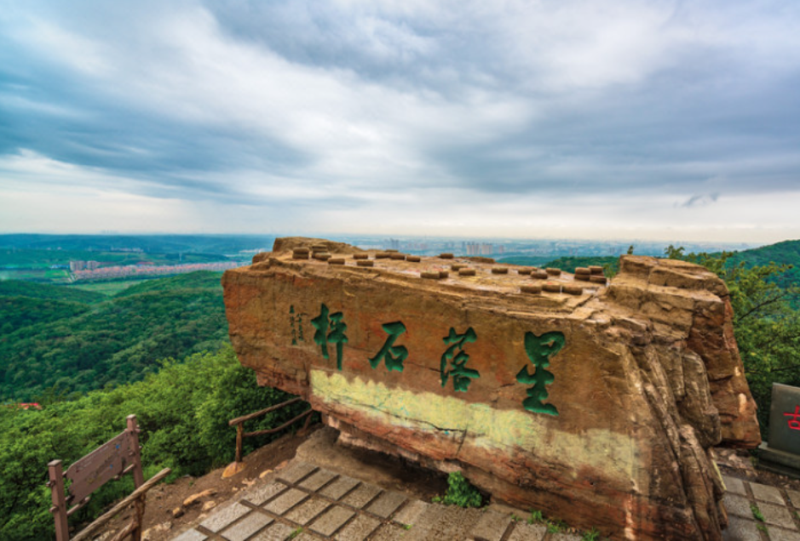
There is an ancient legend about how Qipan Mountain got its name. In ancient times, a shepherd often grazed his sheep on this mountain and always saw two old men playing chess at the summit. One day, the shepherd climbed to the summit to watch the game. During this time, he ate a leftover peach beside the chessboard. In the blink of an eye, the old men disappeared, leaving only a natural chessboard stone. After descending the mountain, the shepherd found that his flock had long disappeared and his shepherd's whip had rotted. When he returned to the village, he found everything completely changed and realized that many years had passed. Thereafter, this mountain was called Qipan Mountain. This legend adds a mysterious color to the scenic area.
The scenic area also preserves many historical relics, such as the Great Wall and ancient passes built by the Tuoba clan during the Northern Wei Dynasty, which witnessed the history of ancient military defense; and the Sixianggong Stronghold and Dushu Cliff, where Li Hua and his nephew took refuge during the An Lushan Rebellion in the Tianbao era of the Tang Dynasty. These relics carry stories from specific historical periods and have important historical and cultural value.
Main Attractions
Qipan Peak
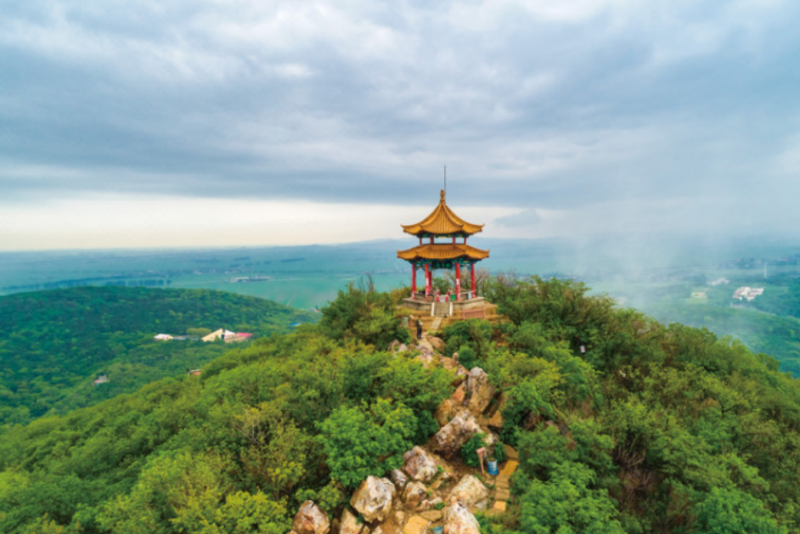
Qipan Peak is the highest peak of Qipan Mountain, with an altitude of 1,318 meters. The mountain is majestic and towering, with great momentum. Standing at the summit, visitors can take in the magnificent scenery of surrounding peaks competing in beauty and layered ridges. It is an excellent place in the scenic area for climbing high and looking far, especially at dawn or dusk, when sea of clouds and sunrise views are even more enchanting.
Ten-Mile Apricot Blossom Valley
Ten-Mile Apricot Blossom Valley is a highly distinctive attraction in Qipan Mountain. The valley contains 330,000 apricot trees, forming nearly ten thousand mu of apricot blossom forest. Every March in spring, apricot blossoms bloom competitively, with pink and white flowers covering the mountains and fields like clouds and snow, filling the air with fragrance. The valley also features several special check-in points, such as Apricot Blossom Pool, Apricot Blossom Light Rain, and Ancient Apricot King, allowing visitors to immersively enjoy the beautiful scene of blooming apricot blossoms.
Sleeping Camel Peak
Sleeping Camel Peak is composed of a group of peaks, with its main peak being Sixianggong Stronghold, at an altitude of 1,342.3 meters. The mountain shape is unique, and its overall outline is remarkably lifelike, resembling a quietly lying camel, hence the name Sleeping Camel Peak. Not only is the terrain steep here, but historical relics are also preserved, blending natural and cultural landscapes.
Northern Wei Great Wall
The Northern Wei Great Wall is located at the pass in front of the ancient road within the scenic area. It was built by the Tuoba clan during the Northern Wei Dynasty for military defense. Although after a thousand years of vicissitudes part of the wall is damaged, its original grand scale can still be seen. It is important physical material for studying ancient Great Wall architecture and military history. Walking along it, visitors can feel the weight of history.
Forest Sea Sky Ladder
Forest Sea Sky Ladder is a distinctive attraction opened in the scenic area to facilitate visitors' touring. The sky ladder is built along the mountain and winds through the dense forest. Climbing along the sky ladder, visitors can closely approach towering ancient trees, listen to birdsong in the forest, and feel the vitality of nature. It is a great place to experience the forest ecology.
Food
Braised Free-Range Chicken with Mushrooms
Braised free-range chicken with mushrooms is a signature specialty dish of the farmhouse restaurants at the foot of Qipan Mountain. It uses free-range chickens raised by local farmers, with firm and tender meat, paired with fresh wild mushrooms picked from the mountain. After being simmered slowly over low heat for several hours, the chicken fully absorbs the fragrance of the mushrooms. The broth is rich and mellow, and highly nutritious. It is the first choice for visitors to taste local flavors.
Wild Vegetable Pancakes
Wild vegetable pancakes are made from various wild vegetables growing on the slopes around the scenic area, such as shepherd's purse and purslane. After being washed and chopped, they are mixed with flour, eggs, seasonings, and other ingredients, then formed into pancakes and fried until golden. They are crispy on the outside and tender on the inside, with the fresh fragrance of wild vegetables. They are green, healthy, and nutritious, a delicious dish that reflects nature's gifts.
Iron Pot Stewed Fish
Farmhouses at the foot of Qipan Mountain are known for iron pot stewed fish. The fish used are mostly fresh live fish caught from nearby reservoirs, ensuring the freshness of the ingredients. During cooking, traditional large iron pots are used, with slow stewing over firewood, paired with tofu, vermicelli, and other ingredients. The fish is tender and flavorful, and the broth is rich and mellow. The scene of dozens of iron pots stewing at the same time has also become a unique sight.
Tickets:
As of August 10, 2025, tickets are 40 yuan per person. You can search for the official WeChat public account "Hebei Qipan Mountain Scenic Area" to get the latest updates.
Opening Hours:
The scenic area is open all year round from 8:00 to 18:00, with entry stopping at 18:00 daily. Visitors are advised to arrange their itineraries reasonably and enter the scenic area within the prescribed opening hours to ensure sufficient time to experience the attractions.
Tour Routes:
For different groups of visitors, the scenic area recommends the following tour routes: The Vitality Exploration Grand Loop is suitable for hiking enthusiasts. Starting from the scenic area entrance, it follows the outermost loop, passing Hongfeng Pass and heading toward the Divine Camel Cloud Rest area, finally reaching the highest peak, Qipan Peak. Along the way, visitors can enjoy multiple main attractions such as Qipan Peak and Wenchang Peak. The entire route takes about 5-6 hours, allowing a full experience of the scenic area's natural and cultural landscapes. The Parent-Child Leisure Small Loop starts from Huacheng Pavilion, first heading to Qipan Peak and the Northern Wei Great Wall. This section is relatively gentle and suitable for children and the elderly. After returning, visitors then climb part of the grand loop. The entire route takes about 3-4 hours and is relaxed and pleasant. The Forest Stroll Divine Camel Cloud Rest route goes up 200 meters from Huacheng Pavilion to the Divine Camel Cloud Rest attraction, then descends via the Forest Sea Sky Ladder to Qipan Mountain Homestay. Some sections of this route are steep and not very suitable for the elderly or visitors with knee problems. The entire route takes about 2-3 hours, allowing visitors to experience the tranquility and comfort of the mountain forest.
Transportation:
Self-driving: From Shijiazhuang city, take Pingshe Expressway, transfer to "Hengxi Expressway," get off at Zhangshiyan Toll Station, and then drive about 10 minutes to reach the scenic area. The total drive takes about 1.5 hours. From Beijing, drive along the Beijing-Hong Kong-Macao Expressway, about 3.5 hours. From Tianjin, take the Jinshi Expressway, about 4 hours.
Public transportation: At Shijiazhuang Station, take bus No. 3 or No. 50 to Shengnan Passenger Transport Station, then take a long-distance bus to Zanhuang County (fare about 9 yuan). After arriving in Zanhuang County, transfer at Zanhuang Traditional Chinese Medicine Hospital South Station to a small bus to Qipan Mountain Scenic Area (fare about 4 yuan). Bus schedules may be adjusted according to passenger flow, so it is recommended to check in advance.
Must-Visit Attractions:
Qipan Peak: The highest peak in the scenic area, with an altitude of 1,318 meters. Climbing to the top offers a panoramic view of the surrounding magnificent scenery. It is an excellent place for climbing high, looking far, and viewing sunrise and sea of clouds.
Ten-Mile Apricot Blossom Valley: It has 330,000 apricot trees and nearly ten thousand mu of apricot blossom forest. When apricot blossoms bloom in spring, it is as picturesque as poetry. It is a highly ornamental attraction in the scenic area.
Sleeping Camel Peak: The main peak, Sixianggong Stronghold, is 1,342.3 meters above sea level. The mountain shape is unique, resembling a lying camel, and it also integrates historical relics, combining natural and cultural landscapes.
Northern Wei Great Wall: A historical relic of the Northern Wei Dynasty, witnessing ancient military history and possessing profound cultural heritage. It is an important attraction for understanding local history.
Travel Tips:
Because moss grows on some stone slab paths in the scenic area, making them slippery, it is recommended to wear slip-resistant hiking shoes and choose comfortable sportswear for easier hiking.
In summer, bring mosquito repellent, a sun hat, and other items to take precautions against mosquitoes and sun. In the rainy season, prepare a raincoat in case of sudden rain. It is recommended to pack a power bank, tissues, and a small amount of cash in your backpack, as signal strength is weak in some areas of the scenic area.
There are no restaurants or other dining facilities in the scenic area, so visitors need to bring dry food and drinking water in advance, such as energy bars, self-heating meals, and fruit, to replenish energy.
It is recommended to arrange your visit during the spring apricot blossom season or autumn. In spring, you can enjoy apricot blossoms; in autumn, the climate is cool and the scenery is pleasant, giving a better touring experience.
Precautions:
There are free parking lots at the scenic area gate, homestay, and second mountain gate. During peak tourist seasons, there are many vehicles, so it is advisable to arrive early to secure a parking space.
There are few toilets in the scenic area and they are sparsely distributed. Visitors are advised to use the restroom near the scenic area entrance before entering.
In winter, some mountain roads may be closed due to snow accumulation, icing, and other reasons. Visitors planning to go in winter may call the scenic area in advance to inquire about opening conditions.
During the tour, walk along designated routes and do not enter undeveloped areas without authorization. Pay attention to safety underfoot during mountain climbing, especially when the road is slippery in rainy weather.
Protect the scenic area's environment, do not litter randomly, and take waste out of the scenic area or put it into designated trash bins to jointly protect the ecological environment.