The Goguryeo Historical Sites and Scenic Area is located in Ji'an City, Tonghua City, Jilin Province. It is a national 5A-level tourist attraction centered on the historical remains of the Goguryeo dynasty, covering important cultural relics such as Gungnae City, Wandu Mountain City, and the tombs of kings and nobles. The scenic area covers a total area of about 43 square kilometers and is distributed across Ji'an's urban area and surrounding mountainous areas. It is one of the most completely preserved Goguryeo cultural site clusters in the world and was inscribed on the World Cultural Heritage List in 2004. The scenic area currently contains 42 Goguryeo-period sites, including 14 royal tombs, 26 noble tombs, and 2 city sites, comprehensively showcasing the politics, military, culture, and burial system of the Goguryeo dynasty (37 BC–668 AD). Among them, the murals and architectural forms of the royal and noble tombs are of extremely high historical and artistic value and are important physical materials for studying the history of ancient ethnic groups in Northeast Asia.
History and Culture
Goguryeo was an ethnic minority regime in ancient Northeast China. It was founded in 37 BC by Jumong at Holseunggolseong (present-day Huanren, Liaoning). In 3 AD, the capital was moved to Gungnae City (present-day Ji'an). Thereafter, Ji'an served as the political, economic, and cultural center of Goguryeo for 425 years. In 427 AD, Goguryeo moved its capital to Pyongyang, but Ji'an retained an important status as a "secondary capital."
The sites within the scenic area bear witness to the rise and fall of Goguryeo. As the capital city of Goguryeo, Gungnae City was first built in 3 AD. Its city wall has a perimeter of 2,713 meters and its surviving height is 3–4 meters. It is one of the best-preserved ancient capital city sites in Northeast Asia. Wandu Mountain City was Goguryeo's military defense city and formed a capital system with Gungnae City consisting of a "plain city and a mountain city." This layout is unique in the capital planning of ancient Northeast Asia.
The murals in the royal and noble tombs are the essence of Goguryeo culture. Their content includes scenes such as hunting, warfare, banquets, and mythology, such as the "Four Deities" (Azure Dragon, White Tiger, Vermilion Bird, and Black Tortoise) and "Fuxi and Nüwa." They integrate the characteristics of Central Plains culture and nomadic culture. In 2004, the "Capital Cities and Tombs of the Ancient Koguryo Kingdom" were inscribed on the World Cultural Heritage List, including Gungnae City, Wandu Mountain City, 12 royal tombs, 26 noble tombs, and the Stele of King Haotai within the scenic area, becoming a shared cultural heritage of China and North Korea.
Major Attractions
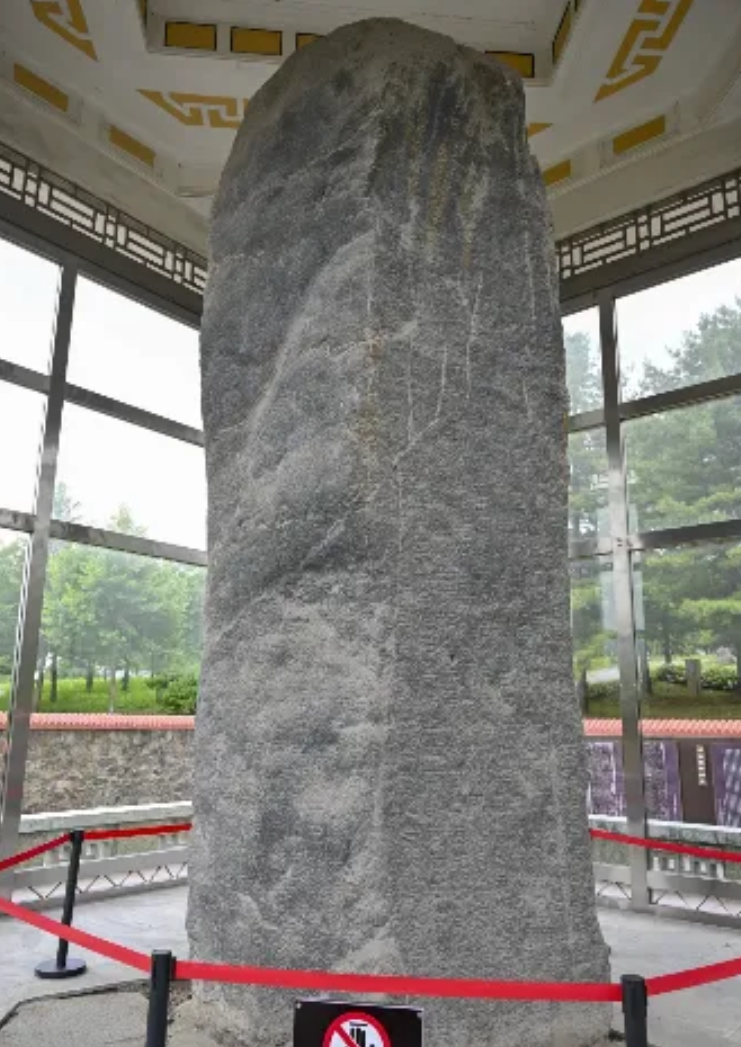
Stele of King Haotai
The Stele of King Haotai is a commemorative stele for the 19th king of Goguryeo, Talkde (King Haotai). It was erected in 414 AD and is located east of the Tomb of King Haotai. The stele body is made of breccia tuff, 6.39 meters high and 1.34–2 meters wide, with no stele cap. The four sides of the stele body are inscribed with clerical script text totaling 1,775 characters, recording the life of King Haotai and the expansion of Goguryeo. It is an important document for studying Goguryeo history. The inscription involves relations with Silla, Baekje, and Wa, providing key evidence for clarifying ancient international relations in Northeast Asia. At present, the stele body is protected inside a stele pavilion, and visitors can view the original inscription up close.
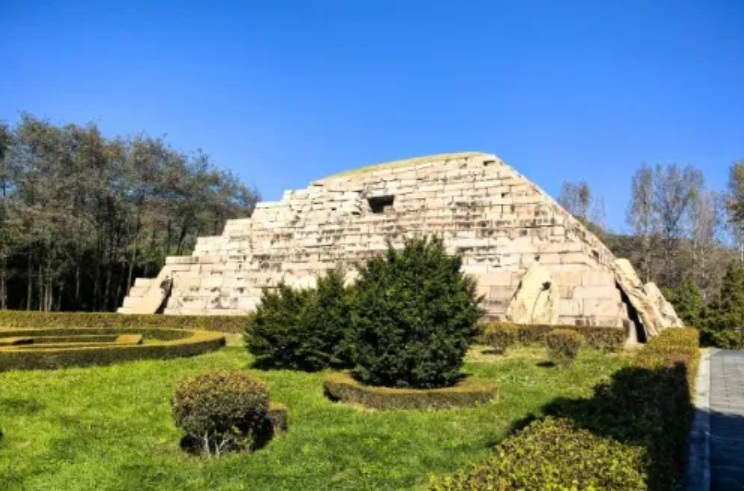
Tomb of the General
The Tomb of the General is the tomb of the 20th king of Goguryeo, King Jangsu. It was built in the 5th century AD. Because the tomb resembles an Egyptian pyramid, it is called the "Oriental Pyramid." The tomb is a stepped stone chamber tomb with a square altar. It is 13.1 meters high, and the side length of the tomb base is 31.58 meters. It was built from more than 1,100 granite blocks in 7 tiers. Each tier is paved with stone strips, and the edges are built with stone strips to form an "eave"-like structure. There was once a large stone sculpture on the top of the tomb, but only the base remains. The tomb chamber is located at the center of the top and contains a stone coffin platform. It was robbed in earlier years. There are 3 accompanying tombs around the tomb. The overall layout is rigorous, and it is a representative work of Goguryeo royal tomb architecture.
Gungnae City
Gungnae City is the site of the Goguryeo capital, located in the center of Ji'an's urban area. The city wall was made of rammed earth and faced with stone on the outside. It has a perimeter of 2,713 meters and 6 city gates. The east, west, and north walls survive, with a remaining height of 3–4 meters and a wall base width of 7–10 meters. Remains of palaces, government offices, and other buildings have been found inside the city, and a large number of Goguryeo-period roof tiles, pottery, and other artifacts have been unearthed. Today, the Gungnae City site has been incorporated into the urban park system. Visitors can stroll along the city wall remains and experience the layout of the ancient capital. Display boards have also been set up around the city wall to introduce the historical changes of Gungnae City.
Wandu Mountain City
Wandu Mountain City is located on the Longshan mountain range 2.5 kilometers northwest of Ji'an's urban area. It was Goguryeo's military defense city and formed a "dual-city system" capital with Gungnae City. The mountain city has a perimeter of 6,947 meters, with the highest point reaching 676 meters in elevation. The city wall was built using the mountain terrain. The surviving wall remains are 2–5 meters high, and there are 5 city gates. Inside the city are remains such as a palace site, a water reservoir, and an observation platform. Among them, the palace site is located in the center of the mountain city and covers an area of about 35,000 square meters. It was once a place where Goguryeo kings spent the summer and handled government affairs during wartime. The observation platform is located at the highest point of the mountain city and overlooks Gungnae City and the surrounding plains, reflecting its military defense function. The architecture of the mountain city makes full use of natural terrain and is an outstanding example of ancient mountain fortress construction.
Yushan Noble Cemetery
The Yushan Noble Cemetery is distributed on the slopes of Yushan northeast of Ji'an's urban area. It is a concentrated area of Goguryeo noble tombs. There are currently 26 tombs, mostly earthen mound stone chamber tombs, and some tombs have exquisite murals painted on their inner walls. Among them, the murals in Tomb No. 5 of Wukuifen are the most famous. The four walls and ceiling of the tomb chamber are painted with the "Four Deities" and "Immortals." The colors are bright and the lines are smooth. They were painted with mineral pigments and remain well preserved after a thousand years. The mural content integrates the immortal thought of Central Plains culture with scenes of Goguryeo life and is a peak work of Goguryeo art. Some tombs are currently open to visitors, who can enter the tomb chamber through the corridor to view the murals.
Suggested Itinerary:
Recommended one-day itinerary: Arrive at the scenic area visitor center at 8:30 a.m. After purchasing tickets, first visit the Stele of King Haotai (40 minutes) to learn about the historical background of Goguryeo; at 9:10, go to the Tomb of the General (1 hour) to view the architectural structure of the "Oriental Pyramid"; at 10:30, go to the Gungnae City site (1 hour) and stroll along the city wall to experience the layout of the capital. At noon 12:00, dine in Ji'an's urban area and taste Ji'an hot pot. At 1:30 p.m., go to Wandu Mountain City (2 hours) and visit the palace site, observation platform, etc., overlooking the entire mountain city; at 3:30 p.m., go to the Yushan Noble Cemetery (1.5 hours) and visit the murals in Tomb No. 5 of Wukuifen; at 5:00 p.m., end the itinerary. If time permits, go to the banks of the Yalu River in the evening to enjoy the border scenery between China and North Korea.
Travel Tips:
The best seasons for visiting are April–May and September–October. In April–May, mountain flowers are in full bloom; in September–October, the climate is cool and suitable for outdoor activities. Summer is rainy, so bring rain gear; winter is cold, and some attractions are closed.
Most sites in the scenic area are open-air sites. It is recommended to wear comfortable sports shoes, protect yourself from the sun in summer, and bring a sun hat and water bottle.
History and culture enthusiasts can rent an audio guide at the visitor center (30 yuan per unit, 200 yuan deposit), or hire a guide (100 yuan per time, shareable among multiple people) to gain a deeper understanding of the background of the sites.
The lighting inside mural tombs is dim, and flash photography is prohibited to avoid damaging the murals; it is recommended to bring a flashlight (some tomb chambers allow their use).
Ji'an's urban area is small, so accommodation can be arranged in the urban area for convenient access to the attractions. Budget hotel prices are about 150–200 yuan per night.
Notes:
All sites in the scenic area are key cultural relics protection units. Touching, climbing, and carving are prohibited. Violators will face fines, and serious cases will be pursued for legal responsibility.
When entering mural tombs, visitors must comply with regulations. Food and drinks are prohibited, and staying inside the tomb for more than 10 minutes is prohibited to protect the murals from damage.
Some sections of Wandu Mountain City are mountain roads, steep and narrow, and slippery on rainy days. Pay attention to safety. It is recommended to follow signboards and not enter unopened areas without authorization.
Respect the customs and habits of local ethnic minorities such as the Korean ethnic group. When dining in Korean ethnic restaurants, observe etiquette and do not make noise.
During peak seasons (May Day and National Day holidays), there are many tourists. It is recommended to arrive at the scenic area 1 hour in advance and avoid the peak period from 10:00 to 14:00; mural tombs have visitor limits, so register for visits as early as possible.
Transportation:
Bus: Within Ji'an's urban area, buses No. 1 and No. 3 can reach Gungnae City, the Stele of King Haotai, and other attractions. The fare is 1 yuan. To go to Wandu Mountain City, take a dedicated bus departing from Ji'an Passenger Transport Station, with one departure per hour from 8:00 to 16:00. The fare is 5 yuan, and the ride takes 20 minutes.
Self-driving: From Tonghua City, drive south along the Jixi Highway (G303) for about 110 kilometers to reach Ji'an's urban area. The drive takes 2 hours. Parking lots are available near attractions such as the Stele of King Haotai and the Tomb of the General in the scenic area. Small vehicles cost 5 yuan per time.
Train: Take train K7591 from Tonghua Station to Ji'an Station. The ride takes 2.5 hours, and the fare is 23.5 yuan. Taking a taxi from Ji'an Station to the scenic area visitor center is about 5 kilometers and costs 10 yuan.
Tourist shuttle: During peak season (April–October), the Tonghua City Tourist Distribution Center operates a special line to the Ji'an Goguryeo sites, departing daily at 7:30 and returning at 16:30. The fare is 150 yuan per person (including round-trip bus fare and a combined ticket) and must be booked 1 day in advance.
Opening Hours:
The opening hours of the scenic area are adjusted according to the seasons: April 1–October 31 is peak season, with opening hours 8:00–17:00 (last entry at 16:30); November 1–March 31 of the following year is off-season, with opening hours 9:00–16:00 (last entry at 15:30). Among them, some sections of Wandu Mountain City are closed in winter (December–February) due to snow accumulation, and only the lower site area is open; due to protection needs, the mural tombs in the Yushan Noble Cemetery are limited to 200 visitors per day, and visits must be registered in advance at the visitor center.
Tickets:
Combined ticket: 70 yuan per person.