Furong Town Scenic Area is located in Yongshun County, Xiangxi Tujia and Miao Autonomous Prefecture, Hunan Province. Originally named Wangcun, it is an ancient town with a history of more than 2,000 years and the capital residence of the earliest Tusi Dynasty of the Tujia people in Xizhou. It carries the glorious historical origin of the 818-year Tujia Tusi Dynasty. The town covers a total area of 249.7 square kilometers, governs 17 villages and 5 communities, and has a total population of 32,800, of which ethnic minorities, mainly Tujia, account for more than 80%. In December 2012, the scenic area was approved as a national 4A-level tourist attraction. The natural landscape here is beautiful and unique, and the folk customs are distinctive. Because a waterfall runs through the town, it is also known as "the thousand-year-old ancient town hanging on a waterfall."
Historical Culture
In the fifth year of Emperor Gaozu of Han (202 BC), Youyang County was first established, and its administrative seat was located here. From 910 AD to 968 AD, this place was the site of the traveling palace of Tusi King Peng Shichou. In 1986, famous director Xie Jin filmed the movie "Hibiscus Town" here. With the successful broadcast of the film, the small town became widely known, and the name "Furong Town" gradually replaced Wangcun. It was officially renamed in 2007.
Furong Town is a settlement of the Tujia people, with a high proportion of Tujia population. Tujia culture has distinctive characteristics. The Xizhou Bronze Pillar, regarded as a sacred object, is an important document for studying the ancient history of the Tujia people. After Peng Shichou was defeated, he formed an alliance with Ma Xifan in the fifth year of Tianfu (940 AD), casting a pillar with 5,000 jin of copper and inscribing an oath on it. Today, this period of history has been adapted into film and television works, becoming a window for people to understand the cultural history of the Tujia people.
Tujia folk dances, Maogusi Dance, Hand-waving Dance, Daliuzi, Tujia mountain songs, and other intangible cultural heritage programs are regularly performed in the core scenic area. Tujia brocade, bamboo weaving, and other intangible cultural heritage projects are also displayed. As the essence of Tujia culture, every pattern of Tujia brocade contains a unique story.
The traditional festivals of the Tujia people are rich and colorful, among which the "Sheba Festival" is the most lively and grand. During the festival, dozens of performing arts such as Maogusi Dance and Hand-waving Dance are all listed in the national and provincial intangible cultural heritage protection lists. In addition, local areas also hold festival activities such as the "Tujia Maogusi Culture Festival," "Hand-waving Dance Competition," and "Mud-Touching Festival," attracting tourists to participate and expanding the influence of Tujia culture.
Main Attractions
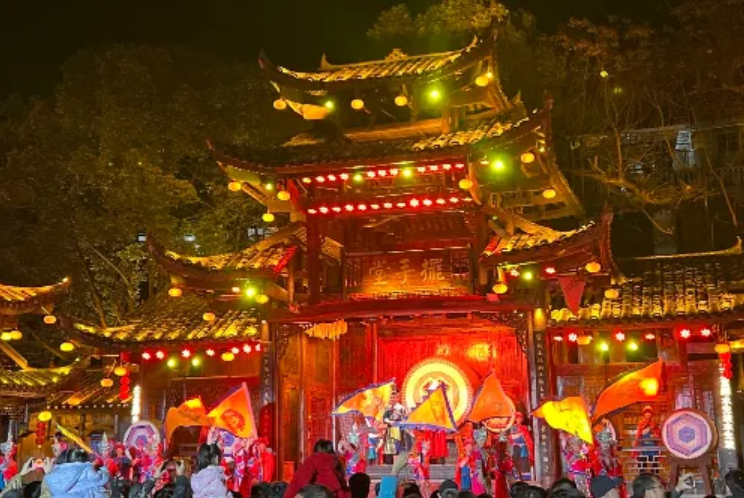
Xizhou Tusi Square
This is the place where successive "Tusi Kings" received guests from various prefectures and performed the Hand-waving Dance. Locals call it the Hand-waving Hall. It is an important cultural activity venue for the Tujia people and carries rich ethnic cultural connotations.
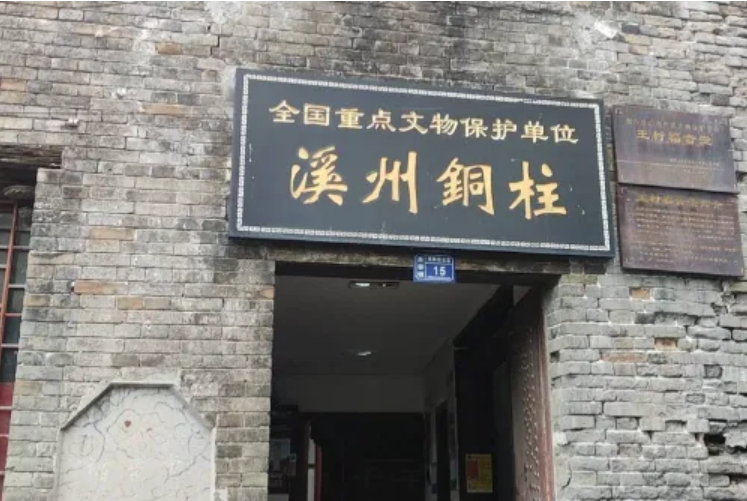
Xizhou Bronze Pillar Garden
The Xizhou Bronze Pillar in the garden is a powerful historical witness to Tusi culture. In 939 AD, after more than a year of the Xizhou War, King Ma Xifan of Chu and Tusi King Peng Shichou made peace and cast a 5,000-jin bronze pillar as a boundary marker. Today, the bronze pillar quietly tells the history of the past, allowing visitors to feel those magnificent years.
Tuwang Bridge
As part of the scenic area, Tuwang Bridge has a unique architectural style and connects different areas of the ancient town. It not only facilitates passage for residents and tourists, but also becomes a unique scenic line in itself, witnessing the daily life and historical changes of the ancient town.
Tuwang Traveling Palace
It was the summer traveling palace of successive Tusi Kings. The currently preserved traveling palace is a Ming Dynasty building with a history of more than 400 years. The traveling palace is backed by mountains and faces water, standing on a cliff. Below the palace are natural landscapes such as the "Water Curtain Cave." Beside the palace are poems and calligraphy left by celebrities such as Tang Bohu and Shen Congwen. There are also Song Zuying's singing stage, the teahouse where Liu Xiaoqing drank tea and watched the waterfall, and film and television shooting locations, full of historical and cultural charm.
Furong Town Waterfall
The largest and most spectacular waterfall in western Hunan, 60 meters high and 40 meters wide, pouring down from a cliff in two tiers. During the high-water season, the waterfall is majestic, as if pouring down from the ninth heaven, and its roar can be heard within ten li. Under the sunlight, the waterfall is like a brilliant pearl, with mist spreading everywhere, as if in a fairyland.
Wangcun Dock
A dock was already built here during the Qin and Han dynasties. During the Ming and Qing dynasties, it became the busiest commercial dock in Yongshun Prefecture, where land and water goods were imported and exported. Mr. Shen Congwen praised this place as "the most beautiful and extraordinary dock of mountains, waters, trees, and stones in the Bai River." The dock witnessed the important position of the ancient town in commercial trade and also reflected its history of prosperity due to water transportation.
Five-Li Stone Slab Street
From the bank of the Youshui River, it slopes upward all the way, built with 25 large steps and 308 small steps, like a long ladder leaning against the slope, extending to Wulipai. It is the best-preserved ancient stone slab street building in Hunan, with board-door shops and Tujia stilted buildings on both sides. The movie "Hibiscus Town" was filmed here. Today, shops line both sides of the street, full of the warmth of everyday life, witnessing the historical changes of the ancient town over thousands of years.
Tour Route:
After entering from the scenic area entrance, walk along Five-Li Stone Slab Street, admire the Tujia stilted buildings and various shops on both sides of the ancient street, and feel the lively atmosphere of the ancient town; then go to Xizhou Bronze Pillar Garden to learn about the historical culture of the Tujia people; next visit Tuwang Traveling Palace to appreciate its unique architectural style and historical charm; then go to the waterfall to enjoy the spectacular waterfall scenery; afterward, you can go to Wangcun Dock to feel the style of the former commercial dock; finally, go to Xizhou Tusi Square to experience the cultural atmosphere of the Tujia people. If time permits, you can also stay longer in the ancient town to enjoy the night view and watch folk performances in the scenic area.
Travel Suggestions:
You can choose to enter the scenic area in the evening, first enjoy the simple and ancient style of the town during the day, and after night falls, enjoy the brilliant night view of the waterfall and the ancient town when the lights are on, experiencing the charm of different periods.
Learn in advance about the cultural customs and historical background of the Tujia people, so you can better understand the attractions and folk performances in the scenic area and improve your travel experience.
Participate in folk activities in the scenic area, such as watching intangible cultural heritage performances including Tujia Maogusi, Hand-waving Dance, and Daliuzi, to deeply experience the local ethnic culture.
Leave enough time to stroll along Five-Li Stone Slab Street, taste specialty foods, and choose handicrafts with Tujia characteristics as souvenirs.
Notes:
Observe the opening hours of the scenic area and arrange your itinerary reasonably to avoid delaying your visit.
Protect the environment within the scenic area, do not litter, and protect the simple style and natural environment of the ancient town.
When viewing the waterfall, pay attention to safety, do not approach dangerous areas, and avoid getting splashed by water or accidents.
When buying souvenirs and tasting food, pay attention to prices to avoid unnecessary disputes.
When encountering local folk activities, respect local customs and cultural traditions, and do not disturb them casually or behave inappropriately.
Transportation:
High-speed rail: After the opening of the Zhangjihuai High-speed Railway, Furong Town entered the high-speed rail era. You can take the high-speed rail to Furong Town Station.
Bus: You can take a minibus from the general bus station next to Zhangjiajie Railway Station or the north bus station next to Jishou Railway Station to Furong Town; there are also buses from Guzhang and Yongshun.
Opening Hours:
The scenic area is open from 07:30 to 23:59. Please refer to the actual opening hours of the scenic area.
Tickets:
The ticket price is 108 yuan per person.