The Anhui Museum (New Campus) is located at No. 87 Huaining Road, Shushan District, Hefei, Anhui Province, on the south side of Swan Lake. It is a national first?grade museum. The new campus officially opened to the public on September 29, 2011. Its architectural design adopts the Huizhou?style concept of "five directions connected, four waters returning to the hall," blending traditional Huizhou elements with modern architectural aesthetics. The museum covers an area of 55,000 square meters, with a total floor area of 41,380 square meters (above?ground: 38,540 sqm, underground: 1,890 sqm). The main building has six floors above ground and one partial basement floor, with a height of 37.7 meters. The permanent exhibition halls occupy 8,500 square meters, and temporary exhibition halls cover 2,040 square meters. The museum houses over 310,000 items (sets) of cultural relics, with notable collections including Shang?Zhou bronze vessels, Han dynasty pictorial stone carvings, ancient ceramics, Song?Yuan gold and silverware, the "Four Treasures of the Study," and Huizhou carvings. It is a comprehensive national?grade museum that systematically presents the regional history and culture of Anhui.
History and Culture
The Anhui Museum traces its origin to the Anhui Provincial Museum, which opened on November 14, 1956. It was officially renamed the Anhui Museum on December 28, 2010, and since then has operated as "one museum, two campuses" (the new Shushan campus and the old Luyang campus). Over the years, the museum has been recognized as a National Patriotism Education Base, a National Key Protection Unit for Ancient Books, a National Science Popularization Education Base, and other honors, thanks to its rich collections and high?quality exhibitions.
The new campus is grounded in the historical context of the Jianghuai region and systematically traces the trajectory of Anhui's cultural development. Human history in Anhui dates back over 2 million years. The prehistoric Lingjiatan culture and Xuejiagang culture demonstrate the heights of early civilization. During the Xia, Shang, and Zhou dynasties, numerous local states flourished in the Jianghuai area, where Chu culture intermingled, and the copper mining and smelting in southern Anhui contributed significantly to China's bronze civilization. From the Qin?Han dynasties onward, Anhui remained a key crossroads of northern and southern cultures. In the Sui?Tang?Song?Yuan periods, the Grand Canal spurred economic prosperity, and figures such as Bao Zheng (a renowned upright official) entered the historical records. During the Ming?Qing dynasties, the rise of Huizhou merchants brought Huizhou culture to its peak, with Huizhou architecture, Hui?ink and She?inkstones, Xin'an painting, and the Tongcheng literary school collectively forming the core identity of Anhui culture. The new campus's exhibition system is built along this historical thread, connecting the thousand?year cultural heritage of the Jianghuai region.
Major Exhibitions
Anhui Civilization Chronicle
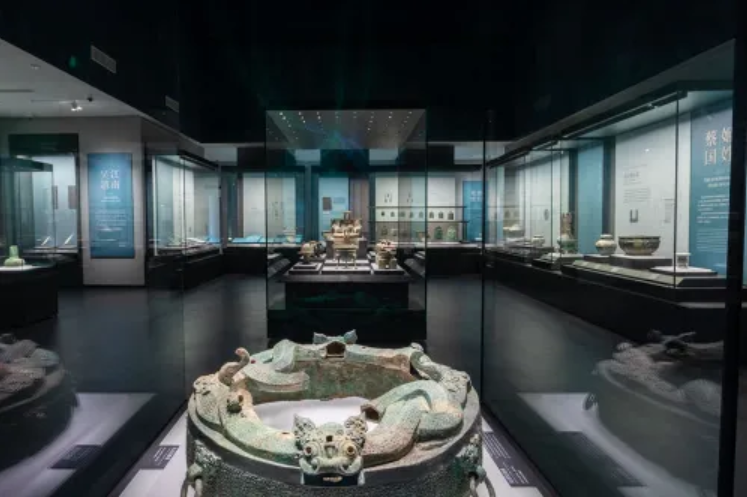
Located on the 2nd and 3rd floors, this is the museum's core permanent exhibition. Arranged chronologically from prehistoric times to the Ming?Qing dynasties, it comprehensively presents the development of Anhui's history. The exhibition hall gathers many of the museum's most treasured items, including:
The Warring States period Chu Ke Ding (Chu Great Ding), the largest bronze round tripod of the Eastern Zhou, a national first?grade relic;
The Spring and Autumn period Wu Wang Guang Jian (King Guang of Wu's Mirror), an important material evidence of the Wu?Cai marriage alliance;
The Warring States period E Jun Qi Jie (Tally of Lord E of Qi), a kind of ancient "duty?free transit certificate";
Lingjiatan culture jades, Shouzhou kiln celadon, Han pictorial stone carvings, and other precious artifacts, fully presenting Anhui's journey from obscurity to the height of civilization.
Huizhou Ancient Architecture
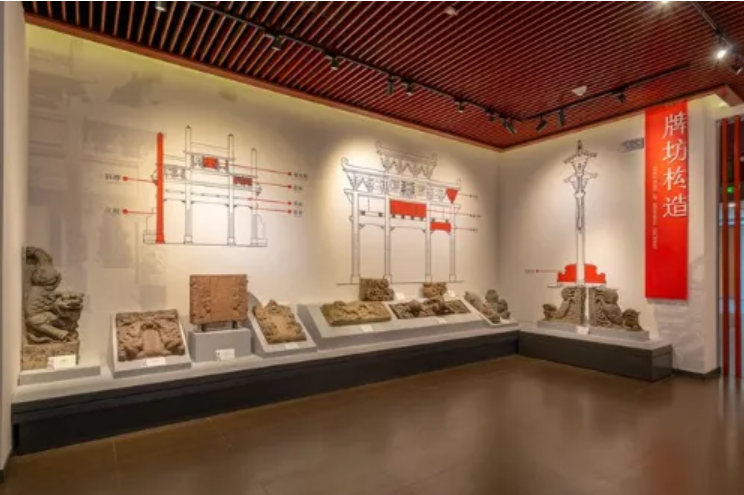
Located on the 4th floor, this exhibition is divided into four units: ancestral halls, memorial archways, residential houses, and the "three carvings" (wood, brick, and stone carving). Through original architectural components, models, multimedia, and other means, it presents the full scope of Huizhou architectural art from the Northern Song to the Qing dynasty. The museum has relocated and restored an entire ancient Huizhou residence, displaying it in its original condition. Key exhibits include the Sanguo Renwu Liangtuo (beam bracket with Three Kingdoms figures), the Taizi Shaobao honorary plaque, the Youchun Tu Renwu door?head brick carving, and the Baizi Tu brick carving, which collectively showcase the exquisite craftsmanship of Huizhou wood, brick, and stone carvings. Visitors can immerse themselves in the aesthetic of "white walls, black tiles, and horse?head gables" that defines Huizhou architecture.
Anhui's Four Treasures of the Study
Located on the 5th floor, this exhibition features Xuan paper, Hui ink, Xuan brushes, and She inkstones—the four distinctive Anhui?made treasures of the scholar's studio. It systematically introduces the raw materials, techniques, historical value, and cultural significance of these writing implements, displaying famous ink sticks, ancient inkstones, antique brushes, Xuan paper products, and related accessories from various dynasties. The exhibits range from practical utensils to fine collectible artworks, fully presenting the unique status of "Anhui's Four Treasures" in Chinese cultural history.
Treasures of the Jianghuai Region
Also on the 5th floor, this exhibition is divided into five sections: gold and silverware, jade and stone objects, lacquerware, iron paintings, and bamboo?wood?ivory?horn artifacts. It brings together fine ancient crafts from Anhui, with representative pieces such as the double?dragon openwork golden pendant, sunflower?shaped gold cup, rhombus?shaped phoenix?pattern silver box, Yuan dynasty Zhang Chengzao carved rhinoceros?cloud lacquer box, and pierced?ear jade vase, demonstrating the superb skill and aesthetic standards of ancient Jianghuai artisans.
Xin'an Painting School
The Xin'an Painting School mainly consisted of painters from Huizhou. This exhibition selects over 30 masterpieces from the school, offering visitors a relatively comprehensive view of its style and artistic achievements, highlighting Anhui's outstanding contributions to Chinese painting and the unique charm of Hui culture.
Suggested Tour Route:
A recommended route is to go from bottom to top, prioritizing the core exhibitions, with a total duration of about 3?4 hours. After entering through the south gate, first go to the information desk on the 1st floor to pick up a guide map and store luggage. Then visit the temporary exhibition halls on the 1st floor to learn about current special exhibitions. Next, take the escalator to the 2nd floor to begin the Anhui Civilization Chronicle (Part I), focusing on the Chu Ke Ding, E Jun Qi Jie, Wu Wang Guang Jian, Lingjiatan jades, and other signature treasures. Continue to the 3rd floor for Anhui Civilization Chronicle (Part II), covering Anhui history from the Song?Yuan to the Ming?Qing. Then go to the 4th floor to explore the Huizhou Ancient Architecture exhibition, experiencing the restored residence and Huizhou carvings. Finally, proceed to the 5th floor to visit Anhui's Four Treasures of the Study and Treasures of the Jianghuai Region. After finishing, return to the 1st?floor souvenir shop to stamp your booklet, completing the tour.
Visitor Tips:
Recommended visiting time: about 2.5 hours for a highlights tour, up to 4 hours for an in?depth visit.
Before entering, follow the official WeChat public account "Anhui Museum" for free audio guides.
Free guided tours are offered daily at 10:00 and 14:00; please gather at the 1st?floor information desk 10 minutes in advance.
Electronic audio guides are available for rent.
Stamp collectors are advised to bring their own notebooks; there are 28 themed stamps at service desks on various floors and at the souvenir shop.
Free luggage storage is available; large items can be left at the entrance.
After the visit, you may walk to Swan Lake to enjoy the lake view and cityscape.
Important Notices:
Do not touch exposed relics or glass display cases.
No flash photography in the exhibition halls; photography is prohibited for some artifacts.
Except for wheelchairs and strollers, scooters, skateboards, and other riding devices are not allowed.
Intoxicated persons, those improperly dressed, and unaccompanied individuals incapable of self?care are not admitted.
Last entry at 16:00; the museum closes at 17:00. Please do not be late.
Children, seniors, and people with disabilities must be accompanied by adults.
Eating, drinking, and loud talking are prohibited inside the museum; please maintain a quiet and orderly environment.
Transportation:
Metro: Take Line 3 to Shengbo Wuyuan (Provincial Museum) Station, Exit 1, and walk about 5 minutes.
Bus: Take routes 13, 20, 113, 129, or 105 to the Provincial Museum South Gate stop; or take 32, 103, 128, or 166 to Pingtang stop and walk east 500 meters.
Driving: Navigate to the museum's south gate or north gate.
Opening Hours:
Tuesday to Sunday, 9:00–17:00 (last entry at 16:00). Closed on Mondays (except for statutory holidays). Holiday schedules are subject to official announcements.
Tickets:
Admission is free. Paid guided tours are available.