Located at No. 72 Wuhu Road, Baohe District, Hefei, Anhui Province, Bao Park is a national 4A-level tourist attraction, a key cultural relic protection site of China, and a national base for integrity education. Centered on commemorating Bao Zheng, the renowned upright official of the Northern Song Dynasty, the park is a comprehensive memorial garden that integrates historical culture, landscape architecture, and anti?corruption education. It is also a landmark cultural tourism destination in Hefei. Covering a total area of 34.5 hectares, including 15 hectares of water, the park mainly consists of four major architectural complexes – the Baogong Temple (Lord Bao Memorial Temple), the Baogong Tomb, the Qingfeng Pavilion, and the Fuzhuang (Floating Villa) – along with surrounding gardens. The overall architectural style follows the classical Jiangnan (southern Yangtze) garden tradition, with structures built along the water in an antique and elegant manner. It is the largest and most comprehensive memorial site for Bao Zheng in China.
History and Culture
The history of Bao Park is closely tied to the Northern Song minister Bao Zheng (999–1062 AD), courtesy name Xiren, a native of Hefei, Luzhou (present?day Hefei, Anhui). Known for his incorruptibility, impartiality, and fearlessness in the face of power, he was posthumously revered as "Bao Qingtian" (Bao the Clear?Sky) and became the quintessential model of an upright official in ancient China. In the eighth year of Jiayou (1063 AD), Bao Zheng’s coffin was transported from Kaifeng, Henan, back to Hefei and buried at Daxingji in the eastern suburbs of Hefei – this marks the historical origin of the park’s core culture.
The Baogong Temple was first built in the first year of Hongzhi (1488 AD) during the Ming Dynasty by Song Jian, the prefect of Luzhou, on the banks of the Bao River. It was initially named "Baogong Academy" and renamed "Baogong Temple" in the eighteenth year of Jiajing (1539 AD). In the eighth year of Guangxu (1882 AD), Li Hongzhang donated 2,800 taels of silver for a large?scale renovation, laying the foundation for the existing structure. The original Baogong Tomb was located at Daxingji in the eastern suburbs; it was designated a provincial key cultural relic site in 1956. In 1973, due to construction relocation, it was moved and rebuilt beside the Bao River in 1985, officially opening to the public in 1987.
In 1999, to commemorate the 1,000th anniversary of Bao Zheng’s birth, the Qingfeng Pavilion was constructed, completing the current layout of Bao Park. Over the centuries, the park has carried forward Bao Zheng’s legacy of integrity, becoming a vital carrier for preserving China’s outstanding traditional anti?corruption culture and promoting the spirit of upright officials. Its profound historical and cultural significance runs through Hefei’s urban development and serves as an important cultural symbol of the city.
Major Attractions
Baogong Temple
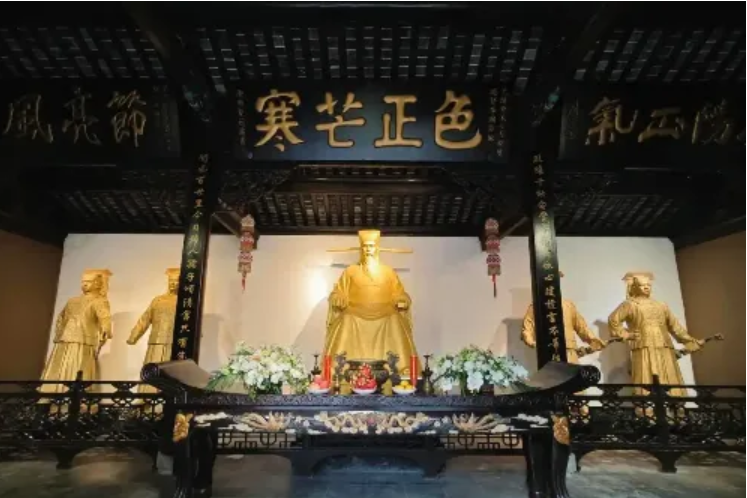
As the core attraction of the park, the Baogong Temple sits on Xianghua Islet in the Bao River. It is a dedicated ancestral hall for Bao Zheng, featuring white walls and grey tiles in a classical style, covering 800 square metres. The main buildings include the Main Hall, the Lianquan (Integrity Spring) Pavilion, and the Liufang (Eternal Fragrance) Pavilion. Inside the Main Hall stands a 2.5?metre?high bronze statue of Bao Zheng, flanked by artifacts and historical materials related to his life. The Lianquan Well on the premises is a historic relic, traditionally believed to cause headaches for corrupt officials who drink from it – a symbolic emblem of integrity.
Baogong Tomb
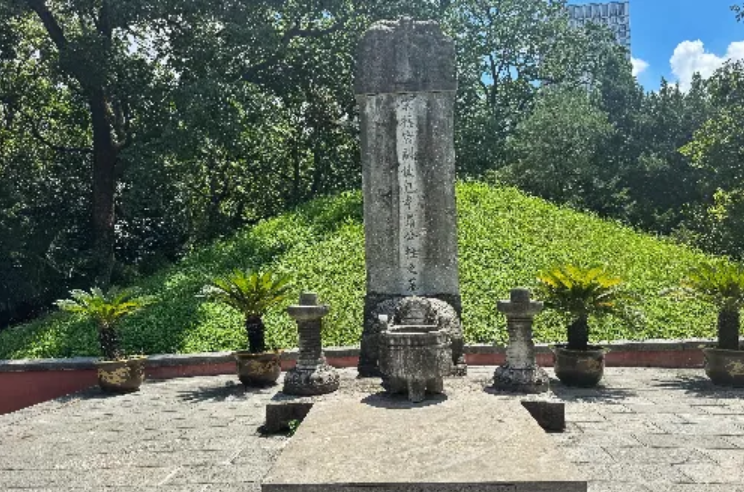
The Baogong Tomb is the burial site of Bao Zheng and his family, covering 1,200 square metres. It comprises the main tomb, auxiliary tombs, a spirit path, a sacrificial hall, and stone carvings, all constructed according to the burial regulations for a second?rank official of the Northern Song Dynasty. The main tomb is a circular earthen mound, 3.5 metres high, containing precious relics such as Bao Zheng’s epitaph. The cemetery is solemn and dignified, with stone figures (humans, horses, and sheep) lining the spirit path, faithfully restoring the style of a Northern Song cemetery.
Qingfeng Pavilion
Built to commemorate the 1,000th anniversary of Bao Zheng’s birth, the Qingfeng Pavilion is the landmark building of Bao Park. Standing 42 metres tall with five storeys and covering 1,700 square metres, it is a pagoda?style pavilion in the Song dynasty architectural tradition. Inside, it displays murals of Bao Zheng’s integrity stories, historical records of upright officials from various dynasties, and calligraphic and painted works. From the top, visitors can enjoy a panoramic view of the entire park and the Hefei cityscape. It serves as the core venue for promoting the culture of integrity.
Fuzhuang (Floating Villa)
Located on the Bao River and named for appearing to float on the water, Fuzhuang is a Jiangnan water?town style garden covering 3,000 square metres. It features tea houses, pavilions, waterside terraces, and rockeries, surrounded by lush greenery in a tranquil setting, showcasing the refined beauty of Jiangnan gardens. It also displays artifacts related to Bao Zheng’s family and folk exhibits.
Suggested Route:
The standard visiting route takes about 2 hours: Park Entrance → Baogong Temple → Lianquan Pavilion → Liufang Pavilion → Cross the Bao River by boat → Baogong Tomb → Spirit Path → Sacrificial Hall → Main Tomb → Qingfeng Pavilion → Fuzhuang → Park Exit. This route connects all four core attractions without backtracking, combining walking and a short boat ride for a comfortable pace, allowing visitors to fully appreciate Bao Zheng’s history and the garden landscape.
Travel Tips:
Recommended visit duration: 2–3 hours; adjust according to your own pace, with emphasis on the Baogong Temple and Qingfeng Pavilion for a deeper understanding of integrity culture.
Bring your ID card for ticket purchase and entry; students and seniors can enjoy discounts with valid documents.
Spring and autumn are the best seasons, with blooming flowers and pleasant weather, ideal for sightseeing and photography.
Audio guides are available for rent to gain comprehensive historical and cultural insights into each site.
A boat ride across the Bao River (about 5 minutes one way) is highly recommended for enjoying the waterscape gardens.
Important Notices:
Flammable, explosive, or controlled?knife items are prohibited; pets are not allowed in core scenic areas.
Smoking, scratching, graffiti, and touching exhibit items are strictly forbidden inside the Baogong Temple, Baogong Tomb, and other cultural relic buildings.
Stay away from the water’s edge, do not play near the water or climb railings, and keep personal safety in mind.
Loud noises, chasing, or roughhousing are not allowed; maintain a quiet and respectful atmosphere.
Do not feed fish arbitrarily or damage plants; help protect the garden’s ecological environment.
During holidays, expect crowds – queue orderly, avoid congestion, and keep your belongings secure.
Transportation:
Bus: Take Hefei Bus Nos. 6, 11, 119, 154, or 226 to Baogong Park Station, then walk 100 metres to the main entrance.
Metro: Take Hefei Metro Line 1 to Baogong Park Station, exit from Gate 3, and walk 300 metres.
Driving: There is a parking lot on Wuhu Road near the park; spaces are limited on holidays – public transport is recommended.
Taxi/Ride?hailing: Set your destination to the main entrance of Hefei Bao Park.
Opening Hours:
Summer (May 1 – September 30): 8:00 – 18:00 (last entry at 17:30).
Winter (October 1 – April 30): 8:00 – 17:30 (last entry at 17:00).
Indoor venues such as the Qingfeng Pavilion and Baogong Tomb close at the same time as the last entry. The park remains open on public holidays with no special closures.
Admission:
Free entry. Paid guided tours are available upon request.