Changbai Mountain Scenic Area is located in Antu County of Yanbian Korean Autonomous Prefecture and Fusong County of Baishan City, Jilin Province. It is a national 5A-level tourist attraction and one of China's top ten famous mountains. It is named after the white pumice and snow on its main peak, Baitou Mountain, and is known as "the First Mountain of the East of the Pass." The scenic area covers a total area of 1,964 square kilometers, with the core scenic area covering about 758 square kilometers. The forest coverage rate reaches 87%. It has a temperate continental mountain climate, with vastly different scenery in each season. It features diverse landscapes such as volcanic landforms, glacial remains, forest ecosystems, and alpine lakes. As the source of the Songhua River, Tumen River, and Yalu River, Changbai Mountain is known for being "majestic, peculiar, precipitous, beautiful, secluded, and mysterious." Its core landscapes include Changbai Mountain Tianchi, waterfalls, hot springs, and the underground forest. It is a comprehensive scenic area integrating ecological sightseeing, scientific research and exploration, and leisure vacations. In 2010, it was inscribed on the UNESCO World Natural Heritage List.
History and Culture
Historically, Changbai Mountain was the birthplace of the Manchu people and their cultural sacred mountain. It was recorded as early as in the Classic of Mountains and Seas, where it was called "Mount Buxian." In Manchu mythology, Changbai Mountain is the place where the heavenly maiden bathed and gave birth to the ancestor Bukūri Yong?on, and therefore it is regarded as a national holy land. In the Qing Dynasty, it was designated a "sacred mountain" and a closure policy was implemented for more than 200 years to protect its ecological and cultural sanctity.
The Changbai Mountain region is also a multi-ethnic settlement area, where Korean, Manchu, Mongolian, and other ethnic groups have lived and multiplied, forming a unique ethnic culture. The Korean agricultural music and dance, Manchu shamanic culture, and traditional hunting customs are deeply integrated with the natural environment of Changbai Mountain, leaving behind a rich folk heritage. The Neyin Ancient City (Changbai Mountain Manchu Culture Museum) in the scenic area fully restores the living scenes of the Manchu Neyin tribe and displays the ethnic history and cultural inheritance of the Changbai Mountain region.
In modern times, because of its unique geographical location and natural resources, Changbai Mountain has become a bond for cultural exchange between China and the DPRK. The people of China and the DPRK have jointly protected this land and its waters, forming a profound transnational friendship. At the same time, Changbai Mountain has a long history of geological scientific research. Since the early 20th century, scholars from many countries have conducted research here on volcanology, ecology, and other fields, providing an important basis for the development of world geological science.
Main Attractions
Changbai Mountain Tianchi
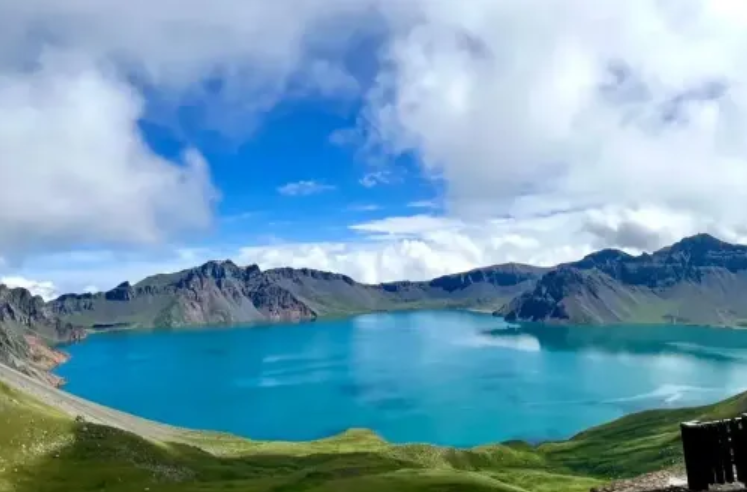
Changbai Mountain Tianchi is the core landscape of Changbai Mountain. It is located at the top of the main peak, Baitou Mountain, and is China's largest volcanic crater lake and one of the world's highest-altitude volcanic lakes. Tianchi has an elevation of 2,189.1 meters, a lake surface area of 9.82 square kilometers, a north-south length of 4.4 kilometers, and an east-west width of 3.37 kilometers. Its average water depth is 204 meters, with the deepest point reaching 373 meters, and its water storage capacity is about 2.04 billion cubic meters. The lake water is clear and blue, surrounded by 16 peaks over 2,500 meters above sea level, with only one gap on the north side, forming Changbai Waterfall. Due to changeable weather, Tianchi is shrouded in clouds and mist for about 260 days a year, and the probability of clearly viewing its full appearance is about 30%. It is a must-see landscape for visitors to Changbai Mountain.
Changbai Waterfall
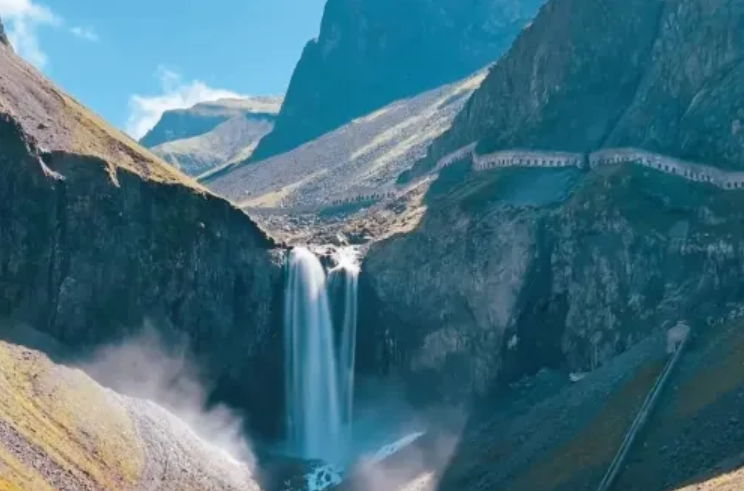
Changbai Waterfall is located between Tianwen Peak and Longmen Peak on the north side of Tianchi. It is the only outlet of Tianchi. After flowing through the 1,250-meter-long Chengcha River, the water suddenly plunges down, forming a waterfall with a drop of 68 meters. It is the largest waterfall in Northeast China. The waterfall has rapid currents, and at maximum flood peak its flow rate reaches 5 cubic meters per second. The roar of the water is loud and the mist fills the air. Under sunlight, rainbows often appear. Below the waterfall, a pool about 20 meters deep is formed, called "Erdao Baihe," which is the true source of the Songhua River. In winter, the waterfall partially freezes, forming a spectacular ice waterfall with a unique charm.
Hot Spring Group
The Changbai Mountain hot spring group is distributed about 900 meters below Changbai Waterfall. It is a product of volcanic activity, with a total of 13 hot spring vents. The highest water temperature reaches 83°C, making it a high-temperature hot spring. The hot spring water is rich in minerals such as hydrogen sulfide and radon and has high medical value. The scenic area has hot spring bathing facilities where visitors can experience volcanic hot springs. Among them, "Julong Spring" is the most famous hot spring spot, with dense vents and the highest water temperature. The surrounding rocks appear red, yellow, brown, and other colors due to long-term mineral staining. Soaking in hot springs in the snow in winter is a unique experience at Changbai Mountain.
Underground Forest
The Underground Forest, also known as the "Valley Bottom Forest," is located on the north slope of Changbai Mountain. It is a primitive forest at the bottom of a valley formed by crustal collapse due to volcanic activity. It is about 1,200 meters above sea level and covers a total area of about 50 hectares. The deepest part of the forest is about 30 meters below the ground. In the valley, ancient trees tower into the sky. The main tree species include Korean pine, larch, and spruce. The average tree age is more than 300 years, and the tallest trees reach more than 40 meters. The forest is inhabited by wild animals such as black bears, wild boars, and sika deer, and the negative oxygen ion content in the air is extremely high. The scenic area has built a 2,500-meter-long wooden boardwalk, allowing visitors to go deep into the valley bottom and experience the tranquility and mystery of the primitive forest.
Xiaotianchi
Xiaotianchi is located on the north slope of Changbai Mountain, about 3 kilometers from Tianchi. It consists of two volcanic crater lakes only 300 meters apart, also known as "Duihuan Lake." The western lake has an area of about 5,380 square meters and a water depth of more than 10 meters. Its water is emerald green and reflects the surrounding Erman's birch forest, creating a serene environment. The eastern lake is smaller, with an area of only about 1,000 square meters. It has water in the rainy season and dries up in the dry season. Xiaotianchi is famous for being a filming location for works such as Snow Mountain Flying Fox and Journey to the West. Rare "living fossil of the plant kingdom" Japanese alder grows by the lake and has high ecological research value.
Lüyuantan
Lüyuantan is located on the north slope of Changbai Mountain. It is named for its deep green pool water and is a deep pool formed by the impact of the Erman's birch forest waterfall. The pool has an area of about 500 square meters and a maximum depth of 10 meters. The waterfall has a drop of 26 meters. Water pours down from the cliff and flows into the pool, stirring up layer upon layer of ripples. The pool is surrounded by green trees and jagged rocks. In summer, the pool water is clear to the bottom, and cold-water fish can be seen in the water. In winter, it forms an ice waterfall and ice pool, like a fairy-tale world of ice and snow. Viewing platforms and wooden boardwalks are set up by the pool, making it an excellent place for landscape photography.
Tour Routes:
Classic One-Day Tour of the North Slope (about 8 hours in total)
Enter from the north scenic area gate of Changbai Mountain, take the eco-friendly bus to the Tianchi transfer center, then transfer to an off-road vehicle (80 yuan/person) to go to the Tianchi viewing platform (1 hour visit); then take a bus to Changbai Waterfall (1.5 hours visit; you can walk to the bottom of the waterfall or take a cable car to overlook it); next, go to the hot spring group (experience hot spring boiled eggs, 10 yuan/3 eggs); have lunch at the hot spring restaurant; in the afternoon, visit Xiaotianchi (40 minutes), Lüyuantan (1 hour), and the Underground Forest (1.5 hours) in sequence, and finally take the eco-friendly bus back to the gate. This route covers the core attractions of the north slope and is suitable for first-time visitors.
One-Day Panoramic Tour of the West Slope (about 9 hours in total)
Enter from the west scenic area gate, take the eco-friendly bus to the Tianchi parking lot, walk up 1,442 steps (about 30 minutes) to reach the Tianchi west slope viewing platform (1.5 hours visit); after descending, go to the Iris Garden (flower viewing in summer, 30 minutes); have lunch at the Alpine Garden service area; in the afternoon, visit Jinjiang Grand Canyon (2-kilometer walking boardwalk, 1.5 hours) and Wangchi (3 kilometers round trip, 1 hour), and finally visit Tizi River (30 minutes), then take the eco-friendly bus back to the gate. This route allows visitors to enjoy the panoramic view of Tianchi and the primitive canyon scenery and is suitable for visitors with good physical strength.
Two-Day Ecological Scientific Research Tour
Day 1: Visit Tianchi, waterfalls, and hot spring group on the north slope, and stay overnight in Erdao Baihe Town; Day 2: Go to Neyin Ancient City (learn about Manchu culture, 1.5 hours), then go to the Changbai Mountain Nature Reserve (advance application for scientific research permission required), go deep into the Underground Forest for ecological observation, and identify rare animals and plants (such as Korean pine, sable, Changbai fir, etc.), and return in the evening. This route is suitable for visitors interested in natural ecology and requires contacting local scientific research institutions in advance to arrange a guide.
Travel Suggestions:
Best seasons to visit: Summer (July-August) has a cool climate and lush vegetation, allowing visitors to see Tianchi and alpine flower seas; autumn (September-October) has colorful forests and fewer tourists, making it the best season for photography; winter (December-February) allows skiing and hot springs, but Tianchi may be closed due to heavy snow.
Equipment suggestions: The weather at Changbai Mountain is changeable, so bring windproof and rainproof jackets (even in summer); hiking shoes are essential (especially since the west slope has many steps); in summer, sun protection is necessary (strong ultraviolet rays); in winter, wear down jackets and non-slip boots (-20°C to -30°C); bring high-calorie snacks (such as chocolate and beef jerky) to replenish energy.
Accommodation suggestions: For the north slope, you can stay in Erdao Baihe Town (30 kilometers from the north slope, many hotels, moderate prices, about 200-500 yuan/night); for the west slope, you can stay in Songjianghe Town (25 kilometers from the west slope, cost-effective); if you want to experience hot springs, you can choose the Blue View Hot Spring Resort Hotel on the north slope (includes hot spring tickets, 800-1,200 yuan/night).
Budget: The average daily per capita consumption is about 500-800 yuan (including tickets, transportation, meals, and accommodation). Prices may rise by 30%-50% in peak season, so advance booking is recommended.
Precautions:
Safety warnings: The Tianchi viewing platform is steep, and some sections have no guardrails. Stand firmly and hold on, and do not approach the edge; Changbai Mountain is a volcanically active area, and entering unopened areas is prohibited; in winter, the roads are icy, so wear crampons (available for rent at the scenic area entrance, 10 yuan/pair).
Ecological protection: Picking wild plants (such as ginseng and matsutake) and catching wild animals are strictly prohibited, and violators will face heavy fines; smoking is prohibited in the scenic area, and garbage must be carried with you to designated trash bins; Changbai Mountain is a water source protection area, and washing in streams and lakes is prohibited.
Documents to carry: Bring your ID card (required for ticket purchase and entry). Visitors entitled to preferential policies need to bring valid documents such as student IDs and senior citizen cards; self-driving visitors need to carry their vehicle registration certificate and insurance policy.
Other: Mobile phone signals in the Changbai Mountain area are unstable, and some scenic areas have no signal. It is recommended to agree with companions on a meeting time and place; in peak season (July-August), the number of tourists surges, so it is recommended to arrive at the scenic area before 6:30 a.m. to avoid the entry rush; food in the scenic area is relatively expensive, so you can bring simple meals (not in glass packaging).
Transportation:
Airplane: The nearest airport to Changbai Mountain is Changbaishan Airport (located in Songjianghe Town, Fusong County). It is about 15 kilometers from the west slope scenic area and about 100 kilometers from the north slope scenic area. The airport has flights to Beijing, Shanghai, Shenyang, Changchun, and other cities, with 10-15 flights per day in peak season. From the airport to the west slope scenic area, you can take the airport bus (20 yuan/person, 30 minutes). To the north slope scenic area, you need to take a bus to Songjianghe Town and transfer to a shuttle bus to Erdao Baihe Town (30 yuan/person, 1.5 hours).
Train: The nearest railway stations are Baihe Station (about 35 kilometers from the north slope scenic area) and Songjianghe Station (about 30 kilometers from the west slope scenic area). There is a direct train from Changchun to Baihe Station (K7388, departs at 19:30, arrives at 6:00 the next day, hard seat 62 yuan); there is train K7511 from Shenyang to Songjianghe Station (departs at 17:00, arrives at 5:30 the next day, hard seat 81 yuan). After arriving at the station, you can take a taxi to the scenic area (about 50 yuan from Baihe Station to the north slope, about 40 yuan from Songjianghe Station to the west slope).
Self-driving: From Changchun, take the Fuchang Expressway (G1212) to the Changbai Mountain north scenic area (about 410 kilometers, 5 hours); from Shenyang, take the Shenji Expressway (G1212) and then the Heda Expressway (G11) to the Changbai Mountain west scenic area (about 550 kilometers, 6.5 hours). Both the north and west slopes of the scenic area have parking lots, with charges of 20 yuan/day for small vehicles and 30 yuan/day for large vehicles.
Tourist buses: Changchun Huanghe Road Passenger Transport Station and Shenyang SK Passenger Transport Station have daily tourist buses to Erdao Baihe Town (north slope) and Songjianghe Town (west slope). Ticket prices are 120 yuan/person (Changchun-Erdao Baihe, 5.5 hours) and 150 yuan/person (Shenyang-Songjianghe, 7 hours), respectively.
Opening Hours:
The opening hours of Changbai Mountain Scenic Area are adjusted according to the seasons:
North Slope (North Scenic Area): Peak season (July 1-August 31) 6:30-17:00 (last entry at 15:00); shoulder season (June 1-June 30, September 1-October 7) 7:00-16:30 (last entry at 14:30); off season (October 8-May 31 of the following year) 8:00-15:30 (last entry at 13:30).
West Slope (West Scenic Area): Peak season (July 1-August 31) 7:00-17:00 (last entry at 15:00); shoulder season (June 1-June 30, September 1-October 7) 7:30-16:30 (last entry at 14:30); off season (October 8-May 31 of the following year) 8:30-15:30 (last entry at 13:30).
South Slope (South Scenic Area): Due to ecological protection, the south slope is only open from June to October each year, with opening hours 8:00-15:00 (last entry at 13:00), and a daily visitor limit of 500 people.
The scenic area may be temporarily closed in extreme weather such as heavy rain, typhoons, or volcanic activity warnings. Specific arrangements are subject to official notices.
Tickets:
Timed reservation ticketing is implemented year-round. Please book tickets in advance.
Ticket 105 yuan/person, bus 85 yuan/person, Tianchi main peak vehicle ticket 80 yuan/person. Changbai Mountain is divided into the north scenic area, west scenic area, and south scenic area. Please go to the corresponding scenic area visitor center to board the bus.