The Museum of the Imperial Palace of Manchukuo is located at No. 5 Guangfu North Road, Kuancheng District, Changchun City, Jilin Province, China. It is a National 5A Tourist Attraction, a Major Historical and Cultural Site Protected at the National Level, and a National First-Class Museum in China. The site was originally the office of the Jilin-Heilongjiang Salt Monopoly Bureau, which managed the salt affairs of Jilin and Heilongjiang provinces during the Republic of China period. It covers a total area of approximately 250,500 square meters, with a building area of approximately 137,000 square meters. Its architectural style is a blend of ancient and modern, Chinese and foreign elements, with typical colonial characteristics. It is one of the three major palace ruins in China.
History and Culture
The predecessor of the Museum of the Imperial Palace of Manchukuo, the office of the Jilin-Heilongjiang Salt Monopoly Bureau, was established in the 34th year of the Guangxu reign of the Qing Dynasty (1908). In 1932, the Japanese invaders installed Puyi to establish the "State of Manchuria" and moved him to the Jilin-Heilongjiang Salt Monopoly Bureau, where the puppet Manchukuo Executive Government was established. In 1934, Puyi ascended the throne as emperor for the third time. After that, buildings such as Huaiyuan Hall, the East Imperial Garden, Jiale Hall, and Tongde Hall were successively built in the puppet imperial palace. In August 1945, Puyi left the puppet imperial palace, and Tongde Hall was later used as places such as a technical school of the First Automobile Factory. In 1962, the Exhibition Hall of the Imperial Palace of Manchukuo was established, its organizational system was restored in 1982, it was officially opened to the public in 1984, and it was officially renamed the Museum of the Imperial Palace of Manchukuo in 2001.
Main Attractions
Qinmin Hall
Located north of Jixi Hall in the puppet Manchukuo imperial palace, with a building area of 1,206 square meters. It was originally the office building of the Jilin-Heilongjiang Salt Monopoly Bureau and later became Puyi's office after renovation and maintenance. In the middle of the building is a square courtyard. On the southeast side of the second floor is the main hall, Qinmin Hall, which was the place where Puyi worked, received important guests, and held formal ceremonies. He once held the "enthronement" ceremony here to become "emperor," among other events.
Jixi Hall
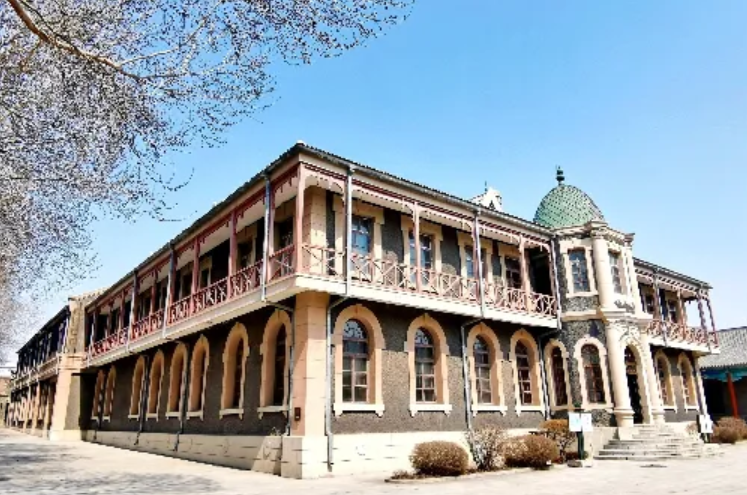
Located in the west courtyard of the inner palace of the puppet imperial palace in Changchun, it was first built in the 34th year of the Guangxu reign of the Qing Dynasty (1908). The building area is unknown. It was the living quarters of Puyi and his empresses and concubines Wanrong and Tan Yuling. The first and second floors were the living quarters. The west side of the second floor was Puyi's living area, and the east side was Wanrong's living area. The west side of the first floor was later changed into Tan Yuling's bedroom and study.
Tongde Hall
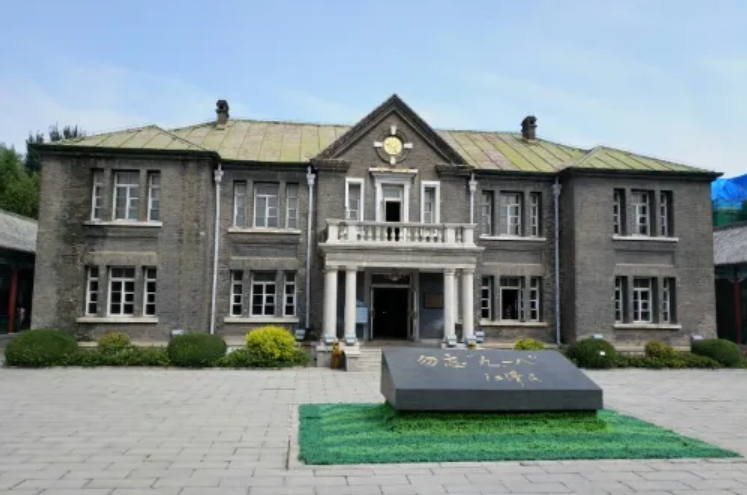
Located in the east courtyard of the puppet imperial palace, with a building area of 5,758 square meters. Its design began in 1935, and it was officially completed at the end of 1938. It was a temporary palace designed and built by the Japanese for Puyi and his empresses and concubines, integrating residence, government affairs, and entertainment. Puyi suspected that there were eavesdropping devices in the building and therefore did not formally move in for a long time.
Huaiyuan Hall
Completed in the autumn of 1934, it was mainly used by Puyi to offer sacrifices to his ancestors, and some administrative offices in the palace also worked here. In addition to the Fengxian Hall, where Puyi enshrined the memorial tablets and portraits of his ancestors, the Shangshu Office, the Imperial Guard Office, and some institutions of the Imperial Household Department were also located here.
East Imperial Garden
It has an obvious Japanese style and is currently the largest garden architecture with Japanese characteristics in China. There is an air-raid shelter in the garden, formed by pouring reinforced concrete in one piece, with rockeries several meters high piled on top.
Tour Route:
Enter from Laixun Gate and visit Tongde Hall, the Painting and Calligraphy Building, the East Imperial Garden, Jixi Hall, Qinmin Hall, Huaiyuan Hall, Jiale Hall, the West Imperial Garden, Zhixiu Pavilion, Changchun Pavilion, the Imperial Household Department, the horse racing ground, and other attractions in sequence.
Tour Suggestions:
It is recommended to enter as soon as the museum opens in the morning so that there is enough time to visit.
Pay attention to the exhibitions in various halls, such as the "Puppet Manchukuo Court Costume Exhibition" on the first floor of Qinmin Hall, to gain a deeper understanding of puppet Manchukuo court culture.
Precautions:
Please observe the visiting order of the scenic area and do not make loud noises or chase and play.
Do not touch cultural relics or damage exhibits to avoid causing damage.
There may be many tourists in the scenic area, so please take care of your personal belongings to prevent loss.
You can learn about exhibition information and visiting notices in advance through the official website or official account of the scenic area, so as to better plan your itinerary.
Transportation:
Bus: Take Bus No. 264 and get off at the Museum of the Imperial Palace of Manchukuo Station, then walk to arrive.
Light Rail: Take Light Rail Line 3 or Line 4 and get off at Weihuanggong Station.
Opening Hours:
Peak season (April 1-October 31): 8:30-17:20, ticket sales stop at 16:20; off-season (November 1-March 31 of the following year): 8:30-16:50, ticket sales stop at 15:50.
Tickets:
Ticket price: 70 yuan per person.