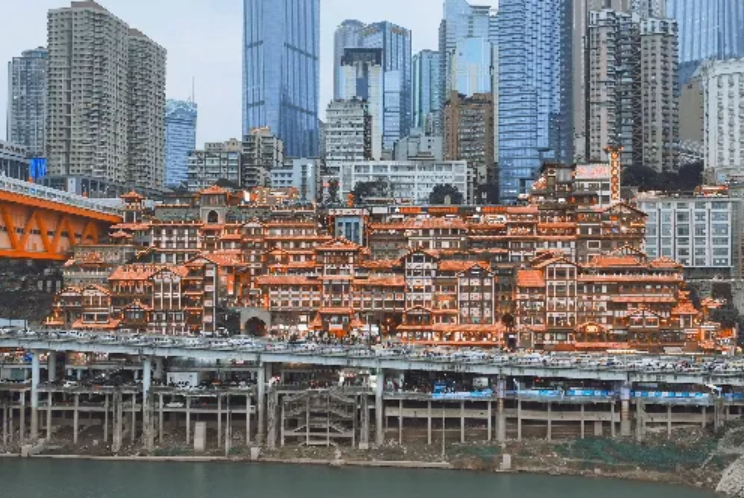
Hongyadong Folk Custom Scenic Area is located at No. 88, Binjiang Road, Jialing River, Yuzhong District, Chongqing, situated in the riverside zone where the Yangtze and Jialing rivers converge. It is a national 4A-level tourist attraction. The scenic area features the traditional architectural style of the "stilted buildings" (diaojiaolou) characteristic of Ba?Yu culture, built along the hillside and riverside. With a floor area of 46,000 square meters and 11 stories, it integrates sightseeing, leisure and entertainment, dining, and shopping. It is a quintessential example of Chongqing’s "three?dimensional magical city" and an important window showcasing Ba?Yu culture.
History and Culture
The history of Hongyadong can be traced back to the Song Dynasty, and it was named after its proximity to Hongyamen (one of the ancient city gates of Chongqing). Hongyamen was a "closed gate" among the old city gates of Chongqing—though it did not have a gate tower, its steep riverside cliffs made it a key military defensive point. During the Qianlong reign of the Qing Dynasty, the inscription "Hongyadong" appeared on the cliff face. Over time, it became a gathering place for civilian docks and godowns, with many porters and craftsmen congregating there, giving rise to a distinctive street?market culture.
In 2006, Hongyadong was renovated and reopened. The renovation preserved the traditional stilted?building structure while incorporating modern commercial elements. Its architectural form blends Ba?Yu culture, dock culture, and mountain?settlement characteristics, making it a living fossil of Chongqing’s historical changes and folk customs.
The "stilted building" is a typical traditional dwelling in Chongqing, built against hills and beside water, supported by wooden pillars suspended in the air to adapt to the undulating terrain of the mountain city. It offers moisture?proof and ventilation benefits, representing the wisdom of the Ba?Yu people in adapting to the natural environment. In the reconstruction of Hongyadong Folk Custom Scenic Area, traditional stilt?building techniques were combined with modern engineering to restore this regionally distinctive architectural form, ensuring the continuation of a vanishing traditional building heritage.
The scenic area also preserves and displays numerous elements of Ba?Yu folk culture, such as the Chuanjiang river?chanties, Chongqing hotpot culture, and traditional handicrafts. Through live experiences and exhibitions, visitors gain an in?depth understanding of Chongqing’s historical evolution and folk customs. Historically, this area was a hub for medicinal herb shops, money exchanges, teahouses, and other businesses, bustling with merchants. Today, Hongyadong continues its prosperity in commerce and culture, serving as an important link between Chongqing’s past and present.
Major Attractions
Stilted Building Complex
The core landscape of Hongyadong, consisting of 11 layers of well?arranged stilted buildings constructed along the mountain, tier upon tier. The structures are of wooden construction with upturned eaves and intricately carved doors and windows, displaying the unique charm of traditional Ba?Yu dwellings. The 11th floor is level with Jiefangbei Pedestrian Street, while the 1st floor leads directly to Binjiang Road, with a vertical drop of about 70 meters, forming a three?dimensional landscape of "one form, three marvels, four streets, and eight vistas."
Folk Exhibition Hall
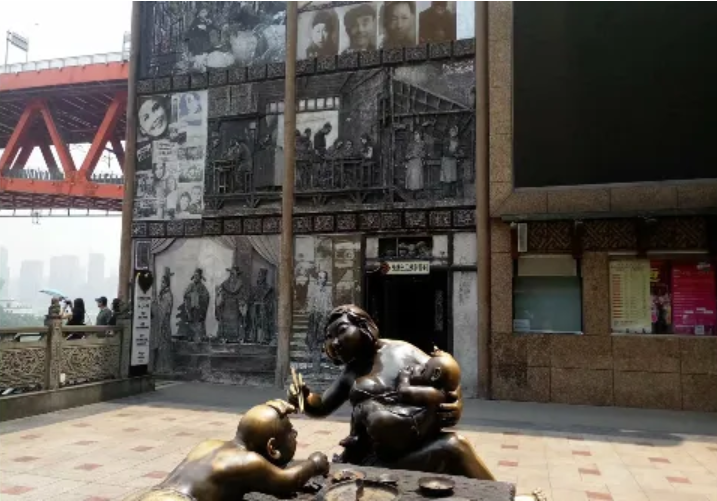
Located inside the scenic area, covering about 800 square meters, it displays cultural relics, old photographs, and traditional handicrafts of the Ba?Yu region. The hall is divided into sections such as "Memories of Ba?Yu," "Folk Customs," and "Intangible Heritage," using physical objects, models, and multimedia to introduce traditional festivals, marriage and funeral customs, and folk arts (e.g., Sichuan embroidery, wood carving). The simulated experience of Chuanjiang river?chanties allows visitors to feel the toil and heroism of the boat trackers, making it an important place to learn about Chongqing’s folk culture.
Jialing River Observation Decks
Distributed across multiple floors, with the best views from the 11th floor and the 1st floor, totaling about 500 square meters. From the decks, visitors can enjoy close?up views of the Jialing River, the majestic Qiansimen Jialing River Bridge, and the modern skyline of Jiangbeizui on the opposite bank—ideal spots for photographing the river and city skyline. Especially at dusk, the sparkling river under the setting sun creates a stunning scene against the urban architecture.
Hongya Drip Green
"Hongya Drip Green" is one of the "Twelve Scenes of Ba?Yu," originally referring to a water?curtain landscape formed by seepage from the cliffs at Hongyamen. The scenic area has now recreated a waterfall feature on the cliff face, with water cascading down, complementing the stilted buildings—particularly lively after rain or under night lights.
Ba?Yu Folk Customs Street
Located on floors 4 to 6, about 300 meters long. The street replicates the layout of old Chongqing commercial streets and hosts numerous shops and restaurants featuring Ba?Yu characteristics. Here, visitors can find hotpot, noodles, sour?spicy noodles, and other local delicacies, as well as handicraft shops selling Sichuan embroidery, paper?cutting, and Rongchang pottery. Street performers stage Sichuan opera face?changing, sugar?figure making, and more, creating a strong Ba?Yu atmosphere.
Qiansimen Bridge Viewing Point
Situated on the lower floors near the river, specifically for viewing the Qiansimen Jialing River Bridge. The bridge is a major link between Yuzhong and Jiangbei districts, with a main span of 312 meters and a tower height of 182.5 meters, serving both road and rail transit with a light and elegant design. From this point, the bridge spans the Jialing River, creating a harmonious contrast with the ancient stilted buildings—a popular spot for photos of both together, especially at night when the bridge and Hongyadong lights complement each other beautifully.
Riverside Observation Belt
Located at the ground level along the Jialing River, about 500 meters long. This is an excellent place to appreciate the confluence of the two rivers and the nightscape of Hongyadong, offering close contact with the flowing river, or the option to take a boat tour for river views.
Suggested Tour Route:
Visitors may start at the Jialing River Observation Deck to enjoy the river view and Qiansimen Bridge, then take stairs or elevators up to the 4th?floor Ba?Yu Folk Customs Street, where they can sample Chongqing noodles, browse handicraft shops, and watch folk performances. Next, head to the Folk Exhibition Hall to learn about Ba?Yu culture, then continue up to the top observation deck on the 11th floor for a panoramic view of the building complex and cityscape. In the late afternoon, return to the lower riverside viewing areas and wait for the evening lights to come on, enjoying the night scenery of Hongyadong and Qiansimen Bridge. The total walking distance is about 1.5 km, with a walking time of 2?3 hours; for a deeper experience of dining and shopping, you may extend your stay.
Travel Tips:
Spring and autumn (March–May, September–November) offer pleasant temperatures; summer (June–August) requires heat protection; winter (December–February) calls for windproofing. It is recommended to visit after 18:00 to avoid peak crowds and enjoy both daytime and night views.
For panoramic shots of Hongyadong from Qiansimen Bridge, use a wide?angle lens; when shooting from Binjiang Road, enable night mode to avoid overexposure from bright lights.
Weekdays are less crowded; weekends and holidays see peak hours from 19:00?21:00. It is advisable to visit the upper levels first and then work your way down.
Souvenir prices inside may be higher—compare several shops; for better value dining, try nearby local streets like Jiaochangkou and Shihui Market.
Recommended visit time: afternoon to evening, to appreciate both the architectural style in daylight and the night lights; the best night?viewing hours are 19:30?21:30.
The on?site dining options focus on Chongqing specialties—recommended: hotpot, noodles, sour?spicy noodles, and Chen’s sesame crisps. Floors 4?6 offer a wide choice.
The best positions for overall shots of Hongyadong are from Jiangbeizui Riverside Park across the river or from Qiansimen Bridge—you can head there after touring.
There are many stairs and steps in the area, so comfortable flat?soled shoes are recommended.
Important Notes:
The stairs are steep and crowds are heavy; watch your step and keep safe. The riverside railings are low—do not climb over for photos.
Smoking is prohibited in wooden stilt?building areas; avoid open flames. Dispose of rubbish in designated bins to keep the area clean.
Buy tickets for the river cruises through official channels to avoid scalpers; rain may affect cruise operations—check the weather in advance.
Self?driving: roads around the area are heavily congested on weekends 18:00?20:00; prefer rail transit. At Xiaoshizi subway station, allow at least 15 minutes for transfers.
In crowded conditions, guard your personal belongings, especially phones and wallets, against loss or theft.
When using stairs or walking on corridors, be mindful of footing, avoid pushing, and take care of the elderly and children.
Some shops may charge high prices; check market rates beforehand and spend rationally.
At night, do not climb over railings; view only in designated areas for safety.
In extreme weather (e.g., heavy rain, strong winds), some open?air viewing areas may be temporarily closed—follow staff instructions.
Transportation:
Rail transit: Take Line 6 to Xiaoshizi Station, Exit 5, and walk about 300 meters to the 11th?floor entrance.
Bus: Take routes 111, 151, 466, etc., to Xiaoshizi Station, or 608, 881 to Hongyadong Station.
Self?driving: Navigate to "Hongyadong Folk Custom Scenic Area." Nearby parking includes Huguang Guild Hall Parking Lot and Daijiaxiang Parking Lot; spaces are limited—arrive before 19:00 is advisable. Parking fee is about ¥10?20/hour.
Walking: From Jiefangbei Pedestrian Street, it is about 800 meters (10 minutes) on foot; you can also stroll through Bayi Gourmet Street along the way.
Opening Hours:
Open from 11:00 to 23:00. Shops and restaurants generally operate from 10:00 to 22:30. During holidays (e.g., Spring Festival, National Day), hours may be extended to 23:30—please check the official notice for the day.
Tickets:
The scenic area is free of charge. Some special venues or activities may require ticket purchases.