The Yangtze River Cableway is located in Chongqing, China, shuttling between Xinhua Road in Yuzhong District and Shangxin Street in Nan’an District. It is a national 4A-level tourist attraction. Designed and manufactured independently by China, it is the first large-scale passenger cableway spanning the Yangtze River, earning the titles of “the first aerial corridor over the Yangtze River” and “the urban air bus.” The scenic area comprises three parts: the Yuzhong City History Culture Area, the Yangtze River Aerial Sightseeing Area, and the Nan’an Film and Television Culture Area, covering a total area of 9.8 square kilometers. The cableway has a total length of 1,166 meters, with a full journey taking about 5 minutes. Each cabin has a capacity of 65 passengers plus 1 attendant and is equipped with anti?sway devices that can withstand winds of Force 5–6. It features safe, environmentally friendly, fast, convenient, punctual, and all?weather operation.
History and Culture
Construction of the Yangtze River Cableway began on March 20, 1986, and it was completed and opened to traffic on October 24, 1987. As the first aerial corridor across the Yangtze River, it has operated safely for over thirty years. It is not only an important means of cross?river transport for Chongqing residents but also a symbol of the city’s history and culture. It has witnessed Chongqing’s development and transformation and carries the memory of Bayu culture. Many films and television productions have been shot here, making it one of Chongqing’s cultural icons.
Main Attractions
Cross?River Landscape Belt
Taking the cableway, the cross?river landscape belt formed along the way is the core attraction. During a one?way trip, you can successively view the skyscraper clusters of Jiefangbei CBD in Yuzhong District, the magnificent confluence of the Yangtze and Jialing rivers, the traditional architecture of Danzishi Old Street, the modern shape of Chongqing Grand Theatre, and the orange?red body of Chaotianmen Bridge. Especially at dusk, the setting sun casts its glow on the river, and the lights of the buildings on both banks gradually turn on. From the cabin, the mountains, river, bridges, and architecture form a three?dimensional urban picture, earning it the reputation of a “moving observation deck.”
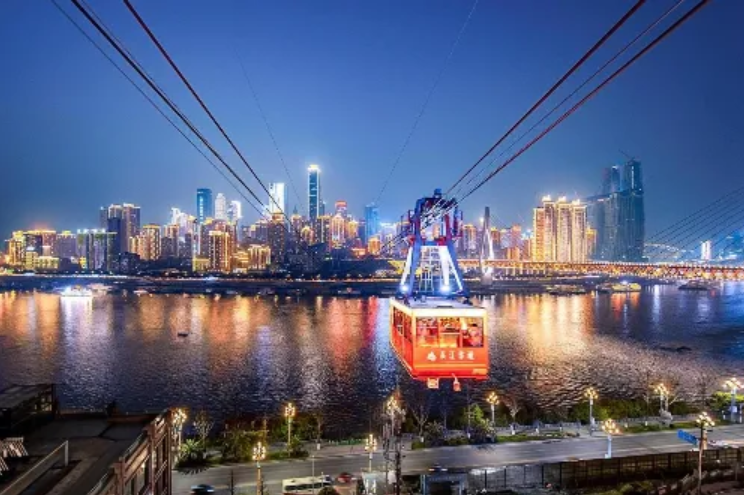
Xinhua Road Cableway Station
Located at No. 151 Xinhua Road, Yuzhong District, this is the northern terminus of the cableway. The station building features a retro style that incorporates the local characteristics of old Chongqing. Inside, there is a Chongqing transport history exhibition area displaying precious photographs from the construction period, engineering drawings, and old cabin models, systematically introducing the cableway’s development. The waiting hall covers about 800 square meters and is equipped with seats and electronic screens showing real?time cabin status and waiting times. Outside the station, there is a viewing platform overlooking the Nan’an District and the Yangtze River, which is an excellent spot for photographing the cabins crossing the river.
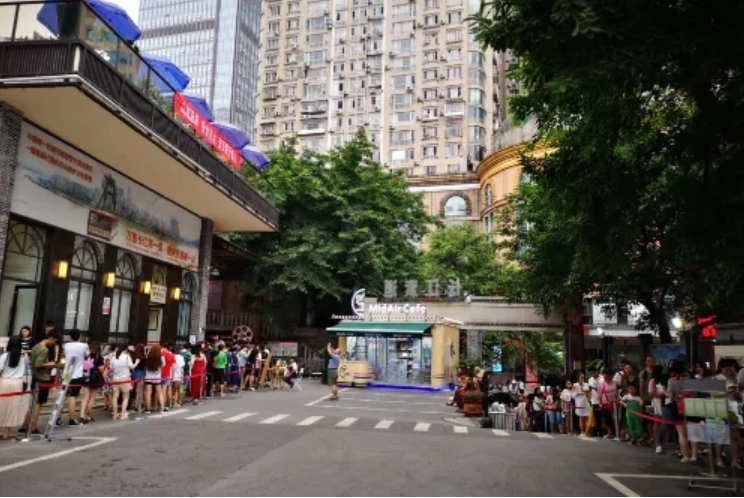
Shangxin Street Cableway Station
Located at No. 4 Shangxin Street, Nan’an District, this is the southern terminus. The station building covers about 600 square meters and is surrounded by an old?style Chongqing neighbourhood. Outside the station, there is a large viewing plaza of about 1,200 square meters, featuring a themed sculpture titled “Yangtze River Cableway” that highlights the close connection between the cableway and urban life. From this station, a 10?minute walk takes you to the Longmenhao Historical and Cultural Block, allowing visitors to combine nearby attractions for a coherent sightseeing route and experience the blend of history and modernity in Nan’an District.
Soaring over the Mountain City
Located at Haoyue Court on the southern bank of the cableway scenic area, this spot covers about 260 square meters. A large stone, about 1.9 meters high and 1.5 meters wide, is inscribed with the words “Soaring over the Mountain City” – it is an excellent secondary photo?taking spot to appreciate the charm of the cableway. Riding the cableway itself is already a wonderful journey of “soaring over the mountain city.”
Suggested Routes:
Recommended Route 1: Start from the North Station in Yuzhong District, take the cableway across the Yangtze River to the South Station in Nan’an District, visit historical and cultural sites such as Longmenhao Old Street and the French Naval Barracks, then stroll along Nanbin Road to enjoy the Yangtze River scenery. In the evening, return to Yuzhong District to admire the night view of Hongyadong.
Recommended Route 2: Start from the South Station in Nan’an District, take the cableway to the North Station in Yuzhong District, explore the Jiefangbei commercial area and Bayi Haochi Street for Chongqing’s specialty snacks, then walk to Hongyadong to experience the dreamlike scene reminiscent of Spirited Away.
Travel Tips:
Try to visit on non?holidays and weekdays to avoid peak crowds and reduce waiting times.
It is recommended to take the cableway in the early morning or at dusk, when the light is soft and the scenery is most photogenic.
When riding, choose a window seat if possible for better views.
When eating at local restaurants, choose reputable establishments to ensure food safety and hygiene.
Check the operating hours and ticket information in advance, and book tickets through official channels to avoid delays.
Combine your visit with nearby attractions: after returning from the southern bank, you can walk 10 minutes to Jiefangbei and then another 15 minutes to Hongyadong for a full?day itinerary.
Important Notes:
Visitors with high blood pressure, heart disease, acrophobia, or other relevant conditions should ride with caution.
It is forbidden to carry flammable, explosive, toxic, or other dangerous items onto the cableway.
Do not shake the cabin or extend any part of your body outside the windows while the cableway is in motion.
Respect the management of the staff and comply with all scenic area regulations.
In case of severe weather (e.g., high winds, heavy rain), the cableway may suspend operations; please follow the instructions of the scenic area.
Do not trust “skip?the?line” tickets sold by touts; purchase tickets only through official channels to avoid being scammed.
Children under 1.2 meters must be accompanied by an adult; elderly and those with limited mobility are advised to have assistance and avoid moving quickly inside the cabin.
Smoking and eating are prohibited inside the cabin; do not lean against the glass or put your head or hands out of the windows, as this may affect safe operation.
Transportation:
Bus: Take bus No. 153, 262, 401, 476, etc., to the “Xiaoshizi” stop and walk about 5 minutes to the North Station; or take bus No. 304, 318, 320, etc., to the “Longmenhao” stop and walk about 3 minutes to the South Station.
Metro: Take Rail Transit Line 1 or Line 6 to “Xiaoshizi” station, exit from Gate 5, and walk about 300 meters to the North Station; or take Rail Transit Loop Line to “Shangxin Street” station, exit from Gate 2, and walk about 800 meters to the South Station.
Driving: The scenic area has parking lots. The North Station parking lot is at No. 151 Xinhua Road, Yuzhong District, and the South Station parking lot is near Longmenhao Old Street. Parking fee is 10 RMB/hour.
Opening Hours:
The Yangtze River Cableway is open year?round. Summer season (March 1 – November 30): 07:30–22:30; Winter season (December 1 – end of February the following year): 07:30–21:30. In case of special circumstances (such as equipment maintenance, severe weather, etc.), operating hours may be adjusted; please refer to the official announcements of the scenic area.
Tickets:
Ticket price: one?way 30 RMB/person, round?trip 50 RMB/person.