Jiguan Cave Scenic Area is located 3 kilometers west of Luanchuan County, Luoyang City, Henan Province. It is a national 5A-level tourist attraction and a UNESCO Global Geopark. The scenic area is centered on a large limestone karst cave, with a total length of 5,600 meters, of which 1,800 meters have been developed for sightseeing, covering a viewing area of 23,000 square meters. It consists of eight major sections. The temperature inside the cave remains a constant 18°C year-round, making it feel like spring in all four seasons, and it is known as the "First Cave of the North." Jiguan Cave was formed approximately 600 million years ago during the Early Cambrian Period. It is a rare karst landscape in northern China and holds extremely high scientific research value and ornamental value.
History and Culture
Jiguan Cave gets its name because the cave entrance resembles a rooster's comb. It was already recorded in the Qing Dynasty "Luanchuan County Annals." In 1992, local villagers discovered and developed it, and it was officially opened to the public in 1993. In 2012, together with Laojun Mountain, it was designated a UNESCO Global Geopark.
Multiple traces of ancient human activity have been found inside the cave, including Song Dynasty coins and Ming Dynasty porcelain shards, proving that people entered to explore it in history. Many myths and legends about Jiguan Cave circulate among the local people, the most famous being the story of "The Golden Rooster Crowing at Dawn."
The scientific research value of Jiguan Cave lies in the fact that it completely records the paleoclimate changes and geological evolution history of the North China region. The cave contains a complete range of chemical sedimentary deposit types and can be called an "underground karst museum."
Main Attractions
Yuzhu Pool
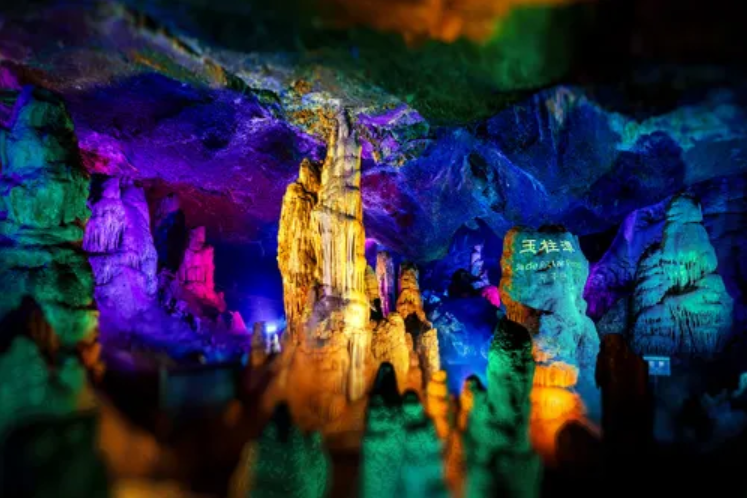
Yuzhu Pool is the first large hall after entering the cave, with an area of 1,600 square meters. The pool water is crystal clear and reflects dozens of stalactite columns of various shapes. Among them, the tallest one, the "Pillar Holding Up the Sky," reaches 38 meters high and 3 meters in diameter, creating a magnificent sight.
Yicai Hall
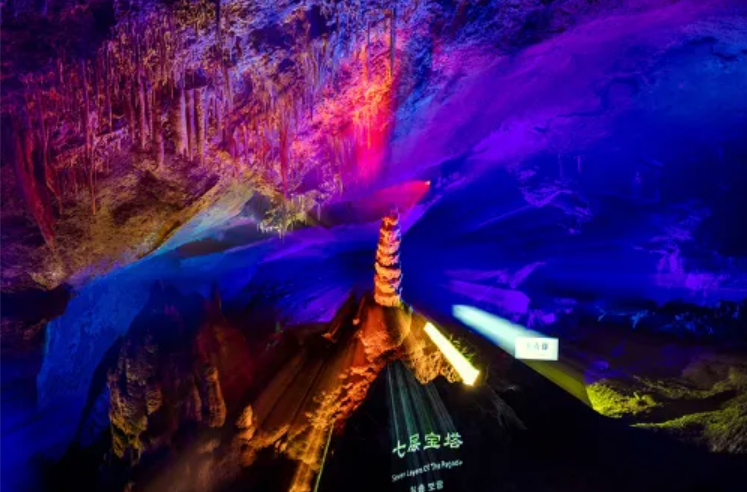
Yicai Hall is famous for its colorful stone curtains and stone flags. Under the illumination of lights, various landscapes formed by calcium carbonate deposits display multiple colors such as red, yellow, and white, just like a fairyland. The most famous landscape is the "Seven-Story Pagoda," which is 12 meters high and resembles an exquisite pagoda.
Diewui Palace
Diewui Palace is named after the huge stone curtains hanging from the cave ceiling, layered one upon another like palace drapes. Among them, the "Carp Leaping Over the Dragon Gate" stone waterfall is 28 meters high and 13 meters wide, making it one of the largest stone waterfalls among developed caves in China.
Stone Bamboo Forest
Stone bamboo shoots and stone columns stand in great numbers on both sides. Together with the lighting effects, they create the atmosphere of a mysterious underground world.
Yaochi Palace
Yaochi Palace is the most magnificent section in the cave. The pool covers an area of 300 square meters, and the stone bamboo shoots reflected in the water appear like a forest. With colorful lighting, it looks like the Yaochi fairyland of the Queen Mother of the West. The most famous landscape, "Jade Trees and Crystal Flowers," is made up of dense stone flowers and is sparkling and translucent.
Recommended Tour Route:
Recommended tour route: Scenic Area Entrance → Yuzhu Pool → Yicai Hall → Diewui Palace → Yaochi Palace → Stone Forest Workshop → Juxian Palace → Exit. A guide provides commentary throughout the tour. The route inside the cave is one-way, and reverse travel is not allowed.
Visiting Suggestions:
The cave is wet and slippery, so it is recommended to wear non-slip shoes.
In summer, the temperature difference between inside and outside the cave is large, so you may bring a light jacket.
Photography enthusiasts may bring a tripod (flash is prohibited).
Following the guide's explanation will help you better understand the geological knowledge.
It can be combined with the nearby Laojun Mountain Scenic Area for a two-day trip.
Avoid peak holiday periods and choose to visit in the morning.
Notes:
Do not touch stalactites or other sedimentary formations inside the cave.
Smoking and littering are prohibited.
Visitors with limited mobility should be cautious, as some sections are steep.
People with heart disease or high blood pressure should not stay for a long time.
Observe the scenic area's safety regulations and do not leave the tour path.
If you feel unwell, contact staff promptly.
Transportation:
Self-driving: From the Zhengzhou direction, take the Zheng-Luan Expressway to the Luanchuan exit, then head west along Luanzhou Avenue for 3 kilometers.
Bus: Take Bus No. 3 from Luanchuan County town directly to the scenic area.
High-speed rail: Take the high-speed rail to Luoyang Longmen Station, then transfer to the Luanchuan tourist express line, which takes about 2 hours.
Airplane: The nearest airport is Luoyang Beijiao Airport, about a 2.5-hour drive from the scenic area.
Opening Hours:
The scenic area is open all year round. Opening hours are 8:00-17:30 (peak season) and 8:30-17:00 (off-season). The cave tour takes about 1.5-2 hours. It is recommended to reserve half a day to visit the entire scenic area.
Tickets:
The ticket price is 80 yuan per person. Other experience projects require separate charges.