Sunlight Rock is located on Gulangyu Island, Siming District, Xiamen City, Fujian Province. It is the core scenic area and iconic landmark of Gulangyu, and an important part of the Gulangyu Scenic Area, which is rated as a national 5A-level tourist attraction. Centered on the highest peak of Gulangyu Island, the scenic area integrates natural scenery, historic architecture, cliffside inscriptions, and Minnan folk customs. It is a mountain-type scenic area that combines mountaineering and sightseeing, cultural study, and leisure tourism. The summit of Sunlight Rock is 92.7 meters above sea level, making it the highest point on Gulangyu Island. The scenic area covers approximately 56,000 square meters and mainly includes the summit, Zheng Chenggong's Drilling Platform, Qinyuan Garden, Bai Niao Yuan (Hundred Birds Garden), and the Memorial Garden of Master Hongyi. From the top, visitors can enjoy a panoramic view of Gulangyu Island, a distant view of Xiamen's urban area, and the Xiamen Bay waters, making it the premier viewing spot on the island.
History and Culture
Originally named Huangyan (Shining Rock) because the morning sunlight first illuminates the rock, it was officially named Sunlight Rock during the Ming Dynasty. Its history is closely linked to the development of Gulangyu and major historical events such as Zheng Chenggong's recovery of Taiwan. In the late Ming and early Qing dynasties, the national hero Zheng Chenggong stationed troops here, drilled his navy, and built a naval drilling platform and a stockade gate. The existing remains of Zheng Chenggong's garrison are important physical evidence for studying Ming-Qing coastal defense and the recovery of Taiwan, and they also serve as a significant patriotic education landmark in southern Fujian.
Sunlight Rock is also a fusion of literati culture and religious culture on Gulangyu. At the foot of the mountain stands Sunlight Rock Temple, first built during the Zhengde period of the Ming Dynasty. It began as a cave shrine and was gradually expanded into a temple in the distinctive Minnan style, making it one of the oldest Buddhist structures on Gulangyu. The scenic area preserves over a hundred cliffside inscriptions from the Ming and Qing dynasties to modern times, covering calligraphy, records, poems, and more, including works by famous figures such as Cai Yuanpei and Cai Jun. These inscriptions possess both artistic and historical value and document the cultural development of Gulangyu.
In modern times, Sunlight Rock became the iconic sight of Gulangyu. After Gulangyu was inscribed as a UNESCO World Heritage Site, Sunlight Rock, as one of the core heritage sites, has fully preserved its mountain landscape, historic buildings, and cultural relics, becoming an important window for showcasing Minnan culture, overseas Chinese culture, and coastal defense culture.
Main Attractions
Summit of Sunlight Rock
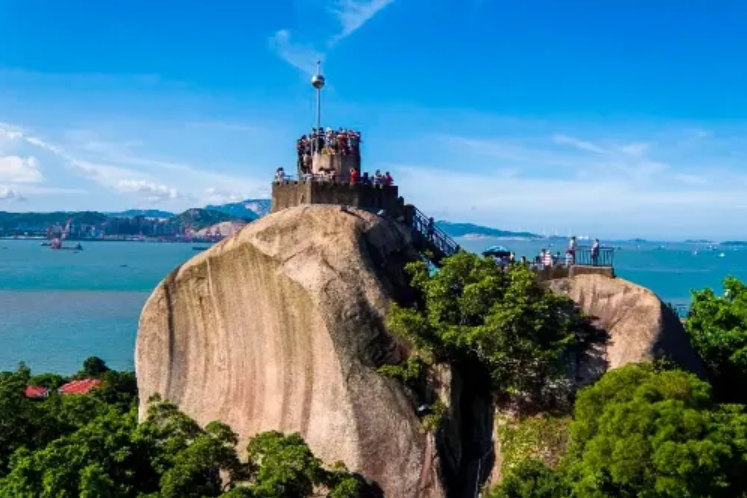
The summit, at 92.7 meters, is the highest point on Gulangyu Island. It features a viewing platform and railings. From the top, visitors can enjoy a 360-degree panoramic view of Gulangyu's red-tiled buildings, beaches, and Ganghouhou Seaside Bathing Area, as well as distant views of Xiamen Island, the Lujiang River, the Yanwu Bridge, and the Kinmen Islands. This is the core viewing spot and a must-visit attraction for tourists.
Sunlight Rock Temple
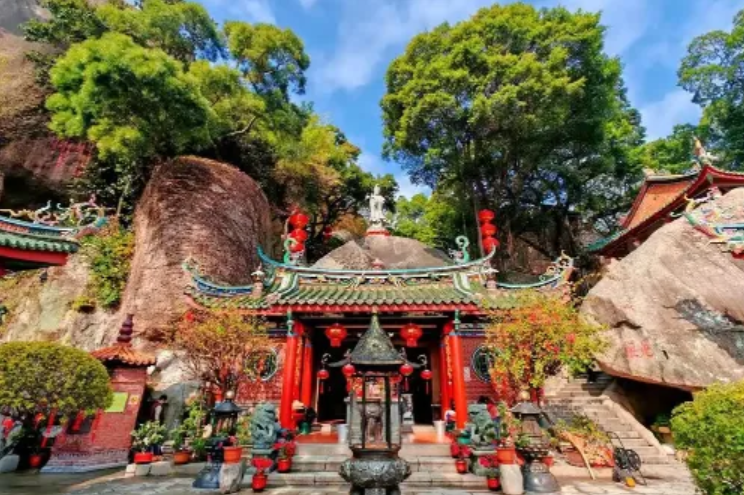
Located at the foot of Sunlight Rock, the temple was first built during the Zhengde period of the Ming Dynasty. Built against a natural cave, it is a Minnan Buddhist temple. The compact and delicate structure is constructed along the mountainside and includes a Main Hall, a Guanyin Hall, and other buildings. The temple blends harmoniously with the rocks and greenery, and it is the oldest Buddhist building on Gulangyu, with an unbroken history of incense offering.
Zheng Chenggong's Naval Drilling Platform
Situated on the mountainside, this stone platform was the command post where Zheng Chenggong drilled his navy in the late Ming Dynasty. It is a core relic of Zheng's garrison on Gulangyu and bears witness to his military training and the recovery of Taiwan. It is an important historical and cultural attraction.
Zheng Chenggong's Stockade Gate
This military pass was built during Zheng Chenggong's garrison period. Composed of natural rocks and stone structures, it was the entrance to the military camp on Sunlight Rock. Well preserved, it demonstrates the coastal defense military layout of Gulangyu during the Ming and Qing dynasties.
Cliffside Inscriptions Group
Distributed along both sides of the climbing paths, there are over 80 cliffside inscriptions, dating from the Ming and Qing dynasties to the Republic of China period. They include calligraphic works, poems, and records in various scripts such as regular, running, and cursive. Among them, inscriptions like "Gulang Dongtian" (Gulang Cave Heaven) and "Lujiang Diyi" (First of Lujiang) are classic works from the Ming Dynasty and represent an important part of Gulangyu's humanistic art.
Qinyuan Garden
Located on the south side of Sunlight Rock, Qinyuan Garden covers about 12,000 square meters and features a musical theme. The garden is lush with greenery and includes viewing pavilions and musical sculptures. Connected to the mountain, it offers a tranquil environment for leisure and sightseeing.
Memorial Garden of Master Hongyi
Located within the Sunlight Rock scenic area, this garden was built to commemorate Master Hongyi's propagation of Buddhism in southern Fujian. It features a memorial sculpture and exhibition areas displaying the master's life and Buddhist culture, serving as a site for religious culture and commemorative visits on Gulangyu.
Suggested Tour Route:
Sunlight Rock Main Gate → Sunlight Rock Temple → Cliffside Inscriptions Group → Zheng Chenggong's Stockade Gate → Zheng Chenggong's Naval Drilling Platform → Climbing Path → Summit of Sunlight Rock → Qinyuan Garden → Memorial Garden of Master Hongyi → Scenic Area Exit
Visiting Tips:
Recommended visiting time: 1.5 to 2 hours. The climbing path is about 800 meters in total, with a gentle slope, suitable for all ages.
The best light for photography is from 6:00 to 8:00 a.m., when you can enjoy the sunrise and a panoramic view of Gulangyu with fewer crowds.
You can combine your visit with other Gulangyu attractions, such as Shuzhuang Garden and Haoyue Garden, to form a full-day itinerary.
Wear comfortable flat shoes, as the paths are mainly stone steps; avoid high heels or slippers.
Rest benches and drinking water fountains are available in the scenic area, so you can travel light without carrying large amounts of water.
During peak seasons, it is recommended to book tickets online in advance to reduce waiting time at the entrance.
Important Notes:
The viewing platform at the summit is small; during peak seasons, queues are expected. Crowding and climbing over railings are prohibited.
Smoking, carving on rocks, and climbing on stone inscriptions or ancient buildings are forbidden.
Pets are not allowed in the core sightseeing areas.
On rainy days, stone steps may be slippery; watch your step. In windy weather, take extra care when viewing from the summit.
The heritage buildings and cliffside inscriptions are part of the World Heritage site; do not touch, deface, or damage them.
Loud noises, street vending, and distributing flyers are prohibited within the scenic area.
Children and the elderly should be accompanied by family members; avoid walking alone.
Transportation:
Getting to Gulangyu: First travel to Xiamen's Siming District Ferry Terminal or the Xiagu Ferry Center (Cruise Center), then take a ferry to Gulangyu's Piano Pier or Neicuo'ao Pier.
On Gulangyu: Sunlight Rock is located in the central part of the island. Motor vehicles are prohibited on the island. It is about a 10-minute walk from Piano Pier and about a 15-minute walk from Neicuo'ao Pier to the scenic area.
There are no buses or taxis directly to the site; all travel is on foot. You can use the Gulangyu scenic area map for route guidance.
Opening Hours:
Summer (May 1 to September 30): 5:30 a.m. to 6:00 p.m.
Winter (October 1 to April 30): 6:00 a.m. to 5:30 p.m.
Ticket sales stop 30 minutes before closing. Public holiday hours remain unchanged; hours may be adjusted in case of severe weather, with advance notice provided.
Ticket Price:
50 RMB per person.