Xiamen Museum is located at No. 95 Tiyu Road, Siming District, Xiamen City, Fujian Province, within the Xiamen Cultural & Arts Center. It is a national secondary museum, a national 3A-level tourist attraction, and a comprehensive municipal museum integrating cultural relic collection, preservation, research, exhibition, and education. The museum focuses on Minnan regional culture, overseas Chinese history, cross-strait relations, and Xiamen’s urban development, with a rich collection that fully presents the historical context and cultural heritage of Xiamen and the Minnan area. The main building features a modern architectural style, with a total floor area of 25,300 m2, exhibition space of about 10,000 m2, and a relic storage area of 2,000 m2, covering a total site area of approximately 15,000 m2. The well-arranged layout combines functionality and cultural aesthetics, making it an important cultural landmark and science education base in Xiamen.
History and Culture
Xiamen Museum was first established in 1959, originally located in Bagua Lou on Gulangyu Island, making it one of the earliest municipal comprehensive museums in Fujian Province. In its early years, its main mission was to collect and preserve historical relics from the Minnan region and Xiamen, gradually amassing a substantial number of ceramics, calligraphy and paintings, folk artifacts, and overseas Chinese-related items, laying the foundation for future exhibitions. In 2006, the museum moved to the new premises in the Siming District Cultural & Arts Center, with fully upgraded facilities and a more complete exhibition system, officially reopening to the public.
As a core showcase for Minnan culture, the museum embodies Xiamen’s complete development journey from a coastal defense town and treaty port to a special economic zone. It deeply interprets the "Five Bonds" between Fujian and Taiwan—close geographical proximity, blood ties, cultural continuity, commercial connections, and legal kinship—while systematically presenting distinctive cultures such as Minnan folk customs, overseas Chinese entrepreneurship, and Minnan architectural arts. The museum currently houses nearly 20,000 items/sets in its collection, including over 1,500 items/sets of precious cultural relics, spanning ceramics, paintings and calligraphy, jades, folk artifacts, modern and contemporary items, and more. Among these, Minnan folk artifacts, cross-strait exchange items, and Xiamen trade relics are particularly distinctive, serving as important physical materials for research on Minnan culture, cross-strait relations, and overseas Chinese history.
Xiamen Museum has been recognized as a National Science Education Base, a Fujian Provincial Patriotic Education Base, and a Xiamen Municipal Civilized Unit. It regularly hosts public exhibitions, cultural lectures, relic restoration workshops, and educational study programs, making it a vital public cultural platform for preserving Minnan heritage, connecting Fujian-Taiwan sentiments, and popularizing historical knowledge.
Major Exhibitions
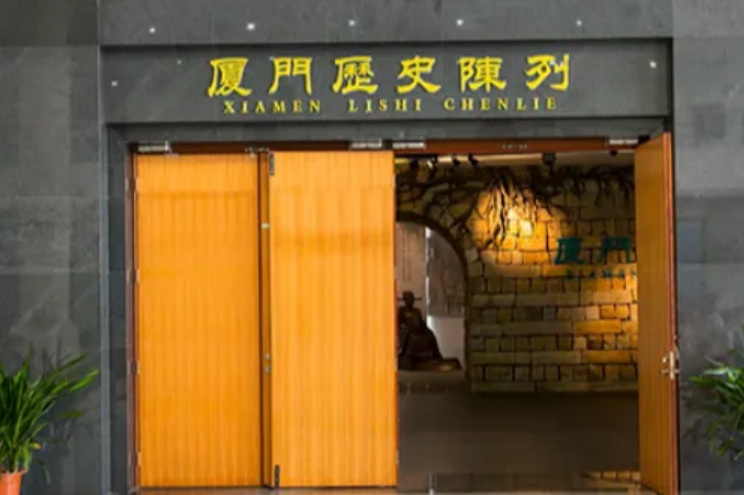
Xiamen History Gallery
The Xiamen History Gallery is the museum’s core permanent exhibition hall, located on the first floor with an area of about 2,000 m2. It follows a chronological timeline, divided into five sections: Ancient Civilization, Tang-Song Administration, Ming-Qing Coastal Defense, Modern Treaty Port, and Contemporary Development. Through artifacts, images, scene reconstructions, and multimedia presentations, it comprehensively displays Xiamen’s history from the Neolithic period to the establishment of the Special Economic Zone. Over 300 relics are on display, including precious items such as Ming-Qing coastal defense weapons, trade contracts, and a restored model of old Xiamen streets.
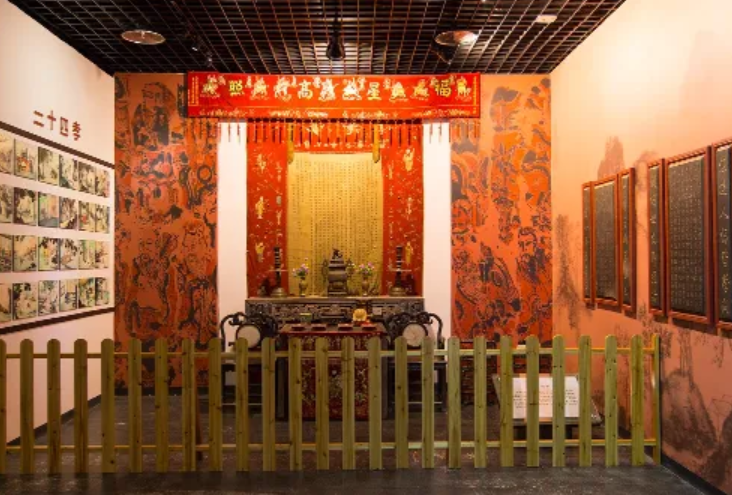
Minnan-Taiwan Folk Customs Gallery
Located on the second floor with an area of about 1,800 m2, this gallery focuses on the shared folk culture of Minnan and Taiwan, showcasing wedding customs, festivals, cuisine, dwellings, opera, handicrafts, and more. It recreates scenes of daily life in the Minnan-Taiwan region and displays over 400 folk artifacts, including traditional wedding utensils, Minnan puppets, festive costumes, and antique farming tools, vividly demonstrating the common cultural roots of Minnan and Taiwan.
Minnan-Taiwan Ancient Stone Carvings
This exhibition is divided into two sections: the Stone Carving Corridor (indoor) and the Stone Carving Plaza (outdoor). The indoor area is organized by function into architectural stone carvings, religious beliefs, and ancestral worship. The outdoor plaza uses landscape gardening to arrange the exhibits thematically, including a "farmhouse courtyard" setting.
Masterpieces of the Museum Collection
This exhibition brings together the most artistically valuable items in the museum, those most characteristic of Minnan culture, and those that best represent the historical and cultural essence of the Chinese nation. Based on material and category, the exhibition is divided into sections such as "Shapes from Clay," "Radiant Jades," "Fragrant Ink Paintings," "Golden and Silver Splendor," and "Master of Chinese Arts and Crafts – Cai Shui Kuang’s Lacquer Thread Sculptures," featuring 216 precious items (sets).
Temporary Exhibition Hall
Located on the third floor with a total area of about 3,500 m2, divided into two independent halls, this space hosts rotating domestic and international exchange exhibitions, thematic cultural shows, art exhibitions, science displays, and more. The content is regularly updated, serving as an important area for broadening cultural perspectives and enriching the museum’s exhibition offerings.
Suggested Tour Route:
Museum Entrance → Xiamen History Gallery → Masterpieces of the Museum Collection → Minnan-Taiwan Folk Customs Gallery → Minnan-Taiwan Ancient Stone Carvings → Temporary Exhibition Hall → Museum Gift Shop → Museum Exit
Visiting Tips:
Recommended visit duration: 1.5 to 2 hours, allowing ample time to view all permanent galleries and gain an in-depth understanding of Xiamen’s history and Minnan culture.
Pick up a free museum guide brochure at the information desk for floor plans and highlights of key artifacts.
Priority should be given to the Xiamen History Gallery and the Minnan-Taiwan Folk Customs Gallery, as they are the core signature exhibitions with the most representative collections.
Visitors with children may participate in free interactive educational activities offered by the museum to enhance enjoyment and learning.
Allow about 10 minutes to browse the museum gift shop for Minnan- and Taiwan-themed cultural creative products.
Weekday visits are recommended for a less crowded experience; on weekends and holidays, try to avoid the peak hours between 10:00 and 11:00 AM.
Important Notices:
Do not touch artifacts, display cases, or exhibits. Flash photography is prohibited, and photography of certain special exhibits is strictly forbidden.
Food, beverages, flammable/explosive materials, controlled knives, and other dangerous items are not allowed inside.
Please maintain quiet while visiting; no loud talking, running, or horseplay.
Smoking, spitting, and littering are prohibited in the exhibition halls. Please take care of public facilities.
Minors must be accompanied by adults to prevent getting lost or accidentally touching exhibits.
Selfie sticks and tripods are not permitted inside; follow staff instructions at all times.
Temporary exhibition rules are subject to on-site notices; visitors must comply with the respective exhibition requirements.
Transportation:
Bus: Take Bus No. 8, 9, 13, 15, 20, 25, 31, 86, 88, or 97 to Wenhua Yishu Zhongxin (Cultural & Arts Center) stop, then walk 200 meters.
Metro: Take Line 2 to Yuxiu Donglu Station, exit from Gate 4, and walk about 800 meters.
Driving: Navigate to the Xiamen Cultural & Arts Center parking lot; parking is open to the public.
Taxi/Ride-hailing: Directly set destination to Xiamen Museum (95 Tiyu Road) and alight at the entrance.
Opening Hours:
Open Tuesday through Sunday, 9:00 AM – 5:00 PM (last admission at 4:30 PM). Closed on Mondays for maintenance. Regular opening on statutory holidays; any special adjustments will be announced via official notices.
Admission:
Free admission. Guided tours in person are available at an additional charge.