Huanglong Mountain Resort Tourist Area is located in Yuhongsi Village, six kilometers northeast of Xinbaoan Town, Huailai County, Zhangjiakou City, Hebei Province. It is a national 4A-level tourist attraction. The scenic area borders Beijing to the east and Shanxi and Inner Mongolia to the west, enjoying a superior geographical location and convenient transportation. As one of the relatively well-preserved forest areas in northern China, Huanglong Mountain Resort is known for its magnificent, continuous mountain ranges, rich ecological resources, and unique leisure experiences. The peaks in the mountains resemble nine giant dragons lying across the land, creating a majestic scene. The scenic area covers a total area of 8 square kilometers, while the resort area occupies more than 8,000 mu. The ecological vegetation coverage rate is as high as 95%, the air is fresh, and negative oxygen ion content is rich. The average annual temperature is 19.1°C, and the highest temperature in midsummer is about 26°C, making it an ideal place for summer vacation, leisure, and health preservation. The scenic area integrates dining and accommodation, entertainment and shopping, leisure and summer retreats, mountain climbing and exploration, and other functions, with complete supporting facilities. It has successively won honorary titles such as “Citywide Comprehensive Management Compliance Unit” and “Advanced Collective in Zhangjiakou’s Tourism Industry.”
History and Culture
Huanglong Mountain Resort contains profound historical and cultural heritage and is home to many myths and legends. Legend has it that the Eight Immortals once left a treasure cabinet on Xianju Mountain. The cabinet contained eighteen treasures, including a golden mill, a silver millstone, and a golden pony. The treasure cabinet was locked by a stone lock, and the key to opening it fell in Nine Dragon Valley. Folk legend says that whoever finds the key will obtain great wealth, adding a mysterious color to the scenic area. In addition, Hushen Cave on the southeast cliff of the scenic area enshrines Hu Shen, the “Dragon King Buddha Who Protects the Country.” Legend says that Hu Shen was originally a man from Shanxi in the Ming Dynasty. Because he was an upright official, he was later placed by a heavenly deity inside an ice gourd on the cliff of Huanglong Mountain Resort. After ten years of ascetic cultivation, he attained immortality. He often came out of the cave to send rain and bless the people, and was therefore named the “Dragon King Buddha Who Protects the Country.” To this day, many tourists still go there to pray for blessings.
In addition to myths and legends, red historical imprints are preserved around Huanglong Mountain Resort. The Xinbaoan Campaign Site, about a 15-minute drive from the scenic area, was a key battlefield in the Pingjin Campaign. In 1948, fierce fighting took place here, witnessing an important course in the history of the Chinese revolution. Tourists can use this opportunity to experience those years of war and remember the sacrifices and dedication of the revolutionary forebears.
Main Attractions
Cloud Grassland
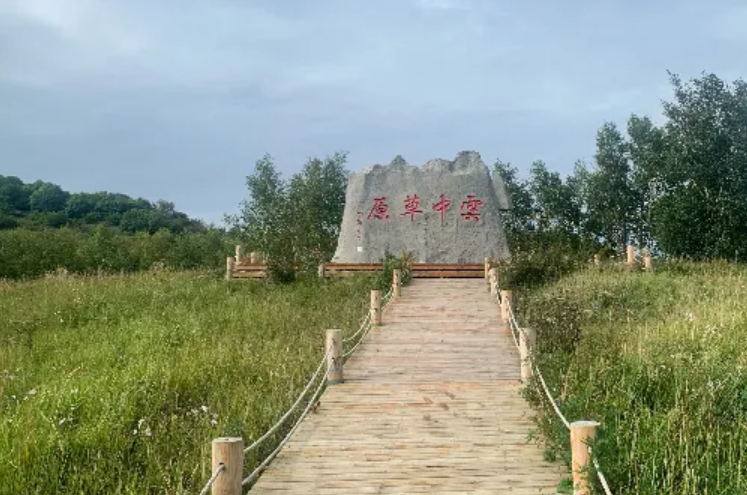
Cloud Grassland is the core attraction of Huanglong Mountain Resort. It is located in the northern part of the scenic area, at an altitude of 1,800 meters, with an area of 8 square kilometers. This alpine meadow is like a huge emerald set atop the peaks. It is often shrouded in clouds and mist, creating the fantastical scene of “people walking in the clouds, grass swaying in the fog.” The average summer temperature is only 19.1°C, more than 10°C lower than the city, making it an excellent summer resort. The grassland is covered with wildflowers such as dandelions and globeflowers. In summer, when they bloom, it looks like a sea of flowers. Traces of wild animals such as hares and squirrels can often be seen. The scenic area has laid wooden boardwalks across the grassland. Tourists can hike along the boardwalks to explore, and at the end, “Luoying Rock” offers a view of a thousand-meter-deep valley, a spectacular sight. At the edge of the grassland, there is an equestrian experience area offering horse riding services at 30 yuan per lap, allowing tourists to feel the joy of galloping on the grassland. In summer, starry-sky camping is also available here, offering a night experience in harmony with nature.
Xianju Mountain
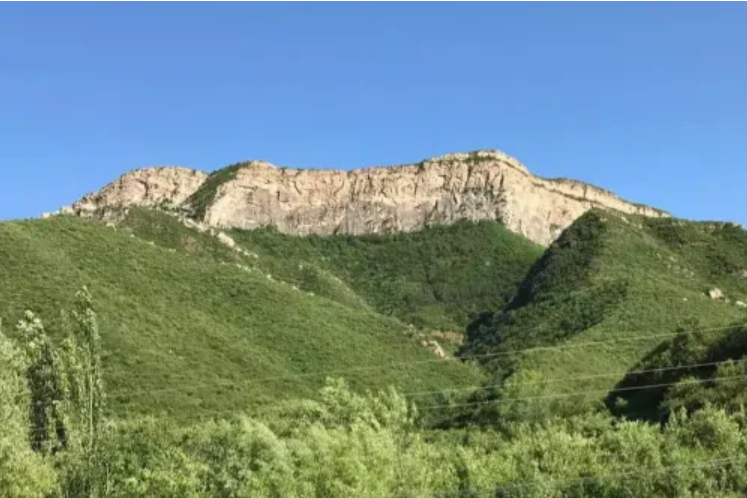
Xianju Mountain is located in the southeastern part of the scenic area. It is named after a huge rock at the top that resembles a “fairy cabinet,” and is a highly legendary attraction in the scenic area. According to legend, the gap between the cabinet body and its lid is so narrow that only one person can pass sideways. The scenic area has specially set up a “Touch the Fairy Cabinet” check-in point, where tourists can touch the “keyhole” of the legendary treasure cabinet, symbolizing the acquisition of “wealth luck.” Climbing Xianju Mountain requires using both hands and feet. The rocks along the way are steep and the climb is very challenging. After reaching the top, visitors can take in the surrounding mountains that look like waves. The natural patterns on the rock surface seem like a “heavenly book” carved by time, inspiring endless imagination.
Huanglong Pool
Huanglong Pool is formed by mountain springs gathering together. The water is crystal clear and rich in various minerals. In summer, the water is cool, and tourists can soak their feet here to relieve the heat. Folk legend says that the Little Yellow Dragon once played here. A natural mark on a rock by the pool is called the “Dragon Claw Print,” a popular spot for tourists to take photos. Walking along the trail by the pool, visitors can see vegetation such as wild walnut trees. In late autumn, fallen walnut leaves cover the ground in gold, creating a distinctive scene.
Treasure Key Gate
Passing through Treasure Key Gate, visitors officially enter the core touring area of Huanglong Mountain Resort, as if beginning a wonderful journey to explore nature and legends. Its unique landforms and mythological meaning make it one of the first landscapes where tourists stop to admire after entering the scenic area.
Hushen Cave
Hushen Cave is located on the cliff of the scenic area. Inside, Hu Shen, the “Dragon King Buddha Who Protects the Country,” is enshrined. The natural stalactites on the cave walls have unique shapes resembling dragon scales, adding to the mysterious atmosphere. Tourists can hold incense and enter the cave to pray, experiencing the artistic conception that “a mountain need not be high; it is famous if an immortal dwells in it.” Outside the cave, visitors can enjoy the steep scenery around the cliff.
Duxian Bridge
Duxian Bridge is a suspension bridge spanning the mountains. It is named after a local legend: a woodcutter once walked across this bridge and happened to see Lü Dongbin and Han Zhongli playing chess here. Because he watched the game for a long time, he was transformed into an immortal. Therefore, folk belief holds that those who walk across this bridge can enjoy a life as wonderful as that of immortals. Although the bridge is not long, walking on it allows visitors to feel the mountain breeze and enjoy the surrounding scenery, offering a unique pleasure.
Maitreya Buddha Statue
The Maitreya Buddha Statue is built against the mountain. It has a serene expression, a bare chest and belly, and a smiling face, fully displaying the open-minded bearing of “a broad belly can tolerate what is hard to tolerate in the world; a smiling mouth laughs at the laughable people in the world.” The statue is surrounded by green trees in a quiet environment. It is not only a humanistic landscape full of Zen meaning in the scenic area, but also a good place for tourists to stop, pray, and feel inner peace. Its charmingly naive image and the natural mountains and waters of the resort complement each other, conveying the cultural connotation of optimism and inclusiveness.
Tiger-Fighting Platform
Tiger-Fighting Platform carries a local heroic story. In May 1966, Zhang Yusheng, a demobilized soldier who had returned home and served as a production team leader, was herding here when he suddenly encountered a fierce tiger. To protect the production team’s cattle, he risked his own safety and fought the tiger, finally subduing it and being praised as a “Living Wu Song.” There is an introduction to the related deeds here, allowing tourists to learn about this brave and fearless history.
Longevity Pavilion
Longevity Pavilion is located beside a murmuring mountain stream and surrounded by green trees, with a quiet environment. In front of the pavilion stand auspicious statues of a crane and deer celebrating spring and wishing for longevity and happiness. A local saying goes: “Walk around Longevity Pavilion, and you will surely live to ninety-nine; sit in Longevity Pavilion, and a hundred sorrows will vanish like an immortal’s joy.” It is a good place for tourists to relax, cool off, and rest. Here, visitors can listen to the babbling stream and feel the beauty of nature.
Cableway
The cableway is a convenient means of transportation connecting the lower scenic area with Cloud Grassland. It is about 1,200 meters long, and a one-way trip takes about 20 minutes. The cableway adopts a safe and reliable monocable circulating fixed-grip gondola design. The gondolas offer a wide field of view, allowing tourists to enjoy the mountain and forest scenery along the way in all directions. For tourists who do not want to hike up the mountain or have limited physical strength, the cableway not only saves 2–3 hours of climbing time, but also provides a unique perspective overlooking the entire resort, making the journey easier and more pleasant.
Suggested Tour Route:
It is recommended to enter from the scenic area entrance. First visit Treasure Key Gate, pass through the natural cave, and admire the steep scenery of Treasure Key Mountain rising like a wall for thousands of feet. Then visit the lower mountain attractions in order, including Hushen Cave, Duxian Bridge, Huanglong Pool, and Guanyin Temple, to experience the characteristics of different landscapes. After that, you can choose to hike up the mountain (about 2–3 hours in total) or take the cable car (about 20 minutes one way) to the summit. After reaching the summit, first visit Cloud Grassland, hike along the wooden boardwalk to Luoying Rock for sightseeing, and experience horse riding and other activities. Then go to Xianju Mountain, climb it, participate in the “Touch the Fairy Cabinet” check-in, and enjoy the summit scenery. After touring, you can go south along the mountain road from the summit, viewing natural landscapes such as Ma’an Bridge, Elephant Rock Mountain, Dangerous Road Sky Ladder, and Reclining Buddha Rock along the way, and finally return to the scenic area entrance. The entire tour takes about 6–8 hours.
Travel Tips:
The suggested duration of visit is one day. If you want to deeply experience the grassland starry sky or participate in nighttime activities, you can choose to stay overnight in the scenic area. The resort offers a variety of room types.
The best season to visit is summer (June–August), when the temperature is cool and the grassland flower sea is in full bloom, suitable for escaping the heat. Autumn (September–October), when the mountain forest colors are rich, is also a good choice.
For hiking, prepare comfortable sports shoes and an appropriate amount of drinking water. The temperature at the summit is lower, so even in summer it is recommended to bring a light jacket.
Tourists planning to experience starry-sky camping can ask the scenic area in advance whether tent rental services are provided. They may also bring their own equipment, but tents must be set up in designated areas.
There is a dining area in the scenic area, mainly serving local specialty farm dishes. Visitors may also bring their own dry food and snacks.
In spring, visitors can participate in the Mountain Flower Festival held by the scenic area; in autumn, there is the Autumn Harvest Picking Festival; in winter, some areas open snow activities. Itineraries can be planned according to seasonal features.
Precautions:
During mountain climbing and touring, follow the guidance of scenic area signs. Do not enter undeveloped areas without authorization to avoid danger.
Climbing Xianju Mountain is relatively difficult. Tourists with heart disease, high blood pressure, or fear of heights are advised to choose carefully. When climbing, grasp firmly and step steadily, and pay attention to safety.
When soaking feet in Huanglong Pool, be careful of slippery ground to avoid falls. Protect the pool water environment and do not litter.
Grassland camping must comply with scenic area regulations. Keep the environment clean, do not discard waste casually, and pay attention to warmth and safety at night.
Wild animals live in the scenic area. Please do not feed, disturb, or harm them, and protect the ecological environment.
In summer, short showers may occur in the mountains. It is recommended to carry rain gear and take sun protection measures to avoid prolonged exposure to the sun.
Respect local religious beliefs and folk customs. Keep quiet in prayer places such as Hushen Cave and observe relevant etiquette.
Transportation:
Self-driving: From Beijing, drive along the Beijing–Tibet Expressway (G6) to the Huailai exit, then drive along National Highway 110 toward Xinbaoan Town, and follow the road signs along the way to Huanglong Mountain Resort. The total distance is about 120 kilometers, and the drive takes about 1.5 hours. From downtown Zhangjiakou, drive east along the Beijing–Tibet Expressway (G6) to the Huailai exit, then follow the same route. The total distance is about 140 kilometers, and the drive takes about 2 hours.
Public transportation: From Huailai County Passenger Station, take a bus to Xinbaoan Town (about one bus every 30 minutes, about 40 minutes). After arriving in Xinbaoan Town, you can take a taxi to the scenic area (about 15 minutes, about 20 yuan). There are long-distance buses from near Zhuxinzhuang Subway Station in Beijing to Huailai County. After arriving, transfer to the above-mentioned bus or taxi.
Tourist routes: Some travel platforms or travel agencies offer one-day tours to Huanglong Mountain Resort from Beijing, including transportation and tickets, and can be booked online in advance.
Opening Hours:
Open all year round. Opening hours are slightly adjusted according to the season: summer (April 1–October 31) is 8:00–18:00; winter (November 1–March 31 of the following year) is 9:00–17:00. The scenic area may make minor adjustments to opening hours based on weather, holidays, and other conditions. It is recommended to confirm by calling the scenic area’s official phone number before traveling.
Tickets:
As of August 18, 2025, the ticket price is 80 yuan per person.