Dajingmen Scenic Area is located at the northern end of Qiaoxi District, Zhangjiakou City, Hebei Province. It is a national 4A-level tourist attraction and a Major Historical and Cultural Site Protected at the National Level. As one of the important passes of the Great Wall of China, it is known together with Shanhaiguan, Juyongguan, and Jiayuguan as one of the “Four Great Passes of the Great Wall,” and is famous as the “First Gate of the Great Wall.” The scenic area’s greatest feature is its integration of “commercial culture” and “martial culture”; it witnessed both the history of ancient military defense and the prosperity of frontier trade. The main structure of Dajingmen is a brick archway on a strip-stone foundation. The gate wall is 12 meters high, 13 meters long at the base, and 9 meters wide; the outer side of the archway is 5.4 meters high and 6 meters wide, while the inner side is 9.5 meters high and 6.8 meters wide; the top platform is 12 meters long and 7.5 meters wide, with a 1.7-meter-high battlement on the outside and a 0.8-meter-high parapet on the inside. The scenic area as a whole includes the Dajingmen Great Wall, Laiyuan Fort, and other areas, covering a total area of about 192,000 square meters. It is the core area showcasing Zhangjiakou’s history and culture and the appearance of the Great Wall.
Historical Culture
Dajingmen was first built in the first year of the Shunzhi reign of the Qing Dynasty (1644). Its construction arose from the need for military defense. Because it is located at a vital throat and the terrain is strategically important, it has been a contested place for military strategists since ancient times. During the Jiajing reign of the Ming Dynasty, on average a relatively large-scale war occurred every four years, which shows the importance of its strategic position.
In addition to its military value, Dajingmen was also an important hub for frontier trade and cultural exchange. As early as the fifth year of the Longqing reign of the Ming Dynasty (1571), a frontier market for “tribute trade” and “tea-horse trade” gradually formed in the Yuanbaoshan area outside Dajingmen. In the Qing Dynasty, this place became an important commercial city in the north, known as an “overland commercial port” and “fur capital.” The famous Zhangku Trade Route started from Dajingmen, connected southward with Beijing and Tianjin and radiated to Huguang, and extended northward to Kyakhta in Russia and even Moscow. This made Zhangjiakou the largest tea export base and fur distribution center in China at that time, greatly promoting economic and cultural exchanges among the Mongolian, Han, Hui, Tibetan, and other ethnic groups.
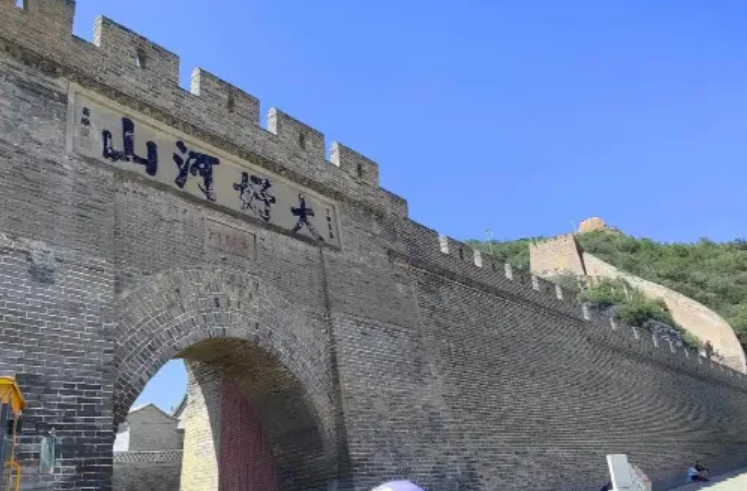
In 1927, Gao Weiyue, the Chahar Commander-in-Chief, inscribed the four large Yan-style characters “大好河山” (Great Rivers and Mountains) on the lintel of Dajingmen. The strokes are vigorous and powerful, and it has become a landmark cultural symbol of Zhangjiakou. In modern revolutionary history, Dajingmen also left a glorious chapter: after the September 18 Incident in 1931, Ji Hongchang led the Anti-Japanese Allied Army from here to fight the Japanese invaders; in August 1945, the Eighth Route Army entered Zhangjiakou through Dajingmen and liberated this ancient city beyond the pass; in December 1948, the Chinese People’s Liberation Army annihilated more than 50,000 Kuomintang troops outside Dajingmen, and Zhangjiakou was liberated for the second time. These historical events have made Dajingmen’s cultural connotations even richer.
Main Attractions
Dajingmen Gate Tower
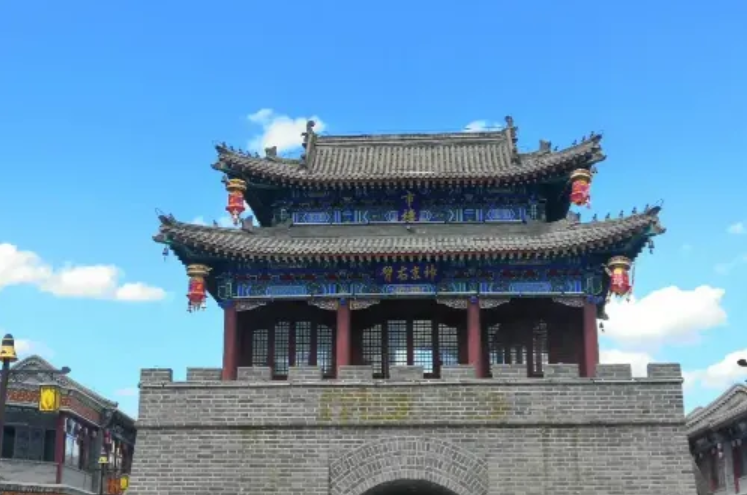
The Dajingmen Gate Tower is the core attraction of the scenic area. Its architectural style is simple and massive, embodying the rugged and vigorous, restrained yet unconstrained spirit unique to northern frontier passes, and it is distinctive among Great Wall pass structures. The four large characters “大好河山” on the lintel were inscribed by Chahar Commander-in-Chief Gao Weiyue in 1927. The font is powerful and forceful, complementing the tower’s ancient simplicity. Ascending the tower, visitors can overlook the urban appearance of Zhangjiakou and the surrounding mountains and terrain, personally experience the military defense layout of “one man guarding the pass, ten thousand men unable to force it open,” and also feel the traces of prosperity from its former role as a trade route. Inside the tower there is an exhibition room, which uses historical photographs, documents, and physical exhibits to introduce in detail the construction history, military role, and trade development of Dajingmen.
Laolongbei Great Wall
The Laolongbei Great Wall is located on the west side of Dajingmen. It is named because the wall winds up the cliffs of West Taiping Mountain like a giant dragon, with a total length of about 1,500 meters. This section of the Great Wall was mostly built according to the mountain terrain, and some sections directly use steep cliffs as natural barriers. The wall is built of strip stone and blue bricks, with an average height of about 6 meters and a top width of 3–4 meters. It has defensive facilities such as battlements and lookout holes. Walking on the Laolongbei Great Wall, visitors can both enjoy the magnificent landscape of the Great Wall merging with the mountains and feel the wisdom and hardship of ancient craftsmen in building the project on steep terrain. It is an excellent place for hiking, sightseeing, and photography.
Beacon Towers
Beacon towers are an important component of the Great Wall military defense system. On East and West Taiping Mountains on both sides of Dajingmen, beacon towers are closely connected with the Great Wall. On the west side, where it goes straight up the cliff, there are two beacon towers. Inside Dajingmen on the west side, about 30 meters from the Great Wall, there is another beacon tower. It was most likely built in the 21st year of the Chenghua reign of the Ming Dynasty (1485), earlier than the construction of the Great Wall in the Dajingmen area (the 25th year of the Jiajing reign of the Ming Dynasty, i.e., 1546).
Laiyuan Fort
Laiyuan Fort is adjacent to the east side of Dajingmen. It was first built in the 41st year of the Wanli reign of the Ming Dynasty (1613) and has a history of more than 400 years. It was a military fortress built in the Ming Dynasty to ensure the security of frontier trade, and it was also the largest mutual trade market west of Beijing at that time. The fort has a perimeter of about 1,000 meters and walls 11.7 meters high. The lower part has a strip-stone foundation, the wall body is rammed earth, and the outer part is wrapped in blue bricks. A corner tower was built at each of the four corners, and there were two gates: the north gate “Laiyuan” and the southwest gate “Yongshun.” Today the plaque of “Yongshun Gate” is still clearly recognizable. Historically, Laiyuan Fort contained Shiquan Street, a stage, foreign firms, shops, and other buildings. It was the core area of Mongolian-Han trade. Although today only part of the fort walls and building ruins remain, visitors can still feel the prosperity of frontier trade back then. It is an important physical witness for understanding the frontier trade system of the Ming Dynasty.
Xiaojingmen
Xiaojingmen is located about 50 meters north of Dajingmen. It was first built in the Qing Dynasty. Its architectural form is similar to Dajingmen but smaller in scale. The gate is about 3 meters wide and 4 meters high, and it is also a brick-and-stone structure. According to historical records, Xiaojingmen was mainly used for daily cargo transport and pedestrian passage. It was an auxiliary passage of Dajingmen and played an important role in frontier trade. After hundreds of years of wind and rain, although Xiaojingmen looks somewhat old and simple, the traces on the lintel and the mottled walls carry memories of the years. Together with Dajingmen, it forms a “sister pass,” jointly witnessing Zhangjiakou’s history as an “overland commercial port.”
Great Wall Museum
The Great Wall Museum is located within the Dajingmen Scenic Area, with a building area of about 800 square meters. It is divided into four exhibition halls: “History of the Great Pass,” “Military Defense,” “Frontier Trade Prosperity,” and “Revolutionary Memory.” Through a large number of precious historical relics, restored scenes, multimedia interactive installations, and other exhibits, the museum systematically displays the historical evolution, architectural features, and military functions of Dajingmen and the surrounding Great Wall, as well as the rise and fall of the Zhangku Trade Route with Dajingmen as its hub and modern revolutionary stories. Among them, exhibits such as Qing Dynasty trade contracts, shop seals, and weapons and equipment from the Anti-Japanese War period are particularly precious, providing rich physical and textual materials for tourists to gain an in-depth understanding of Dajingmen’s history and culture.
Yongshun Gate
Yongshun Gate is the southwest gate of Laiyuan Fort within the Dajingmen Scenic Area. It is a Ming Dynasty architectural relic, and the two characters “永顺” (Yongshun) on the gate plaque are still clearly recognizable. Laiyuan Fort was an important frontier trade fortress in the Ming Dynasty. Yongshun Gate was an important passage for Mongolian, Han, and other ethnic merchants and people to trade and travel, witnessing the prosperity of the “tea-horse trade.”
Tour Route:
Visitors can enter from the main entrance of the scenic area and first arrive at the square in front of the Dajingmen Gate Tower to view the full appearance of the tower and the inscription “大好河山.” Then they can enter the tower to visit the exhibition room and learn the basic historical background. This section is about 200 meters and takes 30 minutes. After that, ascend the gate tower and walk west along the wall for about 800 meters to reach the entrance of the Laolongbei Great Wall. Hike along the Great Wall for about 1,000 meters and enjoy the landscape where the mountain and the Great Wall blend. This section takes about 1 hour. After returning to the Dajingmen Gate Tower, walk east for about 300 meters to enter the Laiyuan Fort ruins area, visit the fort walls, Yongshun Gate, and surrounding relics, and experience the atmosphere of ancient frontier trade. This takes about 40 minutes. Then walk 50 meters north to Xiaojingmen to learn about its function and history, which takes 20 minutes. Finally, go to the Great Wall Museum (Dajingmen Branch) to systematically study the history and culture of the scenic area, which takes about 1 hour. The total route is about 2.3 kilometers, and the tour time is about 3.5–4 hours, comprehensively covering the main attractions of the scenic area.
Travel Suggestions:
The suggested visiting time is half a day (3–4 hours). If you are very interested in history and culture, it can be appropriately extended to 1 day to study the details of each attraction in depth.
The best seasons to visit are spring (April–May) and autumn (September–October), when the climate is cool and the weather is clear, suitable for outdoor activities and photography; in summer, pay attention to sun protection; in winter, you can enjoy the unique scenery of the Great Wall after snow.
Most of the scenic area consists of outdoor walking sections, and some sections of the Laolongbei Great Wall are relatively steep. It is recommended to wear comfortable sports shoes and avoid high heels or sandals.
You may carry an appropriate amount of drinking water and dry food. There are few dining spots in the scenic area. Nearby Mingdekou Street and Yuanbaojin Street have various specialty snacks, which can be arranged after the tour.
It is recommended to consult materials related to the history of Dajingmen in advance, or rent an audio guide at the scenic area (rental 20 yuan per device), in order to understand the historical background and cultural connotations of the attractions more deeply.
Photography enthusiasts can bring a wide-angle lens to photograph the full view of Dajingmen and a telephoto lens to capture details of the Great Wall. The light and shadow effects at sunrise and sunset are excellent, suitable for taking beautiful photos.
Precautions:
Protect cultural relics and historic sites. It is strictly prohibited to carve, graffiti, or post notices on the city walls, gate towers, stone steles, and other historical buildings. Violators will be punished according to the Law of the People’s Republic of China on the Protection of Cultural Relics.
Some sections of the Laolongbei Great Wall have not been fully restored. The road surface is uneven and there are no guardrails. During the visit, please concentrate, walk on the inner side, and do not climb dangerous sections.
Smoking is prohibited in the scenic area. Flammable and explosive items are strictly prohibited from being brought in, in order to protect the safety of cultural relics and the ecological environment.
During holidays and peak tourist seasons, there are many visitors. Please take care of the elderly and children to avoid getting lost; at the same time, keep personal belongings safe to prevent loss.
On rainy days or after snow, the city walls and roads are slippery. It is recommended to postpone visiting the Laolongbei Great Wall. If you must go, walk carefully and slowly, and wear anti-slip equipment if necessary.
Observe the opening hours of the scenic area and plan your tour in advance to avoid still being on remote sections before closing, which may affect your return trip.
Transportation:
Bus: Within the city, you can take Bus No. 16, 32, 33, 34, or 102 and get off at the “Dajingmen” stop. Walk about 100 meters to reach the entrance of the scenic area. Buses run at intervals of 10–15 minutes. First and last bus times are 6:00–20:00 (summer) and 6:30–19:00 (winter). The fare is 1–2 yuan.
Self-driving: Starting from Zhangjiakou city, drive north along Xibagang Road to its northern end, then turn into Zhenggou Street to reach the scenic area parking lot. The parking lot covers an area of about 5,000 square meters and can accommodate more than 200 small cars. Parking fee is 5 yuan/hour, with a cap of 20 yuan within 12 hours.
Taxi: Taking a taxi from Zhangjiakou Railway Station (high-speed rail station) to Dajingmen Scenic Area is about 15 kilometers, takes 30 minutes, and costs about 30–40 yuan; taking a taxi from Zhangjiakou Ningyuan Airport is about 20 kilometers, takes 40 minutes, and costs about 40–50 yuan.
Opening Hours:
Dajingmen Scenic Area is open all year round, and opening hours adjust with the seasons: from April 1 to October 31, it is peak season, with opening hours 8:00–18:30 and last entry at 18:00; from November 1 to March 31 of the following year, it is off-season, with opening hours 8:30–17:30 and last entry at 17:00. The Great Wall Museum (Dajingmen Branch) within the scenic area has the same opening hours as the scenic area and is closed on Mondays (except statutory holidays).
Tickets:
As of August 19, 2025, admission is free, but climbing the gate requires a fee of 13 yuan per person.