Chongqing China Three Gorges Museum is located at No. 236 Renmin Road, Yuzhong District, Chongqing, directly west of the Chongqing People's Grand Hall and adjacent to People's Square, enjoying a prime location and convenient transportation. It is a national first?grade museum and a large comprehensive museum integrating cultural relic collection, preservation, research, exhibition, and education. It also serves as a vital window into the history and culture of the Three Gorges region, the civilization of Bayu, and the broader Yangtze River basin. The museum is distinctly themed around the Three Gorges culture, comprehensively presenting the natural landscape, historical changes, folk customs, and the grand achievements of the Three Gorges Project. Its collection spans bronzes, pottery, porcelain, calligraphy and paintings, stone carvings, coins, and many other categories, all of great historical and artistic value. The museum building is highly recognizable, covering a total area of 30,000 square meters, with a floor area of 45,098 square meters and an exhibition space of about 20,000 square meters. The main structure comprises the main hall, the cultural relic storage building, and an academic lecture hall. Its architectural design adopts the concept of “mountains” and “water” in dialogue, metaphorically evoking the landscapes of the Three Gorges—modern yet rich in cultural connotations, making it one of Chongqing’s landmark buildings.
History and Culture
The development of the Chongqing Three Gorges Museum is closely tied to the Three Gorges Project. Its predecessor can be traced back to the Southwest Museum established in 1951, which underwent several adjustments and developments, laying a solid foundation in collections and scholarship for the later Three Gorges Museum. As the Three Gorges Hydro?electric Project advanced, numerous precious cultural relics were at risk of submersion. To rescue, protect, and display these cultural treasures that bear the history of the Three Gorges, the construction of a dedicated Three Gorges Museum was placed on the agenda.
In 2000, construction officially began on the Chongqing China Three Gorges Museum, and it was completed and opened to the public on June 18, 2005, becoming the largest comprehensive museum in Southwest China at that time. The museum’s collection work spanned the entire process of cultural relic protection and rescue during the Three Gorges Project, accumulating over 100,000 items/sets of cultural relics and related objects unearthed in the Three Gorges area, among which 622 items/sets are first?grade cultural relics. These artifacts span from remote antiquity to modern times, systematically presenting the cultural lineage of the Three Gorges region from the Paleolithic period through the Ba State, Chu State, Qin and Han dynasties, and other historical eras.
In addition, the museum deeply explores the unique cultural connotations of Bayu culture and migration culture. The Three Gorges area was once the core region of Ba?people activity, and the collection contains numerous Ba?style bronzes, such as willow?leaf?shaped bronze swords and tiger?patterned bronze axes, bearing witness to the distinctive character of Bayu civilization. Meanwhile, the artifacts and documents related to the Three Gorges resettlement record the enormous sacrifices and contributions made by millions of migrants for the Three Gorges Project, serving as important carriers of migration culture. Through academic research, exhibitions, and exchange activities, the museum continuously enriches research outcomes on Three Gorges culture and promotes the dissemination and exchange of Yangtze River basin civilizations.
Major Exhibitions
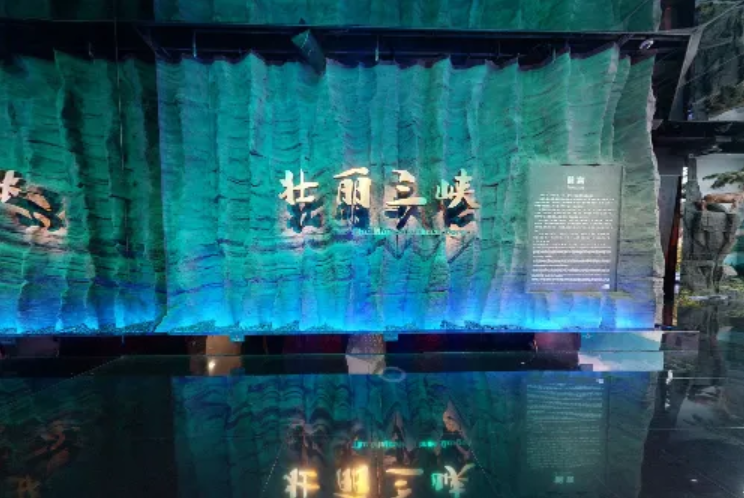
Splendid Three Gorges Exhibition Hall
This is one of the museum’s core exhibition halls, covering about 1,800 square meters. Through numerous artifacts, models, images, and multimedia, it comprehensively presents the natural scenery and human history of the Three Gorges. On display are rock specimens from different geological periods and paleontological fossils from the Three Gorges area, including trilobite fossils and dinosaur fossils dating back hundreds of millions of years, allowing visitors to understand the formation of the Three Gorges landscape. The hall also features miniature models of famous sites such as the Ancient Plank Road, Baidi City, and Zhang Fei Temple, showcasing the architectural heritage of the region. Additionally, scene reconstructions present the traditional life of the original inhabitants of the Three Gorges, along with excavated production and daily utensils, vividly demonstrating the wisdom of the local people.
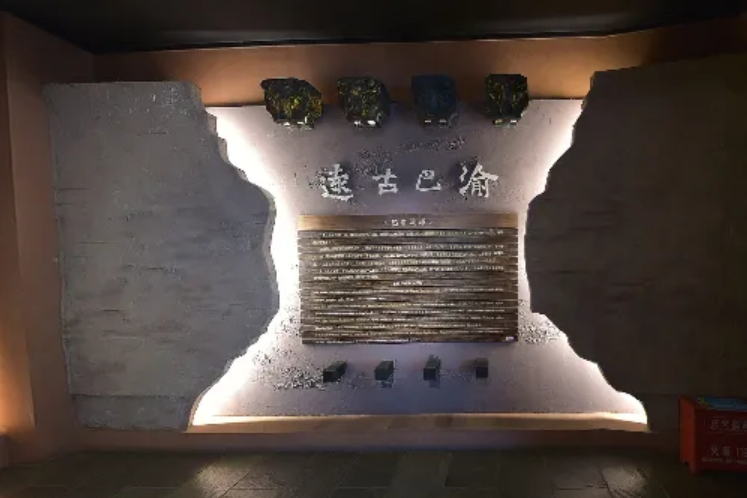
Ancient Bayu Exhibition Hall
Covering about 800 square meters, this hall focuses on the history and culture of the Bayu region from ancient times to the Warring States period, highlighting the brilliant civilization created by the Ba people. It houses many representative Ba?culture artifacts, including several first?grade items such as a Shang?dynasty bronze zun, Warring?States?period willow?leaf?shaped bronze swords, and tiger?patterned bronze ge (dagger?axes). These bronzes are unique in shape, exquisitely decorated, and strongly characteristic of Ba culture, testifying to the military, ritual, and daily life of the Ba state. The hall also displays pottery, jade, and other artifacts unearthed from Ba sites, clearly presenting the early production, tribal development, and exchanges with surrounding cultures in the Bayu region.
City Road Exhibition Hall
With an area of about 1,000 square meters, this hall traces the historical process of Chongqing’s development from an ancient settlement to a modern metropolis. Starting from the capital of the Ba state during the pre?Qin period, it sequentially displays administrative institutions of the Qin and Han dynasties, commercial prosperity of the Tang and Song dynasties, urban development during the Ming and Qing dynasties, its important role as the wartime capital during the Anti?Japanese War, and post?1949 construction and development. The hall displays steles, ancient books, old photographs, folk objects, and more from different periods, with documents from the Anti?Japanese War and daily objects from the Republican era directly reflecting Chongqing’s urban landscape and social changes at various historical stages, allowing visitors to gain a deep understanding of the city’s cultural heritage.
Anti?Japanese War Years Exhibition Hall
Covering about 900 square meters, this is an important exhibition area presenting Chongqing’s wartime history. Through rich artifacts, photographs, textual materials, and scene reconstructions, it comprehensively presents the crucial period from 1937 to 1945 when Chongqing served as the wartime capital. On display are military equipment, government documents, newspapers and magazines, and everyday items from that time, along with reconstructed air?raid shelters and wartime office spaces. The hall highlights Chongqing’s strategic position during the war, including diplomatic activities, industrial relocation, and cultural salvation movements, vividly recreating the magnificent struggle of the Chinese people rallying in Chongqing to resist the enemy. It holds profound significance for patriotic education.
Porcelain Through the Ages Exhibition Hall
China is the birthplace of porcelain. Primitive porcelain appeared as early as the mid?Shang Dynasty (c. 16th century BCE), and by the late Warring States period (475–220 BCE), more mature porcelain was being produced. Porcelain is one of the most brilliant gems in China’s cultural heritage. It is made from porcelain clay (kaolin, feldspar, quartz) through crushing, washing, shaping, drying, glazing, and firing at temperatures above 1200°C. The resulting body is dense, hard, non?absorbent, and produces a metallic sound when struck; the glaze is transparent and glossy, achieving a harmonious blend of utility and artistry.
Han Dynasty Sculpture Art Exhibition Hall
This hall, about 500 square meters, is dedicated to displaying Han?dynasty sculptural artifacts unearthed in the Three Gorges area and around Chongqing. The core exhibits include Han?dynasty pottery figurines, stone que (gateway pillars), and pictorial stones, featuring dancing figurines, musician figurines, warrior figurines, as well as exquisitely carved stone coffins and pictorial stones. These sculptures are simple and vivid, faithfully reflecting the social customs, burial practices, and aesthetic concepts of the Han dynasty, serving as important material evidence for the study of Han?dynasty sculpture and social culture. The hall’s layout allows visitors to clearly appreciate the craftsmanship and the majestic spirit of Han art.
Recommended Route:
A half?day in?depth tour, about 3.5 hours in total. Enter through the main entrance and start on the first floor with the Splendid Three Gorges Hall (approx. 40 min) to immerse yourself in the natural and cultural essence of the Three Gorges—this is the foundation for understanding Three Gorges culture. Then proceed to the Ancient Bayu Hall on the same floor (30 min) to appreciate the early Bayu civilization, focusing on the Ba?style bronzes. Next, go to the second floor for the City Road Hall (40 min) to trace Chongqing’s urban development, followed by the adjacent Anti?Japanese War Years Hall (35 min) to review that period of history. Then head to the third floor for the Porcelain Through the Ages Hall (25 min) to enjoy ceramic treasures, and finally visit the Han Dynasty Sculpture Art Hall (20 min) to experience the rustic beauty of Han sculptures. If time permits, visit the temporary exhibition hall on the basement level for the latest special exhibitions. You may adjust the time spent in each hall according to your interests. The halls are connected by barrier?free corridors, ensuring a smooth route without backtracking.
Visit Tips:
Allow 3–4 hours for your visit; if you are particularly interested in certain cultures or exhibits, you may extend to 5 hours to avoid rushing.
Opening hours: Tuesday to Sunday, 9:00–17:00; closed on Mondays (except national statutory holidays). It is advisable to visit on weekdays for a quieter experience.
Free guided tours are available at 10:00 and 14:30, each lasting about 90 minutes. You may also rent an audio guide for in?depth interpretation.
Rest areas are provided throughout the halls; take a break after every 1–2 halls. Drinking water facilities are available—bringing your own water bottle is eco?friendly and convenient.
The museum regularly hosts lectures, relic restoration workshops, and other interactive activities. Follow the official WeChat account in advance; if your visit coincides with an event, participation can enrich your experience.
Important Notices:
Smoking and eating are prohibited in the exhibition halls. Flammable, explosive, or controlled items are not allowed. A cloakroom is available for storing large luggage and items you prefer not to carry.
Please protect cultural relics and public facilities. Do not touch exhibits, display cases, or walls; no scratching or damaging any installations. Violators will be held legally responsible.
Photography is permitted, but flash, tripods, and selfie sticks are prohibited to prevent light damage to the artifacts and to avoid disturbing other visitors.
Maintain order and keep quiet; do not run, play, or speak loudly in the halls. Please set your mobile phone to silent mode.
Minors, the elderly, and those with mobility difficulties must be accompanied by adults. Barrier?free facilities are available; ask staff for assistance if needed.
Transportation:
Metro: Take Line 2 to Zengjiayan Station, exit C and walk about 800 meters; or take Line 10 to Dali Tang Station, exit A and walk about 500 meters.
Bus: Take routes 152, 181, 262, 421, 829, 862, etc., to Dali Tang Bus Stop, then walk about 300 meters to the main entrance.
Driving: From downtown Chongqing, follow navigation to No. 236 Renmin Road, Yuzhong District. A dedicated parking lot is available; fees: 5 CNY/hour for small vehicles, with a daily maximum of 30 CNY.
Opening Hours:
Regular hours: Tuesday–Sunday, 9:00–17:00; last admission at 16:30. Closed on Mondays (except national statutory holidays). During statutory holidays, hours are extended to 9:00–18:00, with last admission at 17:30. In case of special events or emergency adjustments, the museum will announce updates via its official website and WeChat account. Visitors are advised to check the latest opening information before departure to avoid any inconvenience.
Admission:
Free admission.