Jiuli Lake Scenic Area is located in Zhongshan Town, Xianyou County, Putian City, Fujian Province. It is a national 4A-level tourist attraction, a national-level water scenic area, a provincial-level scenic spot in Fujian, and a renowned Taoist sacred site in the region. The scenic area features four wonders—lake, caves, waterfalls, and rocks—with flowing springs and cascading waterfalls being its most iconic landscapes. It is known as "the most spectacular waterfall under heaven" and, together with Mount Wuyi and Yuhua Cave, is called the "Three Wonders of Fujian." The planned total area is about 35 square kilometers, with a core tourist area of approximately 5 square kilometers. The elevation within the scenic area mostly ranges from 400 to 600 meters, and the forest coverage rate exceeds 85%. With its excellent natural ecology, it is a comprehensive tourist destination that integrates natural scenery, Taoist culture, and leisure wellness.
History and Culture
Jiuli Lake has a profound historical heritage and is one of the important birthplaces of Chinese Taoist culture. According to legend, during the Han Dynasty, nine brothers surnamed He refined elixirs here, helped the people, and ascended to immortality riding carp, hence the name "Jiuli Lake" (Nine-Carp Lake). Its Taoist culture dates back more than 2,000 years. As one of the "Thirty-Six Grotto-Heavens" of Taoism, it ranks as the 28th Grotto-Heaven and is also one of the "Seventy-Two Blessed Lands," holding a very high status in the history of Taoist development.
During the Tang and Song dynasties, Jiuli Lake had already become a popular destination for literati, officials, and nobles. Famous figures such as Cai Xiang and Zhu Xi of the Song Dynasty, and Xu Xiake and Chen Jingbang of the Ming Dynasty, all visited here, leaving behind a wealth of poems, traveloges, and cliff-side inscriptions. Among them, the Ming Dynasty traveler Xu Xiake visited Jiuli Lake twice and wrote Diary of a Visit to Jiuli Lake, which provides a detailed record of the area's landscapes and serves as an important historical document for studying its past.
The "dream-seeking" culture of Jiuli Lake is a unique cultural symbol. It emerged during the Tang and Song dynasties, reached its peak in the Ming and Qing dynasties, and is considered the birthplace of China's dream-seeking culture, earning the title "living fossil of Chinese dream culture." For generations, ordinary people, literati, and officials have come here to pray for dreams, forming a complete system of dream-seeking customs and rituals. In 2011, the dream-seeking customs of Jiuli Lake were included in the Fujian Provincial Intangible Cultural Heritage Representative List.
Major Attractions
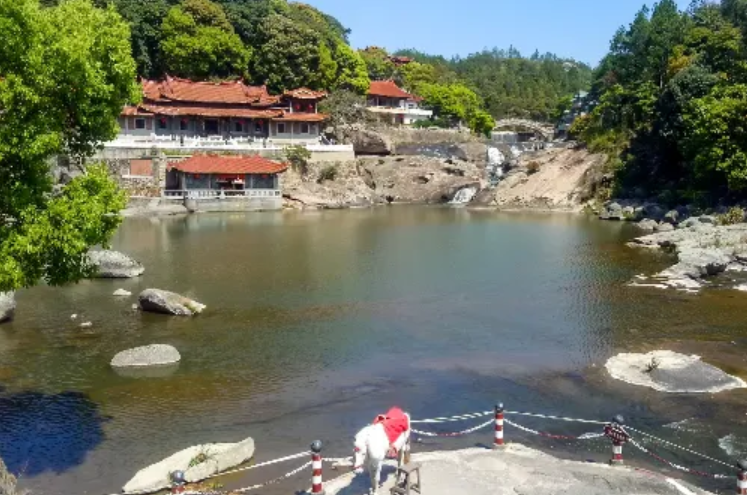
Jiuli Lake
The core lake of the scenic area, located at its center, covers about 8,000 square meters. The water is crystal clear and surrounded by verdant mountains. It is the sacred site where the nine He brothers refined elixirs and attained immortality, and it is also the origin of the area's name. On the lakeshore, Taoist relics such as an alchemy furnace and an immortal spring can still be seen. This is the key spot for enjoying the lake and mountain scenery and experiencing Taoist culture.
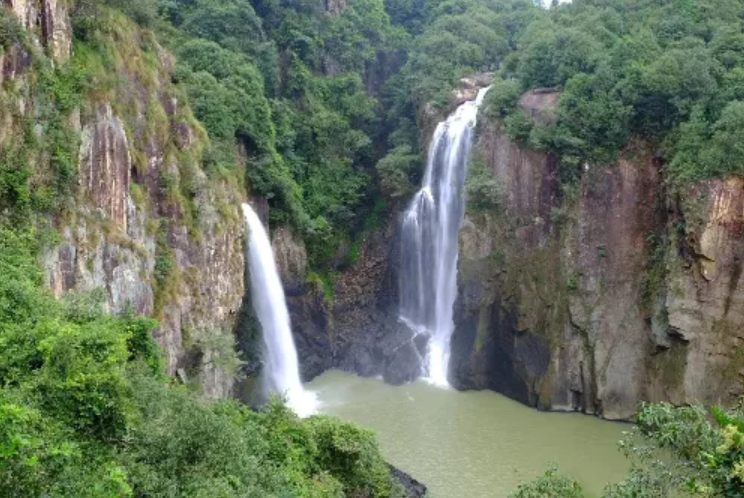
Jiuli Waterfalls
The signature landscape of the area, consisting of nine tiers of waterfalls, stretching over ten li (about 5 km) with a total drop of more than 400 meters. Key falls include Leihong Falls, Pubu Falls, Zhulian Falls, and Yuzhu Falls. Among them, Pubu Falls is about 100 meters high and 60 meters wide, with the greatest drop of all nine tiers. Zhulian Falls resembles a beaded curtain of water, while Yuzhu Falls features two parallel streams like jade pillars. The waterfalls are majestic and form the core natural attraction.
Cliff Inscriptions
Scattered around the lakeshore, waterfall areas, and along hiking trails, there are more than 100 extant inscriptions from the Tang, Song, Yuan, Ming, and Qing dynasties. They are carved in seal, clerical, regular, running, and cursive scripts, and their content mainly includes poems, travel records, and notes. Well-preserved inscriptions such as "Jiuli Lake," "Viewing the Waterfall," and "Blue Water, Red Mountains" are among the most notable. This is one of the best-preserved ancient cliff inscription groups in Fujian Province, with high historical and artistic value.
Jiuxian Temple
First built in the Han Dynasty, this Taoist temple is dedicated to the nine He immortals. The existing structures date from renovations in the Ming and Qing dynasties, with a floor area of about 1,200 square meters. The temple is built against the mountain and beside the water, featuring a simple and elegant architectural style. The main hall enshrines statues of the nine immortals and preserves ancient steles, incense burners, and other cultural relics. It is the core carrier of Taoist and dream-seeking culture at Jiuli Lake.
Penglai Stone Realm
Located on the west side of Jiuli Lake, this area features oddly shaped rocks. There are dozens of natural stone formations, including "Sword-Testing Rock," "Dragon-Scrubbing Rock," and "Pillow-Stream Rock," each with different shapes that complement the lake and waterfalls. Every stone is accompanied by legendary tales about the nine He immortals, making it a distinctive spot where natural scenery blends with mythological culture.
Suggested Tour Route:
Scenic Area Entrance → Jiuli Lake → Jiuxian Temple → Cliff Inscriptions → Leihong Falls → Pubu Falls → Zhulian Falls → Yuzhu Falls → Penglai Stone Realm → Scenic Area Exit
Travel Tips:
Recommended visiting time: 3–4 hours to fully explore the core attractions without rushing.
Best seasons: Spring (March–May) and Autumn (September–November), when the weather is pleasant and waterfall flow is abundant.
For viewing the waterfalls, follow the official trails to enjoy the full panorama of the nine tiers.
There are many uphill sections, so wear comfortable sports shoes to reduce fatigue.
You can combine your visit with the nearby Mai xieyan Scenic Area for a one-day trip.
Rest pavilions and viewing platforms are available throughout the area for breaks and photo opportunities.
Important Notes:
The ground near the waterfalls is slippery; do not approach the cliff edges to avoid slipping or falling.
Open fires and littering are prohibited to protect the ecological environment.
Do not climb on cliff inscriptions or strange rocks; help preserve cultural and natural heritage.
On rainy days, bring rain gear and walk carefully on wet mountain paths.
Inside religious sites, remain quiet, observe religious etiquette, and do not touch cultural relics.
Children and the elderly should be accompanied by family members and avoid visiting remote areas alone.
Do not trust unofficial fortune-telling or paid prayer services to avoid financial loss.
Transportation:
Self-driving: From Putian city center, take the Puyong Expressway toward Zhongshan Town—about 50 km, 1 hour 20 minutes. From Xianyou county town, it is about 30 km, 40 minutes. There is a large parking lot at the scenic area.
Public bus: Take the tourist shuttle from Xianyou Bus Station to Jiuli Lake. Departure times: 7:30, 9:00, 13:00, and 15:00 daily. The ride takes about 1 hour.
Chartered car: You can book a private car from Putian city center directly to the scenic area, suitable for group travel.
Opening Hours:
Summer (May 1 – October 7): 8:00 – 18:00, last admission at 17:30.
Winter (October 8 – April 30): 8:00 – 17:30, last admission at 17:00.
The religious sites within the scenic area follow the same opening hours with no separate closures.
Ticket Price:
50 RMB per person.