Guangfu Ancient City Scenic Area is located in Guangfu Town, Yongnian District, Handan City, Hebei Province. It is a National 5A-level Tourist Attraction. The scenic area is known for its features as an “ancient city, water city, and Tai Chi city.” It fully preserves the layout of a Ming Dynasty prefectural city and is surrounded by a natural moat formed by the Fuyang River. It is also the birthplace of Yang-style and Wu-style Tai Chi, with a profound cultural heritage. The ancient city wall has a perimeter of 4.5 kilometers, a height of 12 meters, and a width of 8 meters. The city covers an area of 1.5 square kilometers. More than 200 Ming and Qing dynasty buildings remain, making it one of the best-preserved water-city-style ancient cities in North China.
Historical Culture
Guangfu Ancient City was first built during the Spring and Autumn period. During the Sui and Tang dynasties, it became the seat of Fuyang Commandery. During the Ming and Qing dynasties, it was the seat of Guangping Prefecture. It has a history of more than 2,600 years. Because the city is located on low-lying terrain and the Fuyang River flows around it, it formed a unique water-city landscape of “water on all sides and dense reeds.” During the Ming and Qing dynasties, it was once the political, economic, and cultural center of southern Hebei.
In the late Ming and early Qing dynasties, Yang Luchan and Wu Yuxiang, founders of Yang-style and Wu-style Tai Chi respectively, studied and practiced martial arts here, making Guangfu the birthplace of Tai Chi. Yang-style Tai Chi is relaxed, extended, and elegant, while Wu-style Tai Chi is compact and refined. The two major schools spread across the country from here. Today, Guangfu Ancient City hosts international Tai Chi exchange events every year, attracting Tai Chi enthusiasts from around the world on pilgrimage.
In 1993, Guangfu Ancient City was designated a Hebei Provincial Key Cultural Relics Protection Unit. In 2017, it was upgraded to a National 5A-level Tourist Attraction. The Guangfu Ancient City Wall, Hongji Bridge, Former Residence of Yang Luchan, and other sites within the ancient city have been listed as National Key Cultural Relics Protection Units.
Main Attractions
Guangfu Ancient City Wall
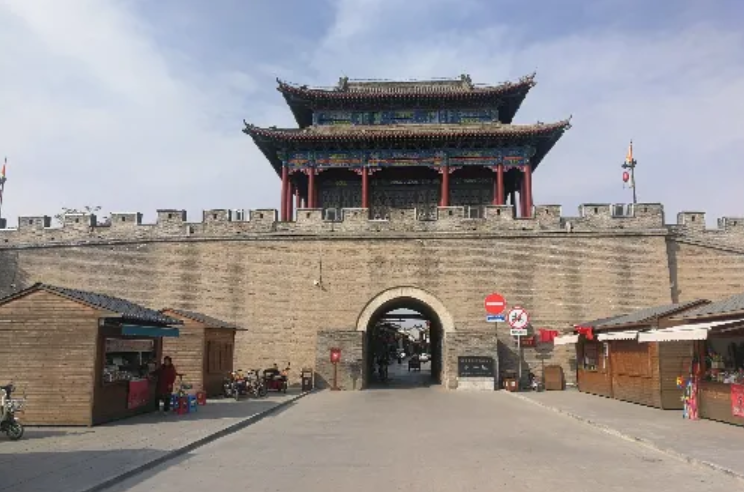
The Guangfu Ancient City Wall was first built in the 21st year of the Jiajing reign of the Ming Dynasty (1542). It is a brick-and-stone structure with a perimeter of 4,522 meters and a height of 12 meters. It has 4 city gates and 2 water gates. The city wall is well preserved, and visitors can walk around the top, overlooking the ancient buildings inside the city and the wetland scenery outside. There are 1,752 crenellations and 57 bastions on the wall. It is an important physical example for studying Ming Dynasty military defense architecture.
Hongji Bridge
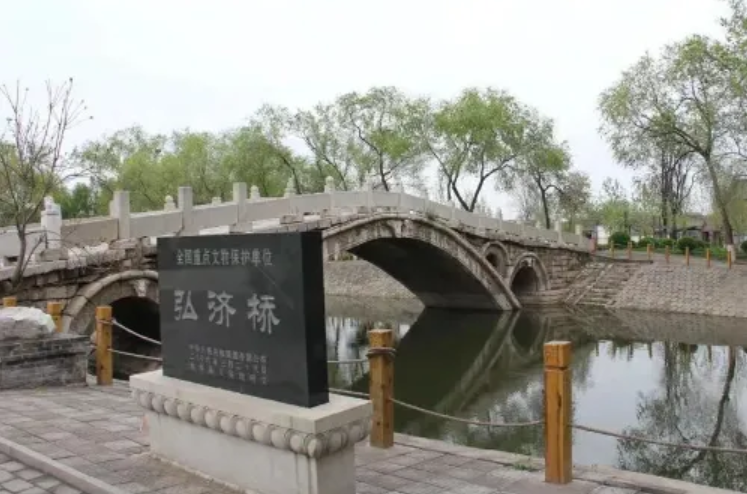
Hongji Bridge is located outside the east gate of the ancient city, spanning the Fuyang River. It was first built in the Sui Dynasty, and the current structure was rebuilt during the Wanli reign of the Ming Dynasty. The bridge is 48.9 meters long, 6.82 meters wide, and 6 meters high. It is a single-arch stone bridge. The bridge deck is paved with 18 large stone slabs, which are carved with exquisite reliefs, including animal patterns such as lions, monkeys, and deer. Because its architectural form is similar to that of Zhaozhou Bridge, it is called the “sister bridge of Zhaozhou Bridge.” In 2006, it was listed as a National Key Cultural Relics Protection Unit.
Former Residence of Yang Luchan
The Former Residence of Yang Luchan is located on South Street in the ancient city. It is the birthplace and early-life residence of Yang Luchan, founder of Yang-style Tai Chi. It was first built in the Qing Dynasty and covers an area of 980 square meters. It is a typical northern Chinese courtyard house. The residence displays exhibits on Yang Luchan’s life and the development history of Tai Chi, as well as cultural relics such as Yang-style Tai Chi manuals and weapons. It is an important place for learning about Tai Chi culture.
Former Residence of Wu Yuxiang
The Former Residence of Wu Yuxiang is located on Yingchun Street in the ancient city. It is the ancestral home of Wu Yuxiang, founder of Wu-style Tai Chi. It covers an area of 1,920 square meters and is divided into east, central, and west courtyard sections, with more than 70 rooms. The residence preserves the study, bedroom, and other rooms where Wu Yuxiang studied Tai Chi. It displays Wu-style Tai Chi manuals, weapons, and cultural relics and historical materials of the Wu family, showing the origin and development of Wu-style Tai Chi.
Guangfu Ancient City Wetland
The Guangfu Ancient City Wetland surrounds the ancient city and covers an area of about 2,000 hectares. It is formed by the convergence of the Fuyang River, Niuwei River, and other rivers, creating an ecological landscape of reed marshes and lotus ponds. The wetland is home to more than 100 species of birds. In summer, when the lotus flowers bloom, visitors can take boat tours and experience the unique charm of a “Northern Water Town.”
Travel Routes:
One-Day Cultural Exploration Route
Morning: Enter through the South Gate of the ancient city, climb the city wall for a tour and a panoramic view of the ancient city; then go to the Former Residence of Yang Luchan to learn about the origin of Yang-style Tai Chi; at noon, taste local specialties such as Guangfu crispy fish and donkey meat sausage in the ancient city. Afternoon: Visit the Former Residence of Wu Yuxiang to learn about Wu-style Tai Chi culture; then go to Hongji Bridge to appreciate ancient bridge architecture; finally, take a boat tour on the ancient city wetland and end the itinerary.
Two-Day Tai Chi Wellness Route
Day 1: In the morning, visit the Former Residences of Yang Luchan and Wu Yuxiang and take part in a Tai Chi experience class (daily 10:00–11:00, 50 yuan per person); at noon, enjoy a Tai Chi wellness meal; in the afternoon, climb the ancient city wall and visit Hongji Bridge; in the evening, go birdwatching in the wetland. Day 2: In the early morning, join Tai Chi morning practice (daily 7:00–8:00, free); in the morning, tour the cluster of ancient Ming and Qing buildings in the city and visit the Guangfu Museum; at noon, taste local specialties such as Zeng-style pork elbow; in the afternoon, cycle in the wetland (bicycle rental 20 yuan per hour) and experience the water town scenery.
Travel Tips:
Suggested duration: 1–2 days. If you want to deeply experience Tai Chi culture and wetland scenery, 2 days are recommended.
Inside the ancient city, you can rent a bicycle (30 yuan per hour) or take a sightseeing bus (50 yuan per person) to save energy, especially suitable for visitors with elderly people and children.
Every Saturday, Sunday, and holiday at 9:00 and 15:00, there are Tai Chi performances at the Former Residence of Yang Luchan Square. It is recommended to arrive 15 minutes early to get a good spot.
In summer, there are many mosquitoes in the wetland, so bring mosquito repellent. In winter, the city wall is windy, so keep warm and consider bringing a scarf and gloves.
Specialty shops in the scenic area are concentrated on South Street. Guangfu crispy fish, donkey meat sausage, and other specialties can be vacuum-packed for takeaway. It is advisable to compare prices at several shops. Average prices: crispy fish 35 yuan per jin (500 g), sausage 25 yuan per jin.
Precautions:
The steps on the ancient city wall are steep. Pay attention to safety when climbing, especially visitors with children, who should keep a close eye on them.
Life jackets are required for wetland boat rides. Follow the boatman’s instructions. Standing or roughhousing on the boat is prohibited.
In the Former Residences of Yang Luchan and Wu Yuxiang, do not touch cultural relics or exhibits. Do not use flash when taking photos.
Some roads in the ancient city are bluestone-paved. It is recommended to wear non-slip shoes. Elderly people and pregnant visitors should be careful when walking.
The parking lot easily fills up on weekends and holidays. It is recommended to take a bus or tourist shuttle. The last bus of Route 605 is at 18:00, so pay attention to the return time.
When tasting snacks such as donkey meat sausage, choose restaurants with clearly marked prices to avoid disputes. Average spending is about 30–50 yuan per person.
Transportation:
Bus: From downtown Handan, take Bus Route 605 directly to Guangfu Ancient City Scenic Area. Departures are from 6:30 to 18:00, about every 15 minutes. Full fare is 5 yuan, and the journey takes about 50 minutes.
Driving: Exit at Handan North on the Beijing–Hong Kong–Macau Expressway and drive west along Yongnian Link Road for about 20 kilometers; or exit at Handan East on the Qingdao–Lanzhou Expressway and drive north along Hanlin Highway for about 15 kilometers. Parking in the scenic area costs 10 yuan per day, with about 800 spaces.
Tourist shuttle: Tourist shuttle buses run from Handan Railway Station and Handan East Railway Station (high-speed rail station) to Guangfu Ancient City. Departures are from 8:00 to 16:00, fare is 10 yuan per person, and the journey takes about 1 hour.
Opening Hours:
Open all day. Internal attractions are open from 8:00 to 18:00 (last entry at 17:30). In winter (November–February), opening hours are 8:30–17:30 (last entry at 17:00). Wetland boat rides are open from 9:00 to 17:00; during the summer Lotus Festival, they are extended to 19:00.
Tickets:
Admission is free, but individual attractions inside require separate tickets.