The Hulishan Fortress scenic area is located at No. 2 Zengcuo'an Road, Siming District, Xiamen, Fujian Province. It is a national 4A-level tourist attraction, a key national cultural relic protection unit, and a national patriotism education demonstration base. The core feature of the scenic area is its well-preserved Qing?dynasty coastal defense fort complex, which houses the world’s largest existing coastal artillery piece – the Krupp cannon. It serves as a vital physical testament to China’s modern military and coastal defense history. Covering a total area of over 70,000 square meters, of which the fort itself occupies 13,000 square meters, the site mainly consists of barracks, tunnels, command posts, observation platforms, protective walls, and ammunition depots, with a total building area of 2,333 square meters. Built along the mountain and facing the sea, it combines military defensive functions with coastal scenic views, and is a coastal?defense cultural attraction that integrates heritage protection, science education, and tourism.
History and Culture
Construction of the Hulishan Fortress began in the 17th year of the Guangxu reign (1891) and took five years to complete, officially entering service in the 22nd year of the Guangxu reign (1896). It was an important product of the late?Qing Self?Strengthening Movement, overseen by Peng Chuhan, the then Admiral of the Fujian Navy. Chosen for its commanding coastal position, the fortress played a critical military role in defending Xiamen Harbor against seaborne invasion, and was a key coastal stronghold in southeastern China.
The fortress’s primary armament was a 280?mm caliber coastal gun manufactured by the German Krupp factory, purchased in 1893. The cannon measures 13.96 meters in length, weighs about 87 tons, and has an effective range of 19,760 meters. It was one of the most advanced coastal defense artillery pieces of its time, and is now the largest and most complete original?condition coastal cannon in the world, recognized by Guinness World Records in 2000.
Hulishan Fortress witnessed the development of modern Chinese coastal defense through significant historical periods, including the War of Resistance against Japan, and continuously fulfilled its defensive role. It is a physical carrier of China’s modern military technology and coastal fortification, embodying the historical spirit of resisting foreign aggression and defending the homeland, and serves as important material evidence for the study of modern Chinese military history, coastal defense history, and the Self?Strengthening Movement.
Major Attractions
Krupp Cannon
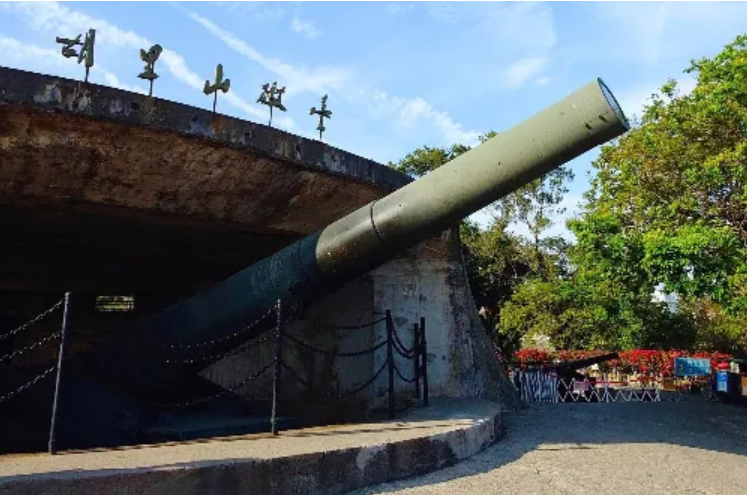
The Krupp Cannon is the centerpiece of the Hulishan Fortress. It is a 280?mm breech?loading coastal gun manufactured by Germany’s Krupp factory, installed in 1893. The cannon is 13.96 meters long, with a bore diameter of 280 mm, weighs approximately 87 tons, has an effective range of 19,760 meters, and can rotate 360 degrees for firing. It is the world’s largest and most complete original coastal artillery piece. The cannon is well?preserved, retaining its original Qing?dynasty mechanical structure and combat functionality, and is the most iconic cultural relic in the scenic area.
Fortress Castle
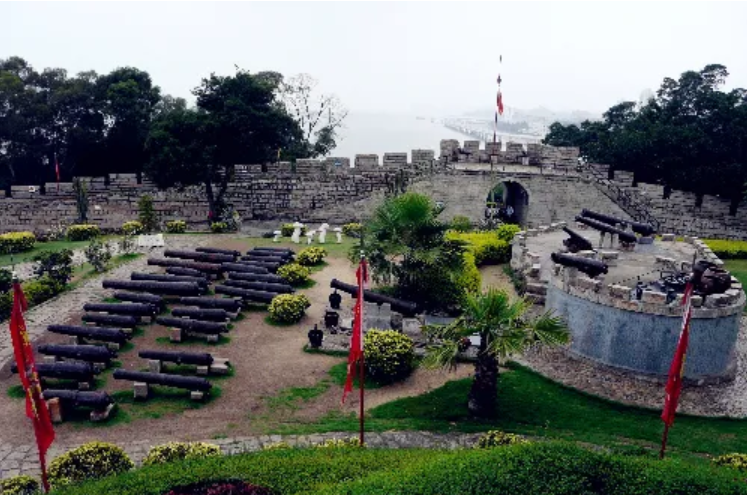
The Fortress Castle is the main structure of the scenic area, covering 13,000 square meters. Built of granite and a mixture of lime, clay, and sand, it features a semi?bastion and semi?rampart design, divided into the battle platform zone, barracks zone, and rear?hill zone. The castle includes command posts, official quarters, soldiers’ barracks, ammunition depots, tunnels, protective walls, and observation platforms. Its strict layout and comprehensive defensive functions make it a typical example of Qing?dynasty coastal fort architecture, preserving the original military construction style.
Qing Soldiers’ Training Camp
Located on the eastern side of the fortress castle, the Qing Soldiers’ Training Camp is a live?action area that recreates the training scenes of the fortress’s Qing?era garrison. Covering about 800 square meters, it features displays of military training equipment, weapons, and drill grounds. Through realistic reconstructions and sculptures, it vividly depicts the daily training, guard duties, and combat scenarios of late?Qing coastal soldiers, offering visitors an intuitive understanding of their military life.
Cultural Relics Exhibition Hall
Situated in the central part of the scenic area, the exhibition hall covers about 500 square meters. It houses over 200 cultural relics, including Qing?dynasty weapons, military documents, coastal defense historical materials, historical photographs, and artillery components. The hall systematically introduces the fortress’s construction history, combat experience, and heritage value, making it an important venue for learning about the history and coastal?defense knowledge of Hulishan Fortress.
Observation Platform
The Observation Platform is located on the southern seaside section of the fortress castle. As the core coastal viewing area, the platform is about 150 meters long and 8 meters wide. Leveraging its elevated coastal position, it offers panoramic views of Xiamen Harbor, the Kinmen Islands, and Xiamen’s coastal scenery, while also allowing visitors to overlook the overall coastal defense layout. It serves both sightseeing and historical appreciation purposes.
Eight Coastal?Defense Cannons
Distributed around the outer battle platform zone of the fortress castle, these eight small?caliber coastal defense guns are cast?iron cannons of various bore sizes. They served as auxiliary defensive weapons, complementing the Krupp Cannon to create a layered coastal defense system. They fully demonstrate the multi?tiered defensive configuration of Qing?dynasty coastal forts. The relics are well preserved and hold significant historical research value.
Suggested Tour Route:
Main Gate → Cultural Relics Exhibition Hall → Qing Soldiers’ Training Camp → Fortress Castle → Krupp Cannon → Eight Coastal?Defense Cannons → Observation Platform → Exit
Visiting Tips:
Recommended visiting time: 1.5 to 2 hours, sufficient to fully explore all core attractions and learn about the history.
Visit the Cultural Relics Exhibition Hall first to gain background knowledge, enhancing your overall experience.
Best visiting hours: 9–11 AM or 3–5 PM, when lighting is favorable for photography and high?temperature periods are avoided.
Join the free guided tours provided by the scenic area for detailed historical insights into the Krupp Cannon and the fortress.
Spend time on the Observation Platform to enjoy the sea view of Xiamen Harbor and appreciate the strategic geographical advantage of this coastal fortress.
Families with children may focus on the Qing Soldiers’ Training Camp for an engaging look at Qing?era military culture.
Important Notices:
All cultural relics within the scenic area are nationally protected. Do not touch, climb, or deface them.
Corridors inside the fortress castle are narrow. No running or pushing; please walk slowly and orderly.
The Observation Platform is seaside. Do not climb over the guardrails. Stay safe.
Flammable, explosive, and smoking items are prohibited in the scenic area.
Pets are not allowed in the core sightseeing zones.
Maintain silence and refrain from loud noise; visit with civility.
Do not feed or damage plants; help protect the environment.
Transportation:
Bus: Take buses No. 2, 22, 29, 47, 87, 92, 135, 310, B2, or B3 to Hulishan Bus Stop, then walk 50 meters to the main gate.
Metro: Take Metro Line 3 to Xiamen Railway Station, then transfer to buses No. 2, 22, or 29 to Hulishan Bus Stop.
Driving: Navigate to the Hulishan Fortress Scenic Area Parking Lot. The site has designated parking spaces; fees are charged according to Xiamen’s municipal standards.
Bike?sharing: Ride a shared bike to the designated parking area near the site, then walk in.
Taxi/Ride?hailing: Directly take a taxi to Hulishan Fortress Scenic Area, No. 2 Zengcuo'an Road, Siming District, Xiamen.
Opening Hours:
Summer (May 1 – September 30): 8:00 – 18:00
Winter (October 1 – April 30): 8:00 – 17:30
Last admission is 30 minutes before closing.
The scenic area is open on statutory holidays with no changes to the schedule.
Ticket Price:
25 RMB per person.