Luoyang Baiyun Mountain Scenic Area is located in the hinterland of the Funiu Mountains in the southwestern part of Song County, Luoyang City, Henan Province, 165 kilometers east of Luoyang urban area and bordering Sanmenxia City to the west. The scenic area is a National 5A-level Tourist Attraction, a National Forest Park, a National Geopark, and one of China's Top Ten Leisure Resorts. It covers a total area of 168 square kilometers, with an average elevation of 1,800 meters. The main peak, Yuhuang Peak, rises 2,216 meters above sea level and is one of the main peaks of the Funiu Mountains. The scenic area is known for its virgin forests, alpine waterfalls, sea of clouds, and Tang Dynasty temples. Its forest coverage rate reaches 98.5%, and the negative oxygen ion concentration is as high as 87,000 per cubic centimeter, making it a famous summer resort and natural oxygen bar in the Central Plains region.
Historical Culture
Baiyun Mountain has a profound historical and cultural heritage. According to research, it was once the place of practice for the Tang Dynasty monk Baiyun Chan Master, from whom the scenic area's name is derived. During the Tang Dynasty, temples such as Baiyun Temple and Yuhuang Pavilion were built on the mountain, with flourishing incense offerings. Poets such as Li Bai and Du Fu once left poems here.
During the Wanli period of the Ming Dynasty, Taoist culture flourished at Baiyun Mountain, and temple architecture reached its peak. Cultural relics such as the "Yuhuang Pavilion" stone stele from the Wanli period of the Ming Dynasty still exist. In modern times, although the religious buildings in the scenic area have gone through vicissitudes, some sites and cultural relics have still been preserved, becoming important physical materials for the study of Central Plains religious culture.
In the 1980s, Baiyun Mountain began to be developed for tourism. In 1993, it was approved as a National Forest Park, and in 2011 it was promoted to a National 5A-level Tourist Attraction, gradually becoming a comprehensive tourist area integrating natural sightseeing, leisure vacations, and scientific research and exploration.
Main Attractions
Yuhuang Peak
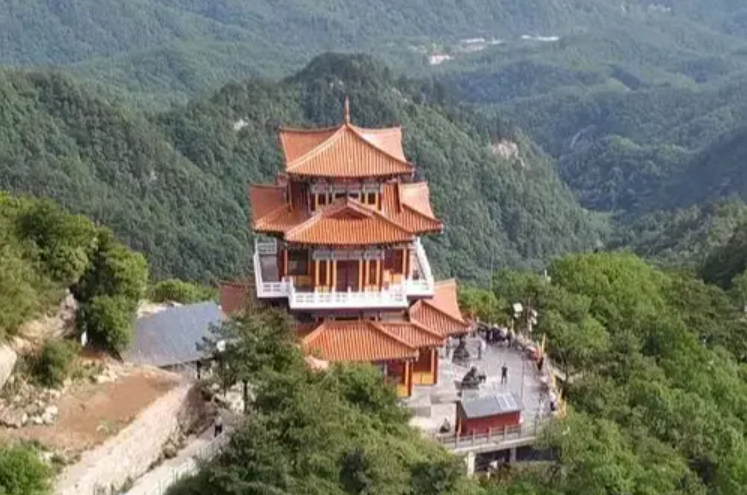
Yuhuang Peak is the main peak of Baiyun Mountain, with an elevation of 2,216 meters. It is named after the Yuhuang Pavilion built at the summit. Climbing Yuhuang Peak offers a 360-degree panoramic view of the Funiu Mountain peaks. In spring, there are seas of azaleas; in summer, rolling seas of clouds; in autumn, layered forests in full color; and in winter, a world covered in silver. It is an excellent place to view sunrise and the sea of clouds. Yuhuang Pavilion was first built in the Tang Dynasty. The existing building is in the Ming and Qing style and enshrines a statue of the Jade Emperor.
Jiulong Grand Canyon
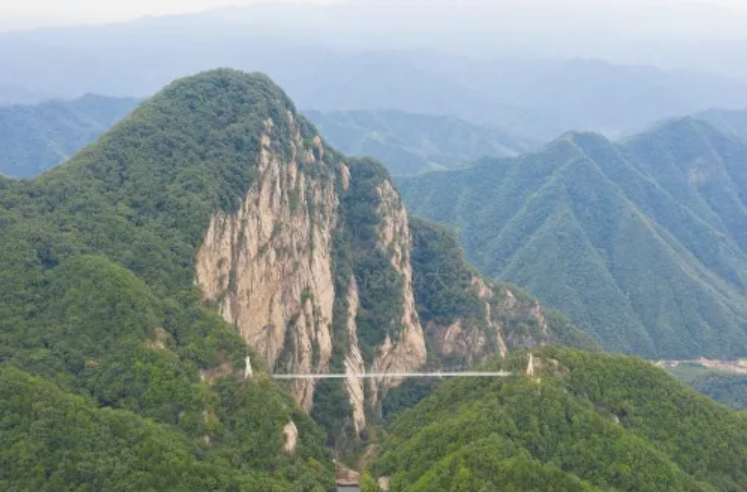
Jiulong Grand Canyon is about 3,000 meters long with a drop of 1,300 meters. It is named after the nine waterfalls in the valley. Its main attractions include Jiulong Waterfall, Huanglong Well, and Wulong Pool. Among them, Jiulong Waterfall is 123 meters high and 10 meters wide. The water pours down from the cliff with great momentum, making it one of the largest waterfalls by drop in the Central Plains region. The canyon has dense vegetation and numerous strange rocks, with an extremely high negative oxygen ion concentration.
Baiyun Lake
Baiyun Lake is located in the central area of the scenic spot, at an elevation of 1,500 meters, with a water area of 16,000 square meters and an average depth of 6 meters. The lake water is clear to the bottom, surrounded by mountains on all sides. The lake offers recreational facilities such as cruise boats and speedboats. A waterfront boardwalk has been built by the lake, making it a great place for leisure fishing and photography. In summer, the lake surface is often shrouded in thin mist, just like a fairyland.
Virgin Forest
The virgin forest of Baiyun Mountain covers an area of 100,000 mu and is one of the best-preserved virgin forests in Henan Province. In the forest, ancient trees tower and vines intertwine. It is home to rare animals such as leopards, musk deer, and golden pheasants, and rare plants such as ginkgo, Manchurian ash, and Chinese yew. The scenic area has an 800-meter-long wooden boardwalk where visitors can hike through the forest and experience the beauty of the primitive ecology.
Luhua Valley
Luhua Valley is 2,000 meters long and is named after the reeds growing throughout the valley. It features attractions such as alpine reeds, a Chinese medicinal herb plantation, and a stone waterfall. The stone waterfall is 200 meters wide and 150 meters high. Formed by calcium carbonate deposits, it resembles a waterfall and is a rare geological wonder. In autumn, when the reeds bloom, white catkins drift in the wind, creating a charming scene.
Liuhou Shrine
Liuhou Shrine was built to commemorate the Han Dynasty famous minister Zhang Liang. It is located at the foot of Baiyun Mountain, covering an area of 10,000 square meters, with a building area of 3,000 square meters. The shrine includes a main hall, side halls, corridors, and other buildings. It enshrines a statue of Zhang Liang and displays his life story. The architectural style is a Ming and Qing-style courtyard compound. The courtyard has verdant ancient cypresses and a quiet environment.
Recommended Tour Routes:
One-day recommended route: Depart from Luoyang at 7 a.m., arrive at the scenic area in about 2.5 hours, take the sightseeing bus to Jiulong Grand Canyon, and hike to visit attractions such as Jiulong Waterfall and Huanglong Well for about 3 hours; have lunch at a restaurant in the scenic area and taste Song County mutton soup; in the afternoon, take the sightseeing bus to Baiyun Lake, take a boat tour, and then go to Yuhuang Peak to enjoy the sea of clouds and sunset for about 4 hours; return to the scenic area entrance in the evening and end the trip.
Two-day recommended route: On the first day, visit Jiulong Grand Canyon in the morning and hike in the virgin forest in the afternoon, then stay overnight at Baiyun International Resort Hotel in the scenic area; on the second day, take the sightseeing bus to Yuhuang Peak in the morning to watch the sunrise, then visit Luhua Valley and Liuhou Shrine, and return to Luoyang in the afternoon.
Travel Suggestions:
It is recommended to spend 2 days to fully experience the mountain and water scenery and forest ecology. Summer (June-August) is the peak season for summer vacations, so accommodation should be booked in advance.
The sightseeing bus in the scenic area is a mandatory purchase. It is recommended to buy a package ticket to save time and money. The last bus time of the sightseeing bus should be confirmed in advance.
Yuhuang Peak is at a high altitude, and the temperature is 8-10°C lower than at the foot of the mountain. Even in summer, a jacket should be carried. In winter, down jackets and non-slip shoes are needed.
Jiulong Grand Canyon has many steps. It is recommended to wear comfortable sports shoes and carry drinking water and snacks. The elderly and children should pay attention to safety.
To photograph the sea of clouds and sunrise, you need to stay overnight at Yuhuang Peak or take the sightseeing bus to the summit before 4 a.m. There is Yuhuang Peak Hotel in the scenic area.
Precautions:
Some sections of the scenic area are at high altitude and have steep slopes. Tourists with high blood pressure, heart disease, and other conditions should choose climbing routes with caution.
Mobile phone signal is weak in the virgin forest. It is recommended to travel in groups and not deviate from the wooden boardwalk to avoid getting lost.
Smoking, open-air cooking, and littering are prohibited in the scenic area. Please protect the ecological environment. There are multiple trash bins and restrooms in the scenic area.
When taking the sightseeing bus, fasten your seat belt, pay attention to passing vehicles when getting off, and keep your belongings safe.
During the rainy season (July-August), pay attention to weather forecasts and avoid staying in the canyon to prevent flash floods; some attractions may be closed in winter due to snow.
Transportation:
Public transportation: Take the direct tourist shuttle to Baiyun Mountain at Luoyang Railway Station or Longmen High-speed Railway Station. There is one departure each day at 8:00 and 9:00. The ticket price is about 60 yuan, and the journey takes about 3 hours. You can also take a bus from Luoyang Bus Station to Song County, then transfer to the Song County-Baiyun Mountain bus. The whole journey takes about 4 hours.
Self-driving: Depart from Luoyang, take the Luoluan Expressway and Songluan Expressway, exit at Jiuxian, and drive about 20 kilometers along National Highway 344 to reach the scenic area. The total distance is about 165 kilometers, and the drive takes about 2.5 hours. The scenic area has a large parking lot, and the parking fee is 20 yuan/day.
High-speed rail: Take the Zhengxi High-speed Railway to Luoyang Longmen Station, then transfer to the tourist shuttle or taxi to the scenic area. The taxi fare is about 300-400 yuan.
Opening Hours:
The scenic area is open all year round. Opening hours are 7:00-19:00 (April 1-October 31); 8:00-18:00 (November 1-next year March 31). Ticket sales and entry stop 2 hours before closing. Some attractions such as Yuhuang Peak may close early in winter due to high altitude. Please refer to the scenic area's announcements for details.
Tickets:
Ticket: 75 yuan/person.