Guilin Lijiang River Scenic Area is located in Guilin City, Guangxi Zhuang Autonomous Region, and is a national 5A-level tourist attraction. The Lijiang River is world-renowned for its beautiful landscape, earning the praise, “The river winds like a green silk ribbon, and the mountains rise like jade hairpins.” The scenic area stretches about 164 kilometers in length, with a drainage area of 6,050 square kilometers. The peaks here take on various shapes—some resembling camels, some elephants, and others fairies—which, together with the clear river water, create a picturesque scene. Scattered throughout the area are many ancient villages, ancient bridges, and other structures that bear witness to the long history and culture of the Lijiang region.
History and Culture
The history of the Lijiang area dates back to ancient times. As early as the Neolithic Age, humans lived and thrived here. Throughout its long history, the Lijiang River has been an important transportation route and a channel for cultural exchange.
Ancient scholars and poets composed countless verses in praise of the Lijiang River, adding a rich cultural atmosphere to the area. For example, the Tang Dynasty poet Han Yu’s line—“The river winds like a green silk ribbon, and the mountains rise like jade hairpins”—vividly captures the beauty of the Lijiang landscape.
The ethnic cultures along the Lijiang River are diverse and vibrant. The Zhuang, Yao, Miao, and other ethnic groups live here, and their traditional customs, songs, and dances have a unique charm, forming an integral part of Lijiang’s cultural heritage.
With the development of tourism, the Lijiang River Scenic Area has gradually become a popular destination for both domestic and international visitors. It not only showcases the beauty of nature but also preserves and promotes the local history and culture.
Major Attractions
Elephant Trunk Hill
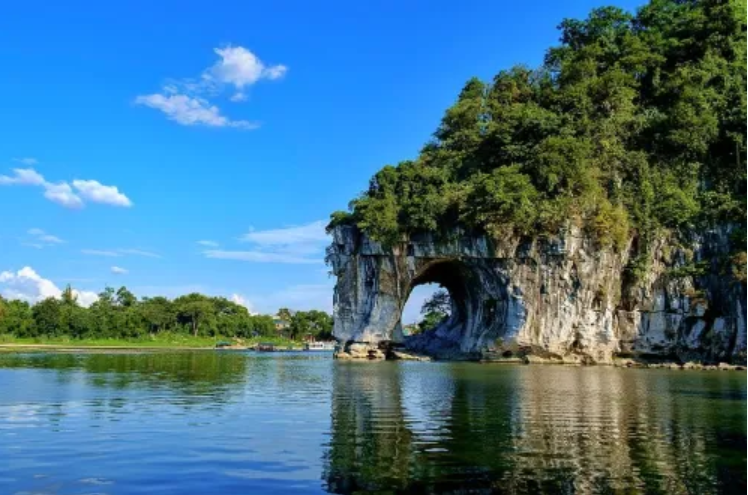
Elephant Trunk Hill is one of Guilin’s iconic landmarks, located at the confluence of the Lijiang River and the Peach Blossom River. It is named for its shape, which resembles an elephant standing by the river with its trunk extended to drink water. The Water Moon Cave, formed between the trunk and the body, reflects the moonlight on the water during clear nights, creating the famous “Elephant Trunk Hill and Water Moon” scene. Inside the cave, there are many stone carvings from past dynasties, which hold significant historical and artistic value.
Nine Horse Mural Hill
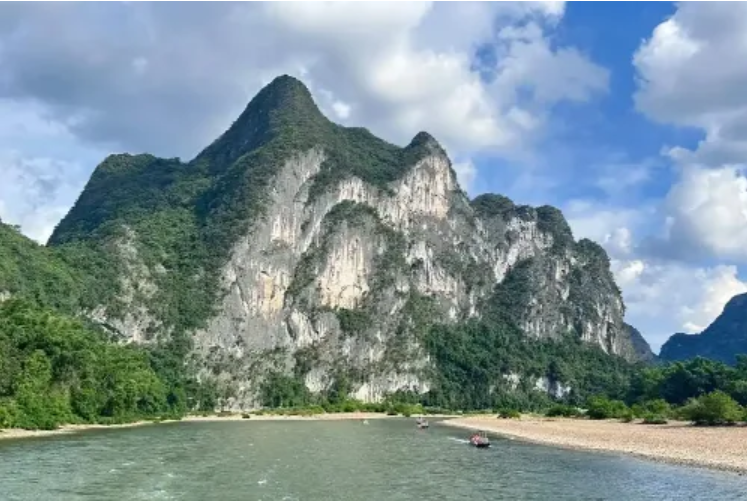
Nine Horse Mural Hill is one of the most renowned spots along the Lijiang River. On a huge cliff by the river, the rock patterns crisscross like a natural painting of galloping horses. Legend has it that those who can identify nine horses are geniuses, those who see seven are top scholars, and those who see five are at least scholars. Many visitors enjoy the fun of searching for the horses on the cliff face.
Yellow Cloth Reflection
Yellow Cloth Reflection is the highlight of the Lijiang River’s scenery. Here, the river is wide and the water is as smooth as a mirror, clearly reflecting the peaks and green bamboos along the banks, like a traditional ink-wash painting. Especially on sunny days, the shimmering water mirrors the green mountains on both sides, creating a breathtaking view. The scene on the back of the new 20-yuan banknote is taken from this location.
Xingping Ancient Town
Xingping Ancient Town is an old town along the Lijiang River, with a history of over 1,700 years. The town preserves many buildings from the Ming and Qing dynasties, with ancient streets, lanes, and bridges laid out in an orderly manner. Strolling along the cobblestone roads, visitors can feel the profound historical atmosphere. Here, visitors can also take bamboo rafts to enjoy the scenery along the river.
Suggested Itinerary:
If you plan to visit the Guilin Lijiang River Scenic Area, you can follow this route:
On the first morning, head to Elephant Trunk Hill to admire the unique charm of this Guilin landmark and learn about its historical and cultural background. At noon, enjoy local specialties such as Guilin rice noodles nearby. In the afternoon, take a cruise on the Lijiang River, departing from Mopanshan or Zhujiang Wharf. Along the way, you will enjoy the strange peaks, rocks, and rural scenery on both sides, passing by famous spots like Nine Horse Mural Hill and Yellow Cloth Reflection. In the evening, arrive at Yangshuo, stroll along West Street to experience its lively atmosphere, and taste local dishes such as beer fish.
On the second morning, go to Xingping Ancient Town to experience its tranquility and antiquity, then take a bamboo raft along the Yangdi–Xingping section of the Lijiang River to get a closer view of the beautiful landscape. In the afternoon, end your trip and return to downtown Guilin.
Travel Tips:
Check the ticketing policies, opening hours, and transportation information in advance to plan your schedule and avoid delays.
If you choose to take a cruise, it is advisable to book tickets in advance, especially during peak tourist seasons.
The natural scenery of the Lijiang River is ideal for photography. Bring a camera, tripod, and other equipment.
When trying local food, choose reputable restaurants and food stalls to ensure food safety, and sample a variety of dishes to experience the local flavors.
In summer, take sun protection and heatstroke prevention measures—bring sunglasses, sunscreen, a sun hat, etc. In winter, keep warm.
When riding a bamboo raft, wear a life jacket and follow the rafter’s instructions to ensure safety.
Important Notices:
Protect the environment: do not litter or damage natural landscapes and cultural relics.
During cruises and raft rides, do not walk around or play roughly to avoid falling into the water.
Respect local customs and religious beliefs, especially in ethnic minority areas.
Purchase tickets and souvenirs through official channels to avoid counterfeit goods or overpriced tickets.
In case of an emergency, contact the scenic area staff or call the local rescue number.
In busy places like Yangshuo West Street, take care of your personal belongings and stay alert for your safety.
Transportation:
By Air: Guilin Liangjiang International Airport is about 28 km from the city center, with direct flights from many domestic cities. From the airport, take the airport shuttle, taxi, or ride-hailing service to the city center and the scenic area.
By Rail: Guilin has several railway stations, including Guilin Station and Guilin North Station. From the stations, take buses, taxis, or ride-hailing services to the city and scenic spots.
By Bus: Many bus routes in Guilin reach some attractions in the Lijiang Scenic Area. For example, buses No. 2 and No. 23 go to Elephant Trunk Hill. However, bus routes may not cover all areas, and intervals can be long.
Taxi / Ride-hailing: Taking a taxi or ride-hailing service in Guilin is convenient, but traffic jams may occur during peak seasons.
Cruise / Bamboo Raft: For a cruise, board at Mopanshan Wharf or Zhujiang Wharf; bamboo rafts are available at Yangdi, Xingping, and other places. Tickets can be booked through travel agencies or the official website of the scenic area.
Opening Hours:
The Lijiang River Scenic Area is open year-round, but hours vary by activity.
Cruises generally depart from around 9:00 AM, with the last boat around 1:00–2:00 PM, subject to seasonal and passenger flow adjustments.
Bamboo rafting is usually open from 8:00 AM to 5:00 PM, but times may change in winter or during low-water periods.
Attractions like Elephant Trunk Hill are open from 6:30 AM to 9:30 PM.
It is recommended to check the latest opening hours via the official channels before your visit.
Tickets:
Boat tickets start from 120 RMB.
You can search for the official WeChat public account “Lijiang Ticketing Office”to get the latest updates or purchase tickets online.