Haizhu National Wetland Park is located in the southeast of Haizhu District, Guangzhou City, Guangdong Province, at the core ecological area of Haizhu Island. It is a national 4A-level tourist attraction and the largest urban wetland park in Guangzhou. The park has a total planned area of 1,100 hectares, of which the wetland area accounts for 1,066.6 hectares. Haizhu Wetland is a composite wetland ecosystem where Pearl River Delta tidal creek wetlands, urban lake wetlands, and semi?natural fruit forests are intertwined. It is known as the “southern lung” of Guangzhou. The park preserves the traditional dike?pond agricultural landscape of the Lingnan water towns and is rich in ecological resources, providing habitat for large numbers of birds, amphibians, fish, and other wildlife. It is also an important stopover for migratory birds in the Pearl River Delta. As a rare large?scale wetland park in the heart of a major Chinese metropolis, it plays multiple roles: water conservation, urban climate regulation, biodiversity protection, science education, and ecological leisure tourism.
History and Culture
The area where Haizhu Wetland sits has a long history of farming. As early as the Tang and Song dynasties, the tidal flats of the Pearl River here were gradually developed and utilised. In ancient times, the dense network of waterways allowed local ancestors to create the unique Lingnan dike?pond agricultural model—mulberry fish ponds and fruit fish ponds—and they cultivated Lingnan fruits such as longan, lychee, wampee, and carambola for generations, giving rise to a thousand?year?old Lingnan orchard and water?town culture.
In modern times, as Guangzhou expanded outward and urbanisation accelerated around Haizhu Island, the ecological protection of this wetland began to receive attention. In 2012, the first phase of Haizhu Wetland was officially opened to the public, and subsequent phases were completed over time. In 2015, with approval from the State Forestry Administration, Guangzhou Haizhu National Wetland Park was officially established as a national?level wetland park. During development, ecological restoration was carried out while protecting the existing fruit forests, water systems, and remaining village historical sites—preserving the thousand?year?old dike?pond farming heritage while creating an ecological model where the city and nature coexist in harmony.
Main Attractions
Haizhu Lake
Haizhu Lake is the core lake area of Phase I of the wetland. The lake is broad, with a long shoreline and a slow?paced greenway circling it. The lake water is connected to the Pearl River water system. Scattered islets and lush aquatic plants make it a year?round haven for large numbers of waterbirds. The lakeside path offers wide views and is a popular spot for enjoying wetland waterscapes, watching birds, and taking a leisurely stroll.
Shiliugang River
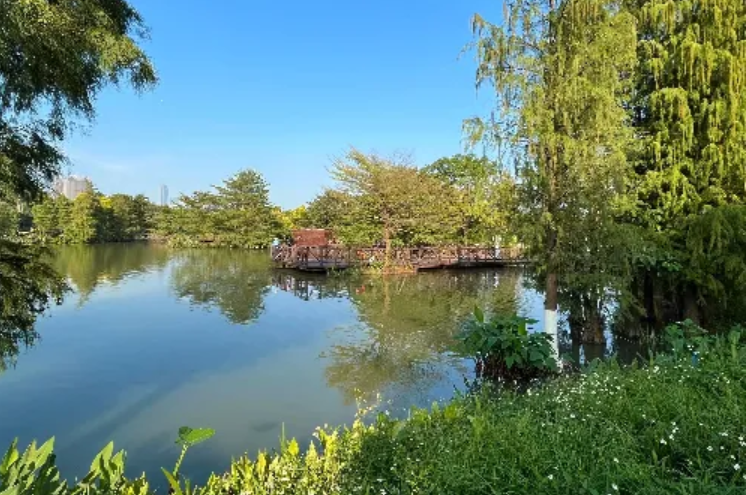
The Shiliugang River runs through the Haizhu Wetland area. As a tributary of the Pearl River, it serves as an important waterway corridor for the wetland. Along both banks, large areas of native fruit orchards remain. Visitors can walk along the riverside boardwalk to enjoy the typical waterway scenery of the Lingnan water towns and view the traditional dike?pond landscape. The river is also a vital channel for water circulation and the movement of aquatic plants and animals within the wetland.
Fushou Fruit Corridor
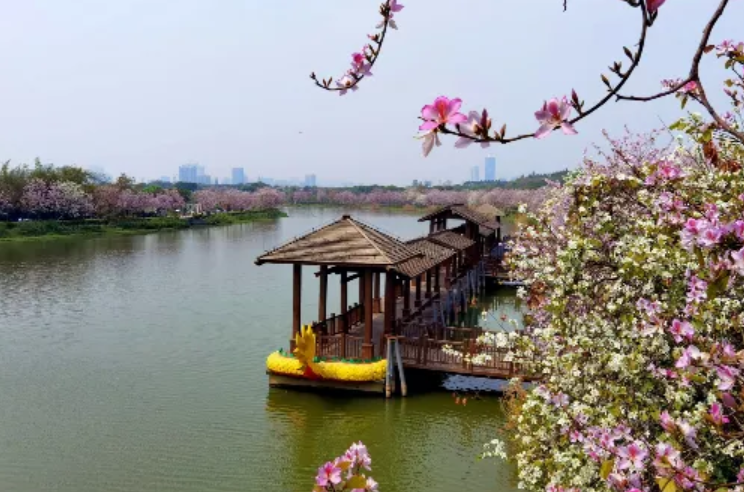
Located in Phase II of the wetland, the Fushou Fruit Corridor is a long walkway that winds through century?old fruit forests. The surrounding area is dotted with ancient trees—longan, lychee, and other fruit species—many of which are very old. Walking through the corridor, visitors can view the Lingnan fruit trees up close and learn about the traditional fruit?fish dike?pond farming culture. It is a distinctive spot for agricultural science education in the park.
Lvxin Lake
Lvxin Lake is in the core area of Phase I. Its clear waters mirror the Canton Tower on the lake’s surface. Around the lake are cascading waterscapes and viewing platforms. The banks are planted with canna, cattails, water lilies, and other aquatic plants. Adjacent to the lake is a 650?metre?long “Flower Stream” with boardwalks that let visitors get close to the wetland waters and flowers.
Flower Stream
The Flower Stream lies next to Lvxin Lake and blooms with flowers in all seasons. Along the path grow maple trees, metasequoia, banyan trees, and other tall species, providing dense shade. Wooden pavilions and stone boardwalks are interspersed, making it an ideal place for flower appreciation and for experiencing the rustic charm of the water town.
Fulujing Birdwatching Hut
The Fulujing Birdwatching Hut is on the south bank of Tuhua Creek in Phase II. It is a three?storey observation building connected by a wooden lattice corridor and is one of the main birdwatching spots in the park. From here, visitors can overlook the orchard wetlands along both sides of Tuhua Creek and observe waterbirds such as egrets and swan geese.
Heliujin Birdwatching Hut
The Heliujin Birdwatching Hut is located at the confluence of Tuhua Creek, Nanyawei Creek, and Mangjiaowei Creek. With its broad river surface and rich aquatic environment, it attracts frequent feeding activity by waterbirds and is one of the best birdwatching locations in the entire park.
Suggested Tour Route:
North Gate → Lvxin Lake → Flower Stream → Fushou Fruit Corridor → Fulujing Birdwatching Hut → Heliujin Birdwatching Hut → Orchard Wetlands → Shiliugang River → Haizhu Lake Lakeside Greenway
Tour Suggestions:
The best seasons to visit are spring and autumn. From October to March each year is the prime period for migratory bird watching.
Allow 3–4 hours for the visit; take a slow walk along the boardwalks to fully appreciate the wetland ecology.
The park is large, so it is advisable to bring drinking water and some snacks. There are many rest areas within the park.
Birdwatchers are recommended to bring binoculars and choose early morning or dusk for better chances of spotting birds.
You can book nature education programmes in advance for a deeper understanding of wetland ecology and farming culture.
Important Notes:
Entry requires advance real?name reservation through official channels; entry is not permitted without a reservation.
The wetland park is an ecological reserve; feeding, disturbing, or harassing birds and other wildlife is prohibited.
Picking fruit from trees, stepping on dike?pond areas, or trampling aquatic vegetation is not allowed.
Mosquitoes are abundant; bring insect repellent for outdoor activities.
Some waterside boardwalks may be slippery—watch your step.
Flying drones is prohibited; commercial photography without permission is not allowed.
In rainy weather, be cautious of water accumulation; in hot weather, take sun protection and heatstroke prevention measures.
Transportation:
Metro: Take Guangzhou Metro Line 3 to Datang Station, Exit B, and walk to the North Gate of Haizhu Wetland.
Bus: Take a bus to Haizhu Wetland North Gate Station or Xinjiao Middle Road (Longtan) Station, then walk to the entrance.
Driving: Navigate to “Haizhu National Wetland Park – North Gate”. Parking spaces are limited; during peak periods, public transport is recommended.
Opening Hours:
The park is open from 9:00 AM to 5:00 PM, with last entry at 4:30 PM. It is closed every Monday. If Monday falls on a public holiday, the closure is moved to the first working day after the holiday. Please check the latest official announcements before your visit.
Ticket Price:
20 RMB per person.