Shanhaiguan Scenic Area is located in Shanhaiguan District, Qinhuangdao City, Hebei Province. It is a National 5A-level Tourist Attraction and a Major Historical and Cultural Site Protected at the National Level, known as the “First Pass Under Heaven.” The scenic area leans against the Yanshan Mountains to the north and overlooks the Bohai Sea to the south. It is one of the northeastern passes of the Ming Great Wall and a key transportation hub between North China and Northeast China.
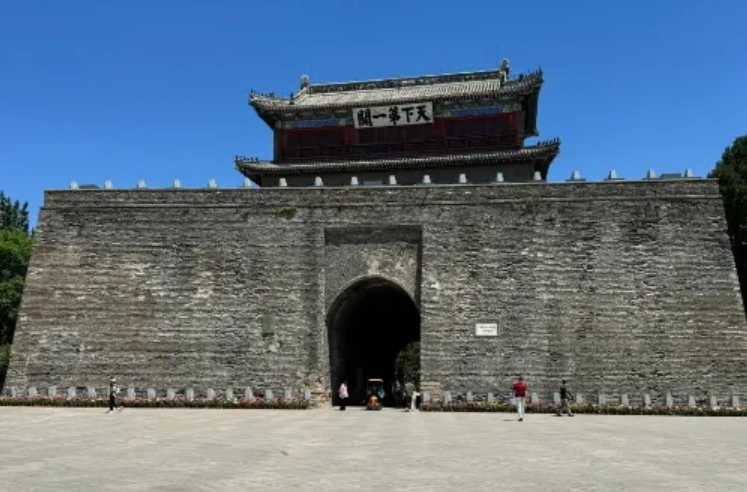
The scenic area covers a total area of about 12 square kilometers. Its core area is Shanhaiguan Ancient City. The ancient city wall has a circumference of about 4,700 meters, a height of 14 meters, and a width of 7 meters. It has four gates in the east, west, south, and north. The east gate, Zhendong Gate, is the main entrance to the scenic area. Its gate tower is 13.7 meters high and bears the plaque “First Pass Under Heaven.” The scenic area integrates Great Wall culture, military culture, pass culture, and coastal scenery. It holds the important position of being “the throat of the border commanderies and the safeguard of the capital” and is an important representative of Chinese Great Wall culture.
Historical Culture
Shanhaiguan was first built in the 14th year of the Hongwu reign of the Ming Dynasty (1381), under the supervision of Xu Da, a founding meritorious official of the Ming Dynasty. It has a history of more than 600 years. Because of its strategic location, it has been a militarily contested place since the Ming and Qing dynasties. Many important battles took place here in history, such as Wu Sangui leading Qing troops through the pass at the end of the Ming Dynasty and the modern Yuguan Resistance, leaving behind rich historical relics and stories.
Shanhaiguan Ancient City is a relatively well-preserved military defense system along the Ming Great Wall. Inside the city are Ming and Qing buildings such as government offices, temples, and residences, reflecting the ancient urban planning concepts of “stationing troops to guard the frontier” and “integrating military and civilian life.” In 1988, Shanhaiguan was included in the World Cultural Heritage site—the Great Wall of China project—becoming a cultural landmark that connects mountains and sea and carries history.
Main Attractions
First Pass Under Heaven Gate Tower
The First Pass Under Heaven Gate Tower is the iconic building of Shanhaiguan. It is located at the east gate of the ancient city and is also called Zhendong Tower. The tower is a brick-and-wood structure, five bays wide and three bays deep, 13.7 meters high, with a double-eaved hip-and-gable roof. The plaque “First Pass Under Heaven” was written by the Ming Dynasty calligrapher Xiao Xian, and the calligraphy is vigorous and powerful. Inside the tower, cultural relics such as Ming Dynasty weapons and city defense models are displayed. Climbing the tower offers a panoramic view of the ancient city and the Yanshan Mountains.
Laolongtou
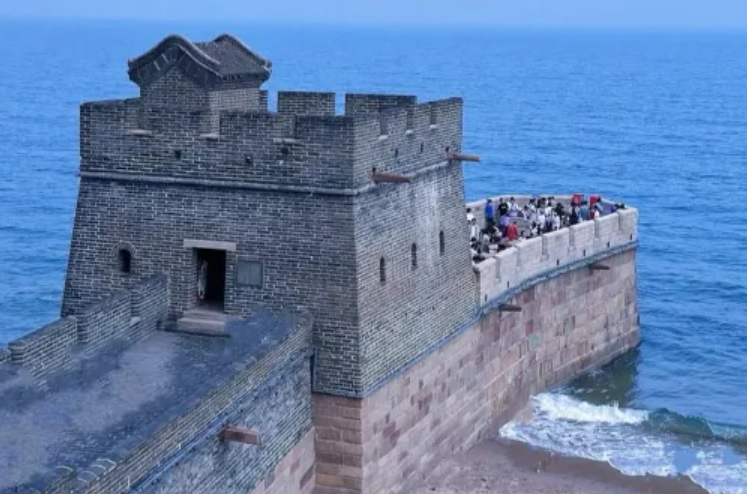
Laolongtou is located 5 kilometers south of Shanhaiguan City. It is the eastern starting point of the Ming Great Wall and is named because the Great Wall extends into the Bohai Sea like a giant dragon. Laolongtou consists of buildings such as the Sea-entering Stone City, Jinglu Terrace, Chenghai Tower, and Nanhaikou Pass. The Sea-entering Stone City extends 22.4 meters into the sea and is built of huge stone blocks, making it a wonder of ancient military defense engineering. The scenic area also has a Great Wall Museum, which displays the integration of Great Wall history and maritime culture.
Meng Jiangnü Temple
Meng Jiangnü Temple is located on Phoenix Mountain, 6 kilometers east of Shanhaiguan City. It was built to commemorate the folk legend “Meng Jiangnü Cries at the Great Wall.” It was first built in the Song Dynasty, and the existing buildings were rebuilt during the Wanli reign of the Ming Dynasty. The temple covers about 4,000 square meters. Its main buildings include the mountain gate, main hall, and rear hall. A statue of Meng Jiangnü is enshrined in the main hall. The temple preserves the “World’s Most Ingenious Couplet”: “The sea water tides morning after morning, morning after morning it falls; the floating clouds grow long, ever long, ever long and fade.” It cleverly uses the polyphonic characteristics of Chinese characters and is thought-provoking.
Jiaoshan Great Wall
Jiaoshan Great Wall is located 3 kilometers north of Shanhaiguan City. It is the first mountain crossed by the Ming Great Wall after Laolongtou, with an elevation of 519 meters. It is named for its horn-like mountain shape. The Great Wall winds upward along the mountain ridge for about 3 kilometers and has defensive facilities such as enemy towers and beacon towers. The Jiaoshan scenic area also includes attractions such as Qixian Temple and Ruilian Pengri. Climbing the wall offers distant views of Shanhaiguan Ancient City and Bohai Bay, allowing visitors to experience the spectacular sight of the “Great Wall hanging upside down.”
Shanhaiguan Ancient City
Shanhaiguan Ancient City is the core area of the scenic spot, covering about 1.2 square kilometers. It preserves the street layout of the Ming and Qing periods and a large number of historical buildings. The main street in the ancient city is Cross Street. East Street connects to the First Pass Under Heaven Gate Tower, West Street has Dabei Temple, South Street has Zhenyuan Escort Agency, and North Street has a mosque. The ancient city also contains relics such as the Ministry of War Branch Office, Bell and Drum Tower, and Ying’en Tower. Visitors can stroll along the bluestone-paved streets and experience the marketplace atmosphere of the Ming and Qing periods.
Tour Routes:
Classic One-Day Tour
Morning: Enter from the First Pass Under Heaven Gate Tower. After climbing and visiting the tower, tour the ancient city along East Street, admire Ming and Qing architecture, and taste local snacks such as Sitiao Baozi; have lunch in the ancient city. Afternoon: Go to Laolongtou Scenic Area, visit the Sea-entering Stone City and Chenghai Tower, and look out at the Bohai Sea; then take a vehicle to Meng Jiangnü Temple to learn about the folk legend; finally go to Jiaoshan Great Wall, climb the wall to overlook the mountains and sea, and end the trip. This route covers the core attractions of the scenic area and combines walking with driving, making it suitable for most visitors.
In-Depth Two-Day Cultural Tour
Day 1: In the morning, visit the First Pass Under Heaven and Shanhaiguan Ancient City, visit the Ministry of War Branch Office and Bell and Drum Tower, and experience life in the ancient city; in the afternoon, go to Jiaoshan Great Wall, hike up the wall, feel its steepness, and return to the ancient city in the evening to enjoy the night view. Day 2: In the morning, go to Laolongtou, focusing on the Sea-entering Stone City and the Great Wall Museum, and learn about maritime defense culture; in the afternoon, go to Meng Jiangnü Temple and, together with the legendary story, gain a deeper understanding of Great Wall culture. Afterward, go to the nearby Yansai Lake Scenic Area (optional, ticket 40 yuan) for a boat tour, ending the in-depth journey.
Travel Tips:
Suggested visiting time: 1–2 days. For an in-depth experience of Great Wall culture and ancient city customs, 2 days are recommended.
Summer (June–August) is hot, and the seaside at Laolongtou has strong ultraviolet rays, so sunscreen and a sun hat are needed. Winter (November–February) is windy and cold, so keep warm, especially when climbing the Great Wall.
There are many stone-paved roads in the ancient city, so non-slip shoes are recommended. Some sections of Jiaoshan Great Wall are steep, so elderly people and children should pay attention to safety and may choose to take the cable car.
Buying a combo ticket is more cost-effective. Tickets can be purchased in advance through the official WeChat account to avoid queuing. Weekends and holidays are crowded, so entering before 8 a.m. is recommended to avoid the peak.
Laolongtou Scenic Area has sea cruises (50 yuan/person), allowing visitors to view the Great Wall from the sea. Meng Jiangnü Temple holds a temple fair on the seventh day of the seventh lunar month every year, with traditional folk performances.
Notes:
The steps of the First Pass Under Heaven Gate Tower are steep. Be careful when going up and down, especially visitors with children, who should keep a close watch.
The Sea-entering Stone City at Laolongtou is slippery. Playing near the edge of the stone city is prohibited to avoid falling into the water. Swimming is prohibited in the scenic area. Please follow the signs and regulations.
Meng Jiangnü Temple has many cultural relics. Touching them and using flash photography are prohibited. The temple is located on a hillside with many steps, so comfortable shoes are recommended.
Some shops and restaurants in the ancient city support mobile payment, but it is advisable to carry a small amount of cash. When buying local specialties, compare prices to avoid overpaying.
Parking lots are easily full on weekends, so taking a bus or train is recommended. The last No. 25 bus departs at 19:00. Pay attention to the return time to avoid being stranded.
Transportation:
Bus: From Qinhuangdao city, take Bus No. 25 or No. 33 directly to Shanhaiguan Scenic Area. Buses run from 6:00 to 19:00, about every 10 minutes. The full fare is 2 yuan, and the journey takes about 40 minutes.
Self-driving: Exit at Shanhaiguan on the Beijing-Harbin Expressway, drive along Guancheng South Road for about 3 kilometers. The scenic area parking lot charges 10 yuan/hour and has about 500 spaces.
Train: Shanhaiguan Railway Station is about 1.5 kilometers from the scenic area. After leaving the station, visitors can walk or take a taxi (5 yuan). Qinhuangdao Station is about 15 kilometers from the scenic area, and Bus No. 33 goes there directly.
Tourist shuttle: Qinhuangdao Beidaihe Airport has a tourist shuttle bus to Shanhaiguan Scenic Area. Departure times are adjusted according to flights. The fare is 30 yuan/person, and the journey takes about 1.5 hours.
Opening Hours:
The scenic area is open all year round. Opening hours for the attractions are: April 1–October 31, 7:30–18:00 (last entry at 17:30); November 1–March 31 of the following year, 7:30–17:00 (last entry at 16:30). Laolongtou Scenic Area extends its opening hours to 19:00 during the July–August peak season. Meng Jiangnü Temple adjusts its opening hours appropriately during cultural events in spring and autumn. Specific times are subject to official announcements.
Tickets:
Tickets are sold separately for each attraction. Buying a combo ticket is recommended, as it is more cost-effective. The combo ticket (including 6 attractions sightseeing bus) is 140 yuan/person.