Lianhuashan Tourist Area is located in Shilou Town, Panyu District, Guangzhou City, Guangdong Province. It is a national 4A-level tourist attraction, a provincial-level scenic spot in Guangdong, and a key cultural relics protection unit of Guangzhou. Composed of 48 low hills of red sandstone, it covers a total area of approximately 2.54 square kilometers, with the highest peak at 108 meters above sea level. It is a comprehensive tourist destination that integrates ancient quarrying culture, religious culture, coastal scenery, and leisure vacation. Over 2,000 years of quarrying history have left behind numerous magnificent and unique quarrying remains—cliffs, caverns, stone bridges, and other landscapes of breathtaking craftsmanship. The site also features the highly venerated Guanyin (Avalokitesvara) sacred precinct, a well-known blessing-seeking destination in Lingnan. Adjacent to the Pearl River estuary, visitors can ascend for a panoramic view of the Shiziyang (Lion's Ocean) river scenery, where mountain, sea, and cultural heritage blend harmoniously.
History and Culture
The human history of Lianhuashan can be traced back to the Western Han Dynasty. From the early Western Han, ancestors began quarrying red sandstone here, with the stone extensively transported to the ancient city of Guangzhou for building city walls, palaces, and residences. Spanning the Western Han, Eastern Han, Southern Tang, Song, Yuan, Ming, and Qing dynasties, over two millennia of continuous quarrying activity left behind the large-scale ancient quarrying site—a rare and well-preserved example of ancient artificial quarrying remains in China.
From the Ming Dynasty onward, due to its strategic location commanding the Shiziyang waterway of the Pearl River, Lianhuashan became a coastal defense stronghold. The Lianhua Pagoda was first built during the Wanli reign of the Ming Dynasty as a landmark navigation lighthouse along the Pearl River shipping route, guiding merchant vessels and earning the title "Provincial Capital's Ornamental Pillar." In the Qing Dynasty, Lianhua City (a fortress) was constructed and served as a coastal defense barracks during the Opium Wars, bearing witness to modern Guangzhou's maritime defense history.
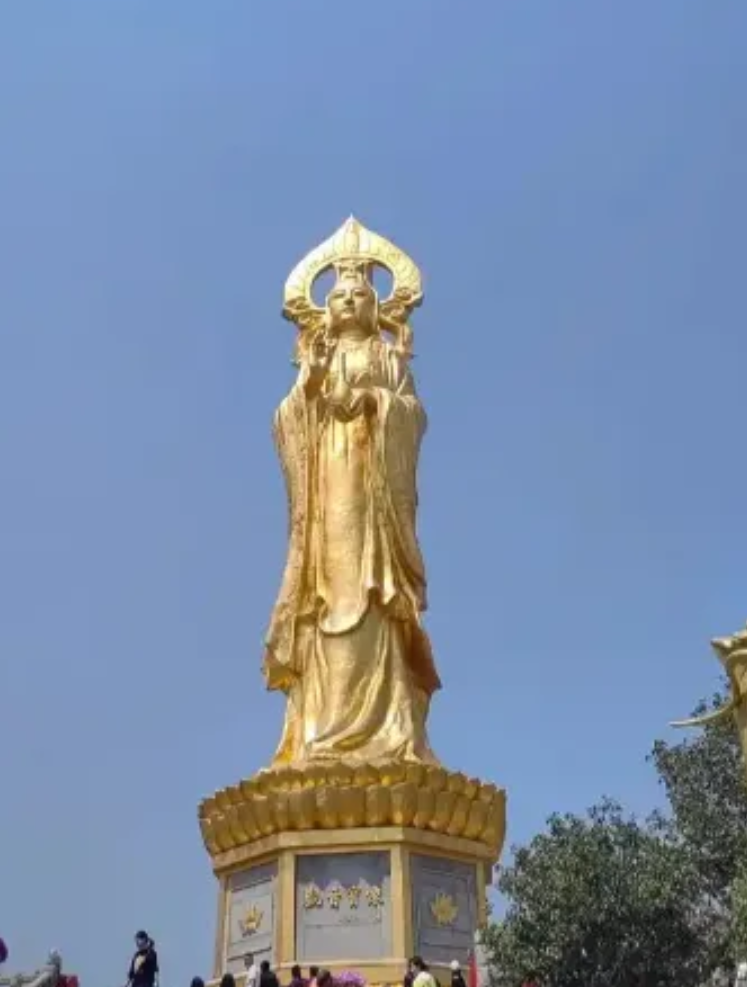
In modern times, Lianhuashan gradually developed into a pilgrimage and sightseeing destination. In 1994, the 40.88-meter-high gilded bronze statue of Guanyin (Wanghai Guanyin, or Guanyin Overlooking the Sea) was completed and consecrated. Since then, the cultural influence of Guanyin at Lianhuashan has continued to expand. During Guanyin's birthday and holidays, large numbers of visitors come to pray, making Guanyin culture an important cultural hallmark of the area.
Major Attractions
Wanghai Guanyin (Guanyin Overlooking the Sea)
Perched atop the peak of Lianhuashan, this gilded bronze statue of Guanyin stands 40.88 meters tall. Facing the Shiziyang, the statue has a solemn and serene expression and is a landmark of Lianhuashan. The square in front is spacious and tidy, with a worship terrace nearby. Incense offerings remain abundant throughout the year, making it a core destination for pilgrims and sightseers.
Lianhua Pagoda
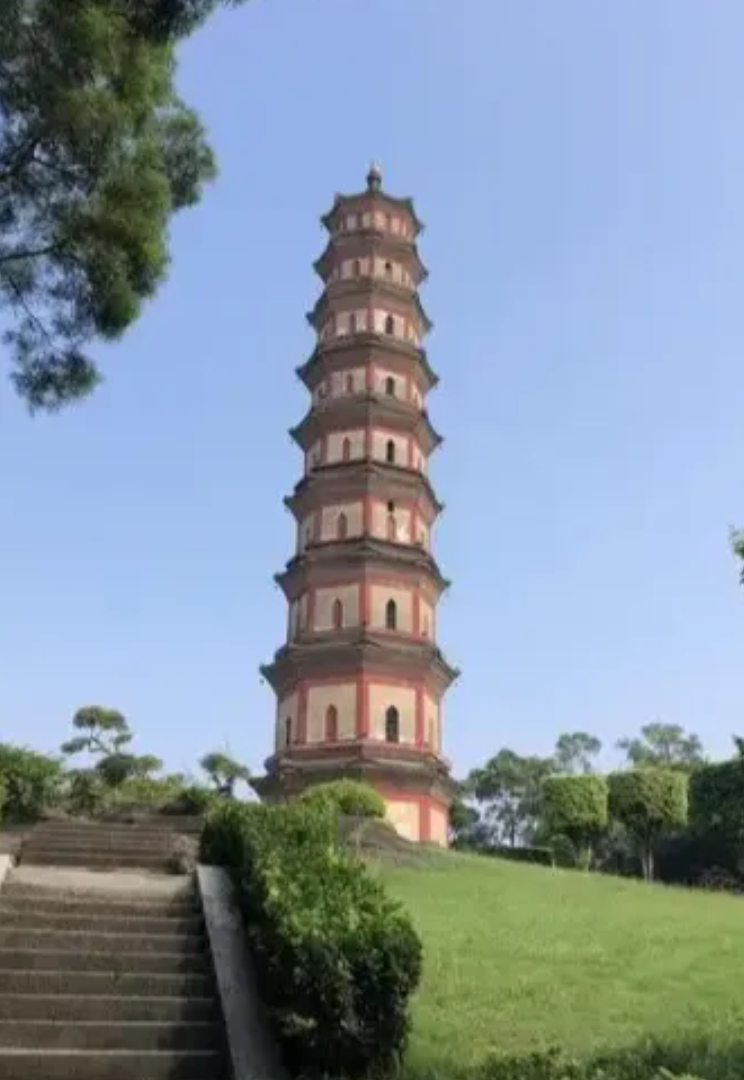
Also known as Wenchang Pagoda, it was first built in 1612 (the 40th year of the Wanli reign of the Ming Dynasty). The pagoda is over 50 meters tall and is an octagonal, nine-story brick pavilion-style tower. Standing beside the Shiziyang, it was visible from afar to ships in ancient times, earning the moniker "Provincial Capital's Ornamental Pillar." It has been well preserved through restorations over the centuries.
Lianhua City
Originally constructed in 1664 (the 3rd year of the Kangxi reign of the Qing Dynasty), Lianhua City was a coastal defense barracks. Its walls form an oval shape, built along the mountain with rammed stone. During the Opium Wars, it served as a garrison post for Qing troops. Inside the city, exhibition halls display documents and artifacts related to Lianhuashan's maritime defense history.
Ancient Quarrying Site
The Ancient Quarrying Site is the most representative historical relic of Lianhuashan. After over two millennia of artificial excavation, it has formed unique landscapes of cliffs, caverns, stone corridors, and plunge pools. Sites such as Swallow Rock, Sword Gate, and Lotus Stone are all part of the quarry remains. The red sandstone cliffs are steep and precipitous, with clear traces of manual chiseling.
Swallow Rock (Yanziyan)
Swallow Rock is the core area of the ancient quarry, named for the swallows that nest in its caverns year-round. The cliff face towers high, with a clear pool at its base. Chisel marks crisscross the rock walls, and jagged stones stand in profusion. Walking through, visitors can vividly sense the labor of ancient quarry workers.
Hundred Flowers Garden (Baihuayuan)
Located in the gentler terrain of the scenic area, the garden features seasonal flowers and plants, with walking paths and rest pavilions. With lush vegetation and a tranquil environment, it is an excellent spot for a relaxing stroll.
Suggested Tour Route:
Main Gate → Ancient Quarrying Site → Swallow Rock → Sword Gate → Lotus Stone → Lianhua City → Lianhua Pagoda → Wanghai Guanyin → Hundred Flowers Garden → Exit
Travel Tips:
Recommended visiting time: 3–4 hours, allowing sufficient time to explore the quarry remains and the Guanyin precinct.
For the best views of the Shiziyang river scenery, ascend to the Wanghai Guanyin square in the morning or at dusk.
Pilgrims may bring their own incense or purchase it at designated areas within the scenic area.
There are many uphill sections, so comfortable, non-slip sports shoes are recommended.
In summer, remember to protect yourself from the sun and stay hydrated; shaded rest areas are relatively sparse on the mountain.
During holidays, visitor numbers are high; it is advisable to avoid peak hours between 10:00 AM and 2:00 PM.
Important Notices:
The cliffs of the ancient quarry are steep; do not climb over guardrails and keep away from dangerous edges.
In the Guanyin worship area, please refrain from loud noise and observe religious site etiquette.
Open flames and smoking are strictly prohibited in the forested areas of the scenic zone.
Do not climb or damage cultural relics and historic structures; protect heritage sites such as Lianhua Pagoda and Lianhua City.
Some sections of the mountain trail have no shelter; elderly visitors and children should be accompanied by family members throughout the visit.
Pets must comply with the scenic area's pet regulations; some religious areas do not permit pets.
Transportation:
Public transit: Take Metro Line 4 to Shiqi Station, then transfer to Bus No. 92 or No. 131 to reach Lianhuashan Tourist Area.
Self-driving: Search for "Lianhuashan Tourist Area" on navigation apps; paid parking is available on site.
Water transport: Take a Pearl River water route ferry to Lianhuashan Pier.
Opening Hours:
Lianhuashan Tourist Area is open year-round. Regular opening hours are from 7:00 AM to 5:00 PM. During major holidays, Guanyin's birthday, and other special dates, hours may be adjusted; please refer to on-site notices and official announcements.
Ticket Price:
54 RMB per person.