The Taohao Fuxi Mausoleum Cultural Tourism Area is located in Huaiyang District, Zhoukou City, Henan Province. It is a national 5A-level tourist attraction and a key cultural relic site under national protection. The scenic area covers an area of 875 mu, with a building area of 50,000 square meters. It is the largest and best-preserved Fuxi sacrificial architectural complex in China. The Taohao Mausoleum was first built during the Spring and Autumn Period, more than 3,000 years ago. It is known as "the First Mausoleum under Heaven" and is the mausoleum temple of Taohao Fuxi, the humanistic ancestor of the Chinese nation.
Historical Culture
Taohao Fuxi was the humanistic ancestor of the Chinese nation and ranked first among the Three Sovereigns. According to historical records, Fuxi established his capital at Wanqiu (present-day Huaiyang), created the Eight Trigrams, established marriage customs, standardized surnames, created writing, and invented fishing nets, thus initiating Chinese civilization. As the final resting place of Fuxi, the Taohao Mausoleum in Huaiyang has been a sacred place for Chinese descendants to seek their roots and worship their ancestors since ancient times.
The Taohao Mausoleum architectural complex was first built in the Spring and Autumn Period, expanded in the prosperous Tang Dynasty, and perfected in the Ming and Qing Dynasties, having undergone repairs and renovations in various dynasties. The entire architectural complex was built according to the numerical principles of Fuxi's Earlier Heaven Eight Trigrams, with a rigorous layout and grand scale, embodying the essence of ancient Chinese architectural art. The Taohao Mausoleum Temple Fair, held annually from the second day of the second lunar month to the third day of the third lunar month, has a history of thousands of years and has been included in the national intangible cultural heritage list.
Main Attractions
Wu Chao Gate
The first main gate of the Taohao Mausoleum, first built in the Ming Dynasty. It is five bays wide and three bays deep, with a single-eaved hip-and-gable roof, representing a typical Ming Dynasty official architectural style. The three large characters "Taohao Mausoleum" on the gate plaque were inscribed by Emperor Jiajing of the Ming Dynasty.
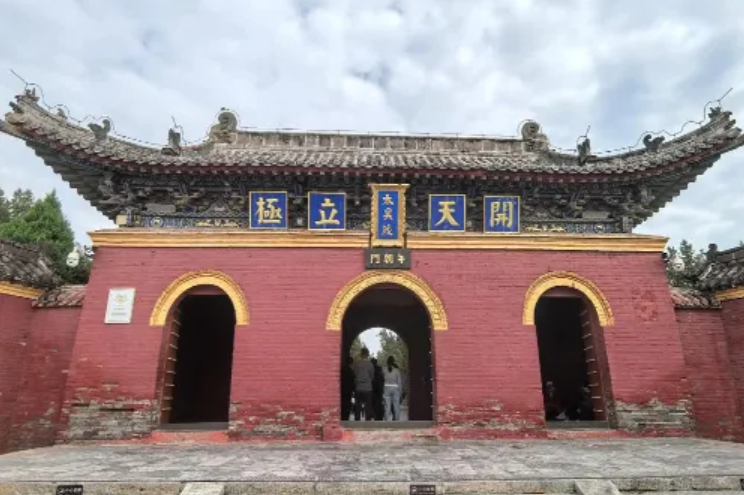
Xiantian Gate
Named after the "Earlier Heaven Eight Trigrams" created by Fuxi, it is the second main gate of the Taohao Mausoleum. The gate tower is tall and majestic, and above the doorway hangs a plaque reading "Opening Heaven and Establishing the Ultimate," praising Fuxi's achievements in founding civilization.
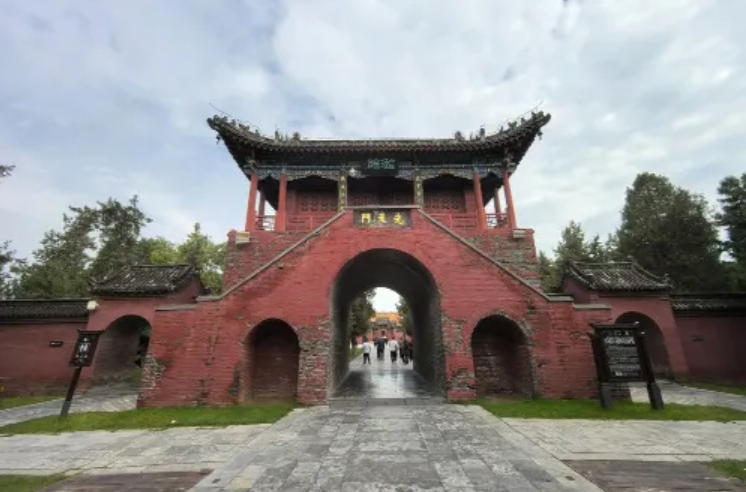
Taiji Gate
The third main gate of the Taohao Mausoleum, named because a Taiji symbol is painted above the doorway. This gate is the last barrier to the core sacrificial area, embodying the philosophical idea that "Taiji produces the Two Modes, and the Two Modes produce the Four Images."
Tongtian Hall
The main hall of the Taohao Mausoleum, first built in the Ming Dynasty. It is five bays wide and three bays deep, with a double-eaved hip-and-gable roof, and is the main venue for holding grand sacrificial ceremonies. Inside the hall is a statue of Fuxi, 5 meters tall, holding the Eight Trigrams and with a solemn expression.
Xianren Hall
Located behind Tongtian Hall, it is the hall dedicated to Nüwa, the wife of Fuxi. The statue of Nüwa in the hall is kind and gentle, echoing the statue of Fuxi and embodying the concept of harmony between yin and yang.
Taishi Gate
The last gate leading to the mausoleum, behind which is the Fuxi Mausoleum. The three characters "Taishi Gate" on the gate imply that Fuxi was the founder of Chinese civilization. On both sides of the gate is the couplet "One Stroke Opens Heaven" and "Ten Thousand Generations of Civilization."
Recommended Tour Route:
Recommended tour route: Wu Chao Gate → Xiantian Gate → Taiji Gate → Tongtian Hall → Xianren Hall → Taishi Gate → Fuxi Mausoleum → Yarrow Garden → Yue Fei Temple. The entire tour takes about 2-3 hours. During the temple fair each year, visitors can also experience a rich variety of folk activities.
Travel Suggestions:
Visit during the temple fair from the second to the third lunar month to experience the most authentic folk culture.
It is recommended to hire a guide to gain an in-depth understanding of Fuxi culture.
There are many ancient buildings in the scenic area, suitable for photography.
Respect sacrificial etiquette and maintain a solemn and respectful atmosphere.
Allow 2-3 hours for the visit; for an in-depth tour, half a day can be arranged.
Notes:
Please keep quiet in the mausoleum area and do not make loud noises.
Do not touch cultural relics or ancient buildings.
Observe sacrificial etiquette and do not take photos at will.
Protect the scenic area's environment and do not litter.
Keep personal belongings safe and beware of theft during the temple fair.
Transportation:
By car: Depart from the urban area of Zhoukou and drive east along Zhouhuai Avenue for about 30 kilometers to arrive.
By bus: Take the Zhoukou-to-Huaiyang shuttle bus from the Zhoukou Bus Station and get off at the Taohao Mausoleum stop.
By high-speed rail: Take the high-speed rail to Zhoukou East Station, then transfer to a bus or taxi to the scenic area (about 25 kilometers).
Opening Hours:
The scenic area is open all year round. Daily opening hours are 8:00-17:30 (peak season, April 1-October 31) and 8:30-17:00 (off-season, November 1-March 31 of the following year). Ticket sales at each attraction within the scenic area stop 30 minutes before closing.
Tickets:
Tickets are 40 yuan per person.