The Wudalianchi Scenic Area is located in Wudalianchi City, Heihe City, Heilongjiang Province. It is a national 5A-level tourist attraction, a Global Geopark, and a World Biosphere Reserve. The scenic area is centered on volcanic landforms and mineral spring resources, with a total area of 1,060 square kilometers, including 321,000 mu of forest land, 57,300 mu of grassland, and 150,000 mu of wetlands. There are 14 volcanoes from different periods, with eruptions spanning more than 2 million years, forming unique geological landscapes such as volcanic cones, crater lakes, and lava plateaus. It also has rare cold mineral springs in the world, with extremely high scientific, medical, and tourism value.
Historical Culture
The volcanic activity in Wudalianchi has a long history. The earliest volcanic eruption began about 2.07 million years ago, and the most recent eruption occurred between 1719 and 1721, forming two young volcanoes, Laoheishan and Huoshaoshan, as well as five interconnected lakes formed when volcanic lava blocked the Baihe River channel - Wudalianchi, which is also the origin of the scenic area's name.
Local ethnic minorities discovered the medical effects of the mineral springs hundreds of years ago and called them "divine springs." During the Kangxi period of the Qing Dynasty, the government began to pay attention to the mineral spring resources here, gradually forming a tradition of using mineral springs for treatment. In the 1980s, the Wudalianchi Scenic Area was officially developed and constructed. Its unique volcanic geological landscape and mineral spring culture attracted global attention, becoming an important base for studying volcanic ecosystems and mineral spring medicine.
Main Attractions
Laoheishan
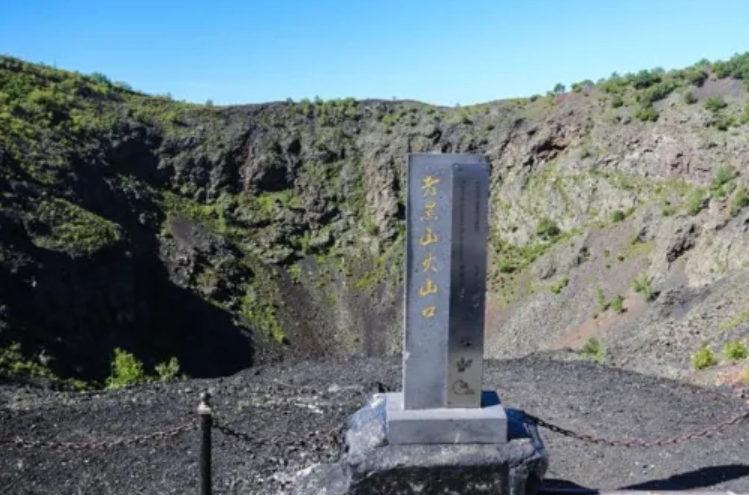
Laoheishan is one of the youngest volcanoes in Wudalianchi. It erupted between 1719 and 1721, with an altitude of 515.9 meters, a crater diameter of 350 meters, and a depth of 136 meters. The mountain body is composed of black pumice and lava, surrounded by extensive lava plateaus covering an area of 80 square kilometers. Visitors can climb to the top of the crater along the boardwalk, overlook the full view of the funnel-shaped crater, and also observe rare lava landforms such as the Fanhua Stone Sea and steam cones. Among them, the Fanhua Stone Sea was formed by the cooling of flowing molten magma and resembles a surging sea of stone, covering an area of about 20 square kilometers.
Wudalianchi (Lake Group)
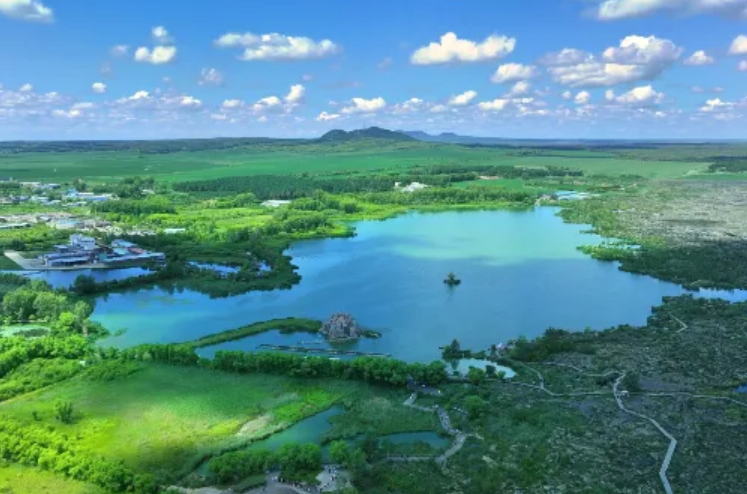
Wudalianchi consists of five interconnected lakes. From south to north, they are Touchi, Erchi, Sanchi, Sichi, and Wuchi, with a total area of 18.47 square kilometers and a total water storage capacity of about 157 million cubic meters. Among them, Sanchi is the largest, with an area of 8.4 square kilometers, and Wuchi is the deepest, with a water depth of about 12 meters. The lakes are surrounded by volcanic lava landforms. The lake water is clear and reflects the volcanic cones, creating a unique scenery. In summer, visitors can take boat tours. In winter, the lake surface freezes, forming a natural ice rink and making it a great place to view volcanic ice scenery.
Yaoquanshan
Yaoquanshan has an altitude of 355.8 meters and is the only volcano in the scenic area with a crater lake. The crater has a diameter of 240 meters and a depth of 39 meters, and the accumulated water inside forms a "heavenly well." At the foot of the mountain are famous mineral springs such as Nanquan, Beiquan, and Erlongyanquan. Among them, Nanquan and Beiquan are drinking mineral springs, rich in metasilicic acid, radon, and other minerals. The water temperature remains at 2-4°C year-round and has effects such as strengthening the stomach and aiding digestion. Erlongyanquan is a bathing spring with clear water, suitable for washing. Every year, a large number of tourists come here to drink and bathe in the springs and experience the miraculous effects of the mineral springs.
Longmen Shizhai
Longmen Shizhai was formed about 280,000 years ago by a volcanic eruption. It is a lava plateau formed by the accumulation of huge rocks from the eruption, covering an area of about 20 square kilometers. The huge rocks here can reach several meters in diameter and have various shapes. Some resemble lying dragons, and some resemble giant lions, hence the name "Longmen Shizhai." Rare plants adapted to the volcanic environment grow within the stone fortress, such as volcanic poplar and fish-scale pine, forming a unique volcanic ecosystem. It is an ideal place for hiking adventures and science education.
Shuijinggong
Shuijinggong is a volcanic lava ice cave formed about 300,000 years ago. It is 150 meters long, and the temperature inside remains at about -5°C year-round. The rock walls inside the cave are covered with crystal-clear frost flowers and ice stalactites. Under the illumination of lights, it looks like a crystal palace, hence the name. The ice layer inside the ice cave was formed by groundwater remaining after volcanic eruptions freezing in a low-temperature environment. Even in summer, thick ice layers can be seen. It is a unique attraction for escaping the heat and viewing ice scenery.
Tour Routes:
Recommended three-day tour route: On the first day, visit Laoheishan in the morning (about 3 hours) to see the crater and lava plateau; in the afternoon, go to Wudalianchi and take a boat tour of Sanchi and Sichi (about 2 hours), and stay overnight at a mineral spring sanatorium near the scenic area in the evening. On the second day, visit Longmen Shizhai in the morning (about 2.5 hours), and visit Yaoquanshan in the afternoon to experience drinking spring water and foot soaking (about 2 hours). On the third day, go to Shuijinggong (Ice Cave) in the morning (about 1 hour), and end the trip in the afternoon.
If time is tight, you can choose a one-day tour route, focusing on Laoheishan and Wudalianchi to experience the core geological landscapes.
Travel Suggestions:
Best season to visit: Summer (June-August) has a cool climate and is suitable for viewing volcanic landscapes and experiencing mineral springs; autumn (September-October) features colorful forests and beautiful scenery; in winter, you can view ice caves and volcanic snow scenery, but the temperature is relatively low.
The scenic area is mostly covered by volcanic lava landforms, and the roads are relatively rugged. It is recommended to wear slip-resistant sports shoes; in summer, the ultraviolet rays are strong, so sunscreen and hats are needed; in winter, temperatures can drop below -30°C, so thick down jackets, snow boots, scarves, and other cold-weather gear are required.
Although mineral springs have health benefits, they should not be consumed in excess. It is recommended to follow the guidance of local guides; when drinking spring water, use the special cups provided by the scenic area to maintain hygiene.
It is recommended to stay overnight in the scenic area and experience the special services of the mineral spring sanatorium, such as mineral spring baths and mud therapy, which can help relieve fatigue.
Dining prices in the scenic area are relatively high, so you can bring some dry food; if you want to taste local specialties, it is recommended to choose farmhouse restaurants near the scenic area for better value.
Precautions:
The volcanic lava landforms in the scenic area are fragile. Please do not climb at will or damage rocks and vegetation, and follow the environmental protection principle of "take only photos, leave only footprints."
When drinking mineral spring water, pay attention to hygiene. Do not directly touch the spring outlet with your mouth; use containers provided by the scenic area to collect water.
In summer, there are many mosquitoes and insects in the scenic area, so mosquito repellent supplies are needed; in winter, the roads are icy and slippery, so pay attention to safety when walking and riding in vehicles.
Some attractions such as the crater and ice cave require long-distance hiking. Elderly people and children are advised to go accompanied by family members and adjust the itinerary according to their own conditions.
The signal in the scenic area is weak. It is recommended to download offline maps in advance and keep in contact with companions to avoid acting alone.
Transportation:
Train: You can take a train to Wudalianchi Station (formerly Zhanhe Station). The station is about 30 kilometers from the scenic area. After getting off, you can take a taxi or tourist shuttle to get there. The journey takes about 40 minutes, and the taxi fare is about 50 yuan.
Bus: There are direct buses from Heihe City Passenger Transport Station to Wudalianchi Scenic Area, about 6 buses per day. Departure times are from 7:00 to 15:30. The journey takes about 2 hours, and the ticket price is 25 yuan per person. There are also long-distance buses from Harbin directly to the scenic area. The journey takes about 6 hours, and the ticket price is about 100 yuan per person.
Self-driving: From Heihe City, drive along the Jilin-Heilongjiang Expressway (G1211) toward Wudalianchi. The total distance is about 120 kilometers, and the journey takes 1.5 hours. From Harbin, drive along the Suibei Expressway (G1111) and then transfer to the Jilin-Heilongjiang Expressway (G1211). The total distance is about 380 kilometers, and the journey takes 4.5 hours. There are multiple parking lots in the scenic area, with a charging standard of 5 yuan per time.
Transportation within the scenic area: The scenic area is large, and the distances between attractions are relatively far. You can take the scenic area sightseeing bus. The through ticket is 50 yuan per person and is valid for two days, allowing unlimited transfers between attractions.
Opening Hours:
Wudalianchi Scenic Area is open all year round. In peak season (May 1-October 31), opening hours are 7:30-17:30; in off-season (November 1-April 30 of the following year), opening hours are 8:00-16:30. Some attractions such as boat tours will suspend operations in winter due to frozen lakes, subject to scenic area announcements.
Tickets:
Wudalianchi Scenic Area implements a combined ticket system. The combined ticket price is 145 yuan per person, including major attractions such as Laoheishan, Huoshaoshan, Wudalianchi (including boat tours), and Longmen Shizhai. Yaoquanshan Scenic Area is charged separately, with a ticket price of 20 yuan per person; Shuijinggong (Ice Cave) ticket is 30 yuan per person, and Bailongdong ticket is 30 yuan per person.