Luofu Mountain Scenic Area is located in Boluo County, Huizhou City, Guangdong Province. It is a national 5A-level tourist attraction, a national key scenic spot, and a national forest park. Covering a total area of over 214 square kilometers, Luofu Mountain attracts numerous visitors with its magnificent peaks, lush evergreen vegetation, towering ancient forests, and an otherworldly atmosphere of immortal grottoes. It is formed by the merging of Luo Mountain and Fu Mountain, comprising 432 peaks of various sizes, 980 waterfalls and famous springs, 18 cave heavens and wonderlands, and 72 stone chambers and secluded grottoes. On the mountain are renowned Taoist temples such as Chongxu Ancient Temple and Su Lao Temple, as well as cultural buildings like the Ge Hong Museum, all of which carry rich historical and cultural significance. With its high forest coverage and fresh air, the scenic area is a natural oxygen bar and an excellent destination for leisure, mountain hiking, fitness, and experiencing historical culture.
History and Culture
Luofu Mountain has an extremely long history and is known as the "No. 1 Mountain South of the Five Ridges." As early as the Qin Dynasty, records of Luofu Mountain appeared, and it was listed as the "Seventh Cave Heaven and Thirty-Fourth Blessed Land," making it one of the famous Taoist mountains.
During the Eastern Jin Dynasty, the renowned medical scientist and Taoist scholar Ge Hong and his wife Bao Gu lived in seclusion on Luofu Mountain, where they practiced Taoism, gathered herbs, made alchemical pills, and wrote books. Ge Hong completed important works such as Baopuzi here, which had a profound impact on the development of ancient Chinese medicine and Taoist theory. At the same time, he practiced medicine and helped local people, earning great respect from the community.
During the Tang and Song Dynasties, Luofu Mountain attracted many literati and poets, including Li Bai, Du Fu, and Su Shi, who all left poems and verses related to the mountain. While exiled to Huizhou, Su Shi visited Luofu Mountain many times and wrote the famous line, "At the foot of Luofu, spring lasts all year round; loquats and plums ripen in succession," further enhancing the mountain's fame and cultural depth.
During the Ming and Qing Dynasties, religious culture on Luofu Mountain further developed, with Taoist temples and shrines continuously built and renovated, making it an important center for religious activities in the Lingnan region.
In modern times, Luofu Mountain has been developed reasonably on the basis of conservation, becoming a well-known tourist destination. It also continues to serve as an important base for the inheritance and research of traditional Chinese medicine culture.
Major Attractions
Chongxu Ancient Temple
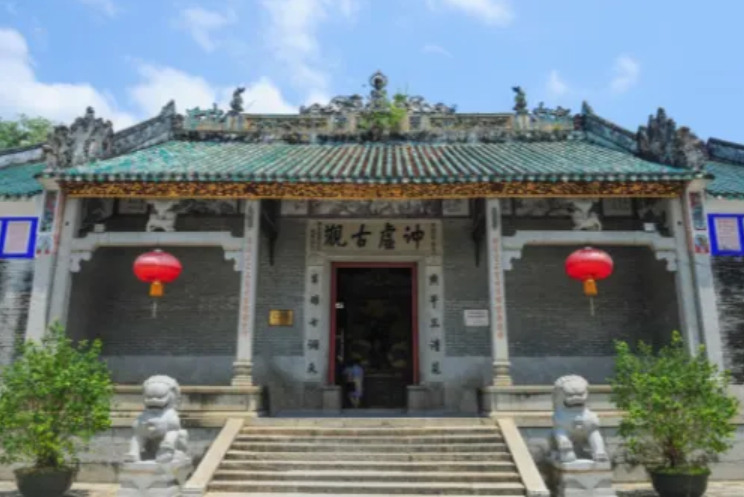
Located within the Zhuming Cave scenic area of Luofu Mountain, Chongxu Ancient Temple is one of the most famous Taoist temples on the mountain, with a history of over 1,600 years. It was founded by Ge Hong of the Eastern Jin Dynasty, initially named "South Nunnery," and later expanded into "Chongxu Temple." The existing structures date from a reconstruction during the Tongzhi period of the Qing Dynasty, with a building area of over 4,400 square meters. Inside are the Sanqing Hall, Huang Daxian Hall, Lü Zu Hall, and other buildings, laid out in a rigorous and simple, elegant architectural style. Chongxu Ancient Temple is not only an important site for Taoist activities but also carries rich historical and cultural information, serving as valuable physical material for the study of ancient Chinese Taoist architecture and culture. Additionally, relics such as Ge Hong's alchemical furnace and herb-washing pond can be found within the temple, bearing witness to Ge Hong's history of alchemy and medicine-making here.
Su Lao Temple
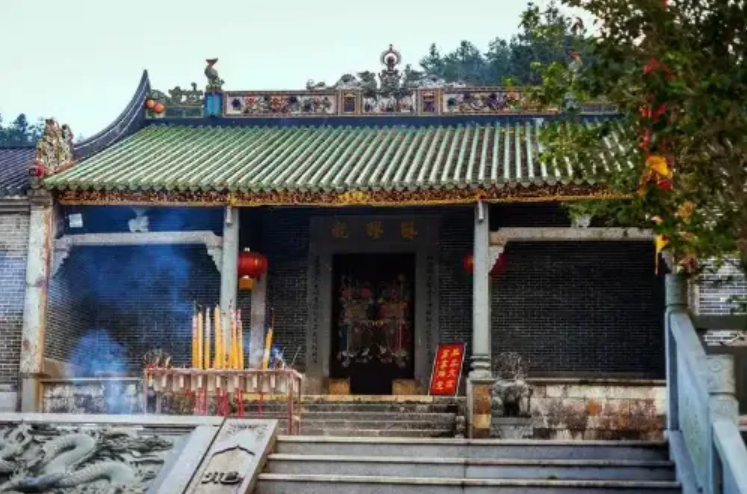
Located at the northern foot of Luofu Mountain, Su Lao Temple is surrounded by a quiet environment and is known as the "Divine Grotto of Immortals, a Taoist Holy Land." It was first built during the Eastern Jin Dynasty, originally called "North Nunnery," and later renamed "Su Lao Temple." The temple buildings are constructed along the mountain slopes in a well-arranged manner, mainly comprising the Sanqing Hall, Lü Zu Hall, Bell and Drum Tower, and others. The area around Su Lao Temple is dense with forests, beautiful scenery, and fresh air, making it an excellent place for self-cultivation. Historically, Su Lao Temple was a retreat for many literati and Taoist believers, leaving behind many legends and stories. Today, visitors can experience the rich Taoist cultural atmosphere and enjoy the surrounding natural scenery.
Zhuming Cave
Zhuming Cave is one of the core scenic areas of Luofu Mountain. It is said to be the Seventh Cave Heaven among the Ten Great Cave Heavens of Taoism and was granted the title "Zhuming Yaozhen zhi Tian" during the Southern Han Dynasty. The Zhuming Cave area features lush vegetation and many oddly shaped rocks, such as "Flying Stone" and "Eagle Beak Rock." With beautiful mountains and clear waters, it is an ideal place for hiking and sightseeing, as well as leisure and vacation. The area also includes attractions like Bailian Lake and Huixian Bridge, where visitors can stroll along the lake, enjoy the scenery, and experience the poetic sentiments of the ancients on the bridge. In addition, Zhuming Cave is an excellent spot for watching the sunrise over Luofu Mountain, attracting many photographers and tourists.
Ge Hong Museum
Located at the foot of Luofu Mountain, the Ge Hong Museum was built in memory of Ge Hong, the famous Eastern Jin Dynasty medical scientist and Taoist theorist. The museum covers an area of about 35,000 square meters, with a building area of approximately 6,000 square meters. It houses a large collection of cultural relics, documents, and medical classics related to Ge Hong. Through pictures, physical objects, multimedia, and other displays, it comprehensively presents Ge Hong's life story, academic achievements, and his contributions to medicine and Taoism. Visitors can gain an in-depth understanding of Ge Hong's cultural heritage and appreciate the breadth and depth of traditional Chinese medicine culture. It is a site that combines cultural education with tourism.
Bailian Lake
According to historical records, the famous Neo-Confucian philosopher Zhou Dunyi often visited Bailian Lake to admire the lotus flowers and chant about his love for the lotus. It is said that his renowned essay "On the Love of the Lotus" was written after observing the scenery of Bailian Lake. He used the lotus as a metaphor for his integrity and left behind an immortal poem at Luofu Mountain: "In this red dust world, few are at leisure; still more, the fish of the deep tie me down. Alone I climb Luofu to gaze afar; my righteous heart returns to its true self."
Zhuming Academy
Luofu Mountain has deep connections with Confucian culture. Therefore, holding the traditional "Opening of Writing" ceremony at Zhuming Academy on Luofu Mountain holds significant educational meaning for children's enlightenment. It also helps to promote traditional Chinese Confucian culture and inherit Chinese civilization.
Eagle Beak Rock
This rock looks like an eagle's beak from a distance, hence its name. Legend has it that Huang Daxian once raised a tiger here to protect passersby from bandits. Later, the tiger died and turned into a huge stone guarding the mountaintop, blessing travelers with safety. This is the legend of Eagle Beak Rock.
Suggested Tour Routes:
One-Day Tour: Arrive at Luofu Mountain Scenic Area in the morning, then go to the Zhuming Cave area to visit Bailian Lake, Huixian Bridge, and other spots, enjoying the natural scenery and oddly shaped rocks. Next, visit Chongxu Ancient Temple to learn about Taoist culture and Ge Hong's historical relics. Have lunch at a restaurant in the scenic area or nearby, tasting local specialties such as Luofu Mountain Su Lao vegetable and Henghe stuffed tofu. In the afternoon, head to the Ge Hong Museum to learn more about Ge Hong's life and achievements. After that, you may choose to hike up the mountain to enjoy the views or take the cable car to save energy. Finally, enjoy free time or buy souvenirs before ending the day's trip.
Two-Day Tour: On the first day, arrive at the scenic area in the morning and go to the Zhuming Cave area to slowly tour the various attractions, experiencing the natural scenery and cultural atmosphere of Luofu Mountain. In the afternoon, visit Su Lao Temple to admire its architecture and the surrounding forest scenery, and experience the tranquility of Taoist culture. Spend the night at a hotel or guesthouse near the scenic area, enjoying local cuisine. On the second morning, get up early to watch the sunrise over Luofu Mountain, then visit Chongxu Ancient Temple and participate in any Taoist cultural activities (if available). Afterwards, go to the Ge Hong Museum to further learn about Ge Hong's contributions. In the afternoon, have free time to continue hiking or rest in the leisure area at the foot of the mountain, then return home.
Travel Tips:
Check the weather forecast and the opening hours of various attractions in advance to plan your itinerary properly and avoid delays. If hiking, choose a sunny day for better views and safety.
Wear comfortable sports shoes and suitable clothing. The scenic area is large and may require considerable walking and hiking, so comfortable gear will make your visit more enjoyable.
When visiting temples, Taoist temples, or other religious sites, dress appropriately and avoid wearing overly revealing or unsuitable clothing. Observe the relevant rules and etiquette; do not make loud noises or behave inappropriately.
When trying local food, pay attention to food hygiene to avoid discomfort from unclean food. You can sample a variety of specialties, but do not overeat.
If hiking, prepare adequate water and some food in advance, and take breaks as needed to avoid excessive fatigue. Carry common medicines such as cold medicine, fever reducer, and band-aids just in case.
Learn about Luofu Mountain's history, culture, and Ge Hong in advance, so you can better appreciate the connotations of the attractions during your visit, enhancing your enjoyment and learning.
Important Notes:
Protect the environment within the scenic area; do not litter. Dispose of garbage in designated bins to help maintain the ecological environment.
Some paths in the area are steep, so pay attention to safety when climbing. Elderly people and children should be accompanied by adults. Follow safety warnings and signs, and do not venture into undeveloped or dangerous areas.
When visiting religious sites, respect religious beliefs and customs; do not touch or damage religious relics and facilities. When taking photos, check whether photography is permitted to avoid unnecessary trouble.
When using the cable car or other transport facilities, follow staff instructions, abide by riding rules, fasten seat belts, and do not move around or play inside the cars.
Keep an eye on your personal belongings, especially in crowded places like entrances, restaurants, and parking lots, to prevent loss. Use a backpack or other means to securely store valuables.
When staying overnight in the scenic area, keep your room key safe, follow the rules of the hotel or guesthouse, and maintain personal hygiene and safety. Contact staff if any issues arise.
In case of emergency, contact the scenic area staff or call the emergency rescue number. Know the locations of emergency facilities and evacuation routes so you can respond quickly if needed.
Transportation:
Bus: You can take bus routes L1A, L1B, or Boluo 18 to get near Luofu Mountain Scenic Area, then walk or transfer to the scenic area's internal transport. However, bus routes may change, so check the bus schedule in advance.
Self-driving: Use navigation apps and enter "Luofu Mountain Scenic Area, Huizhou City" for directions. From downtown Huizhou, take routes such as Huibo Avenue and Huizhou Avenue to reach the area. There are several parking lots inside the scenic area, but parking spaces may be limited during holidays and peak seasons, so arrive early.
Tourist Shuttle Buses: Some travel agencies or tourism organizations offer shuttle buses to Luofu Mountain Scenic Area. You can inquire with agencies or book online; this option is relatively convenient and may include guide services.
High-speed Rail: Take the high-speed train to Huizhou North Station, then either take a taxi or transfer by bus to Luofu Mountain Scenic Area. There is a certain distance from Huizhou North Station to the scenic area, and a taxi ride may take considerable time and cost.
Opening Hours:
Luofu Mountain Scenic Area is open all year round, from 8:00 am to 5:30 pm daily. However, the opening hours of some internal attractions, such as temples and Taoist sites, may vary according to religious activities. During holidays or peak tourist seasons, the scenic area may extend its hours as appropriate; visitors are advised to check the official website or relevant announcements to plan their itineraries. In addition, certain areas or attractions may be temporarily closed during severe weather (e.g., heavy rain, strong winds), so travelers should pay attention to weather changes before departure.
Tickets:
Tickets start from 39 yuan.