Huizhou West Lake Scenic Area is located in the central urban district of Huizhou City, Guangdong Province, and is a national 5A-level tourist attraction. The scenic area features a harmonious blend of natural landscapes and cultural heritage, renowned for its "Five Lakes, Six Bridges, and Eighteen Scenic Spots." The "Five Lakes" refer to Feng Lake, E Lake, Ping Lake, Ling Lake, and Nan Lake, with a water area of approximately 3.13 square kilometers. The total scenic area covers 20.91 square kilometers, of which 6.59 square kilometers is land. The area boasts majestic mountains, floating islets, verdant hills, and naturally formed picturesque views. The ancient architecture around West Lake, such as Sizhou Pagoda and Chaoyun's Tomb, bears witness to the vicissitudes of history.
History and Culture
Huizhou West Lake has a long and profound history. As early as the Eastern Jin Dynasty, there were traces of human activity in this area. During the Tang Dynasty, the natural beauty of Huizhou West Lake began to attract attention.
In the Northern Song Dynasty, the great literary figure Su Shi (Su Dongpo) was exiled to Huizhou. He oversaw the dredging and management of the lake and composed numerous poems and literary works, greatly enhancing the cultural significance of West Lake. During his time in Huizhou, Su Shi lived with his beloved concubine, Wang Chaoyun. After her death from illness, she was buried by the lake, and Chaoyun's Tomb became an important cultural landmark of West Lake.
During the Ming and Qing Dynasties, numerous pavilions and towers were built around West Lake, further enriching its cultural landscape. Poets and scholars of successive dynasties, including Yang Wanli and Qu Dajun, visited West Lake and left behind a wealth of poetry and prose, spreading the fame of Huizhou West Lake far and wide.
In modern times, through continuous restoration and preservation, Huizhou West Lake has become an important window showcasing Huizhou's history and culture, attracting numerous tourists for sightseeing.
Major Attractions
Sizhou Pagoda
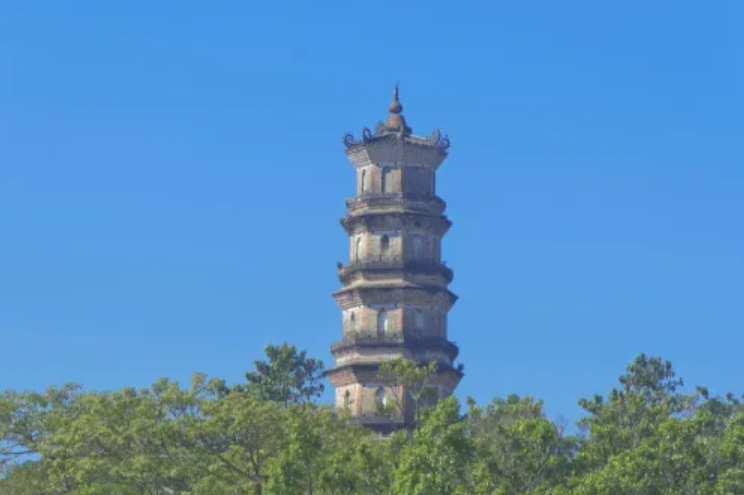
Sizhou Pagoda is one of the iconic landmarks of Huizhou West Lake. Originally built in the Tang Dynasty, it has a history of over a thousand years. The pagoda stands about 40 meters tall and is an octagonal, seven-story brick structure with pavilion-style eaves. Perched atop West Hill by the lake, the pagoda is especially striking at sunset when its reflection shimmers on the water—a scene known as "Wild Goose Pagoda in Sunset Glow," one of the Eighteen Scenic Spots of West Lake.
Gushan (Solitary Hill)
Gushan is a small hill within the lake area. Though not high, it is celebrated for its serene and picturesque surroundings. On the hill stands the Dongpo Memorial Hall, which displays Su Shi's life story and poetic works during his time in Huizhou. Nearby lies Chaoyun's Tomb, built by Su Shi in memory of his beloved concubine Wang Chaoyun. The couplet on the tomb reads: "Out of tune with the times, only Chaoyun could understand me; playing a lonely tune, every rainy dusk I miss you deeply," expressing Su Shi's deep affection for Chaoyun.
Fengzhu Garden
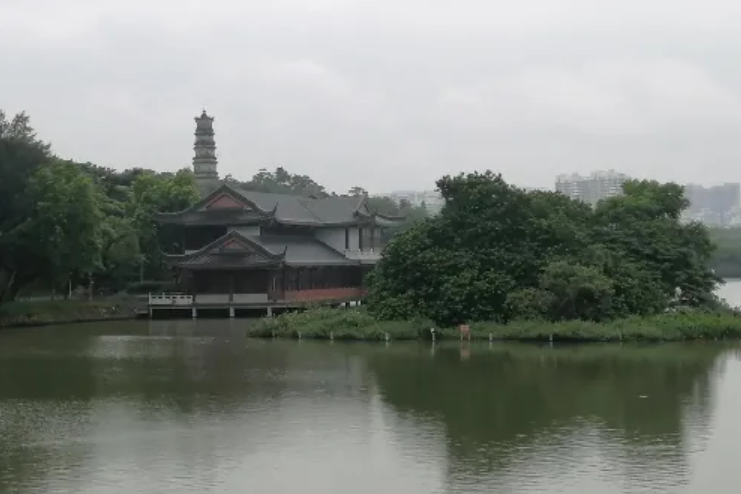
Fengzhu Garden is a cluster of antique buildings in Huizhou West Lake, predominantly in the Lingnan architectural style. The garden features pavilions, terraces, winding streams, and lush greenery, offering exquisite scenery. It is not only a great spot for appreciating garden landscapes but also frequently hosts cultural exhibitions and events showcasing Huizhou's traditional culture and arts.
Jiuqu Bridge (Nine-Bend Bridge)
Jiuqu Bridge spans the lake with a winding design featuring nine bends. Stone railings line both sides, allowing visitors to enjoy the beautiful lake views as they walk across. At night, the bridge lights up, creating a stunning reflection on the water.
Xixin Bridge
Xixin Bridge is the first of the six famous bridges in Huizhou West Lake Scenic Area. Both the Su Causeway and Xixin Bridge were funded and constructed with the support of Su Dongpo, built in 1095 during the Song Dynasty. The bridge was originally made of stone and ironwood, as solid as iron, and featured nine elevated pavilions. It has been renovated multiple times over the centuries; the current structure dates back to 1983.
Yingxian Bridge
Yingxian Bridge connects Fanghua Islet with Yuanmiao Taoist Temple. Originally built in the Song Dynasty and later abandoned in the Qing Dynasty, it is the fourth of the six famous bridges and was rebuilt in 1986. Legend has it that crossing this bridge to the temple to welcome immortals and pray would grant one's wishes, hence the name "Yingxian" (Welcoming Immortals).
Huazhou Bridge
Huazhou Bridge is a reinforced concrete structure, 75 meters long and 2.7 meters wide. The bridge is supported by 32 pairs of cast-in-place reinforced concrete columns, with a flat platform in the middle section adorned with three arches and four openings on each side to allow boat passage. The bridge railings are made of concrete with decorative openwork patterns, offering visitors a scenic vantage point to admire the lake.
Fenghu Academy
Fenghu Academy was first established in the Southern Song Dynasty and rebuilt at its current site during the Kangxi era of the Qing Dynasty. It is a representative ancient academy in Huizhou, long renowned for its scholarly heritage. The academy preserves a couplet written by Qing Dynasty scholar Song Xiang: "Culture and learning rival those of ancient Lu and Zou; mountains and waters rival the fairy isles of Penglai and Yingzhou." Visitors can immerse themselves in the scholarly atmosphere of ancient scholars and enjoy the relaxed charm of Lingnan garden aesthetics.
Suggested Tour Route:
If you plan to visit Huizhou West Lake, you may follow this route: Start by entering through the East Gate and walk to Gushan to visit the Dongpo Memorial Hall and Chaoyun's Tomb, experiencing Su Shi's cultural legacy. Then proceed to Sizhou Pagoda to admire this thousand-year-old structure. Stroll along the lake shore and cross Jiuqu Bridge to enjoy the panoramic views. Continue to Fengzhu Garden to appreciate the beauty of Lingnan gardens. For lunch, try local delicacies at restaurants around the lake. In the afternoon, continue exploring other attractions such as Nan Lake and E Lake to experience the unique character of each lake area. Finally, exit the scenic area from the South Gate or another exit.
Travel Tips:
It is recommended to visit on a clear day to fully appreciate the lake and mountain scenery.
Learn some historical and cultural background about Huizhou West Lake in advance to better understand the attractions.
As the scenic area is quite large, wear comfortable shoes for extended walking.
If you wish to sample local cuisine, try a variety of specialty dishes and snacks to experience Huizhou's food culture.
Consider visiting in the early morning or at dusk, when there are fewer tourists and you can enjoy a different perspective of West Lake's beauty.
Important Notices:
Protect the environment—do not litter or damage plants and trees.
Follow all park regulations, stay out of restricted areas, and prioritize safety.
When visiting indoor venues such as memorials or exhibition halls, observe the rules—keep quiet and do not touch exhibits.
Be cautious near the lake; do not get too close to the water's edge to avoid falling in.
If driving, follow traffic rules and park in designated areas as indicated.
Transportation:
Bus: Take bus routes 2, 5, 7, 8, or 10 to stops near Huizhou West Lake, such as West Lake East Gate Station or Pinghu Gate Station.
Driving: Visitors can drive to Huizhou West Lake; there are multiple parking lots nearby. However, parking spaces may be limited during holidays and peak times.
Taxi: Taxis are readily available within Huizhou city and provide a convenient option.
Opening Hours:
Huizhou West Lake Scenic Area is open all year round, 24 hours a day. However, some indoor attractions such as memorials and exhibition halls generally open from 9:00 AM to 5:00 PM, with last entry at 4:30 PM. Please refer to the actual opening hours of each attraction for specific details.
Tickets:
Admission to the scenic area is free. However, certain attractions or special exhibitions/events may charge a fee. Please refer to official announcements for details.