The Jiangmen Kaiping Diaolou Cultural Tourism Area is located in Kaiping City, Jiangmen City, Guangdong Province, and is a national 5A-level tourist attraction. It is famous for its unique diaolou architecture. These diaolou combine traditional Chinese rural architecture with Western architectural styles, creating a distinctive landscape. At their peak, there were more than 3,000 diaolou in Kaiping; 1,833 remain today, distributed across various villages in Kaiping. The tourism area covers a total area of about 180 square kilometers and includes several villages with concentrated diaolou. The buildings come in diverse forms, such as colonnaded, platform-style, and castle-style. They are mostly built of reinforced concrete, grey bricks, and other materials, and served multiple functions including defense and residence. They are a special type of Chinese vernacular architecture and an important symbol of Kaiping’s overseas Chinese hometown culture.
Historical and Cultural
The rise of Kaiping diaolou was closely related to Kaiping’s historical background and geographical environment. In the late Qing Dynasty, Kaiping society was unstable, banditry was rampant, and floods and other natural disasters were frequent, seriously threatening the lives and property of local people. At the same time, many people from Kaiping traveled overseas to make a living. After earning wealth, they returned home to build houses.
To resist bandits and natural disasters, they combined the sturdiness and defensive features of Western architecture with traditional Chinese architectural styles to build these diaolou. Diaolou generally had defensive facilities such as gun holes and watchtowers. Some were also equipped with generators, water tanks, and other living facilities so that people could be self-sufficient in emergencies.
Over time, diaolou not only became defensive fortresses but also carriers of overseas Chinese hometown culture. Through the construction of diaolou, overseas Chinese brought back Western architectural art, lifestyles, and cultural concepts, giving Kaiping diaolou a unique charm that blends Chinese and Western elements in architectural style, decorative art, and other aspects.
Today, Kaiping diaolou are not only precious historical and cultural heritage but also important physical materials for studying overseas Chinese history, architectural art, and vernacular culture. They bear witness to a unique period in the history of Kaiping as an overseas Chinese hometown.
Major Attractions
Li Garden
Li Garden is one of the most representative attractions among Kaiping diaolou. It is a private garden built over ten years by Mr. Xie Weili, an overseas Chinese living in the United States. Li Garden has both the charm of a traditional Chinese garden and the style of Western architecture. The diaolou in the garden are exquisitely built. Among them, Panli Lou is the most famous. Its exterior is magnificent, and its interior is gorgeously decorated, with fine murals, carvings, and other details. The garden contains pavilions, terraces, towers, small bridges, and flowing water, laid out ingeniously and harmoniously. It is an excellent place to appreciate diaolou architecture and garden scenery.
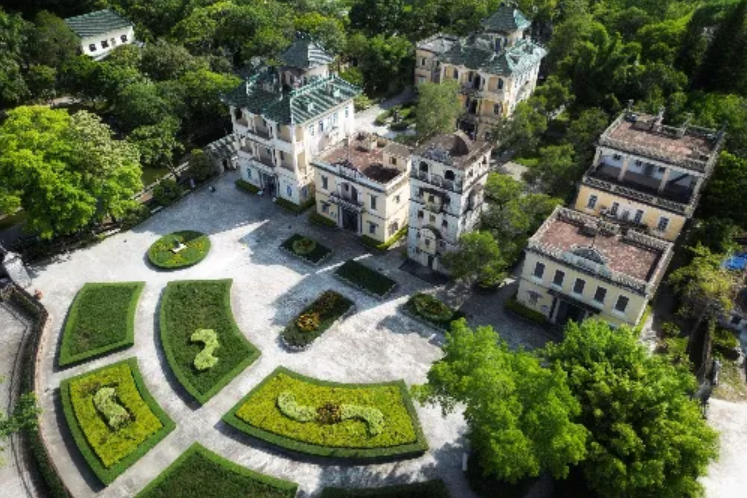
Zili Village
Zili Village is a village with a cluster of diaolou. Fifteen diaolou remain. The diaolou here have different shapes and are well preserved. They set off one another with the surrounding rice fields, lotus ponds, old banyan trees, and other natural scenery, forming a quiet and beautiful rural picture. Among them, Mingshi Lou is one of the most distinctive diaolou in Zili Village. Many everyday objects from the past are preserved inside, allowing visitors to learn about the lives of overseas Chinese at that time.
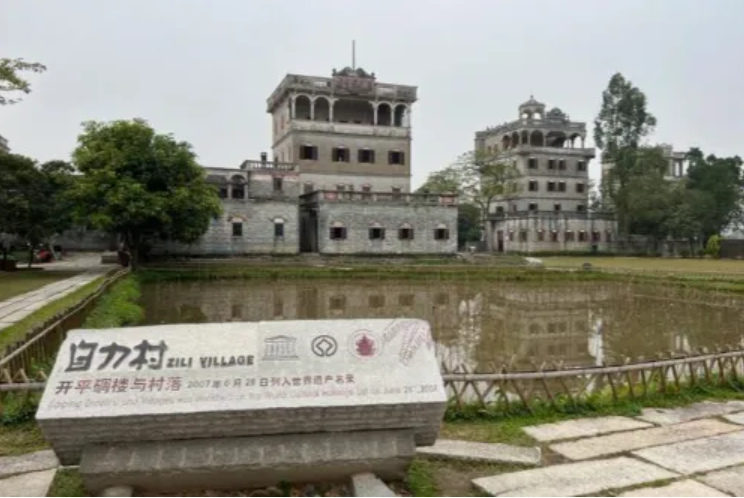
Majianglong Diaolou Cluster
The Majianglong Diaolou Cluster consists of villages such as Yong’an and Nan’an, with a total of 13 diaolou. The diaolou here are hidden among dense bamboo groves, creating a quiet environment. The architectural styles of the diaolou are diverse; some are tall and majestic, while others are small and exquisite. Experts from UNESCO called the Majianglong Diaolou Cluster “the most beautiful village in the world.” Visitors here can feel a perfect blend of nature and culture.
Ruishi Lou in Jinjiangli
Ruishi Lou is the tallest and most beautiful surviving diaolou in Kaiping and enjoys the reputation of being “the No. 1 Tower in Kaiping.” It is nine stories high and has a reinforced concrete structure. Ruishi Lou has a unique appearance, blending elements of Romanesque, Byzantine, and other Western architectural styles. Its interior decoration is also extremely exquisite. Whether doors, windows, railings, or ceilings, there are fine carvings and painted decorations, demonstrating a high level of architectural artistry.
Suggested Itinerary:
If you plan to visit the Jiangmen Kaiping Diaolou Cultural Tourism Area, you can choose the following route: On the first morning, go first to Li Garden to admire this private garden that blends Chinese and Western styles and its exquisite diaolou architecture, and learn about the historical stories behind it. At noon, dine near Li Garden and taste Kaiping’s local specialties. In the afternoon, go to Zili Village, stroll through the village with its diaolou cluster, feel the tranquility and beauty of the countryside, and visit distinctive diaolou such as Mingshi Lou.
On the second morning, go to the Majianglong Diaolou Cluster, weave among the diaolou shaded by bamboo groves, and enjoy the landscape where nature and culture merge. At noon, dine at a restaurant near Majianglong. In the afternoon, go to Jinjiangli to visit Ruishi Lou, “the No. 1 Tower in Kaiping,” and appreciate its unique architectural artistry. Finally, end your pleasant Kaiping diaolou journey.
Travel Tips:
It is advisable to learn about the historical and cultural background of Kaiping diaolou in advance. You can read relevant books or search for information online. This will help you better understand the significance and value of diaolou architecture and enhance your travel experience.
Because the attractions are distributed in different villages and there is a certain distance between them, it is advisable to arrange your time and transportation reasonably. You can choose to drive yourself or take a tourist shuttle bus to visit more efficiently.
Some places inside the diaolou are narrow and steep. Pay attention to safety when visiting. The elderly and children should be accompanied by adults.
When tasting local food, choose regular restaurants and food stalls to ensure food hygiene and safety. At the same time, respect local food culture and customs.
When visiting in summer, take sun protection and heatstroke prevention measures, because some attractions require walking outdoors. In winter, keep warm.
If you are interested in photography, it is recommended to bring a camera and suitable lenses. The architectural details of the diaolou and the surrounding rural scenery are excellent subjects for photography.
Notes:
Protect the environment of the scenic area. Do not litter or damage diaolou buildings or the surrounding natural landscape.
When visiting inside diaolou, follow the relevant regulations. Do not touch or damage internal cultural relics and decorations.
Some diaolou may still have residents living in them. When visiting, respect residents’ lives and privacy. Keep quiet and do not disturb their normal lives.
If you choose to drive yourself, obey traffic rules and park according to the instructions of the parking lot to avoid affecting other vehicles and pedestrians.
If you encounter an emergency in the scenic area, contact scenic area staff promptly or call the scenic area’s rescue telephone for help.
Buy tickets through official channels to avoid fake or overpriced tickets. If you are entitled to preferential policies, bring relevant certificates for verification.
Transportation:
Bus: There are buses in Kaiping city that go to the diaolou scenic area. You can take Bus No. 613 and other buses to reach attractions such as Li Garden and Zili Village. However, bus operating hours and frequency may be limited, so check in advance before traveling.
Self-driving: Visitors can choose to drive themselves. From Jiangmen city, drive along expressways such as the Shenhai Expressway and follow navigation prompts to each attraction. There are parking lots around the scenic area, but parking spaces may be tight during peak periods such as holidays.
Taxi: Taking a taxi from within Kaiping city to the diaolou scenic area is relatively convenient, but the cost is relatively high. Be sure to choose a licensed taxi to avoid being overcharged. You can also use ride-hailing platforms to call a car.
Tourist shuttle bus: There are tourist shuttle buses from Kaiping city to the diaolou scenic area, which are relatively convenient and quick. You can board them at designated places in the city. For specific information, consult a local travel agency or the scenic area service center.
Opening Hours:
The opening hours of the Jiangmen Kaiping Diaolou Cultural Tourism Area are generally 08:30 to 17:30 every day. The opening hours of Li Garden, Zili Village, the Majianglong Diaolou Cluster, Jinjiangli, and other attractions are basically the same. However, during special holidays or events, the opening hours may be adjusted. Visitors are advised to check the latest opening hours through official scenic area channels before going to avoid delaying their trip.
Tickets:
Tickets for the Jiangmen Kaiping Diaolou Cultural Tourism Area are available as combined tickets and individual tickets. The combined ticket price is about 180 yuan and includes major attractions such as Li Garden, Zili Village, the Majianglong Diaolou Cluster, and Jinjiangli. Individual ticket prices vary by attraction: Li Garden is about 100 yuan, Zili Village about 78 yuan, the Majianglong Diaolou Cluster about 50 yuan, and Jinjiangli about 50 yuan.