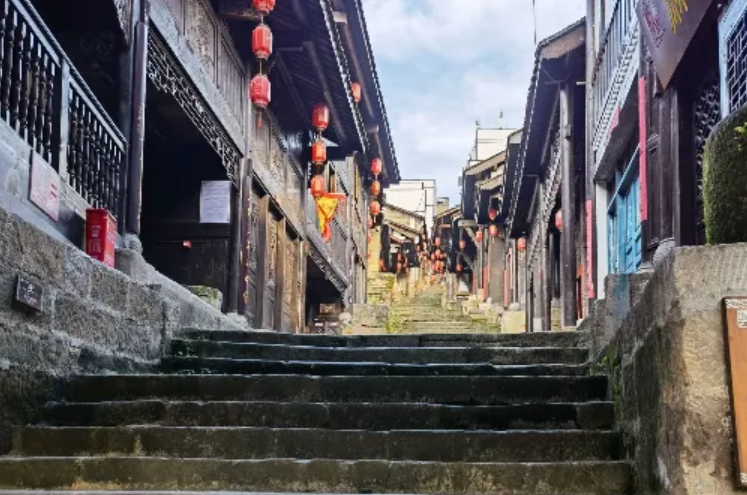
Xituo Ancient Town is located in Shizhu Tujia Autonomous County, Chongqing, and is a national 4A-level scenic area. The town is highly distinctive, with the "Yunti Street" (Cloud Ladder Street) as its main architectural feature. The street runs perpendicular to the Yangtze River, winding upward like a dragon for about 1.9 kilometers, earning it the reputation of "The Finest Street along the Ten-Thousand-Li Yangtze River." Covering an area of approximately 0.5 square kilometers, the town integrates natural and cultural landscapes. Its architecture is mostly in the Ming and Qing dynasty styles, blending elements of Bayu culture, Tujia culture, and other cultural traditions, showcasing a unique charm.
History and Culture
Xituo Ancient Town has a long history. As early as the Qin and Han dynasties, it was an important salt transport wharf. Ancient Ba people settled here, and by taking advantage of the Yangtze River's golden waterway and the unique terrain of Yunti Street, the town became a key distribution center for goods between the upper and lower reaches of the Yangtze. Over the course of history, the town underwent changes through various dynasties, and the salt trade continued to flourish. During the Ming and Qing dynasties, the town enjoyed prosperous commerce, attracting numerous merchants and immigrants. Tujia culture, Bayu culture, and foreign cultures merged here, forming a distinctive regional culture. Today, the architecture and street layout of Xituo Ancient Town still retain their ancient appearance, bearing witness to historical changes and holding great historical and cultural value.
Major Attractions
Yunti Street (Cloud Ladder Street)
Yunti Street is the core attraction of Xituo Ancient Town. It is about 1.9 kilometers long, with 113 steps and 1,124 stone stairs. Lined with Ming and Qing style buildings on both sides, the street is filled with shops, including many traditional handicraft stores and snack stalls. Visitors can stroll along the street, soaking in the historical atmosphere and admiring the unique architectural style.
Ersheng Temple (Temple of the Two Sages)
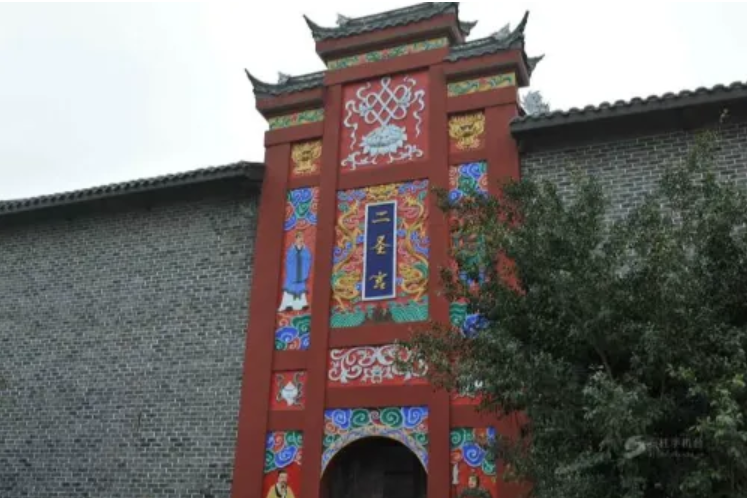
Originally built in the Ming dynasty, Ersheng Temple was dedicated to the worship of Confucius and Guan Yu. It was originally located in Binjiang Community of Yanxi Town and was relocated and reconstructed in 2012 at the Dumenzui section of Yunti Street in Xituo Ancient Town due to the Three Gorges Project. The temple complex faces east and is built along the slope. It is a courtyard-style Huizhou architecture, consisting of a gate, left and right wing rooms, and a main hall, covering an area of 900 square meters. It is now a municipal-level cultural relic protection unit.
Huanhou Temple (Temple of Marquis Huan)
Commonly known as "Zhangfei Temple," Huanhou Temple was built in the early Qing dynasty and has a history of over 300 years. It was specially dedicated to Zhang Fei, a general of the Shu Kingdom during the Three Kingdoms period. The Shizhu Ting Gazetteer from the 22nd year of the Daoguang reign (1842) includes a hand-drawn map of Huanhou Temple, proving its existence at that time, and the main hall was rebuilt in the 3rd year of the Republic of China (1914). This site once served as the Sichuan Salt Merchants' Guild Hall (also known as "Sichuan Guild Hall"), later as the garrison headquarters of Xituo, and after 1949 it was converted into a photo studio. The main hall is 3 bays wide, measuring 15.28 meters, with a depth of 6.3 meters. The wooden walls inside are painted with white-line portraits of Zhao Yun, Guan Yu, and Zhang Fei. The architecture provides valuable material evidence for the study of local religious and guild hall culture.
Qingzhong Hall
Qingzhong Hall was first built in the 9th year of the Tongzhi reign of the Qing dynasty (1870). It features a courtyard layout with brick-and-wood structure, covering a total area of 1,192.29 square meters and a floor area of 799.3 square meters, consisting of a main hall, left and right wing rooms, and a front hall. It was once a nunnery, and after 1949 it served as the school building for Qingzhong Elementary School. Now it is a county-level cultural relic protection unit and has been transformed into the Shizhu Intangible Cultural Heritage Exhibition Hall, displaying rich intangible cultural heritage items such as Tujia "playing ox" props and salt-carrying back baskets.
Yuwang Palace (Temple of King Yu)
Located in the middle section of Yunti Street, Yuwang Palace was first built during the Qianlong reign of the Qing dynasty. It is the largest guild hall building in the ancient town, originally established as a fellow-townsmen guild hall for merchants from Huguang (present-day Hunan and Hubei provinces). It was named after the worship of Yu the Great, the legendary tamer of floods. It covers an area of about 800 square meters, with a floor area of approximately 600 square meters.
Suggested Tour Route:
Visitors can start from the entrance of the ancient town and walk up Yunti Street, enjoying the Ming and Qing style buildings and shops along the way. Visit the Xituo Ancient Town Salt Transport Museum to learn about the town's salt transport history. After reaching the top of Yunti Street, head to the South Dragon Well to experience the town's historical relics. During the tour, you can sample local specialty foods and experience the local customs and culture.
Tour Tips:
It is recommended to wear comfortable shoes, as Yunti Street has many stone steps, making walking easier.
You may want to learn about the history and culture of Xituo Ancient Town in advance so as to better appreciate its attractions and architecture.
When tasting local food, pay attention to food hygiene and choose reputable restaurants and snack stalls.
When visiting the Xituo Ancient Town Salt Transport Museum, follow the museum's regulations and take care of the cultural relics.
Important Notes:
Comply with the relevant regulations of the ancient town; do not damage the architecture or environment.
When visiting Yunti Street, pay attention to safety, especially when going up and down the stone steps—be careful not to slip.
Respect local customs and traditions, especially those of the Tujia ethnic group.
In case of problems or emergencies, contact the scenic area staff promptly.
Transportation:
Air: You can first arrive at Chongqing Jiangbei International Airport, then take a long-distance bus or taxi to Shizhu Tujia Autonomous County, and then transfer to local transport to Xituo Ancient Town.
Rail: Take a train to Shizhu County Station, then take a shuttle bus or taxi to Xituo Ancient Town.
Highway: Self-driving visitors can take the G50 Shanghai–Chongqing Expressway or other highways to Shizhu Tujia Autonomous County, then follow navigation to Xituo Ancient Town. Parking lots are available around the town.
Opening Hours:
Xituo Ancient Town is open all day, but some attractions may have different opening hours. The Xituo Ancient Town Salt Transport Museum is generally open from 9:00 AM to 5:00 PM and is closed on Mondays (except public holidays).
Admission:
Xituo Ancient Town is free to enter. Some attractions, such as the Xituo Ancient Town Salt Transport Museum, may charge a separate fee. Please refer to the official notice for specific prices.