Gushan (Drum Mountain) is located in Jin'an District, Fuzhou City, Fujian Province. It is a national 4A-level tourist attraction and the most representative famous mountain in Fuzhou. Its name comes from a huge rock on the summit that resembles a drum, which is said to emit a drum-like sound during wind and rain. The core scenic area covers approximately 49.7 square kilometers, with its main peak, Lizefeng Peak, rising to 925 meters above sea level. It serves as a natural ecological barrier and a popular hiking destination on the outskirts of Fuzhou. Gushan is characterized by Buddhist culture, cliffside inscriptions, and natural landscapes, integrating religious, cultural, and scenic elements. The scenic area is home to the ancient Yongquan Temple, which has a history of over a thousand years, and more than 160 historical cliff inscriptions. With dense forest cover, ancient towering trees, and babbling streams, it is a preferred destination for Fuzhou residents to go hiking, pray, sightsee, and engage in cultural study.
History and Culture
The history of Gushan can be traced back to the Western Jin Dynasty, with over 1,700 years of human history. In the Tang Dynasty, Buddhist temples began to be built, gradually establishing the mountain as a renowned Buddhist site in the Min region. In the second year of the Kaiping era of the Later Liang Dynasty during the Five Dynasties period, Yongquan Temple was formally established. It was subsequently expanded and renovated through the Song, Yuan, Ming, and Qing dynasties, becoming one of the five great Zen monasteries of Fujian and gaining widespread influence even in Southeast Asian Buddhist circles.
Gushan has long been an important gathering place for literati and scholars in Fujian. Since the Song Dynasty, famous historical figures such as Zhu Xi, Cai Xiang, Li Gang, Lin Zexu, and Yan Fu have visited, composed poetry, and left inscriptions. The existing cliff inscriptions cover various calligraphic styles including seal, clerical, regular, running, and cursive scripts. This collection is the largest and best-preserved cluster of cliff inscriptions in Fujian Province, holding great artistic and historical research value.
In modern times, Gushan has become an important cultural landmark and revolutionary memorial site in Fuzhou, where many intellectuals and patriots have paused to express their sentiments. Its Buddhist culture, stone inscription culture, and landscape culture are interwoven, forming an integral part of Fuzhou's regional cultural heritage.
Major Attractions
Yongquan Temple
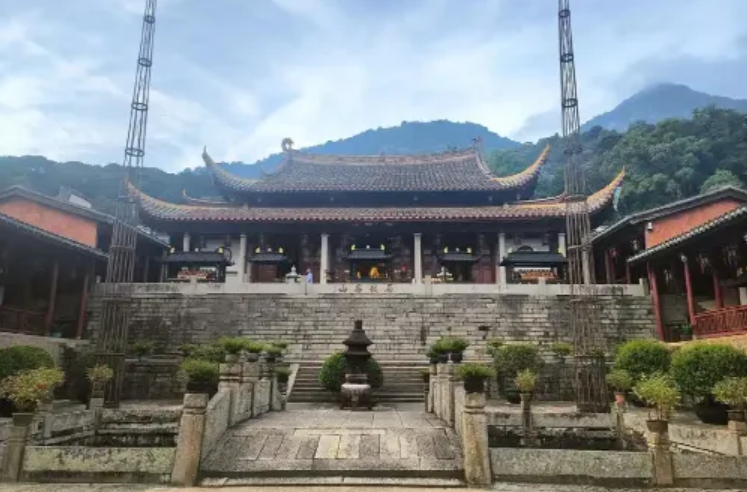
Located at an elevation of 455 meters on the mountainside, Yongquan Temple is the core attraction of Gushan. Founded in the second year of the Kaiping era of the Later Liang Dynasty, it is a nationally key Buddhist temple and one of the five great Zen monasteries of Fujian. Built along the mountain slope, the temple features ingenious architecture with a unique layout described as "entering the mountain without seeing the temple, entering the temple without seeing the mountain." Inside, there are the "three iron relics": an ancient iron tree, an iron cauldron, and iron trees (cycads). The temple also preserves a large number of Buddhist artifacts, scriptures, and statues. With vigorous incense offerings, it remains an important Buddhist center in Southeast China.
Cliff Inscription Cluster
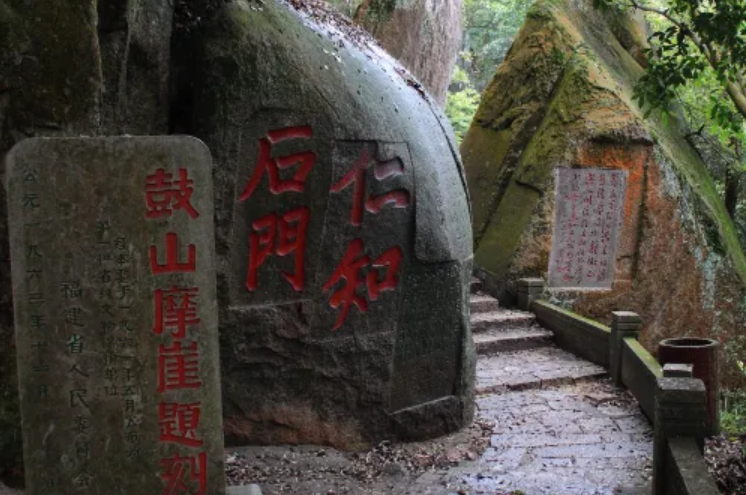
The cliff inscriptions are distributed along the ancient hiking path, Lingyuan Cave, and the Drinker's Rock area. There are over 160 existing inscriptions, dating from the Song Dynasty to modern times, in the forms of poems, records, and name carvings. They display a wide range of calligraphic styles. The most famous is the character "Shou" (Longevity) inscribed by Zhu Xi of the Song Dynasty. This cluster is a key provincial cultural relic protection unit and a precious treasure of southern Chinese stone carving art.
Lizefeng Peak
As the main peak of Gushan, Lizefeng stands at 925 meters, making it the highest peak on the outskirts of Fuzhou. An observation platform at the summit offers panoramic views of the entire Fuzhou city, the Minjiang River, and the surrounding mountains. It is the best spot for high-altitude viewing on Gushan, with expansive vistas that change with the four seasons.
Eighteen Scenic Spots
These form the core natural landscape cluster of Gushan, including eighteen distinctive features such as Drinker's Rock, Immortal Ape Rock, Forget-Return Rock, Bowl-Shaped Peak, and Jade Bamboo Shoot Peak. Characterized by奇特 rocks, secluded caves, clear springs, and ancient trees, these spots display diverse and naturally formed scenery, representing the essence of Gushan's natural landscapes.
Ancient Hiking Path
The ancient hiking path of Gushan is about 7.5 kilometers long, with 2,145 stone steps. Built in the Qing Dynasty, it is the best-preserved ancient mountain trail in Fuzhou. Lined with green trees and dotted with multiple rest pavilions, the path connects Yongquan Temple, the cliff inscriptions, the Eighteen Scenic Spots, and other attractions, serving as the main walking route for visitors.
Suggested Tour Route:
Scenic Area Entrance → Ancient Hiking Path → Cliff Inscription Cluster → Yongquan Temple → Eighteen Scenic Spots → Lizefeng Peak → Return downhill
Tour Recommendations:
The entire round-trip hike on foot takes about 4–5 hours. For those with average fitness, consider hiking one way and taking the cable car on the return.
Allocate about 1 hour for visiting Yongquan Temple, including the main halls, the three iron relics, and the cultural exhibits.
The cliff inscriptions are concentrated near Lingyuan Cave; take your time to appreciate them and learn about their historical and calligraphic background.
Spring and autumn are the best seasons to visit, with pleasant weather and beautiful mountain scenery ideal for hiking and photography.
For the summit climb to Lizefeng, choose a clear day to enjoy unobstructed views of Fuzhou's cityscape and the Minjiang River.
Important Notes:
There are many stone steps, and some sections are quite steep. Wear non-slip sports shoes; avoid high heels or leather shoes.
Open flames are prohibited in the scenic area. Smoking, campfires, and barbecues are strictly forbidden. Comply with forest fire prevention regulations.
Stay on the main trails. Do not climb undeveloped areas or touch dangerous rocks and inscriptions.
Yongquan Temple is a Buddhist monastery. Maintain silence during visits, respect religious customs, and do not touch Buddha statues or ritual objects.
In summer, guard against sunburn and mosquitoes; in the rainy season, beware of slippery paths and avoid summiting during thunderstorms.
Some sections have no mobile signal. It is advisable to hike in groups and plan your route in advance.
Transportation:
Bus: Take city buses No. 7, 29, 36, 40, 58, 69, 73, 108, 115, 131, 170, 302, or 303 to Gushan Scenic Area Station, then walk to the entrance.
Self-driving: Navigate to "Fuzhou Gushan Scenic Area." There is a parking lot at the entrance for small vehicles.
Taxi/ride-hailing: Take a taxi or ride-hailing service directly to the scenic area entrance; the journey from downtown takes about 20–30 minutes.
Opening Hours:
The scenic area is open 24 hours.
Yongquan Temple is open daily from 6:00 to 18:00.
The cable car operates daily from 8:00 to 17:30.
Visitors are advised to plan their hiking and temple visits accordingly. Night hiking on foot is not recommended.
Admission:
The scenic area is free to enter.
However, the Eighteen Scenic Spots require a separate ticket, and guided tours with commentary are also chargeable.