The Bingling Temple World Cultural Heritage Tourism Area is located in Yongjing County, Linxia Hui Autonomous Prefecture, Gansu Province, and is a national 5A-level tourist attraction. The scenic area comprises three major sections: the Bingling Temple Grottoes, the Bingling Stone Forest, and Bingling Lake, covering a total area of approximately 180 square kilometers. The Bingling Temple Grottoes are renowned for preserving the earliest dated inscription among all grottoes in China, housing 694 stone-carved statues, 82 clay sculptures, and about 900 square meters of murals. The Bingling Stone Forest is a typical waterside Danxia landform, covering about 30 square kilometers, with thousands of sheer peaks and countless ravines. Bingling Lake stretches 66 kilometers in length, has a water area of 150 square kilometers, and a storage capacity of 5.7 billion cubic meters, making it one of the largest plateau artificial lakes in China.
History and Culture
Bingling Temple was first established during the Western Qin dynasty, originally called "Tangshu Grotto" (meaning "ghost cave" in the Qiang language). It was later known as Longxing Temple and Lingyan Temple. After the Yongle period of the Ming dynasty, it was renamed "Bingling Temple," based on the Tibetan translation of "one hundred thousand Buddhas." Its history can be traced back over 1,600 years. When the Western Qin dynasty established its capital in Linxia, the king personally visited the grottoes and left an inscription in his own handwriting, which is still preserved on the cliff face. From the first grotto excavation in the first year of Jianhong of the Western Qin (420 AD) through the Song dynasty, the grottoes significantly influenced Han Chinese Buddhism, including the Pure Land, Huayan, and Chan schools. During the Sui dynasty, this was a busy anchorage for merchant ships and a key passage on the ancient Silk Road leading south to Tibet. At the end of the Yuan and the beginning of the Ming dynasties, the Gelug school (Yellow Hat sect) of Tibetan Buddhism was introduced to Bingling Temple. In 2014, the Bingling Temple Grottoes were inscribed on the UNESCO World Heritage List as one of the heritage sites of the "Silk Roads: the Routes Network of Chang'an-Tianshan Corridor."
Major Attractions
Bingling Temple Grottoes
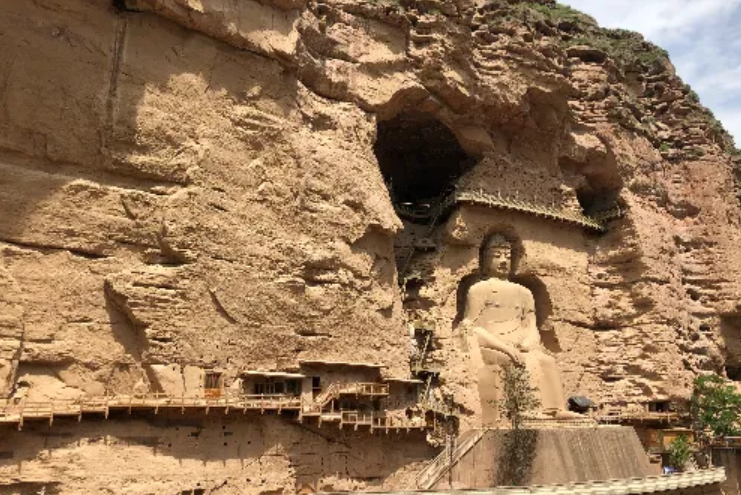
The grottoes are divided into three sections—Upper Temple, Donggou, and Lower Temple—distributed along the red sandstone cliffs on both sides of the Dasi Gully. The cave shrines are layered one above another, with winding plank roads spiraling upward. There are 196 existing niches and caves. The largest is a seated Maitreya Buddha from the Tang dynasty, standing 27 meters tall, while the smallest statue is only 10 centimeters high. Among them, 2 caves and 1 niche date from the Western Qin, 8 caves and 25 niches from the Northern Wei, 2 caves from the Northern Zhou, 2 from the Sui, and 20 caves and 113 niches from the Tang dynasty—the Tang works achieving the highest artistic merit. Cave 169 is the largest, earliest, and richest in content, measuring 26.75 meters wide, 15 meters high, and 19 meters deep. It contains an ink inscription dated to the first year of Jianhong of the Western Qin, which is the earliest dated inscription found in any Chinese grotto and provides a benchmark for dating other ancient grottoes nationwide.
Bingling Stone Forest
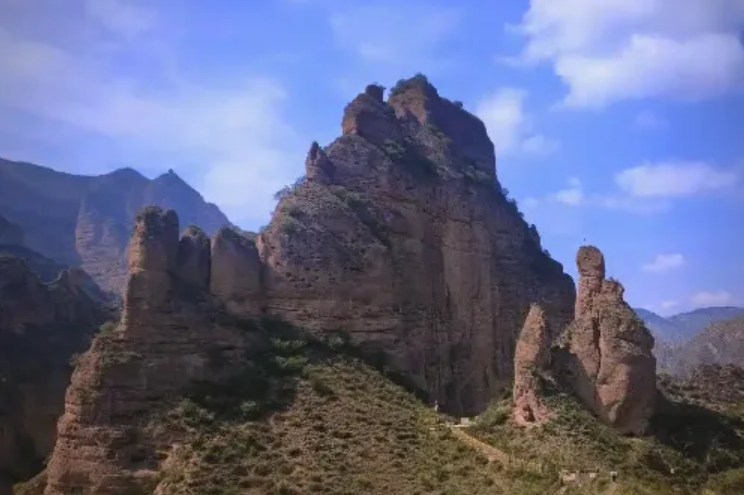
The Bingling Stone Forest is a classic waterside Danxia landform, hailed as "the foremost wonder under heaven." Thousands of peaks stand upright, and countless ravines crisscross the area, totaling about 30 square kilometers. Representative sights include Yuanbao Mountain, Princess Wencheng Entering Tibet, Buzha Peak, and Buddha's Palm Peak—each with unique shapes, as if delicately carved by nature.
Bingling Lake
Bingling Lake is one of China's largest plateau artificial lakes, stretching 66 kilometers in length, with a water area of 150 square kilometers and a storage capacity of 5.7 billion cubic meters. The lake water is clearly demarcated between clear and turbid, green and yellow. A boat cruise on Bingling Lake offers magnificent views of towering peaks such as Wanjuchaojian (Myriad Tablets Upright) and Sister Peaks.
Bingling Temple Water Curtain Cave
The Water Curtain Cave has been famous throughout history for its enduring relics and legends, known both domestically and internationally. To the north, Xigou winds sinuously with a hidden cavern. Inside the hall, natural deep caves on both the east and west sides feature splashing waterfall pearls. Legend says this was the birthplace of the Great Sage (the Monkey King) and the dwelling place of Xuanzang during his pilgrimage for scriptures.
Bingling Gorge
The steep and perilous cliffs, along with grotesque and jagged rocks, inspire awe. The vast water shimmers with boundless green waves, so thick they seem like silk. Gazing up from the water, the sky appears exceptionally blue and high, and the clouds drift with unusual leisure and beauty.
Suggested Tour Route:
Start by taking a sightseeing cruise to enjoy the scenery of Bingling Lake, passing by attractions such as Wanjuchaojian and Sister Peaks. Arrive at the Bingling Stone Forest passenger transfer pier, then tour the Stone Forest to admire the unique Danxia landforms. Finally, take another boat to the Bingling Temple Grottoes pier, and hike to visit the grottoes, experiencing the profound heritage of thousand-year-old Buddhist culture.
Travel Tips:
Check the opening hours and ticket information in advance to plan your itinerary accordingly.
When visiting the grottoes, consider following a guide or renting an audio guide for a better understanding of the history and culture.
In summer, take sun protection measures; in winter, keep warm and wear appropriate clothing.
Allow ample time to appreciate the lake and mountain views and the unique landforms of the Stone Forest.
Important Notes:
Comply with scenic area regulations; do not touch or climb on cultural relics and monuments.
While on the boat, follow the staff's instructions, pay attention to safety, and wear a life jacket.
Protect the environment; do not litter and keep the scenic area clean.
If you are unfamiliar with religious culture, avoid inappropriate behavior when visiting the grottoes.
Transportation:
From Lanzhou, you can first take a bus to the Liujiaxia Hydropower Station Dam, then transfer to a sightseeing boat to Bingling Temple—the water route is about 54 kilometers. Alternatively, you can take a land route from Yongjing County to Bingling Temple, covering about 30 kilometers.
Opening Hours:
The usual opening hours are 08:30–18:30, with ticket sales ending at 17:30. However, hours may vary due to weather or special circumstances; please check the official announcements before your visit.
Tickets:
Entry ticket: 50 RMB per person.