Nanputuo Temple is located at No. 515, Siming South Road, Siming District, Xiamen, Fujian Province. It is a national 4A-level tourist attraction, a renowned Buddhist site in southern Fujian, a key national cultural relic protection unit, and one of the key Buddhist temples in the Han Chinese region of China. Centered on Minnan Buddhist culture, the temple integrates ancient architectural art, garden landscapes, and religious culture. Its buildings rise step by step along the mountain slope in a rigorous and orderly layout. Covering an area of 258,000 square meters with a floor space of 21,270 square meters, the temple is nestled between hills and water, offering beautiful scenery and thriving incense offerings. It serves multiple functions as a religious pilgrimage site, cultural attraction, and leisure destination, making it one of the most representative cultural landmarks in Xiamen.
History and Culture
Nanputuo Temple was first built in the late Tang and Five Dynasties period, originally named Sizhou Temple. In the Northern Song dynasty, it was renamed Wujinyan (Endless Rock). It fell into disuse during the Yuan dynasty and was rebuilt in the early Ming dynasty as Puzhao Temple. In the 23rd year of the Kangxi reign of the Qing dynasty (1684), General Shi Lang of the Jinghai Marquis rebuilt the temple on the former site of Puzhao Temple. Because it lies south of Mount Putuo and enshrines Guanyin Bodhisattva, it was named Nanputuo (South Putuo) Temple, a name that has been used ever since.
Since its founding, the temple has been a Buddhist center in southern Fujian, producing many eminent monks over the centuries. In modern times, Masters Huiquan, Taixu, and Hongyi all preached and taught here, promoting the inheritance and development of Minnan Buddhist culture. Nanputuo Temple is not only a place of religious activity but also an important carrier of Minnan culture and overseas Chinese culture. Its architectural style, Buddhist rituals, and vegetarian cuisine deeply reflect the regional characteristics of southern Fujian and enjoy high prestige in Buddhist circles both at home and abroad.
In 1924, Nanputuo Temple was converted into a public monastery (Shifang Conglin), and the following year, the Minnan Buddhist Academy was established, becoming a nationally renowned higher education institution for Buddhism. It has trained a large number of Buddhist talents and made significant contributions to modern Buddhist education in China. Today, Nanputuo Temple maintains traditional Buddhist practices and cultural heritage while opening to the public, serving as an important window for disseminating Buddhist culture and Minnan traditional culture.
Main Attractions
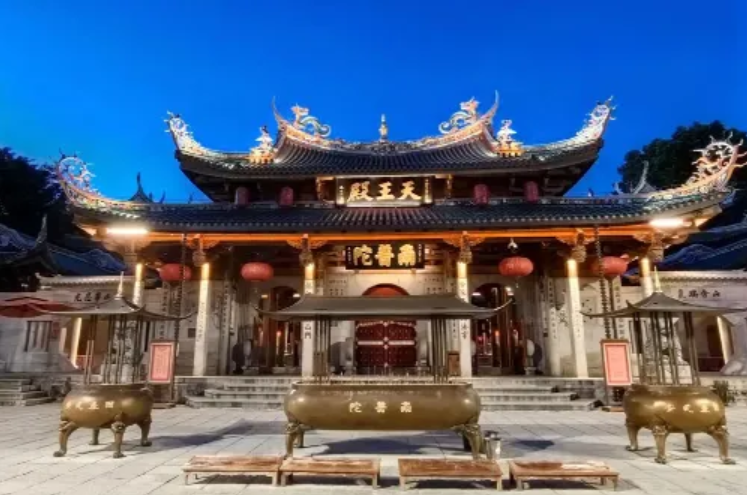
Hall of Heavenly Kings (Tianwang Hall)
The first hall of the temple, originally built in the Qing dynasty and renovated many times. It is 12 meters high, with five bays wide and three bays deep. It enshrines Maitreya Buddha, Skanda Bodhisattva, and the Four Heavenly Kings, with solemn and exquisite statues. It serves as the gateway to the temple and the first core attraction for visitors.
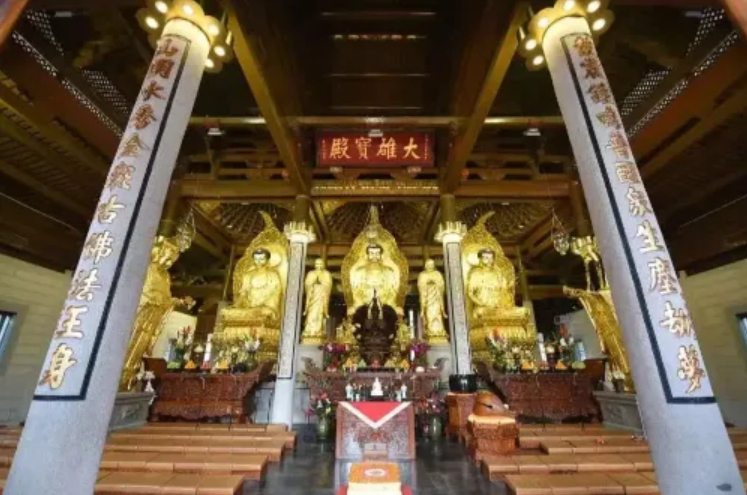
Great Hero Hall (Daxiong Baodian)
The main hall of the temple and the primary venue for major Buddhist ceremonies. It is 14.6 meters high, with seven bays wide and five bays deep. Built in the traditional Minnan double-eave hip-and-gable style, with upturned eaves and ornate carvings, it enshrines the Three Buddhas of the Three Times and the Eighteen Arhats. The Buddha statues are elegantly ancient, and the interior decorations combine Buddhist culture with Minnan craftsmanship.
Great Compassion Hall (Dabei Dian)
One of the landmark buildings of Nanputuo Temple, first built in the Ming dynasty. It is a three-story octagonal pavilion with a pointed top, 16 meters high. Inside, an octagonal standing statue of Guanyin is enshrined, with Guanyin images on all four sides. The hall is constructed entirely with mortise-and-tenon joinery without a single iron nail, showcasing exquisite craftsmanship and serving as a classic example of Minnan ancient architecture.
Sutra Depository (Cangjing Ge)
Located at the highest point of the temple, this two-story pavilion houses Buddhist scriptures, cultural relics, and ritual implements. It contains a large collection of sutras, calligraphy, paintings, ceramics, and other precious artifacts, including many Ming-dynasty Buddhist texts and manuscripts by eminent monks of past generations, combining cultural and historical value.
Vegetarian Restaurant (Su Zhai Guan)
A nationally renowned vegetarian dining venue, established in 1934. Featuring Minnan vegetarian culinary techniques, it uses natural ingredients and meticulous preparation. The dishes are noted for their color, aroma, flavor, and presentation. It is a core carrier of the temple’s vegetarian culture and a must-visit for those wishing to experience Minnan vegetarian cuisine.
Five Elders Peak (Wulao Feng)
Located behind Nanputuo Temple, this is one of Xiamen’s famous mountains, with an elevation of 184.8 meters. Named for its five connected peaks that resemble five old men, the mountain is lush with trees and has hiking trails. From the summit, visitors can overlook downtown Xiamen and the sea views of the Lujiang River, making it a complementary natural scenic spot.
Minnan Buddhist Academy
Founded in 1925 and located within the temple grounds, it has separate male and female divisions. It is a historically significant Buddhist higher education institution in China. The buildings are simple and elegant, and the campus is quiet, serving as an important base for Buddhist education and cultural research.
Suggested Tour Route:
Main Gate → Hall of Heavenly Kings → Great Hero Hall → Great Compassion Hall → Sutra Depository → Vegetarian Restaurant → Minnan Buddhist Academy → Five Elders Peak Trailhead → Five Elders Peak Observation Deck
Tour Tips:
Recommended visit duration: 2–3 hours; add 1 hour if hiking. Allocate time reasonably to cover both architectural and natural sights.
Morning visits are preferable for fewer crowds, a quieter cultural experience, and to avoid afternoon heat.
Try the vegetarian meal at the restaurant; opening hours: 11:00–14:00 and 17:00–20:00.
Wear comfortable sports shoes for hiking; the trail on Five Elders Peak is gentle and suitable for all ages.
Combine with nearby attractions such as Xiamen University and the Ring Road for a one-day itinerary.
Free incense is provided at designated spots; no need to bring your own incense or candles. Practice civility in worship.
Important Notes:
Do not touch Buddha statues or ritual objects inside the halls; keep quiet and refrain from loud noises or running.
Smoking is prohibited throughout the temple grounds; no open flames or oversized incense sticks are allowed. Comply with fire safety regulations.
Do not feed animals or climb ancient buildings/trees; do not scratch or damage cultural relics.
Follow temple etiquette during worship; do not kneel or pray casually; photography of Buddha statues inside halls is prohibited.
When hiking on Five Elders Peak, stay on designated trails, watch your step to prevent slipping, and ensure personal safety.
Respect Buddhist beliefs and temple rules; no commercial solicitations or distribution of flyers.
Pets are not allowed inside the scenic area. Comply with all management regulations.
Transportation:
Bus: Take routes 1, 15, 21, 45, 71, 841, or 959 to Nanputuo Station, then walk 50 meters to the main gate.
Metro: Take Line 3 to Xiamen Railway Station, then transfer to bus 21 or 1; or take Line 1 to Zhenhai Road Station, then transfer to bus 45 or 71.
Taxi/Ride-hailing: Navigate directly to the main gate of Nanputuo Temple; from downtown Xiamen, the ride takes 10–20 minutes.
Driving: Paid parking lots are available near the site, but spaces are limited; public transport is recommended on holidays.
Opening Hours:
Regular hours: 8:00–17:30. On special Buddhist festival days, hours are adjusted to 7:30–18:00. The Five Elders Peak trail is open during the same hours as the temple. Indoor venues like the Sutra Depository close entry at 17:00. Please plan your visit accordingly.
Admission:
Free entry. Guided tours with a human interpreter are available for a fee.