The Qingyuan Mountain Scenic and Historic Area is located in Fengze District, Quanzhou City, Fujian Province. It is a National Scenic and Historic Area and a National 5A-Level Tourist Attraction, covering a total area of 62 square kilometers. It comprises three major sections:Qingyuan Mountain, Jiuri Mountain, and the Lingshan Islamic Tombs. Renowned for its "36 grottoes and 18 scenic spots," the main peak rises to 498 meters above sea level. The mountain derives its name from a clear spring (Qingyuan) found on it. Combining natural landscapes with rich cultural heritage, it serves as both an ecological barrier for Quanzhou and a cultural landmark.
The area features 3 national-level key cultural heritage protection units and 6 provincial-level units, including the largest existing Taoist stone sculpture in China – the Laozi Statue – and the Islamic Holy Tombs. With a forest coverage rate of 91% and high negative oxygen ion concentrations, it is a comprehensive scenic area integrating religious pilgrimage, ecological sightseeing, and science education.
History and Culture
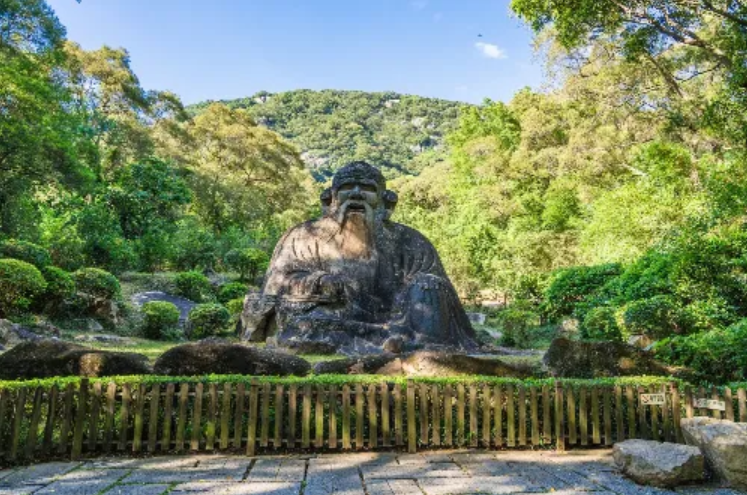
The history of Qingyuan Mountain dates back to the Qin Dynasty. It became a famed Taoist mountain during the Tang Dynasty and saw the blending of diverse cultures during the Song and Yuan dynasties. The Laozi Statue was carved in the Song Dynasty; it is 5.63 meters high, 8.01 meters wide, and 6.85 meters thick, representing the pinnacle of Song Dynasty stone carving art and is the largest existing Taoist stone sculpture in China.
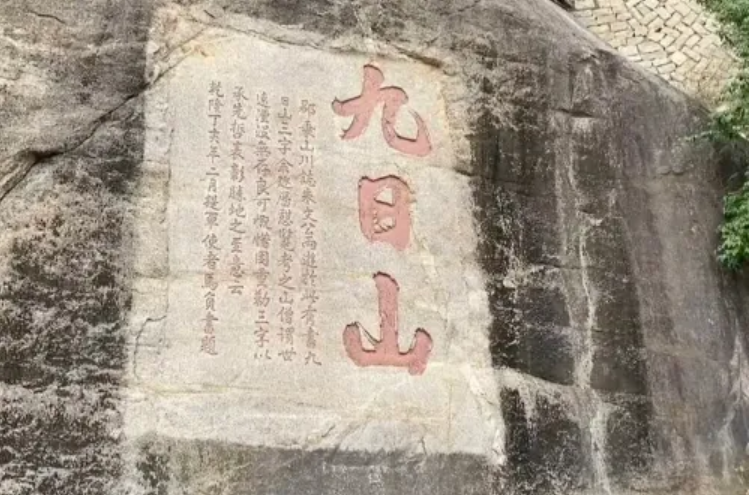
The Jiuri Mountain Wind-Prayer Inscriptions document the wind-prayer ceremonies for merchant ships during the Song Dynasty's Maritime Silk Road. They are an important part of the world's maritime trade heritage. There are 75 cliff inscriptions in total, 13 of which record wind-prayer events, witnessing the prosperity of Quanzhou's ancient port. The Lingshan Islamic Tombs are the burial site of disciples of the Prophet Muhammad and are among the oldest existing Islamic holy sites in China, designated as a national-level key cultural heritage protection unit in 1988.
The area also contains numerous cliff inscriptions left by literati throughout the ages; 578 inscriptions survive today, including 33 from the Song Dynasty, 5 from the Yuan, 17 from the Ming, and 13 from the Qing. Their content spans religion, politics, economics, and more, serving as a "living fossil" for the study of Minnan (Southern Fujian) history and culture.
Major Attractions
Laozi Rock (Laojun Rock)
China's largest existing Taoist stone sculpture, standing 5.63 meters high. Carved from a natural rock, it features a benevolent expression and smooth robe folds, showcasing Song Dynasty stone carving art. The statue shows the figure resting his left hand on his knee and his right hand on a low table. It is an iconic landmark of Qingyuan Mountain and was listed as a national-level key cultural heritage protection unit in 1988.
Jiuri Mountain Wind-Prayer Inscriptions
Located on Jiuri Mountain, these consist of 75 cliff inscriptions, with 13 recording wind-prayer ceremonies for Song Dynasty merchant ships. These "official wind-prayer dispatches" cover events from the third year of the Chongning era of the Northern Song to the second year of the Xianchun era of the Southern Song (1104–1265 AD). They are vital physical materials for studying the Maritime Silk Road and were inscribed as a core heritage site of "Quanzhou:Emporium of the World in Song-Yuan China" on the UNESCO World Heritage List in 2021.
Lingshan Islamic Tombs
The burial site of the Prophet Muhammad's disciples, Sahechu and Wuma'er, established during the Tang Dynasty. The tombs are constructed from granite, 2 meters high with a circumference of 6.35 meters. Behind the tombs is an Arabic inscription detailing their missionary work in Quanzhou. They are among the oldest existing Islamic holy sites in China, designated as a national-level key cultural heritage protection unit in 1988.
Tianhu Lake (Heavenly Lake)
Located atop Qingyuan Mountain at an elevation of 368 meters, this is an artificial lake covering approximately 15,000 square meters. The lake water is clear, surrounded by verdant trees, offering a panoramic view of Quanzhou city. Pathways and observation decks around the lake make it an excellent spot for leisure sightseeing.
Qianshou Rock (Thousand-Hand Rock)
Named for its enshrinement of the Thousand-Hand and Thousand-Eye Guanyin (Avalokitesvara), it was first built in the Song Dynasty, with the current buildings in Ming and Qing architectural styles. On the grounds stands a thousand-year-old camphor tree, 25 meters tall with a diameter of 3.1 meters, listed as one of Quanzhou's ancient and famous trees. Behind the rock is the "Flying Pagoda," a five-story, hexagonal stone pagoda 7 meters high.
Mituo Rock (Amitabha Rock)
Named for its enshrinement of the Amitabha Buddha. The Amitabha statue here dates from the Yuan Dynasty, standing 4.7 meters high and 2.5 meters wide. The Buddha has a rounded face and a serene expression. In front of the rock is the "Spring Grotto Waterfall View," where spring water flows from rock crevices, creating a waterfall with a drop of about 10 meters.
Bixiao Rock
Features Yuan Dynasty Tibetan Buddhist statues, representing the Three Buddhas of the Past, Present, and Future. They are 3 meters high and 6.5 meters wide, making them the earliest surviving Tibetan Buddhist stone carvings in Fujian Province. The statues wear monastic robes and sit in the lotus position with solemn expressions. On the rock is the inscription "Touhai" (Piercing the Sea), offering a distant view of Quanzhou Bay from this spot.
Cien Rock (Bestowed Grace Rock)
Named after being granted its title by a Tang Dynasty emperor. The rock houses a White-Robed Guanyin statue, 3.5 meters high, built during the Song Dynasty. In front is the "Wangzhou Pavilion" (Prefecture-Overlooking Pavilion), offering a panoramic view of Quanzhou. There are more than 20 cliff inscriptions in the vicinity, including the characters "Quanshan" (Spring Mountain) calligraphed by the Song Dynasty master Mi Fu.
Suggested Itineraries:
One-Day Tour Recommendation:Take a sightseeing bus from the entrance to Laojun Rock to see China's largest Taoist stone sculpture. Then walk to Qianshou Rock to see the ancient camphor tree. Continue to Mituo Rock to appreciate the Yuan Dynasty Amitabha statue, followed by Bixiao Rock to view the Tibetan Buddhist Three Buddhas. Take a sightseeing bus to Tianhu Lake for a bird's-eye view of Quanzhou city. Finally, on the way down, visit Cien Rock to conclude the tour.
Cultural Experience Route:Enter from the Jiuri Mountain entrance to visit the Wind-Prayer Inscriptions and learn about Maritime Silk Road history. Then proceed to the Lingshan Islamic Tombs to experience Islamic culture. Finally, head to the main Qingyuan Mountain area to visit Laojun Rock, cliff inscriptions, and other cultural landmarks. The entire tour takes approximately 5 hours.
Travel Tips:
The recommended visit duration is half a day to one full day. Spring (March–May) and Autumn (October–November) offer the most pleasant weather and are the best seasons to visit. In summer, sun protection and heatstroke prevention are advised.
There are many walking trails in the area, so comfortable sports shoes are recommended. Those with limited mobility can take the sightseeing bus (one-way:¥10/person, round-trip:¥20/person).
For an in-depth cultural experience, visitors can hire a guide (¥50/session) or rent an audio guide device (¥20/unit).
Nearby are numerous Quanzhou specialty foods, such as mianxianhu (sweet potato noodle soup), runbing (popiah/spring rolls), and tusundong (jellyfish-like cold dish). Visitors are encouraged to try them at time-honored local establishments.
Important Notices:
Respect religious site regulations. When entering temples like Qianshou Rock or Mituo Rock, maintain silence and refrain from casual photography.
Some trails have steep sections; visitors should exercise caution, especially those accompanying the elderly or children.
Help protect the environment:do not litter, and do not carve or deface cultural relics such as cliff inscriptions.
In summer, insect repellent is recommended as mosquitoes are plentiful. In winter, warm clothing is advisable due to significant temperature differences between morning and evening.
The scenic area has multiple entrances; visitors are advised to plan their route in advance to avoid getting lost. Free guide maps are available at the visitor center.
Transportation:
Bus:Take buses 3, 28, 30, 45, 202, or K1 from the city to the "Qingyuan Mountain Scenic Area" stop, then walk about 10 minutes to the entrance.
Self-driving:Navigate to "Qingyuan Mountain Scenic and Historic Area." There are three parking lots:Laojun Rock Parking, Tianhu Lake Parking, and Cien Rock Parking. Fees:¥10/car, ¥20/large vehicle.
Tourist Shuttle:A direct tourist bus runs from Quanzhou Passenger Transport Center Station to Qingyuan Mountain, operating from 08:00 to 17:00, with one departure every hour. Fare:¥5/person.
Opening Hours:
Summer:05:30 – 18:30
Winter:06:00 – 18:00
(Please refer to official announcements for the latest information.)
Admission Fee:
Ticket price:¥70/person.