The Sanfang Qixiang Scenic Area is located in Gulou District, Fuzhou City, Fujian Province, on both sides of the east-west Nanhou Street in the city center. It is a national 5A-level tourist attraction, covering an area of 40.2 hectares. The site consists of ten east-west alleys forming a "checkerboard" pattern, with three "Lanes" on the west side of Nanhou Street and seven "Alleys" on the east side. It is one of the largest and best-preserved ancient residential districts in Southeast China, renowned as a "living fossil" of the ancient Chinese lifang (neighborhood) system and a "museum of Ming and Qing architecture." The courtyards within the lanes and alleys are mostly symmetrically arranged along a central axis, enclosed by walls, and feature multi-courtyard layouts along the depth axis, showcasing distinctive Fuzhou architectural style.
History and Culture
The history of Sanfang Qixiang can be traced back to the Jin Dynasty, with development during the Tang and Five Dynasties periods, and reaching its peak in the Ming and Qing Dynasties. For a long time, this area was home to high-ranking officials, literati, and prominent figures in Fuzhou. From the late Qing to the Republic of China era, many influential figures who shaped modern Chinese history—such as Lin Zexu, Bing Xin, and Lin Juemin—resided here. Due to wars and other factors, the area suffered damage. After the founding of the People's Republic of China, multiple restoration and protection efforts were carried out. In 2005, the Fuzhou municipal government launched renewed conservation work, preserving many ancient buildings and centuries-old trees. In 2006, Sanfang Qixiang was designated a National Key Cultural Relic Protection Unit; in 2009, it received the title of "China's Top Ten Historic and Cultural Streets"; and in 2015, it was rated a national 5A-level scenic area and received the UNESCO Asia-Pacific Heritage Award for Cultural Heritage Conservation.
Major Attractions
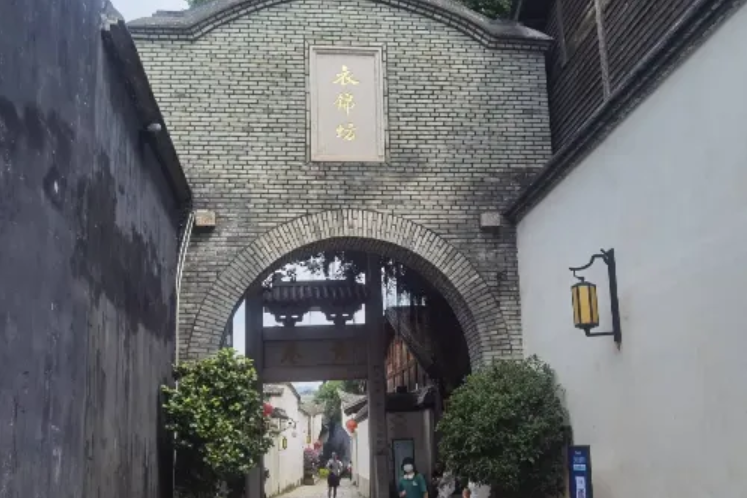
Yijin Lane
Located on the west side of Nanhou Street, it is the northernmost of the three lanes, also known as the First Lane. It runs east-west, opposite Huang Alley, starting from Nanhou Street in the east and crossing Tonghu Road to Yiqian Bridge in the west, with a total length of 395 meters and a width of 4 to 5.5 meters. In ancient times it was called Tongchao Lane; in the Song Dynasty (Xuanhe period) it was named Dijin Lane; and in the Southern Song Dynasty, it was renamed Yijin Lane after Wang Yixiang, a provincial judge from Jiangdong, lived here. The lane preserves ancient buildings such as the Zheng Family Mansion (with its Waterside Stage), the Ouyang Family Mansion and Garden Hall, and the Zheng Pengcheng Former Residence, as well as century-old rare trees including Chinese fringetree, cycad, and magnolia.
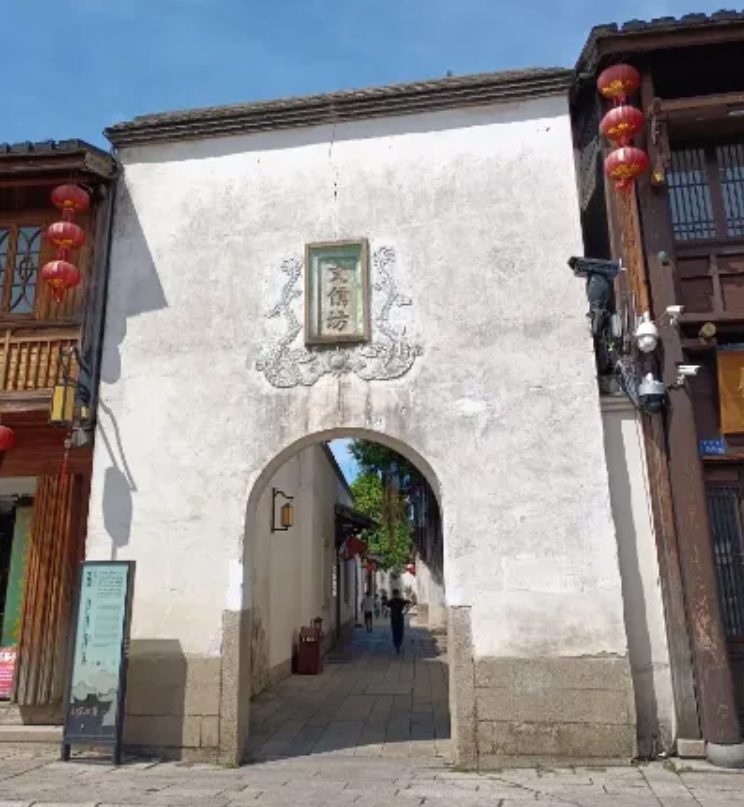
Wenru Lane
Situated south of Yijin Lane and north of Guanglu Lane, it occupies the middle position among the three lanes, opposite Anmin Alley. This was once a gathering place for many literati and scholars, and historically hosted numerous famous figures. The lane retains many ancient buildings of historical and cultural significance.
Guanglu Lane
Located on the southern side of the three lanes. It has rich historical and cultural heritage, with ancient buildings such as the Liu Family Mansion, which covers about 4,000 square meters and now serves as the main exhibition hall of the Community Museum.
Yangqiao Alley
One of the seven alleys, located in the northern part. The Lin Juemin and Bing Xin Former Residence at No. 17 Yangqiao Road is a National Key Cultural Relic Protection Unit. This residence was originally the family home of Lin Juemin's ancestors (including Lin Changmin). Today, it houses two exhibition areas: "Exhibition on Martyr Lin Juemin" and "Bing Xin and Her Hometown Fuzhou."
Langguan Alley
Among the seven alleys. The Yan Fu Former Residence at No. 20 covers over 600 square meters and is a National Key Cultural Relic Protection Unit. The house consists of a main hall and a garden hall; the main hall is a typical Fuzhou traditional residence, while the garden hall is a blend of Chinese and Western styles from the late Qing to early Republic. The residence was built during the Tongzhi reign of the Qing Dynasty, with a history of over 140 years.
Ta Alley
One of the seven alleys. Ta Alley has many historical stories and legends, and its architecture reflects local Fuzhou characteristics. In the late Qing period, the Fuzhou Reading and Newspaper Society was founded here.
Huang Alley
The Little Yellow House at No. 36 covers about 3,600 square meters and is a National Key Cultural Relic Protection Unit. The residence features ornate carvings and includes garden views such as the Vine Blossom Singing Pavilion, the Little Canglang Pavilion, and the Xiaobi Corridor. The Fuzhou Taiwan Guild Hall is located at No. 51 Huang Alley, with a total building area of 1,611 square meters. Its predecessor was the Fuzhou-Taiwan Examination Hostel, built in 1884 under the advocacy of Liu Ao, a late-Qing official in charge of Taiwan, to provide accommodation for Taiwanese scholars coming to Fuzhou for provincial imperial examinations and for the metropolitan examinations in Beijing.
Anmin Alley
Opposite Wenru Lane. Historically, the peasant army of Huang Chao came here and posted notices to reassure the people at the alley entrance. The alley preserves many ancient buildings in traditional Fuzhou style.
Gong Alley
The buildings in Gong Alley generally hold high historical and artistic value. The Shen Baozhen Former Residence at No. 26 is one of the oldest and most culturally significant ancient houses in Sanfang Qixiang, and is also a National Key Cultural Relic Protection Unit.
Jibi Alley
The Xie Family Ancestral Hall at No. 60 covers about 1,000 square meters and is a Fujian Provincial Cultural Relic Protection Unit. Its rear wall adjoins Gong Alley, and it now serves as the Fujian Zhuangyuan Hall Art Museum. In 2009, Fuzhou City officially restored the name "Jibi Alley" and carried out renovations on damaged ancient buildings on the north side.
Nanhou Street
Running from the Yangqiao Road intersection in the north to the Macao Bridge on Jibi Road in the south, about 1,000 meters long, it serves as the central axis of Sanfang Qixiang. The seven alleys lie to its east and the three lanes to its west. From the rise of Sanfang Qixiang until the Republic of China era, it was the main commercial street, bustling with merchants, offering all daily necessities through the "thirty-six trades," as well as book engraving shops, secondhand bookstalls, mounting shops, and lantern markets for the Lantern Festival and Mid-Autumn Festival.
Waterside Stage
Located at No. 4 Yijin Lane, it is a National Key Cultural Relic Protection Unit. The residence was first built during the Wanli reign of the Ming Dynasty, over 400 years ago. Today, regular performances of Min opera, Chichang (folk storytelling), Shifan music, and instrumental music are held here. The building complex faces south, with a post-and-lintel wooden frame, covering a total area of 2,675 square meters. The Waterside Stage in the garden hall is the only surviving waterside stage in Fuzhou; the pool covers 60 square meters, and the stage on the pool faces south, a single-level platform of 30 square meters, surrounded by water on three sides, separated from the main hall by a courtyard, with excellent acoustics.
Fujian Folk Customs Museum
Converted from the Ermei Former Residence, which was designated a National Key Cultural Relic Protection Unit in 2006. The museum displays nearly 1,000 pieces of Fujian folk cultural relics, arranged in scene-based exhibits that recreate the daily life of the Ming and Qing periods in the Min region.
Fujian Provincial Intangible Cultural Heritage Exhibition Pavilion
Located in the Ye Family Residence, which was designated by the Fujian Provincial Government in 2009 as the permanent exhibition center for Fujian's intangible cultural heritage. It displays over 1,000 intangible cultural heritage items and is now a national-level cultural relic protection unit.
Suggested Tour Routes:
One-day route: Enter the scenic area through Nanhou Street. First visit Yijin Lane to see the Waterside Stage and other ancient buildings; then proceed to Wenru Lane to experience its literary atmosphere; then to Guanglu Lane to visit the Liu Family Mansion. Afterwards, go to Langguan Alley to visit the Yan Fu Former Residence, then continue through Ta Alley, Huang Alley (visit the Little Yellow House and Fuzhou Taiwan Guild Hall), Anmin Alley, Gong Alley, and Jibi Alley. Finally, return to Nanhou Street to explore the commercial street and enjoy local snacks.
Two-day route:
Day 1: Morning – visit the Lin Juemin and Bing Xin Former Residence in Yangqiao Alley, then Langguan Alley and Ta Alley. Afternoon – visit Huang Alley. Evening – enjoy the night views and local nightlife within Sanfang Qixiang.
Day 2: Visit Anmin Alley, Gong Alley, and Jibi Alley, then head to Yijin Lane, Wenru Lane, and Guanglu Lane for an in-depth exploration of each lane's history and culture. You may also visit the Fujian Folk Customs Museum and the Fujian Provincial Intangible Cultural Heritage Exhibition Pavilion.
Travel Tips:
Recommended visit duration: 1–2 days. Spring and autumn offer pleasant weather and are the best seasons to visit. In summer, take sun protection and mosquito repellent measures; in winter, keep warm.
The area is primarily explored on foot, so wear comfortable shoes.
You may hire a guide or rent an audio guide for a better understanding of the historical and cultural background.
Try local specialty foods, but choose reputable and hygienic establishments.
Consider purchasing local cultural and creative souvenirs as keepsakes.
Important Notes:
Respect the historical and cultural relics; do not touch or damage ancient buildings or artifacts.
When visiting former residences of notable figures, remain quiet and follow the rules of each venue.
The site can be crowded, especially during holidays and peak tourist seasons; keep an eye on your personal belongings.
Help protect the environment; do not litter.
Follow on-site order when watching performances or events.
Transportation:
Bus: Multiple bus routes serve the area near Sanfang Qixiang, such as routes 1, 2, 8, 11, etc., getting off at Nanjie Station or Sanfang Qixiang Station.
Metro: Take Metro Line 1 to Dongjiekou Station, exit from B or C, and walk to the scenic area.
Driving: Parking lots are available around the site, but spaces may be limited during peak seasons. Navigate to "Sanfang Qixiang Scenic Area" and follow signs to find suitable parking.
Opening Hours:
Open all day. Paid attractions generally open from 8:30 to 21:00, but specific times may vary by season or under special circumstances.
Admission:
Free admission. Some individual attractions charge separate fees.