Meizhou Island is located in the central part of Putian City, Fujian Province. It is the second largest island in Putian, only 1.84 nautical miles from the mainland. It is a national 5A-level tourist attraction. The scenic area features a distinctive blend of profound Mazu culture and charming coastal natural scenery. It is the birthplace of Mazu culture and is regarded as the spiritual homeland by over 300 million Mazu devotees worldwide. The island boasts numerous Mazu?related buildings and sites, along with natural attractions such as beautiful beaches and unique marine erosion landforms. The island covers an area of 14.35 square kilometers and has a coastline of 30.4 kilometers.
History and Culture
Meizhou Island is the place where Mazu became a deity, carrying deep historical and cultural significance. The Mazu Ancestral Temple was first built in the 4th year of the Yongxi era of the Song Dynasty (987 AD) and is the world’s first Mazu temple, serving as the core sacred site of Mazu culture. Countless Mazu devotees from around the globe regard it as a pilgrimage destination. The Tianfei Hometown Heritage Park, located in the natural village of Dongcai Shanglin, is the birthplace of Mazu. The park preserves cultural relic protection sites such as a cliff carving inscribed with “Tianfei Hometown” from the Ming Dynasty, a stele from the Qing Dynasty bearing “Tianfei Ancestral Place Name Shanglin,” and an ancient well, along with other documented historical traces related to Mazu. In addition, the World Mazu Culture Forum, held annually on November 1 at its permanent venue, carries the mission of spreading and promoting Mazu culture among people along the Maritime Silk Road, further advancing its global dissemination.
Main Attractions
Mazu Ancestral Temple
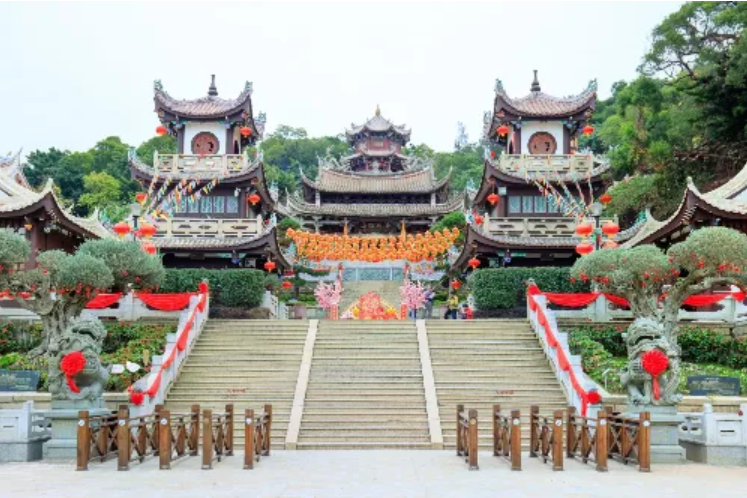
As the pilgrimage center for Mazu devotees worldwide, the temple complex features red walls and golden tiles, built along the mountain slope. First constructed in 987 AD, it is the oldest Mazu temple in the world, enshrining a thousand?year?old camphorwood statue of Mazu carved during the Song Dynasty. It also houses Mazu statues made of “gold, wood, water, fire, and earth” – the largest and most diverse collection of Mazu statues globally. The temple is listed as a key national cultural relic protection unit and a national civilized unit.
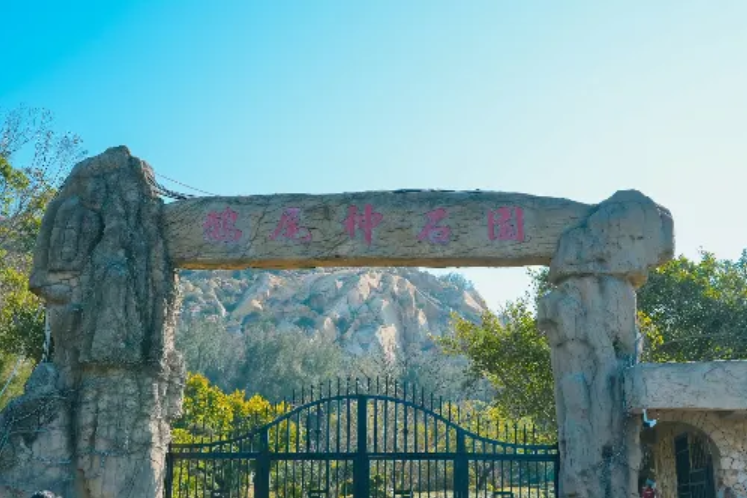
Ewei Shenshi Park (Ewei Marine Erosion Geopark)
Located at the southernmost tip of Meizhou Island, also known as the Ewei Marine Erosion Geopark. It faces the sea on three sides, with an elevation of 65 meters and an area of about 480 mu (32 hectares). Named for its goose?tail?like terrain and the granite rocks formed by natural processes over 410 million years during the Caledonian orogeny, the park features rare and typical marine erosion landforms. Key sights include “Turtle Paying Homage to Mazu,” “Flying Halberd Cave,” “Lovers’ Frogs,” and “Mazu’s Blessing Stone.”
Lianchi Beach
Located at the foot of the Mazu Ancestral Temple hill, this beach stretches 1.2 kilometers in a crescent shape resembling a moon bay, facing the Taiwan Strait. It is a bustling summer tourist hub and hosts the Cross?Strait Beach Music and Beer Carnival as well as a Taiwanese food tasting area.
Mazu Film and Television Park
Built as the filming base for the 38?episode television drama Mazu, the park is situated on the east coast of Donghuan Road, Ganglou Village, covering an area of 60 mu (4 hectares). Attractions include a fishing village fortress, ancient Meizhou charm, the Lin family courtyard, Wanghai Terrace, Ping’an Fort, the East Sea Dragon Palace, and an aquarium, offering visitors a taste of Song?dynasty fishing village life.
Meizhou Tidal Sound
Listed as one of the 24 scenic spots of Putian, located at the northernmost tip of Meizhou Island. It is named for the continuous sound of waves as tides converge near the mainland. The rocks are mostly grayish?white, forming connected stone formations, with views resembling “Dog Barking at the Sun,” “Hawk Playing with a Mouse,” and “Young Swallows Spreading Wings.”
Tianfei Hometown Heritage Park
Situated in the northwest corner of the island at Dongcai Shanglin natural village, covering about 90 mu (6 hectares) with a total floor area of approximately 9,300 square meters. It is Mazu’s birthplace, preserving cultural relics such as the Ming?dynasty cliff carving “Tianfei Hometown,” the Qing?dynasty stele “Tianfei Ancestral Place Name Shanglin,” and an ancient well. The park also includes Mazu’s former residence and the Mazu Origins Museum.
World Mazu Culture Forum Venue
Construction began in March 2017, covering an area of 53 mu (3.5 hectares) with a total floor space of 46,000 square meters. The World Mazu Culture Forum is held here annually on November 1. Besides the main conference hall, the venue also hosts a Poly Group Junya brand hotel, Meizhou Island’s first 3D cinema, and the World Crab Museum, among other leisure facilities.
Hushiguo Ecological Park
Located in the central part of Meizhou Island, adjacent to the World Mazu Culture Forum Venue, covering a total area of over 1,000 mu (67 hectares). After nightfall, a giant 3D water curtain show titled Mazu is projected on the lake, using sound, light, electricity, and water effects with naked?eye 3D technology to showcase the Mazu spirit of “virtue, kindness, and great love.”
Reclining Buddha on the Sea
Situated along the Huandao South Road, within the island botanical garden area. The small uninhabited islets opposite the beach together resemble two reclining Buddhas lying on the sea, with heads resting on the waves and serene expressions.
Meidong Bay
Located between Mazu Ping’anli and Ewei Shenshi Park, this narrow bay stretches about 1.7 kilometers. It features beach family recreation facilities, slow walking trails, and is being developed into a multi?functional waterfront resort area.
Mangrove Park
Located along the western coastline of Meizhou Island, with existing mature mangrove forests covering 450 mu (30 hectares). The main species include Avicennia marina, Kandelia obovata, and Aegiceras corniculatum. The park has multiple viewing platforms and a 2?kilometer slow walking trail, and serves as a habitat for egrets.
Suggested Itineraries:
One?Day Tours:
Mazu Culture Pilgrimage Tour: Mazu Ancestral Temple (including the Mazu Stele Forest, Mazu Cultural Park, and morning worship) → Tianfei Hometown Heritage Park → Mazu Ping’anli → Golden Beach.
Coastal Scenery Tour: Mazu Ancestral Temple → Lianchi Beach → Ewei Marine Erosion Geopark.
Two?Day Tour:
Day 1: Mazu Ancestral Temple → Tianfei Hometown Heritage Park → Mazu Cultural Film and Television Park → Golden Beach.
Day 2: Ewei Marine Erosion Geopark → Lianchi Beach.
Three?Day Tour:
Day 1: Mazu Ancestral Temple → Tianfei Hometown Heritage Park → Lianchi Beach.
Day 2: Sunrise at Meizhou Tidal Sound → Morning worship of Mazu → Mazu Ping’anli.
Day 3: Reclining Buddha on the Sea → Ewei Marine Erosion Geopark → Golden Beach → 3D water curtain show Mazu at Hushiguo Park.
Travel Tips:
The best time to visit is from March to November, when the climate is pleasant and the scenery is at its best.
If time permits, plan for a 2? to 3?day trip to fully explore the island’s culture and natural beauty.
Visit Ewei Shenshi Park at sunset for stunning views of the sunset over the unique marine erosion landforms.
When at Lianchi Beach, take sun protection measures to avoid sunburn.
Choose reputable restaurants for seafood to ensure food safety and freshness.
Important Notes:
Check the ferry schedule in advance and plan your trip to avoid missing the last boat.
Respect local religious beliefs and customs, especially those related to Mazu culture, including proper etiquette and taboos.
Pay attention to safety warnings when playing near the sea; do not enter restricted or dangerous areas.
Help protect the environment by not littering and keeping the scenic area clean.
Compare prices when buying seafood or other goods to avoid overcharging.
Transportation:
By Air: The nearest airports are Xiamen Gaoqi International Airport, Fuzhou Changle International Airport, and Quanzhou Jinjiang International Airport.
From Xiamen Airport: Take the Airport Express (North Station line) to Xiamen North Railway Station, then travel to Putian Railway Station, take Bus K09/363 to Wenjia Pier, and then take the ferry to Meizhou Island.
From Fuzhou Airport: Take the Airport Express shuttle bus to Putian Bus Station, then take Bus 361/362 to Wenjia Pier, and then the ferry.
From Quanzhou Airport: Take Bus K604 to Quanzhou South Railway Station, then to Putian Railway Station, take Bus K09/363 to Wenjia Pier, and finally the ferry.
By Train: From Putian Railway Station, take Bus K09/363 directly to Wenjia Pier, then transfer to the ferry.
By Car: Navigate to Wenjia Pier, Putian City. Park at the Wenjia Pier parking lot (during peak holiday traffic, you may use the “Mazu City Langqinwan Public Parking Lot,” with free shuttle buses to Wenjia Pier on national holidays), then take the ferry to Meizhou Island.
Opening Hours:
The scenic area is open year?round from 07:00 to 21:00.
Ferry schedules:
Summer time (April 16 – October 15): Luxury passenger ferries – Meizhou first departure 7:00, last departure 17:40; Wenjia first departure 7:20, last departure 18:00; departures every 20 minutes in between. Night flights: 19:00, 20:00, 21:00.
Winter time (October 16 – April 15): Luxury passenger ferries – Meizhou first departure 7:00, last departure 17:00; Wenjia first departure 7:20, last departure 17:20; departures every 20 minutes in between. Night flights: 18:00, 19:00, 20:00.
Tickets:
Ferry ticket: 125 RMB/person (round trip).