The Xiamen Zhonggu Ropeway is located in Siming District, Xiamen City, Fujian Province, within the Wanshi Mountain–Gulangyu National Scenic Area, adjacent to the west side of the Xiamen Botanical Garden (a national 4A-level scenic spot), at No. 25–110 Huyuan Road. Built upon the natural terrain of Zhonggu Mountain, it is a well-known urban sightseeing aerial tramway in southern Fujian and the only dynamic in-air viewing project on Xiamen Island. The ropeway stretches over 1,000 meters in length, with 9 steel support towers and 82 sightseeing cabins. Its maximum height above ground reaches 150 meters, and the round-trip journey takes about 40 minutes. With an investment of over 10 million yuan, it connects the Botanical Garden, Huxi Rock, Hongshan Park, and the Wulao Peak area of Nanputuo Temple. The surrounding Wanshi Mountain area is densely forested and ecologically rich, serving as an urban "oxygen bar." The ropeway uses circulating cable cars that run smoothly, offering 360-degree panoramic views of the island’s mountains, sea, city skyline, and coastal scenery—making it a distinctive cultural tourism attraction combining nature and urban vistas.
History and Culture
The planning of Zhonggu Ropeway began in the second half of 2001; construction officially started soon after, with the main structure completed in 2003. It passed national safety and quality inspections in October 2004 and officially opened to the public on May 1, 2005, filling the gap for urban aerial sightseeing in Xiamen.
The name "Zhonggu" derives from the local mountain, reflecting Xiamen's southern Fujian mountain culture and coastal characteristics. The route passes by Wulao Peak and Huxi Rock, both renowned historical mountains in Xiamen. Wulao Peak has long been a sacred site for southern Fujian Buddhist culture, adjacent to Nanputuo Temple, with a rich Zen atmosphere and numerous cliff inscriptions and ancient trails. The area also preserves wartime tunnels and trenches from the Anti-Japanese War, bearing witness to modern revolutionary history. Here, natural landscapes, religious culture, and modern history intertwine.
After years of operation, the Zhonggu Ropeway has continuously improved its facilities and services while protecting the mountain ecology and historical relics. It has become an iconic Xiamen sightseeing project—popular both for local leisure outings and as a must-visit spot for tourists to enjoy panoramic views of Xiamen and its coastal cityscape.
Main Attractions
Lower Station Service Area
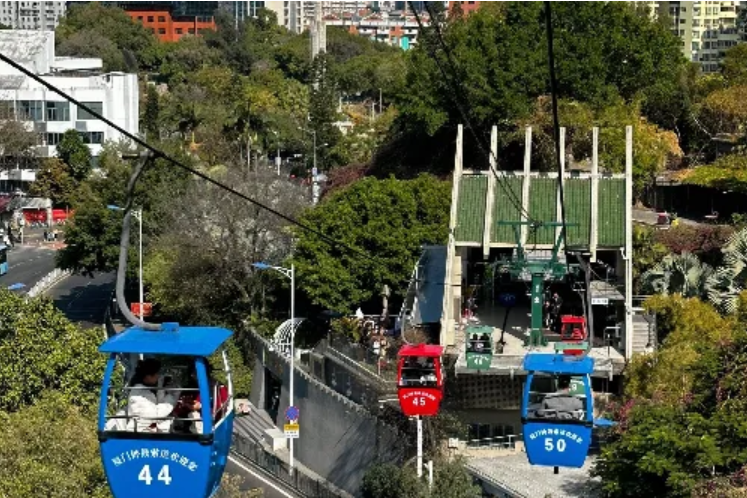
Located beside the West Gate of Xiamen Botanical Garden, the lower station serves as the starting point of the ropeway tour. It features a ticket hall, waiting areas, information desks, restrooms, and other basic facilities. The architecture blends with the surrounding forest environment, and the area enjoys convenient transportation connections to the main city roads, the Botanical Garden, and Huyuan Road walking trails. It is a core hub for visitor assembly, ticketing, and rest.
Aerial Panoramic Sightseeing Section
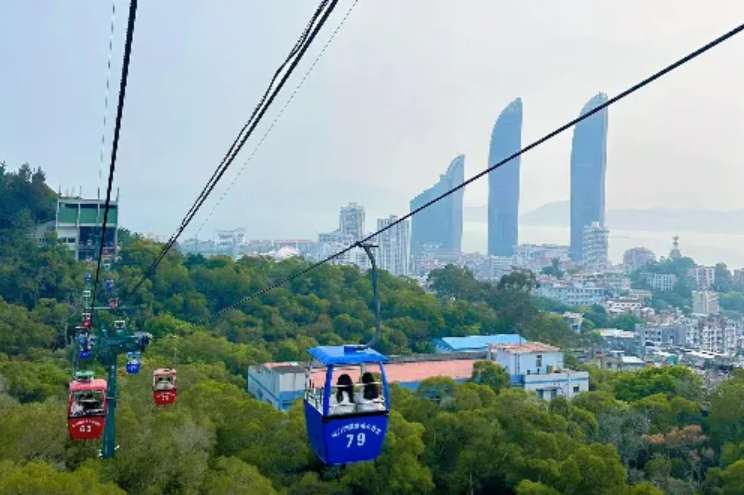
This is the ropeway’s core scenic section. The cable cars glide slowly above the Zhonggu Mountain forest, crossing the entire Wanshi Mountain woodland. During the ride, visitors can closely observe native rainforest vegetation and rugged rock formations while gazing into the distance at the old city buildings of Xiamen, Hongshan Ancient Temple, and—on clear days—Gulangyu Island, the Kinmen Islands, and other offshore islets. The integrated view of mountains, sea, city, and islands is spectacular, making this an excellent spot for sunset aerial photography and city panoramas.
Wulao Peak Scenic Section
The upper station connects to the Wulao Peak area on the west side of Nanputuo Temple. Wulao Peak is a classic Xiamen mountain, with five rolling peaks, serene forests, and deep Buddhist cultural heritage. From here, the view is expansive, overlooking the entire Nanputuo Temple complex and the coastal scenery of Siming District. Ancient stone steps and cliff inscriptions are preserved along the mountain, where natural forests and southern Fujian's ancient architecture complement each other.
Huxi Rock Distant Viewing Belt
Midway along the ropeway, the route passes over Huxi Rock, a long-established Xiamen scenic spot known for its bizarre rocks, natural caves, steep cliffs, and dense woods. Viewing Huxi Rock from above offers a unique perspective on the region's distinctive Danxia landforms and secluded mountain landscapes—quite different from the ground-level experience.
Tour Route:
Lower station ticket checkpoint → Board the sightseeing cable car for an aerial tour → View over Wulao Peak → Overlook Huxi Rock area → Round-trip return ride → Exit at lower station → Walk to Xiamen Botanical Garden / Nanputuo Temple.
Travel Tips:
It is recommended to take the cable car around 4:00 PM; the 40?minute round trip allows you to enjoy the sunset over the sea, with better lighting and more photogenic views.
Combine your visit with Xiamen Botanical Garden and Nanputuo Temple for a half?day itinerary, allowing a relaxed pace between attractions.
The ropeway operates as a round?trip service only (no one?way tickets). Plan your energy accordingly; ride at a steady pace and avoid sudden movements.
Spring and autumn offer the most pleasant weather and beautiful mountain scenery; in summer, remember sun protection and insect repellent.
On holidays, visitor flow is heavy; consider off?peak visits or purchase tickets online in advance to reduce on?site queuing time.
Important Notes:
Each cabin has a fixed passenger limit. Do not rock the cabin, climb rails, or extend your head, hands, or feet outside the windows at any time.
Children under 1.2 meters in height may ride for free but must be accompanied by a responsible adult guardian throughout the journey.
Individuals with hypertension, heart disease, acrophobia, vertigo, or other relevant conditions, as well as pregnant women and those with limited mobility, should ride with caution or refrain from riding.
In case of high winds, thunderstorms, heavy rain, typhoons, or other severe weather, the ropeway may temporarily suspend operation or impose capacity limits; check the official real?time notices before departing.
Flammable, explosive, sharp, or controlled items, oversized luggage, and pets are prohibited in the ropeway area.
Protect the mountain ecology; smoking is strictly prohibited throughout the scenic area. Do not litter, and help preserve the vegetation and historical sites.
Transportation:
Metro: Take Xiamen Metro Line 1 to Zhongshan Park Station, Exit 4, and walk 300 meters toward Zhonggu Mountain Tunnel to reach the entrance.
Bus: Take bus routes 87, 57, 309, etc., to Botanical Garden Station or Zhonggu Ropeway Station, then walk 2–5 minutes to the ticket office.
Driving: Search "Zhonggu Ropeway Ticket Office" on navigation apps. There are municipal public parking lots nearby, but spaces are limited; public transport is recommended during peak periods.
Short walk: 50 meters from the West Gate of Xiamen Botanical Garden, or a 15?minute walk from the North Gate of Nanputuo Temple, directly to the ropeway station.
Opening Hours:
Regular operating hours: 08:30–17:30 daily; ticket checking and boarding stop at 17:30. Open on holidays as normal. During extreme weather or routine maintenance, hours may be temporarily adjusted or service suspended; check the on?site notices and official announcements for the latest information.
Tickets:
Round?trip ticket: 80 RMB per person.