Shuzhuang Garden is located at Ganghou Road, Gulangyu Island, Siming District, Xiamen City, Fujian Province. It is one of the core attractions of Gulangyu Island, a national 5A-level tourist attraction, and a classic representative of modern Chinese garden art. The garden features "hiding the sea" through ingenious design and landscape borrowing as its core characteristics, integrating garden landscapes with the natural sea views. Breaking away from the traditional enclosed garden model, it is considered the pinnacle of private gardens in southern Fujian. Covering an area of approximately 9,300 square meters, including about 2,100 square meters of water area and 1,800 square meters of building area, the garden is built against the mountains and beside the sea, with an exquisite layout. Core attractions include the Forty-Four Bridges, Twelve Grotto-Heavens, Bùshān Garden, and Cáng Hǎi Garden, combining the charm of Jiangnan-style gardens with the coastal scenery of southern Fujian, making it one of the most scenic cultural landmarks on Gulangyu Island.
History and Culture
Shuzhuang Garden was first built in 1913 by Lin Erjia, a wealthy Taiwanese gentry. Lin, whose literary name was Shuzhuang, named the garden after himself. After the First Sino-Japanese War, Lin moved to Gulangyu with his father. Missing his ancestral home—the Banqiao Family Garden in Taiwan—he built this private seaside garden on a sloping coastal area as a tribute to his homeland, carrying with it a deep sense of nostalgia. The garden was constructed over several years on the southern tip of Gulangyu and originally served as a private residence with living, viewing, and leisure functions.
The design philosophy of Shuzhuang Garden integrates Jiangnan garden aesthetics, southern Fujian architectural styles, and coastal geographical features. It pioneered the "sea-hiding" technique, where the sea is not visible upon entry; only after venturing deeper does the ocean suddenly come into view—an innovative approach in Chinese garden history. The garden remained private property of the Lin family for many years. After the victory in the Second Sino-Japanese War in 1945, Lin Erjia donated the garden to the local government, and it was officially opened to the public in 1955, becoming a landmark public attraction on Gulangyu Island.
As an important component of Gulangyu's historical international settlement, Shuzhuang Garden embodies the cultural integration between Fujian and Taiwan, as well as the nostalgic sentiments of overseas Chinese. It also serves as a tangible testament to modern southern Fujian private garden architecture. In 2017, it was inscribed as part of the UNESCO World Cultural Heritage site of Gulangyu Island.
Major Attractions
Cáng Hǎi Garden
Cáng Hǎi Garden is the core entrance area of Shuzhuang Garden and the key embodiment of the "sea-hiding" design philosophy. Upon entering, rockeries and walls block the view of the sea; only after passing through a moon gate does the ocean suddenly appear, creating a striking visual contrast. The area includes an entrance courtyard, the moon gate, and a waterside pavilion, covering about 1,200 square meters. It is the first major attraction visitors encounter.
Forty-Four Bridges
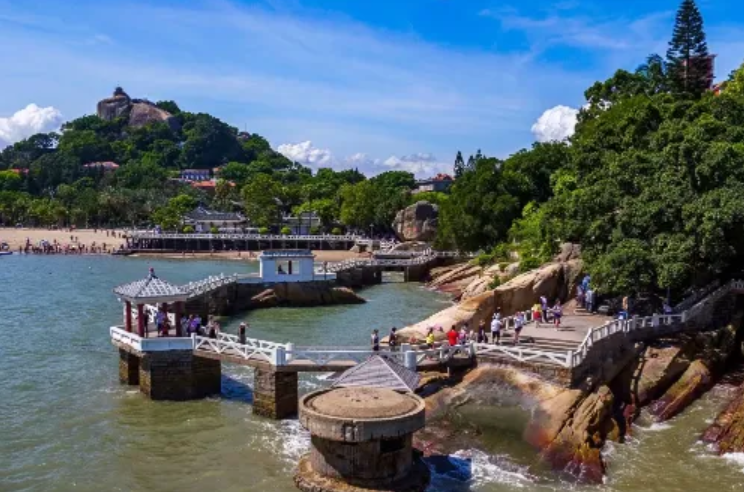
The Forty-Four Bridges are the garden's iconic coastal boardwalk, named because Lin Erjia was 44 years old when he built them. Stretching about 100 meters in length, the winding bridges meander through the garden's water areas and coastline, featuring viewing pavilions, zigzag bridges, and curved railings. They offer close-up views of the sea and panoramic garden scenery, making them the best spots for sightseeing and photography.
Twelve Grotto-Heavens
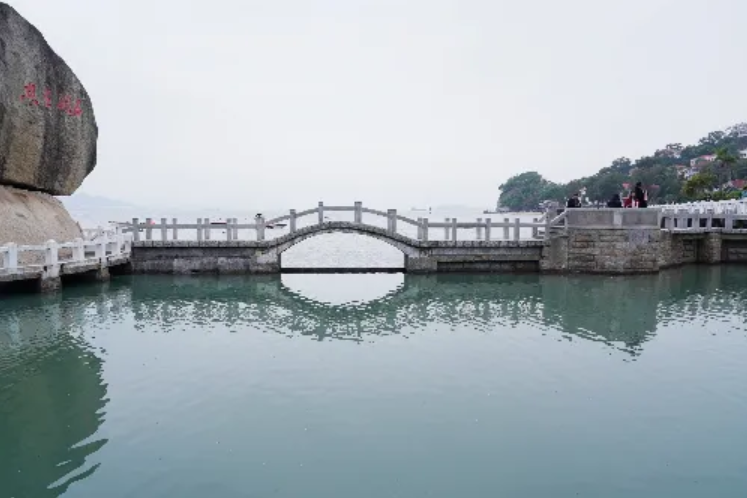
The Twelve Grotto-Heavens are a rockery and cave landscape, constructed from natural rocks combined with artificial stonework, covering about 300 square meters. The rockery contains twelve stone caves of varying sizes and shapes, arranged according to the Earthly Branches, interconnected in a winding and mysterious layout. Combining viewing pleasure with playful exploration, this is the garden's most distinctive rockery feature.
Bùshān Garden
Located on the northern hilly area of Shuzhuang Garden, Bùshān Garden was built along the natural slope with the concept of "supplementing the mountain" through landscaping. It integrates the hillside with the garden, featuring viewing platforms, green plantings, and leisure trails, covering about 2,000 square meters. Climbing to higher elevations offers panoramic views of the entire garden and the coastal scenery of Gulangyu.
Piano Museum
Located within Shuzhuang Garden, the Piano Museum consists of two halls with a total floor area of about 800 square meters. It houses nearly 100 antique pianos from countries such as Australia, the United Kingdom, and Germany. It is a world-class piano-themed museum and a core showcase of Gulangyu's musical culture.
Rénqiū Pavilion
Rénqiū Pavilion is a waterside viewing pavilion in Shuzhuang Garden, built in the southern Fujian architectural style. Situated above the water, it offers views of the Forty-Four Bridges and the sea. Compact and exquisite, it serves both as a rest stop and a scenic overlook, making it an important architectural feature of the garden.
Suggested Tour Route:
Shuzhuang Garden Entrance → Cáng Hǎi Garden → Moon Gate → Forty-Four Bridges → Rénqiū Pavilion → Twelve Grotto-Heavens → Bùshān Garden → Piano Museum → Exit
Travel Tips:
Recommended visiting time: 1 to 1.5 hours, allowing for a complete tour of all core attractions without rushing.
Prioritize visiting the Piano Museum, as it features timed automatic performances on antique pianos—plan your visit accordingly.
Enter before 9:00 a.m. or after 4:00 p.m. for fewer crowds and better photo opportunities.
Take your time exploring the Twelve Grotto-Heavens to fully enjoy the cave maze; watch your step on the stairs.
The Forty-Four Bridges offer the best sea views—pause there to enjoy the coastline and ocean scenery.
Combine your visit with other attractions on Gulangyu Island, and plan for at least half a day in total.
Important Notices:
Climbing on rockeries, railings, or entering non-visitor areas is strictly prohibited.
Inside the Piano Museum, do not touch exhibits or use flash photography.
As there are many water areas, children must be accompanied by adults at all times.
Pets are not allowed; smoking and spitting are prohibited within the garden.
Please keep noise levels low to maintain a peaceful environment.
During holidays, follow crowd control measures and maintain orderly queues.
The garden has many steps; wear comfortable, non-slip footwear.
Transportation:
To reach Gulangyu, first go to Xiamen Ferry Terminal and take a ferry to Gulangyu Piano Pier. The crossing takes about 5 minutes.
Motor vehicles are prohibited on Gulangyu Island. Shuzhuang Garden is located in the southwestern part of the island, about a 15-minute walk from Piano Pier.
Alternatively, take the Gulangyu sightseeing electric cart to the Shuzhuang Garden stop, then walk about 2 minutes.
From downtown Xiamen, take buses No. 2, 3, 8, 19, or 29 to the Ferry Terminal bus stop, then walk to the pier.
Opening Hours:
Summer (May 1 – September 30): 6:00 – 21:00
Winter (October 1 – April 30): 6:30 – 21:00
The Piano Museum operates during the same hours. Last entry is at 17:30, and venue clearance begins at 20:45.
Admission:
Ticket price: 30 RMB per person.