Xiaowutai Jinhe Scenic Area is located in Yu County, Zhangjiakou City, Hebei Province. It is an important part of the Xiaowutai Mountain National Nature Reserve and a national 4A-level tourist attraction. The scenic area is known for its unique mountain scenery, rich biodiversity, and profound historical and cultural heritage. It features high mountains, dense forests, and murmuring streams, and contains a rare primitive secondary forest in North China, with vegetation coverage of over 90%. The total area of the scenic area is about 10 square kilometers, of which the core scenic area is about 5 square kilometers. The highest peak, Dongtai (East Peak), has an altitude of 2,882 meters and is the second-highest peak in North China. Most buildings in the scenic area are pseudo-classical structures integrated with the natural landscape, such as pavilions and boardwalks, with a total building area of about 1,500 square meters. They facilitate sightseeing without damaging the overall natural appearance.
Historical Culture
The Xiaowutai Mountain area, where Xiaowutai Jinhe Scenic Area is located, has a long history. Traces of human activity date back as early as the Neolithic Age. Several Neolithic sites have been discovered in and around the scenic area, and a large number of pottery, stone tools, and other artifacts have been unearthed, bearing witness to the life and reproduction of early humans here.
Historically, Xiaowutai Mountain was an important site for Buddhist and Taoist activities, leaving behind numerous religious and cultural relics. According to historical records, as early as the Tang Dynasty, monks built temples here to spread Buddhism. Some temple ruins still exist in the scenic area, such as the Jinhe Temple Ruins. Although they have weathered many vicissitudes, their original scale and layout can still be seen, attracting many religious culture enthusiasts and historical researchers.
In addition, the Xiaowutai Mountain area was an old revolutionary base area. During the War of Resistance Against Japanese Aggression, it was an important part of the Shanxi-Chahar-Hebei Anti-Japanese Base Area. Countless revolutionary martyrs waged arduous struggles here, leaving behind many inspiring and heroic deeds and adding a strong “red culture” heritage to the scenic area.
Main Attractions
One-Line Sky
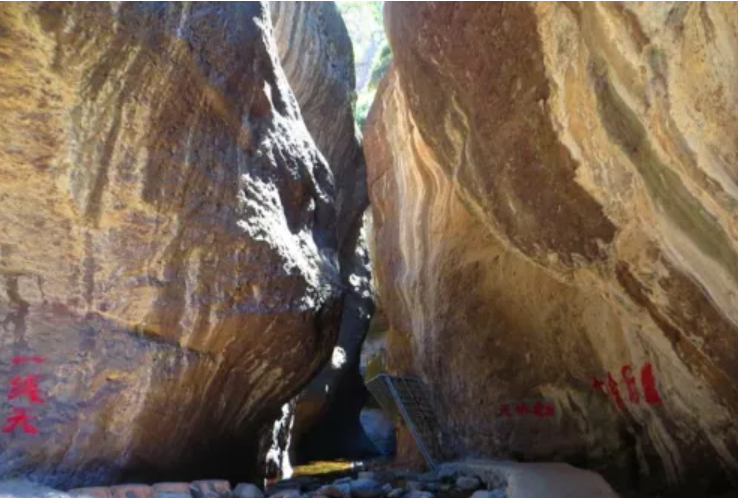
One-Line Sky is located in the northern part of the scenic area. It is a naturally formed canyon about 200 meters long, with the narrowest point only 1.5 meters wide. The cliffs on both sides are steep and tens of meters high. Looking up, visitors can see only a thin line of sky, hence the name. Walking through One-Line Sky, one can feel the uncanny workmanship of nature. Many inscriptions by literati and poets of past dynasties remain on the cliffs, giving the site a certain cultural value.
Demon-Suppressing Stone
The Demon-Suppressing Stone is about 5 meters high and nearly 8 meters wide. It is generally an irregular rectangular cuboid, with its surface covered in rugged patterns, as if carved by thousands of years of wind and rain. Legend says that this stone fell from the sky in ancient times to suppress mountain spirits. On one side of the stone, naturally formed marks resembling talismans can faintly be seen, adding to its mystery. Surrounded by trees, the stone complements the surrounding canyons and streams. It is not only a natural landscape full of fantasy in the scenic area but also a popular photo spot where visitors stop to explore and take pictures because of its folk legends.
Toad Head
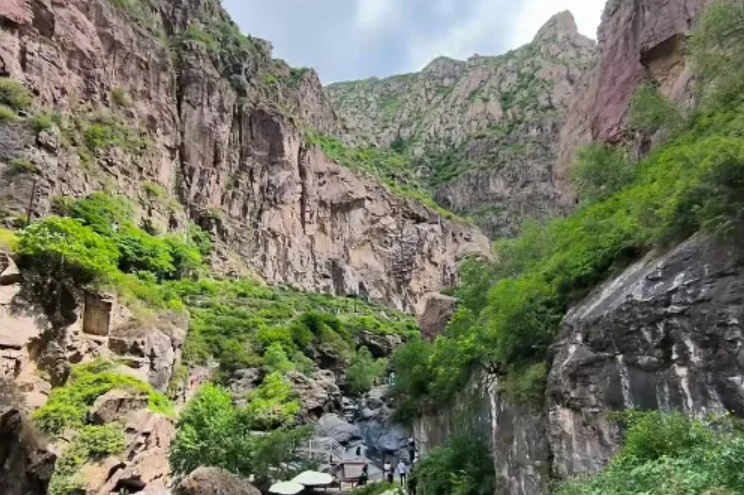
Toad Head in Xiaowutai Jinhe Scenic Area is the first sight upon entering the scenic area. It is a rock formation on a low-hanging cliff, shaped like a toad drinking water by the river. From different angles, some people think it resembles a conch lid, a shell, or a steamed bun. With its remarkably lifelike form, this unique rock adds a natural, spontaneous charm to the scenic area and attracts visitors to stop, admire, and take photos.
Jinhe Temple
Jinhe Temple was first built in the Tang Dynasty and was once a Buddhist temple of considerable influence within a radius of a hundred li. At its peak, the temple covered about 5,000 square meters, with well-arranged halls, gathered monks, and flourishing incense. On the existing ruins, broken walls, ancient steles, stone inscriptions, and column bases can still be seen, silently telling of its past glory. The temple is situated among green mountains and clear waters, surrounded by verdant ancient cypresses, with a quiet environment. Although it has endured many vicissitudes, it still exudes a rich historical and religious cultural atmosphere and is an important place for visitors to explore historic sites and feel the passage of time.
Tour Route:
Entrance → Toad Head → Qingliang Valley → Demon-Suppressing Stone → Sleeping Immortal Stone → One-Line Sky → Shenlong Pool → Tongtian Cave → Road-Repair Stele → Red Canyon → Maze Spring → Pagoda Forest → Jinhe Temple → Jinhe Temple Ruins → Suspension Bridge. This route allows visitors to experience most of the attractions in the scenic area and appreciate the natural scenery and historical culture of Jinhe Scenic Area. The Suspension Bridge marks the end of the scenic area, after which visitors can return along the same route.
Travel Tips:
The hiking route in the scenic area is relatively long. It is recommended to wear comfortable sports shoes and sportswear to reduce fatigue.
Because the scenic area is at a relatively high altitude and temperatures vary greatly, visitors should bring a jacket even in summer to avoid catching cold.
The tour is physically demanding, so it is recommended to bring enough drinking water and dry food. There are a few small shops in the scenic area, but prices are relatively high.
The natural scenery in the scenic area is beautiful. It is recommended to bring a camera or mobile phone to record the beautiful moments.
The best seasons to visit are summer (June-August) and autumn (September-October). In summer, visitors can escape the heat; in autumn, they can enjoy red leaves. A suggested visit lasts 1-2 days.
If planning to climb Dongtai, it is recommended to check the weather in advance and avoid rainy or windy weather to ensure safety.
The scenic area has a camping area. If you want to camp, prepare camping equipment in advance and follow the scenic area’s camping regulations.
Precautions:
The scenic area is a national nature reserve. Damaging vegetation, picking flowers and plants, and capturing wild animals are strictly prohibited. Violators will be punished accordingly.
Some sections of the scenic area are steep and dangerous. Pay attention to safety while touring, and do not leave designated routes without authorization to avoid getting lost or having accidents.
Smoking and open flames are prohibited in the scenic area to prevent forest fires.
Protect the environment of the scenic area. Do not litter; put garbage in designated bins.
If you feel unwell or encounter an emergency during the hike, you can call the scenic area rescue phone. There are multiple emergency rescue points in the scenic area.
Respect local customs and religious beliefs. Keep quiet at temple ruins and other places, and do not touch cultural relics at will.
Mobile phone signal is weak in some areas of the scenic area. It is recommended to agree on meeting times and places with companions in advance to avoid getting separated.
Transportation:
By Car: From Beijing, take the Beijing-Tibet Expressway → Xuanda Expressway → Yu County East Exit, then follow signs for about 30 kilometers to the scenic area. The total distance is about 300 kilometers, and the drive takes about 4.5 hours. From Zhangjiakou City, take the Zhangshi Expressway → Xuanda Expressway → Yu County East Exit, then drive about 30 kilometers to the scenic area. The total distance is about 150 kilometers, and the drive takes about 2.5 hours.
Public Transport: There are scheduled buses from Yu County town to the scenic area, departing daily at 8:00 and 10:00, with return trips at 14:00 and 16:00. The journey takes about 1 hour, and the fare is about 20 yuan per person. From Zhangjiakou Bus Station, visitors can take a bus to Yu County, then transfer to the bus to the scenic area.
Taxi: Taking a taxi from Yu County town to the scenic area costs about 80-100 yuan, and the journey takes about 1 hour.
Opening Hours:
Opening hours are adjusted according to the season. In summer (April 1-October 31), opening hours are 7:00-18:00. In winter (November 1-March 31), some areas are closed, and open areas are available from 8:00-17:00. The scenic area performs maintenance on some routes from December to February each year, which may affect normal sightseeing. It is recommended to check the scenic area’s official information before traveling.
Tickets:
As of August 20, 2025, admission is 68 yuan per person.