Chaotianmen is located in Yuzhong District, Chongqing, China, at the confluence of the Yangtze River and Jialing River. It is one of the seventeen historic city gates of Chongqing, an important gateway among the nine riverside gates, and the city's largest waterway passenger terminal as well as a hub for the two rivers. The Chaotianmen Square complex has four levels and covers an area of 37,000 square meters, with a rooftop observation plaza of 15,117 square meters. At the center of the square stands a 25?square?meter "Zero Kilometer" marker, symbolizing the starting point of Chongqing's highways. As a landmark of the Yuzhong Peninsula, it is renowned as the "Golden Triangle" due to its unique geographical position, and serves as a core urban area integrating culture, scenery, and transportation.
History and Culture
The name "Chaotianmen" derives from the historical practice of local officials receiving imperial edicts here. It was the largest of Chongqing's seventeen gates (nine open and eight closed). During the Ming Dynasty, when Dai Ding built the city walls following the principles of the Nine Palaces and Eight Trigrams, this gate was named Chaotianmen because it faced the capital Nanjing. Historically, it was both a transport artery and a center for commercial activities. Outside the gate, docks and land post stations lined the riverbank, bearing witness to the flourishing ancient water?and?land transport. From 2015 to 2016, archaeological excavations along the section from Xishuimen to Chaotianmen uncovered city wall remains and artifacts from different periods, confirming its important historical role as a dock, trade center, and water transport hub. In May 2016, Chaotianmen was selected as one of the "Top Ten Cultural Symbols of Chongqing," becoming a significant emblem of the city's history and culture.
Major Attractions
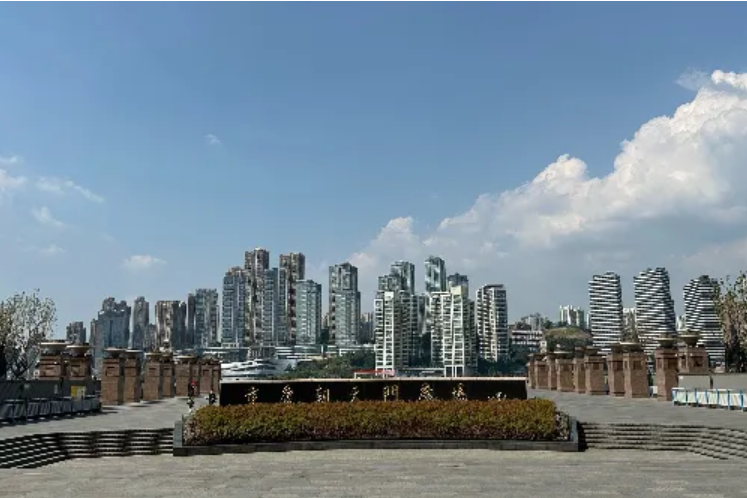
Chaotianmen Square
Chaotianmen Square covers 37,000 square meters and is designed in the shape of a giant sailing ship, earning it the nickname "Chongqing's Titanic." At the center of the square, the "Zero Kilometer" marker represents the starting point of Chongqing's highways. On the north and south sides of the marble monument are inscribed respectively the dedication for Chaotianmen Square, the Chronicle of Chongqing Chaotianmen Square, the Old Map of Chongqing, and the Ode to Chongqing Chaotianmen Square. The middle level houses the Chongqing Planning Exhibition Hall and the Chongqing Historical Celebrities Museum, the latter displaying 200 historical figures—both natives and non?natives—who have shaped Chongqing's cultural heritage.
Raffles City Chongqing
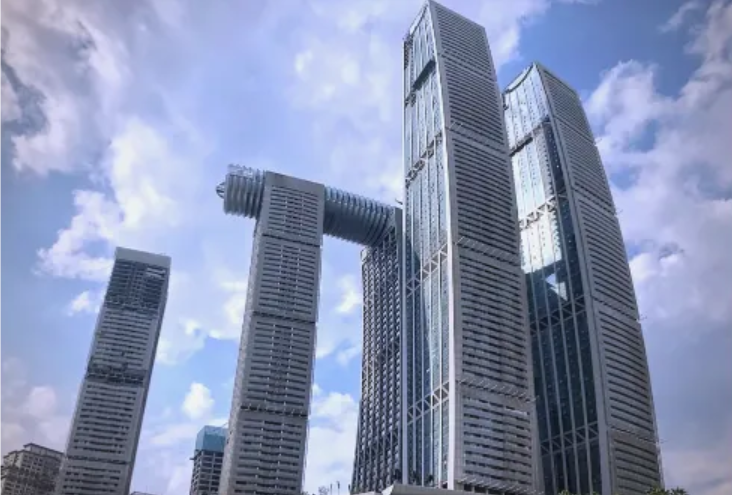
Designed by international architect Moshe Safdie, the eight towers stand along the river like sails, symbolizing "sails raised toward the sky." The project includes luxury residences, a shopping mall, office towers, five?star hotels, and serviced apartments. Its most distinctive feature is the 300?meter?long "Crystal Bridge" suspended at a height of 60 stories, connecting four of the towers. Visitors can enjoy a 360?degree panoramic view of the scenery along the two rivers and the city's three?dimensional landscape.
Chaotianmen Bridge
Officially the Chaotianmen Yangtze River Bridge, construction began in December 2004 and it opened to traffic in April 2009. The bridge connects Wulidian in Jiangbei District to the east with Tanzishi in Nan'an District. Its main span is 1,741 meters long, and upon completion it was the world's largest?span arch bridge. It is often called the "First Bridge at the Yangtze River Gateway of the Mountain City" and is a vital hub in Chongqing's transport network.
Raffles City Crystal Bridge
The Crystal Bridge is the signature element of the Raffles City "Sails toward the Sky" complex. Spanning four towers, it stands about 250 meters above the ground, measuring 300 meters long, 32.5 meters wide, and 26.5 meters high, with a total floor area of about 10,000 square meters. Built with glass and steel, it resembles a giant "crystal necklace." Inside, it features an observation deck, a sky garden, and dining areas, allowing visitors to gaze 360 degrees at the magnificent confluence of the Yangtze and Jialing rivers, the full panorama of the Yuzhong Peninsula, and the dazzling city nightscape.
Confluence Observation Deck
This is one of the best spots to view the meeting of the two rivers. The deck is about 150 meters long and 30 meters wide, paved with non?slip tiles, and equipped with railings and rest benches. In the early morning and at dusk, the river is often shrouded in mist or bathed in sunset glow, offering ever?changing vistas. During the high?water season (June–September), the rivers swell, and at their confluence the currents become swift, forming large whirlpools; in the dry season, the river surface is wide and placid, revealing the scenery on both banks. The deck also features illustrated information boards explaining the hydrological characteristics of the two rivers and the formation of the famous "Jiamashui" (clamping?water) phenomenon.
Chongqing Historical Celebrities Museum
This comprehensive art venue, dedicated to the history and famous figures of Chongqing, covers an area of 1,400 square meters with a built?up area of 3,757 square meters. It exhibits 501 historical figures—both native and from elsewhere, including Ba Zi, Liu Bocheng, and Zhou Enlai—through sculptures, oil paintings, multimedia, and other techniques, presenting the 3,000?year historical evolution of Chongqing.
Suggested Itinerary:
Morning: Arrive at Chaotianmen Square, visit the "Zero Kilometer" marker and the marble monument, and go up to the observation deck to view the "Jiamashui" confluence of the two rivers. Then enter the Chongqing Planning Exhibition Hall to learn about the city's development through scale models and multimedia displays.
Lunch: Enjoy Chongqing hotpot or noodles at restaurants around the square.
Afternoon: Walk to Raffles City, browse the shopping mall, and ascend the Crystal Bridge observation deck for a panoramic view of the mountain city. Then head to the Chaotianmen Bridge viewing area to take photos of the bridge and the river scenery.
Evening: Take a one?hour cruise on the two rivers from the dock to admire illuminated landmarks such as Hongyadong and Qiansimen Bridge, experiencing the charm of the "city that never sleeps."
Travel Tips:
The best seasons are spring (March–May) and autumn (September–November) when temperatures are pleasant. Summer (June–August) is hot and rainy—take precautions against heat and rain. In winter (December–February), the river wind is chilly, so wear a down jacket.
On weekends and public holidays, the area is crowded. It is advisable to visit indoor venues in the morning on weekdays, and arrive at the dock one hour early in the evening to buy tickets and choose seats.
For the Crystal Bridge, choose sunny mornings (10:00–12:00) or early evenings (17:00–19:00) for the best soft light and photography. On the cruise, the right?side seats on the second deck offer the best views.
In summer, use sunscreen, bring a parasol or hat, and carry a light jacket as the river breeze can be strong. In winter, wear warm clothing.
For a river cruise, purchase tickets at Chaotianmen Dock. Night cruises (19:30–21:00) cost about ¥158 per person, offering water?level views of Chaotianmen and the riverside night scenery.
Raffles City offers a wide variety of dining options; try Chongqing hotpot or noodles, with an average spend of about ¥60–¥100 per person.
A half?day (3–4 hours) is recommended for the visit. It can be combined with nearby attractions such as Jiefangbei and Hongyadong (both within 2 km) for a full?day itinerary.
Important Notices:
The riverside railings are low; do not climb over or approach turbulent areas. Follow crew instructions on cruises and refrain from running or playing on deck.
Smoking and spitting are prohibited in the square and exhibition halls. Protect cultural exhibits; do not touch public facilities such as the "Zero Kilometer" marker.
On weekends, traffic congestion is likely on Changbin Road between 11:00 and 16:00; public transport is recommended. At Xiaoshizi subway station, transfers can be very crowded—allow ample time.
Observation decks and riverside promenades are busy, especially on holidays; keep an eye on your belongings to prevent theft.
During the high?water season (June–September), some riverside areas may be submerged. Pay attention to warning signs and do not enter restricted zones.
At night, lighting along the riverside promenade is dim; walk in well?lit areas and preferably in groups.
Purchase cruise tickets through official channels; do not trust touts offering "cheap tickets" near the dock to avoid scams.
Transportation:
Subway: Take Line 1 or Line 6 to Xiaoshizi Station, Exit 5, and walk about 800 meters (10 minutes) to the square.
Bus: Take routes 466, 0492, 866, etc., to Chaotianmen Bus Stop, or routes 382, 414 to Chaotianmen Square Stop.
Driving: Navigate to "Chaotianmen Square." Parking is available at Raffles City Parking Lot and Changbin Road Parking Lot. On weekdays, spaces are limited; arrive before 10:00 if possible.
Walking/Cycling: From Jiefangbei, walk along Minzu Road for about 1.5 km (20 minutes), passing historic lanes like Shancheng Alley along the way.
Opening Hours:
Chaotianmen Square is open 24 hours a day.
Chongqing Planning Exhibition Hall: generally 9:00–17:00 (closed on Mondays).
Chongqing Historical Celebrities Museum: 9:00–18:00.
Raffles City shopping mall: 10:00–22:00.
Crystal Bridge observation deck: 10:00–21:00.
Two?river cruises operate on a timed schedule; in summer, departures are mostly 19:30–21:00, and in winter they are earlier, 18:30–20:00—check the daily notice for exact times.
Tickets:
Chaotianmen Square and the outdoor areas are free of charge.
For indoor venues such as the Historical Celebrities Museum, advance booking or ticket purchase is required via official channels; prices are subject to the venue's announcement.
River cruise tickets are sold separately: regular boats cost about ¥100–¥150 per person, while luxury boats cost about ¥200–¥300 per person, depending on your choice.