The Gansu Provincial Museum is located at No. 3 Xijin West Road, Qilihe District, Lanzhou City, Gansu Province. It is a national first?grade museum, a key national museum, and also a national base for patriotic education and a national popular science education base. Founded in 1939, the museum has a total building area of 43,000 m2, with exhibition space of 21,000 m2. It houses nearly 90,000 cultural relics and natural specimens, including more than 50,000 precious artefacts and 16 national?treasure?level items. As the only provincial?level comprehensive museum in Gansu, it has a well?rounded collection system with distinctive regional characteristics, focusing on Gansu’s prehistoric painted pottery culture, Silk Road culture, Buddhist art culture, Yellow River culture, and revolutionary culture in northwest China. It serves as the core window for displaying Gansu’s millennia?long historical heritage and Silk Road civilisation. The museum building is stately and imposing, built in a modern cultural?museum architectural style with well?defined functional areas, including permanent exhibition halls, temporary exhibition halls, a conservation and restoration centre, an academic lecture hall, and public service areas. Its facilities and equipment meet the first?class standards of provincial museums in China.
History and Culture
The predecessor of the Gansu Provincial Museum was the Gansu Science Education Museum, established in 1939. It was one of the earliest cultural and scientific institutions in northwest China in modern times. In its early years, it mainly undertook natural science surveys in the northwest, folk artefact collection, and science popularisation, laying the foundation for the development of cultural heritage work in the region. In 1950, it was renamed the Northwest People’s Science Museum, under the cultural and educational system of the Northwest Administrative Region, and further expanded its functions in artefact collection and historical research, focusing on collecting and organising excavated artefacts, folk objects, and natural specimens from Gansu and surrounding northwestern areas.
In 1956, it was officially named the Gansu Provincial Museum, establishing its position as a provincial?level comprehensive museum and initiating systematic and professional work in artefact collection, exhibition, and academic research. In 1958, it moved to its current site, gradually improving its exhibition system and organising the historical narrative of Longyuan (Gansu), with particular emphasis on Majiayao painted pottery, Han?dynasty bamboo slips, Silk Road remains, and grotto Buddhist sculptures. After the reform and opening?up, the museum continuously carried out artefact acquisitions, archaeological collaboration, and exhibition upgrades, greatly enhancing its collection size and research capacity.
In 2008, the museum became one of the first public cultural venues in China to offer free admission to the public. In 2012, it was rated as a national first?grade museum, joining the ranks of outstanding cultural institutions nationwide. With over eighty years of accumulation, and drawing on Gansu’s unique historical and geographical advantages, the museum has preserved a complete sequence of historical remains from prehistoric civilisations, pre?Qin ancient cultures, the Qin?Han Silk Road, the Wei?Jin and Northern Dynasties, the glorious Tang and Sui dynasties, the Song?Yuan frontier administration, and modern revolutionary history. It has become the core cultural vehicle for interpreting the upper?reaches civilisation of the Yellow River and the eastern section of the Silk Road.
Main Exhibitions
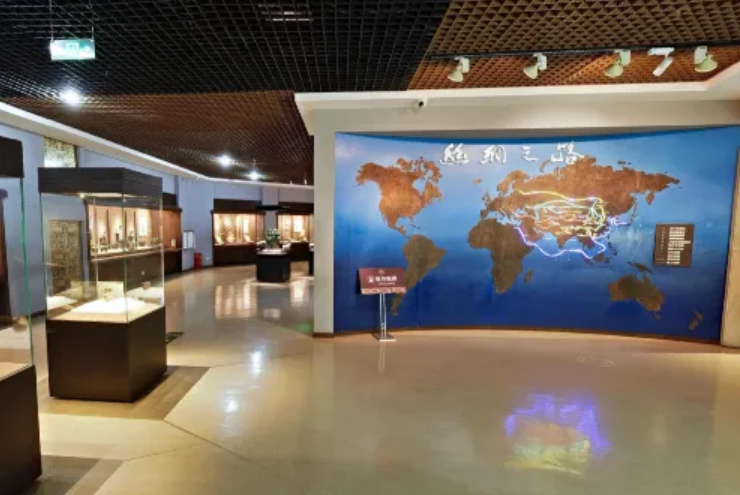
Gansu Silk Road Civilisation Hall
This is the core permanent exhibition hall of the Gansu Provincial Museum. It systematically displays the cultural remains of the Gansu section of the Silk Road from the Han Dynasty to the Yuan Dynasty, presenting a complete picture of trade, cultural exchange, and ethnic integration along the route. Representative artefacts include the Bronze Galloping Horse, the mural brick of the Postman, various gold and silverware, glassware, and silk fragments, fully demonstrating Gansu’s vital role as the golden section of the Silk Road. It is the key exhibition area for understanding northwest Silk Road culture.
Gansu Painted Pottery Hall
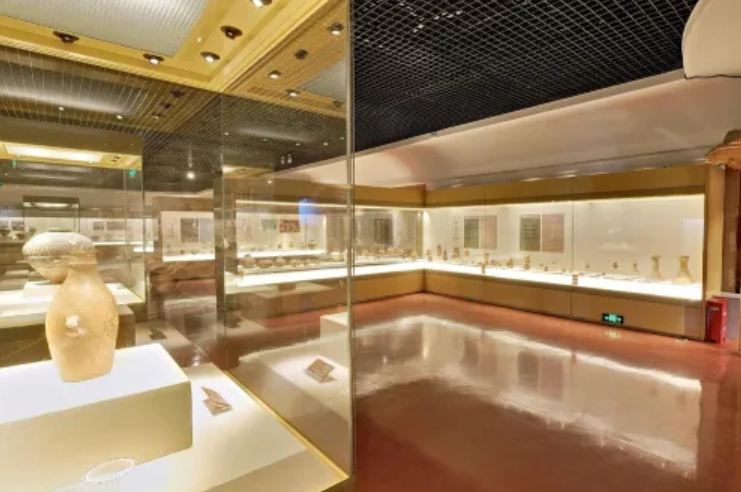
This is the largest and most comprehensive thematic exhibition hall of painted pottery in China. It displays prehistoric painted pottery spanning from 7,000 to 2,000 years ago, covering local Gansu cultural types such as Dadiwan, Majiayao, Qijia, Xindian, and Shajing. The exhibits form a complete sequence with rich shapes and exquisite decorative patterns, clearly showing the evolutionary development of northern Chinese prehistoric painted pottery. Many Majiayao culture masterpieces are unique to China, making this hall an essential resource for studying prehistoric agricultural civilisation, primitive art, and the daily life of ancient peoples.
Gansu Buddhist Art Exhibition
This exhibition focuses on Gansu’s grottoes and Buddhist cultural heritage, displaying Buddhist statues, mural fragments, sutras, and ritual implements from the Sixteen Kingdoms period to the Ming and Qing dynasties. The artefacts come from or were collected from famous Gansu grottoes such as Tiantishan, Binglingsi, and Maijishan. The exhibition systematically shows the process of Buddhism’s introduction from the Western Regions into the Central Plains, its establishment and development in Gansu, and its eventual sinicisation, reflecting the unique artistic features of northwest Buddhist art, which combines Western Regions styles with Central Plains aesthetics.
Palaeontological Fossil Hall
This is the museum’s specialised natural history exhibition area, displaying prehistoric fossil specimens unearthed in Gansu, including various flora and fauna from the Cenozoic and Mesozoic eras, such as the famous Yellow River Elephant fossil, Mamenchisaurus fossil, and giant rhinoceros fossil. The hall reconstructs Gansu’s ancient geological landscape and biological evolutionary history, combining scientific education with visual appeal, and serves as a core venue for youth science education.
Red Gansu Exhibition Hall
This is a permanent thematic hall on revolutionary history. Through artefacts, photographs, and documents, it systematically presents Gansu’s modern revolutionary history, focusing on major events such as the Long March, the construction of the Shaanxi?Gansu?Ningxia Border Region, and the liberation of northwest China. It displays revolutionary relics, historical documents, and old photographs, passing on the red culture of Longyuan and serving as an important patriotic education base in the province.
Suggested Visiting Route:
Entrance security hall → Ground floor: Palaeontological Fossil Hall → Ground floor: Red Gansu Exhibition Hall → Second floor: Gansu Painted Pottery Hall → Second floor: Gansu Silk Road Civilisation Hall → Third floor: Gansu Buddhist Art Exhibition → Cultural and Creative Products Area → Exit
Visiting Tips:
Recommended visiting time: 2?3 hours, enough to fully tour all permanent exhibition halls and gain an in?depth understanding of Gansu’s history and culture.
Priority should be given to the core exhibition halls – the Silk Road Civilisation Hall and the Painted Pottery Hall are the museum’s most important displays; focus your time there.
Free audio guides are available on site, or you may follow the official guided tours (offered at scheduled times) to enhance your experience and learn more about the stories behind the artefacts.
For families with children or students, the Palaeontological Fossil Hall is highly recommended for its educational and fun appeal.
On holidays and weekends, visitor numbers are high; it is advisable to visit on a weekday morning to avoid peak crowds.
After the tour, you may visit the cultural and creative products area to purchase Gansu?themed souvenir items.
Important Notices:
The museum operates a real?name reservation system. All visitors must make a real?name reservation and present a valid ID for entry. Those without a reservation will not be admitted.
Do not touch exhibits, display cases, or specimens, and do not climb over guardrails. Offenders will be dealt with according to regulations.
The use of flash, video recording, selfie sticks, and tripods is prohibited inside exhibition halls to prevent light damage to artefacts.
Smoking, loud talking, running, chasing, and spitting are strictly prohibited. Please keep the exhibition halls quiet.
Flammable, explosive, or controlled items, as well as snacks and beverages, are not allowed inside. Large luggage must be checked at the storage area.
Children and elderly visitors must be accompanied by guardians or family members to ensure safety.
Some special exhibitions in the temporary exhibition halls may have separate visitor limits or timed entry; please follow on?site instructions.
In case of emergency maintenance or event setup, some halls may be temporarily closed; please check the museum’s daily notices.
Transportation:
Public bus: Take Lanzhou bus routes 1, 31, 50, 53, 58, 106, 127, 136, or 158 and get off at Qilihe Bridge Station or Gansu Provincial Museum Station; walk a short distance to the museum.
Metro: Take Lanzhou Metro Line 1 to Qilihe Station, then walk west about 500 metres to reach the museum.
By car: Navigate to the main entrance of Gansu Provincial Museum. The museum has a public car park with limited spaces; on holidays, public transport is strongly recommended.
Opening Hours:
The Gansu Provincial Museum is open Tuesday to Sunday throughout the year, closed on Mondays for routine maintenance. Official notices will be issued for statutory holidays. Regular opening hours: 9:00 AM – 5:00 PM; last entry at 4:00 PM; clearing begins at 4:30 PM; closing at 5:00 PM. The museum is closed on New Year’s Eve and the first day of the Chinese New Year, but open during the rest of the Spring Festival period. Opening hours may be adjusted temporarily due to special weather, equipment maintenance, or major events; visitors are advised to check official announcements in advance.
Tickets:
Admission is free. Paid guided tours are available upon request.