Zhongshan Bridge is located in Chengguan District, Lanzhou City, Gansu Province, spanning the Yellow River. It is a Major Historical and Cultural Site Protected at the National Level and a core scenic node of the Lanzhou Yellow River Custom Line, a national 4A-level tourist attraction. The bridge was first built in 1907, with a total length of 233.33 meters, a total width of 7.5 meters, and a five?span steel arch truss structure. Its piers are built of granite ashlar, with a single span of 45.9 meters. The overall controlled scenic area extends along both banks of the Yellow River, encompassing the bridge itself, the north and south bridge?head plazas, and the supporting riverside walkways, covering a total area of approximately 28,000 square meters. Zhongshan Bridge is the earliest modern steel bridge built over the Yellow River and is renowned as the “First Bridge of the Yellow River.” It combines the craftsmanship of modern Western bridge engineering with the cultural landscape of the Northwest Yellow River region, integrating transportation heritage, historical study, and riverside sightseeing. It is a landmark of Lanzhou and an iconic structure of Yellow River culture.
History and Culture
In the 33rd year of the Guangxu reign of the Qing Dynasty (1907), the Qing government signed a construction contract with the German firm Telge & Schroeter, hiring American bridge engineer M. B. Fullborg and German engineer D. W. D. Rode to design and supervise the project. All steel materials were imported from Germany, while stone materials were quarried locally from the Qingshi Mountains around Lanzhou. The bridge was completed and opened to traffic in 1909, originally named “Lanzhou Yellow River Iron Bridge.” The total construction cost was 306,691.934 taels of silver.
In 1928, in memory of Dr. Sun Yat?sen, the Gansu provincial government officially renamed the bridge Zhongshan Bridge, a name that has remained to this day. Between 1942 and 1954, the bridge underwent multiple reinforcements and repairs. In 1954, a large?scale reinforcement and renovation was carried out, adding curved steel arches to improve structural stability and addressing issues of steel corrosion and insufficient deck load capacity.
In 1986, the Lanzhou municipal government issued regulations prohibiting motor vehicle traffic on the bridge, converting it into a pedestrian?only sightseeing bridge. In 2006, Zhongshan Bridge was listed by the State Council as part of the sixth batch of Major Historical and Cultural Sites Protected at the National Level. Over more than a century, the bridge has witnessed the commercial, transportation, and urban development of Lanzhou. It stands as a physical relic of the convergence of the Silk Road and Yellow River civilization, carrying the historical value of Northwest China’s modern industry and Sino?Western technical exchange.
Main Attractions
Bridge Structure
The bridge is a five?span through?type steel truss arch bridge, 233.33 meters long, with a wooden deck and cast?iron carved railings on both sides. The piers are trapezoidal stone masonry bases embedded into the riverbed. The steel members still bear original foundry marks from Germany, and the century?old steel structure remains well preserved. The deck is open only to pedestrians. Standing on the bridge, visitors can enjoy close views of the rushing Yellow River and panoramic vistas of the White Pagoda Mountain and the urban skyline on both banks—making it the core viewing spot.
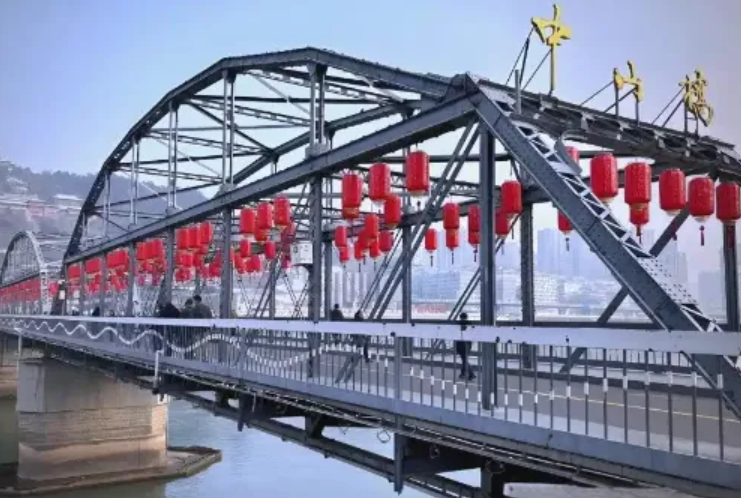
North?End White Pagoda Mountain Viewing Platform
Located at the northern end of Zhongshan Bridge and directly connected to it, this open viewing platform is built at the foot of White Pagoda Mountain, covering about 1,200 square meters. It offers an unobstructed, full view of the entire bridge and the main stream of the Yellow River. The platform is equipped with antique pavilions and stone resting steps. From here, visitors can head north directly to the White Pagoda Temple scenic area. It is the best spot for taking panoramic photos of Zhongshan Bridge.
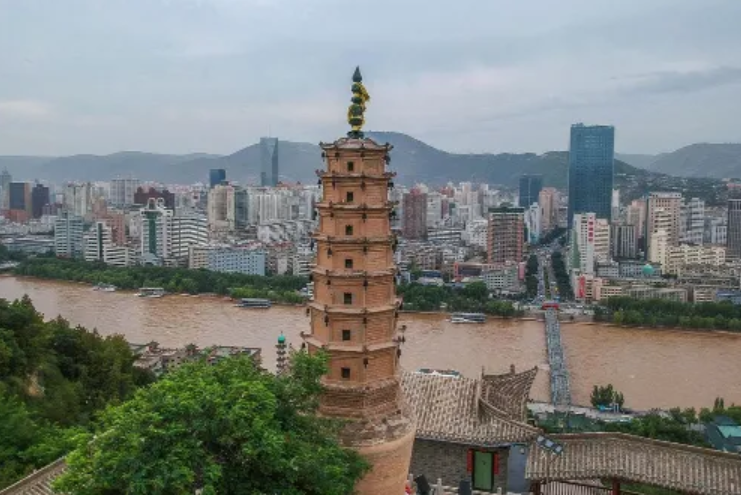
South?End Yellow River Mother Culture Plaza
Situated in the plaza area at the southern end of the bridge, this plaza covers approximately 11,000 square meters and features Yellow River cultural reliefs, stone inscriptions recording the century?long history of the iron bridge, and landscaped green walkways. The inscriptions fully document the bridge’s construction, renaming, and restoration history. The plaza also provides resting benches and tourism information boards, making it a major gathering and check?in point for visitors.
Yellow River Riverside Walkway
Extending along both banks of the Yellow River around Zhongshan Bridge, the walkway totals about 1.6 kilometers in length. It is paved with anti?slip stone and features stone viewing steps and water?level platforms along the way. The walkway connects Zhongshan Bridge, the Waterwheel Expo Park, the Yellow River Cableway, and other scenic spots. Walking along it offers an up?close experience of the river’s flow, and the night lighting strips enhance the evening and nighttime scenery.
Suggested Tour Route:
Tourist Information Center → South?End Yellow River Mother Culture Plaza → Zhongshan Bridge Structure → North?End White Pagoda Mountain Viewing Platform → White Pagoda Mountain foothill path → South section of the Riverside Walkway → Exit.
Travel Tips:
Best visiting hours: Early morning (7:00–9:00) for soft light ideal for panoramic shots; early evening (18:00–21:00) for sunset views and the bridge’s night lighting.
Duration: A full visit to the bridge and surrounding attractions takes about 1.5–2 hours; if you also climb White Pagoda Mountain, allow about 3 hours.
Photography: Bring a wide?angle lens. The north?end viewing platform is the best spot for panoramic shots; the bridge deck is good for close?ups of steel details and the river.
Historical reading: Take time to read the stone inscriptions at the south end, which chronicle the bridge’s century?long history—ideal for study tours related to Yellow River culture.
Seasonal note: During the summer flood season (June–August), the river flows swiftly. Prefer the calmer central section of the deck and avoid leaning on railings for extended periods.
Important Notices:
Motor vehicles and non?motorized vehicles are prohibited on the bridge at all times. Bicycles and e?bikes must be parked in designated areas at the north and south plazas.
The cast?iron railings show signs of century?old weathering. Climbing, shaking, or leaning on them is forbidden. Do not throw any objects or stones into the Yellow River; help protect the water environment.
Night lighting is on from 19:00 to 23:00. The bridge deck can be crowded during these hours; please keep an eye on children and the elderly to avoid pushing or trampling.
The wooden deck can be slippery when wet. Wear non?slip footwear and walk slowly on rainy days.
Low?altitude drone flights over the bridge and plaza areas are prohibited without prior approval.
The Yellow River has strong currents. Do not enter the riverbank or swim in the river, and stay away from unprotected waterfront edges.
Transportation:
Bus: Take routes 4, 6, 9, 15, 25, or 131 to White Pagoda Park Bus Stop, then walk 300 meters to the north entrance; or take routes 1, 31, or 44 to Xiguan Shizi Station, then walk 600 meters to the south plaza.
Driving: Navigate to “Zhongshan Bridge South Plaza Parking Lot.”
Water bus: Yellow River Water Bus Line 1 stops at White Pagoda Wharf; walk 200 meters to the north end of the bridge.
Taxi/ride?hailing: Set your destination to White Pagoda Park or Zhongshan Bridge South Plaza; travel time from downtown Lanzhou is about 10–20 minutes.
Opening Hours:
The bridge itself, the north and south plazas, and the riverside walkway are open 24 hours a day, year?round, with no closure period.
The supporting cultural display boards at the south plaza are open daily from 9:00 to 21:00; the north?end viewing pavilions are open all day.
The adjacent White Pagoda Mountain scenic area is open from 6:00 to 22:00 for combined visits.
The bridge’s night lighting system operates daily from 19:00 to 23:00, subject to adjustment during rain or snow for equipment safety.
Admission:
Access to the bridge, north and south plazas, and the riverside walkway is completely free of charge. No entrance fee is required. Guided tour services are available for a fee.